After a year of jumping through a thousand procedurally generated loading screens, the developers finally realized that maybe, just maybe, we’d prefer a world that wasn’t built by an algorithm having a bad day. Shattered Space is a DLC that ditches the “mile wide and inch deep” philosophy for a handcrafted, moody trip to Varuun’kai. It’s a dense, cosmic horror-tinged pivot that asks you to stop fast-traveling and actually look at the scenery for once.
If you’re at least level 35 and tired of the same old United Colonies bureaucracy, the capital city of Dazra is waiting to kick your teeth in. This isn’t just another patch; it’s a desperate attempt to prove that the soul of a classic RPG, that “see a mountain, climb a mountain” magic, wasn’t lost in the vacuum of space. It’s dark, it’s weird, and it’s arguably what the base game should have been from the start.
Key Takeaways
- Shattered Space abandons procedural generation in favor of a single, handcrafted map on the moon of Va’ruunkai, prioritizing environmental depth and intentional level design over infinite scale.
- The expansion shifts the game’s aesthetic toward cosmic horror and gothic themes, focusing on the mature, cult-centric lore of House Va’ruun and the capital city of Dazra.
- Combat is significantly more aggressive and vertical, introducing teleporting Vortex Horrors and low-gravity mechanics that require more tactical movement than the base game.
- Players should reach at least level 35 before attempting the DLC to survive the increased difficulty and more lethal enemy encounters.
Handcrafted Horrors On The Varuun Homeworld
Let’s be honest, the base game often felt like a glorified loading screen simulator where you spent half your life jogging across empty, procedurally generated dirt balls. Shattered Space finally pulls the emergency brake on that nonsense by trapping us on the handcrafted moon of Va’ruunkai. Ditching the infinite, soulless void for a single, dense map in Dazra is the smartest move this studio has made since the days when dragons were the biggest threat to our free time. Every corner of this alien capital feels intentional, dripping with a moody, cosmic horror vibe that procedural algorithms simply cannot replicate. It is a relief to actually find something interesting by walking for two minutes instead of checking your watch and wondering if you should just fast travel to the sweet embrace of death.
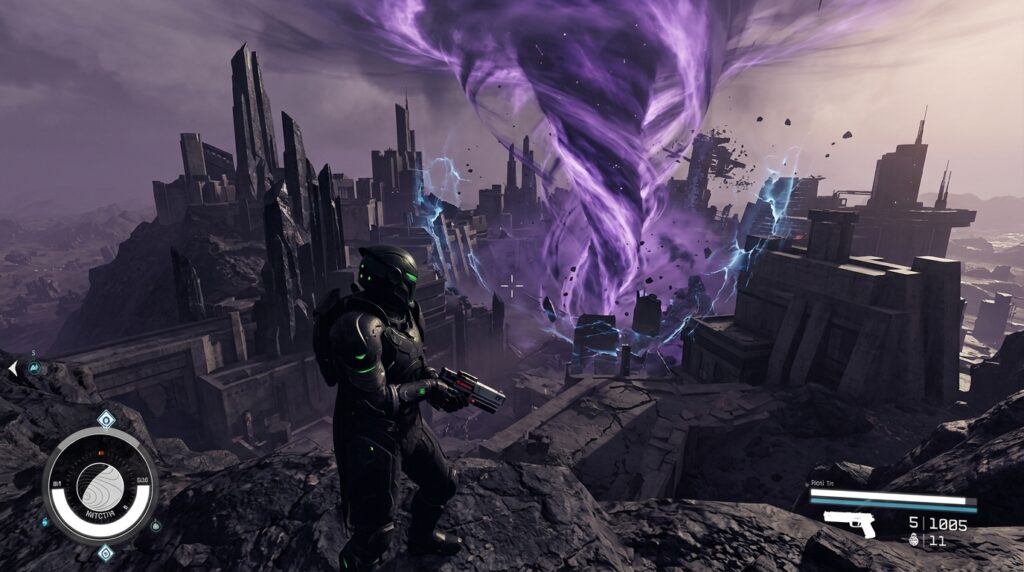
The atmosphere in Dazra is thick enough to choke a terrormorph, trading the sterile NASA-punk aesthetic for something that looks like a heavy metal album cover. You are not just scanning rocks for the sake of a checklist anymore because the environment actually tells a story through its twisted architecture and shimmering gravity anomalies. There is a tangible sense of dread when you stumble upon a ruined outpost that was clearly built by human hands rather than a random number generator. It reminds me why we used to love these games in the first place, specifically that feeling of being rewarded for poking your nose into dark corners. Quality beats quantity every single time, especially when the quantity is just a million miles of nothing.
This expansion acts as a desperate, much-needed apology for the “mile wide and inch deep” philosophy that plagued the original release. By focusing on the Varuun homeworld, the developers have created a playground where the lore actually feels integrated into the geography. You can feel the weight of the history here, from the cultist politics to the literal holes ripped in reality that keep things spicy. It is refreshing to play a version of this universe where the world-building does not feel like it was outsourced to a bored robot. If this is the direction the game is heading, I might actually stop making jokes about how the vacuum of space is less empty than the base game’s planets.
Cosmic Cults And The Great Serpent Narrative
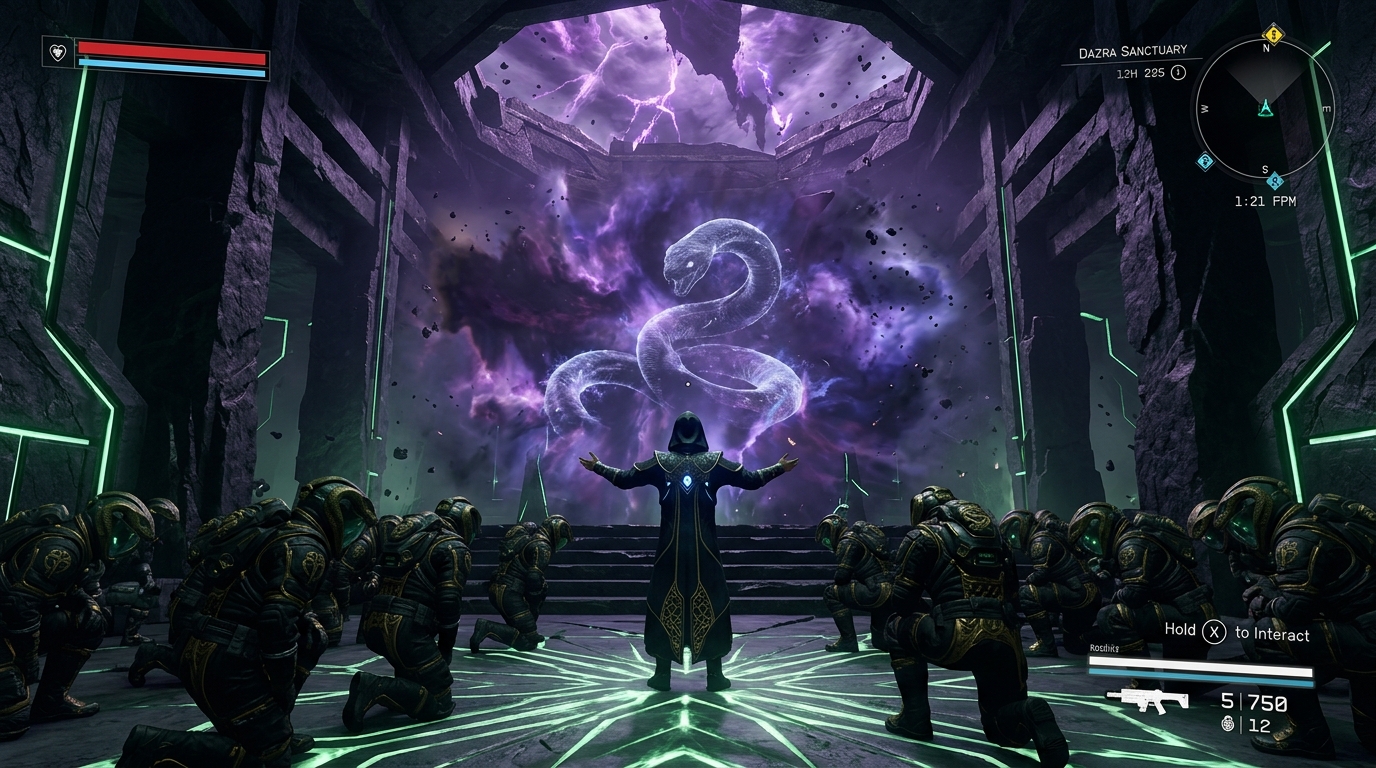
House Varuun was always the most interesting part of the lore, mostly because they were the only ones not acting like a bunch of space scouts at a summer camp. Shattered Space finally lets us explore the dark, moody heart of Varuunkai to see if the Great Serpent is actually a cosmic threat or just a giant misunderstanding fueled by too much isolated living. The expansion ditches the sterile, white-walled aesthetic of New Atlantis for a vibe that feels more like a gothic horror set in a neon-tinted crater. It is a refreshing change of pace to deal with a society that actually has some baggage and internal conflict rather than just another group of NPCs asking you to find their lost data slates.
The narrative definitely leans into a more mature tone, trading wide-eyed optimism for religious schisms and the literal haunting of a capital city. You are not just scanning rocks anymore, as you are navigating the messy politics of a cult that might actually be right about the end of the universe. While the atmosphere is thick enough to choke a terrormorph, the gameplay still struggles to shake off those old habits. You will still find yourself running errands for high-ranking zealots, but at least this time the helmets look cool and the stakes feel like they actually matter to the people involved.
Whether this truly fixes the perceived emptiness of the original experience depends on how much you value handcrafted depth over infinite, boring scale. By locking the action to a single, dense map, the developers finally gave us a world that feels lived-in and dangerous rather than a collection of assets scattered by an algorithm. It is not a total reinvention of the wheel, but the Great Serpent’s playground offers enough mystery to keep you from checking your watch every five minutes. If you wanted the game to stop being so polite and start being a bit more unhinged, this cult-centric deep dive is exactly what the doctor ordered.
Combat Evolution And Gravity Defying Mechanics
The expansion introduces the Vortex Horrors, which are essentially cosmic nightmares that have no interest in hiding behind crates or waiting for their turn to shoot. These enemies are a massive step up from the base game because they actually force you to move, teleporting around the battlefield and closing the distance with terrifying speed. You can forget about the days of picking off brain-dead pirates from a mile away with a silenced sniper rifle while they ponder why their friends are falling over. These new threats are aggressive, twitchy, and genuinely unsettling, making every encounter feel like a frantic struggle for survival rather than a routine chore. It is refreshing to see the developers finally lean into the weirdness of deep space instead of giving us another human faction in a slightly different shade of tactical gear.
Gravity-defying mechanics have also received a much-needed shot of adrenaline, turning the clunky zero-g segments into something that actually feels tactical. The level design on Varuunkai utilizes verticality in ways the main game ignored, forcing you to master your boost pack just to keep your head attached to your shoulders. Combat in these low-gravity zones feels less like a slow-motion float and more like a high-stakes dance where positioning is the difference between victory and a quick reload. It is not quite a total overhaul of the engine, but the tweaks are significant enough to make the gameplay loop feel evolved rather than just recycled. For a game that was often criticized for being as empty as a vacuum, these tighter and more chaotic skirmishes provide a welcome spark of life.
Handcrafted Redemption on a Moody Planet
Ultimately, Shattered Space feels like an apology for the base game by giving us exactly what we asked for, even if it arrives a bit late to the party. By ditching the endless procedural slog in favor of a handcrafted, moody planet like Varuunkai, the developers have finally recaptured that sense of discovery that makes their older titles so addictive. It is a dense, atmospheric playground that proves the studio still knows how to build a world with actual personality when they are not letting an algorithm do the heavy lifting. If you were one of the players who uninstalled because you were tired of walking across empty moons to find the same three generic outposts, this expansion might actually convince you to give the game a second chance.
However, calling this a mandatory experience for everyone is a stretch that even a boost pack could not reach. While the shift to a single, focused map is a massive improvement, it does not fundamentally rewrite the DNA of the combat or the often clunky dialogue systems that polarized fans at launch. At thirty dollars, you are paying a premium for a vibe check that lasts about fifteen hours, which feels a bit steep unless you are already a die-hard devotee of House Varuun. If you are looking for a complete overhaul that fixes every grievance you had with the original release, you are going to be disappointed by the lack of mechanical innovation.
My final verdict is that Shattered Space is a solid, well-crafted expansion that is best enjoyed during a deep sale for anyone who is not already an apologist. It successfully moves the needle back toward the traditional exploration we love, but it stops short of being a total comeback story. It is a great step in the right direction and a much-needed injection of soul into a galaxy that felt a little too sterile. Grab it when the price drops, settle into the eerie glow of Dazra, and enjoy the fact that you finally do not have to fast travel every thirty seconds just to find something interesting to look at.
Frequently Asked Questions
1. What exactly is Shattered Space and why should I care?
It is the DLC that finally drags the game out of its procedurally generated gutter and into a handcrafted, moody world called Varuunkai. Much like how the best psychological horror games use atmosphere to build tension, this expansion trades empty dirt balls for actual level design and a thick, heavy metal atmosphere.
2. Do I have to deal with a thousand loading screens to get anywhere?
Not this time around. Most of the action is condensed into a single, dense map in the capital city of Dazra, meaning you can actually walk to interesting locations instead of fast traveling through a dozen menus. It is the smartest move the developers have made in years.
3. What level should I be before I head to Dazra?
You should be at least level 35 unless you enjoy having your teeth kicked in by the locals. The enemies here are not playing around, and the difficulty spike is a blunt reminder that Varuunkai is not a place for low level tourists or the faint of heart.
4. Does this DLC fix the boring NASA-punk aesthetic of the base game?
It swaps the sterile, white plastic look for a dark, weird, and unsettling vibe that feels more like a horror movie than a space simulator. Every corner of the new map feels intentional and dripping with personality, which is a massive upgrade over the soulless void of the original planets.
5. Is the gameplay still just scanning rocks and filling out spreadsheets?
The focus has shifted away from mindless resource gathering and toward exploration that actually rewards your curiosity. Because the world is handcrafted, you will find environmental storytelling and unique encounters that a computer algorithm could never dream up during its lunch break.
6. Is it worth my time or should I just stick to the base game?
If you want to see the soul of a real RPG again, this is the version of the game that should have launched in the first place. It ditches the mile wide and inch deep philosophy for a focused experience that proves the studio still remembers how to build a world worth exploring.