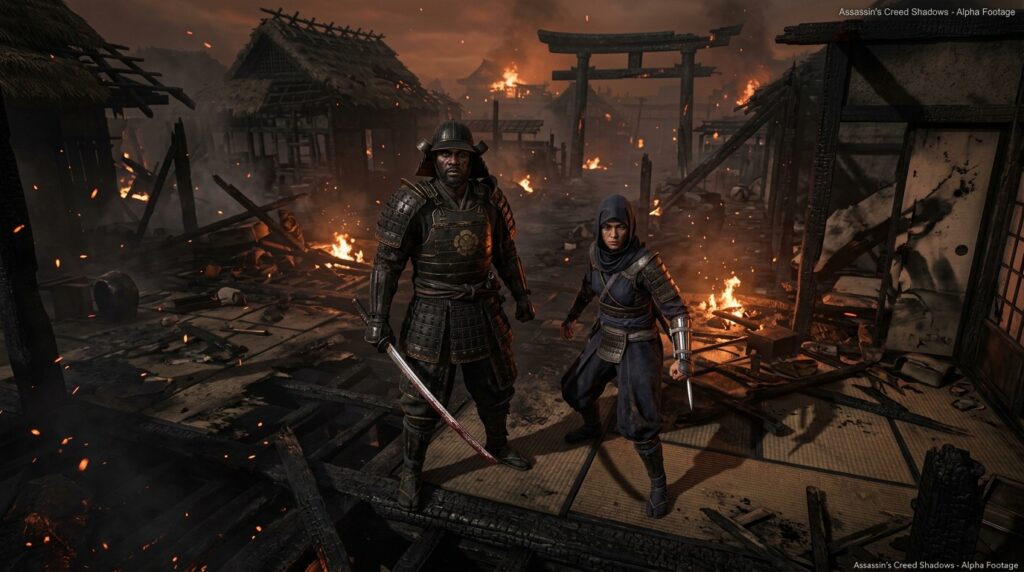
Ubisoft’s trip to feudal Japan was supposed to be the slam dunk fans have begged for since the Bush administration, but instead, we got the assassins creed shadows controversy, a PR firestorm so bright you can see it from space. Between the screaming matches over Yasuke’s social standing and the “woke” accusations flying faster than a kunai, the actual game has almost become an afterthought. It’s the kind of historical headache that makes you wonder if the developers forgot that the “Creed” usually involves staying in the shadows, not becoming a permanent fixture on the evening news.
The discourse has devolved into a toxic cocktail of genuine cultural concerns and internet trolls arguing over 16th-century HR records. While historians are busy citing sources, the rest of the gaming world is stuck watching developers trip over their own feet trying to balance DEI initiatives with historical immersion. If you’re looking for a clear-cut story about a ninja, you’re in the wrong place; this is a masterclass in how to turn a highly anticipated release into a corporate-sized headache.
Key Takeaways
- The dual-protagonist system effectively resolves the franchise’s long-standing identity crisis by allowing players to specialize in either dedicated stealth or brutal combat without mechanical compromise.
- Superficial cultural blunders and architectural inaccuracies in the promotional material reflect a worrying lack of craftsmanship that distracts from the game’s core technical innovations.
- The intense social media controversy surrounding historical accuracy acts as a smokescreen for the more critical question of whether the game can evolve beyond the repetitive Ubisoft open-world formula.
- Gameplay execution and mission design must ultimately take precedence over political discourse, as the success of the title depends on mechanical depth rather than historical or social optics.
Yasuke And The Great Historical Accuracy Firestorm
The internet has a funny way of setting itself on fire before a game even hits the shelves, and the Yasuke drama is the perfect example of a discourse dumpster fire. While critics are busy arguing over whether a 16th-century retainer counts as a “true” samurai, they are completely missing the point of why this dual-protagonist system matters for the actual gameplay. We are basically being given two entirely different ways to interact with feudal Japan, which is a lot more interesting than another generic warrior story. One minute you are playing a heavy-hitting tank who breaks through gates, and the next you are a nimble shinobi sticking to the shadows. If the mechanics actually hold up, I could care less about the DEI checklist arguments that seem to dominate every comment section these days.
Instead of obsessing over historical footnotes, we should be looking at how this split identity fixes the identity crisis the series has suffered from for a decade. For years, the franchise has tried to force us to be both a stealthy ghost and a legendary warrior at the same time, which usually results in a messy compromise that excels at neither. By splitting these roles between Yasuke and Naoe, the developers are finally letting us specialize in distinct playstyles without the awkward middle ground. You get the brutal, direct combat that the RPG-era fans love, while the old-school purists get their dedicated stealth mechanics back. It is a smart move that prioritizes mechanical depth over corporate pandering, even if the marketing team leaned a bit too hard into the social optics.
Ultimately, the firestorm surrounding Yasuke feels like a massive distraction from the question of whether the studio can actually deliver a polished experience for once. We have seen this cycle before where a game becomes a political battleground, only for the actual product to launch with the same tired glitches and repetitive map markers. I want to see if the world feels lived-in and if the combat has any actual weight, rather than just debating the racial demographics of 1580s Kyoto. If the game is fun and the dual-protagonist system adds layers to the mission design, then the historical accuracy police can stay mad while the rest of us actually play. A good game is a good game, regardless of how many angry threads it generates on social media.
Cultural Blunders From Architecture To Shrines
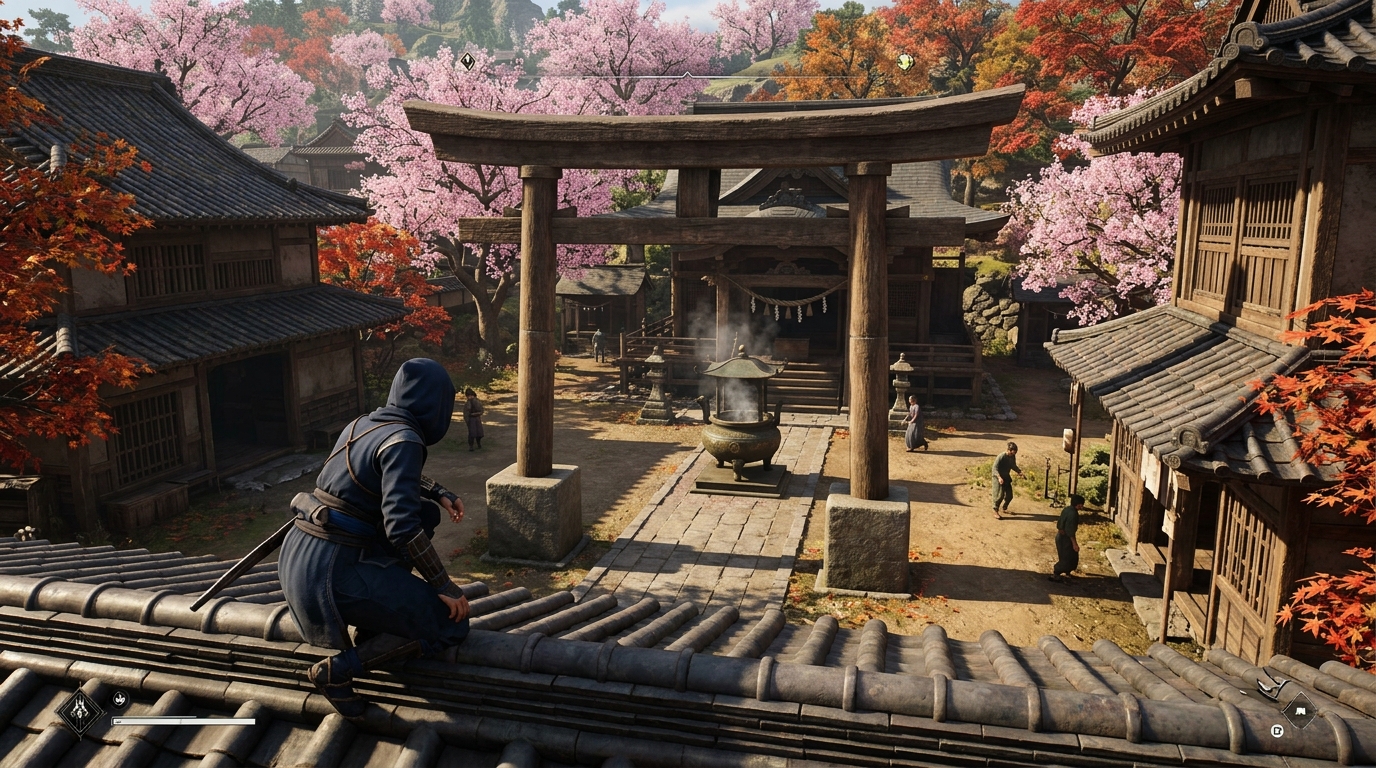
The developers claimed they wanted to deliver a love letter to Japanese culture, but they accidentally sent a ransom note written in crayon instead. The promotional campaign for Assassin’s Creed Shadows became a masterclass in how not to handle historical settings, featuring everything from Chinese architecture masquerading as Japanese to square floor mats that would make a period-accurate interior designer weep. It is genuinely impressive that a studio with this much money could mess up basic geometry, yet here we are watching them issue formal apologies for using a historical reenactment group’s flag without permission. You would think a quick trip to a library or a five-minute consultation with an actual historian would have prevented the architectural equivalent of putting a taco stand in the middle of a Victorian London street.
The situation spiraled from embarrassing to downright disrespectful when leaked footage showed a shrine desecration mechanic that felt less like a stealth game and more like a bull in a china shop. Watching a protagonist smash through sacred objects while the developers pat themselves on the back for immersion is the kind of tone-deaf move that makes you wonder if anyone at the office actually looked at the source material. This is not just about nitpicking the placement of a roof tile or the shape of a doorway, because it reflects a fundamental lack of care for the world they are trying to sell us. If you are going to charge seventy dollars for a digital tour of feudal Japan, the least you can do is make sure the temples do not look like they were outsourced to a generic asset flip.
Beyond the visual blunders, these cultural blunders highlight a worrying trend where corporate checklists take priority over genuine craftsmanship and cultural literacy. When a developer has to spend half their marketing cycle backpedaling and deleting concept art, it distracts from the actual gameplay systems like the dual-protagonist mechanics we actually want to see. We are stuck debating whether a building has the right number of windows instead of discussing how Yasuke and Naoe fundamentally change the franchise’s stealth loop. It is a frustrating mess that proves no amount of high-fidelity lighting can hide a foundation built on lazy research and a complete disregard for the details that make a setting feel alive.
Dual Protagonists Versus The Ubisoft Formula
The endless shouting matches over historical accuracy have done a great job of distracting everyone from the real question: is this just another bloated map-clearing simulator in a fancy new outfit? The studio is banking on the Naoe and Yasuke dynamic to save the series from its own repetitive DNA, but I have my doubts. While one character focuses on the classic hidden blade stealth and the other plays like a human wrecking ball, we have seen this “choose your playstyle” gimmick before in several previous entries. If the mission design does not force us to actually use these unique skill sets in meaningful ways, we are just looking at two different skins for the same old grind.
The split between shinobi agility and samurai brute force sounds great on paper, but the execution needs to go deeper than just a different combat animation. I am tired of the franchise promising a return to roots while still burying the experience under a mountain of icons and meaningless busywork. If Naoe’s stealth sections are just the same “crouch in tall grass” loop we have been doing since the Obama administration, then the dual protagonist system is nothing more than a shiny distraction. We need level design that actually rewards the specific strengths of these characters instead of letting us brute-force every encounter with whichever hero we happen to be controlling at the time.
Ultimately, the controversy surrounding the cast feels like a convenient smokescreen for a publisher that is terrified of changing its profitable, if boring, formula. I want to see if the game actually evolves the stealth mechanics or if it just uses the dual-narrative hook to justify another hundred hours of repetitive outposts. Taking a stance on this isn’t about the culture war, it is about whether we are getting a fresh gameplay experience or just another standard open-world title with a dual-protagonist coat of paint. If the game cannot stand on its own mechanics without the social media noise, then all the dual-protagonist systems in the world won’t save it from being uninstalled.
Gameplay Trumps the Culture War Noise
Ultimately, the internet storm surrounding Yasuke and historical accuracy is a loud distraction from what actually makes or breaks an Assassin’s Creed title. Whether you think the studio is pushing a specific agenda or just trying something new, the real test is how the dual-protagonist system feels when you are actually holding the controller. If the stealth mechanics are tight and the contrast between Naoe’s shinobi shadows and Yasuke’s samurai brute force creates a compelling gameplay loop, then the social media shouting matches become irrelevant. I am far more concerned with whether the mission design feels fresh or if I am just clearing the same repetitive outposts for the hundredth time in a different setting.
You should probably mute the keyboard warriors and focus on whether this version of feudal Japan actually respects your time as a player. The controversy might sell clicks, but it does not change the fact that we have been asking for a Japanese setting since the days of the original trilogy. If the parkour is fluid and the world feels alive, those are the victories that matter more than a debate over a retainer’s status from hundreds of years ago. I am here to be a digital assassin, not a historian with a grudge, so I am choosing to judge the game by its execution rather than its comment section.
If you find yourself genuinely angry about a character choice before even seeing the credits roll, you are likely missing out on some of the best stealth gameplay the series has offered in years. The publisher has a habit of tripping over its own feet with corporate PR, but their developers usually know how to build a world that is worth exploring despite the noise. My final verdict is to ignore the rage-baiting thumbnails and give the dual-protagonist system a fair shake because the gameplay variety is exactly what this franchise needed to avoid going stale. If it plays well, it stays installed, and if it is boring, no amount of historical accuracy could have saved it anyway.
Frequently Asked Questions
1. Who exactly is Yasuke and why is everyone losing their minds?
Yasuke was a real historical figure of African origin who served the daimyo Oda Nobunaga in 16th century Japan. The internet is currently eating itself alive debating whether his status as a retainer qualifies him as a true samurai or just a historical footnote. I honestly do not care about the 500 year old HR records as long as playing as a giant tank who smashes through gates is actually fun.
2. Is Assassin’s Creed Shadows actually historically accurate?
The developers are trying to walk a tightrope between historical immersion and creative liberty, and they are currently wobbling pretty hard. While they have nailed the aesthetic of feudal Japan, they are clearly prioritizing their DEI initiatives and modern storytelling over a 100 percent factual recreation. It is a video game, not a peer reviewed thesis, so expect plenty of Hollywood flair mixed in with the history.
3. How does the dual protagonist system work in the game?
You get two distinct playstyles that are basically polar opposites of each other. You can play as Naoe for the classic stealth and shinobi vibes, or switch to Yasuke when you want to stop hiding and start breaking bones. It is a smart way to keep the gameplay from getting stale, assuming the developers do not mess up the balancing.
4. Why are people calling the game woke?
The woke accusations mostly stem from the choice to feature a Black protagonist in a Japanese setting instead of a traditional Japanese male lead. Critics see this as checking boxes for modern diversity points rather than telling a natural story. Whether it is a genuine creative choice or a corporate mandate, it has turned the comment sections into an absolute radioactive wasteland.
5. Should I care about the controversy if I just want to play a ninja game?
If you just want to stab people from the rafters, most of this noise is irrelevant to you. The core of the game still promises the classic loop of exploration and assassination in a beautiful setting. Just be prepared to mute a few keywords on social media if you want to avoid the endless screaming matches over historical technicalities.
6. Is the studio actually listening to the fan backlash?
The publisher is currently in full damage control mode, trying to appease both the historical purists and their own corporate vision. They have tripped over their own feet a few times in PR statements, but they are unlikely to change the core characters this late in the game. They are committed to this path, for better or worse, so grab some popcorn and watch the firestorm.