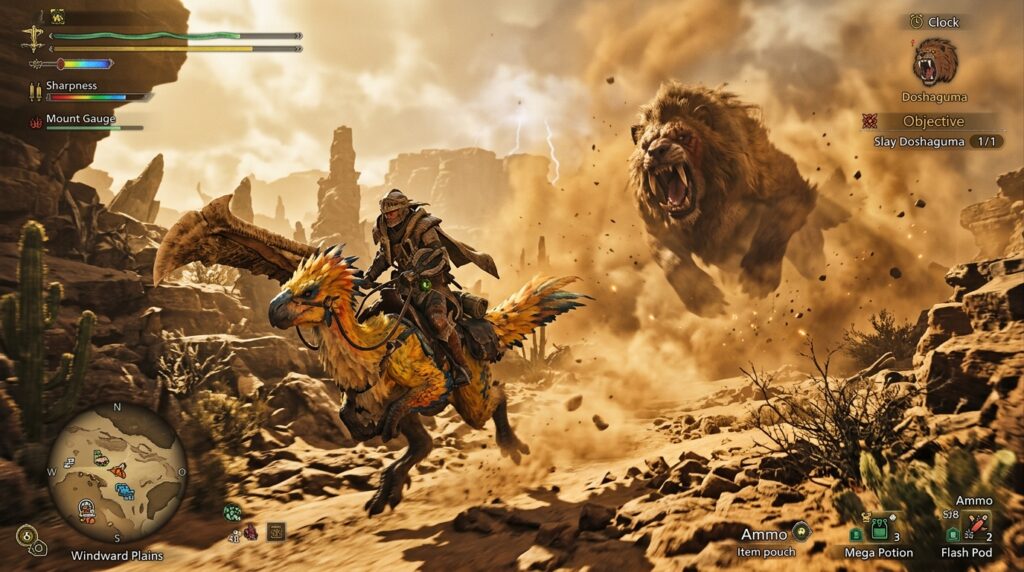
Capcom is finally ditching the loading screens and letting us actually hunt, rather than spending half our lives staring at a progress bar. This monster hunter wilds preview confirms that the formula has evolved into a seamless, living ecosystem that is roughly twice the size of its predecessor. It is about time we stopped treating separate map zones like distinct dimensions, and seeing the village flow directly into the fray is a massive win for anyone who values their sanity.
The real star of the show is the weather, which is apparently determined to kill you before the monsters do. Biomes now cycle through brutal Inclemency phases where lightning and sandstorms turn the map into a survival horror game, followed by Plenty phases where everything is lush and suspiciously peaceful. It is a dynamic, high-stakes system that forces you to actually pay attention to the environment instead of just mindlessly swinging a giant slab of iron at a lizard’s face.
Key Takeaways
- Monster Hunter Wilds eliminates all loading screens between the village and the hunting grounds, creating a seamless, interconnected world that is twice the size of previous maps.
- A dynamic three-phase ecosystem cycle—Inclemency, Fallow, and Plenty—forces players to adapt to dangerous weather like sandstorms and lightning that actively change monster behavior and resource availability.
- The new Focus Mode introduces surgical precision to combat, allowing hunters to target specific wounds and weaknesses for massive damage and tactical flinches.
- Hunters can now carry and swap between two different weapon types on their Seikret mount mid-hunt, enabling strategic versatility to handle different monster matchups without returning to camp.
Seamless Maps And The End Of Loading Screens
The era of staring at a loading screen while your hunter contemplates their life choices is finally over. Monster Hunter Wilds is doubling down on the concept by giving us maps that are twice as large and, more importantly, completely seamless. You can now hop on your mount in the middle of a bustling village and ride straight into the heart of a sandstorm without a single immersion-breaking pause. It sounds like a basic upgrade, but removing those invisible walls fundamentally changes how the game feels. Instead of treating the hub and the hunt like two separate mini-games, the world finally feels like a cohesive, living ecosystem that does not need to stop for air every time you cross a border.
This shift to a seamless open world is not just about showing off technical muscle, it is a blunt fix for the stop-and-go pacing that has plagued the series for decades. In previous titles, chasing a wounded monster into a new zone felt like a chore, but now the hunt is a continuous, high-speed pursuit through shifting environments. The maps are designed to evolve through phases like Inclemency and Plenty, meaning the terrain you started on might look like a lightning-choked nightmare by the time you actually corner your prey. You are no longer just fighting a boss in a static arena, you are navigating a volatile landscape that refuses to load in the background while you wait.
Let us be honest, we have all seen open world become a buzzword for empty space, but Wilds actually uses that scale to crank up the tension. Because there are no loading screens to act as a safety net, you cannot just zone out to escape a botched encounter or a surprise invader. The seamless transition between the village and the wild means the stakes feel constant, and the world feels significantly more dangerous when you realize there is no magical barrier protecting you from a hungry wandering apex. It is a bold move that moves the franchise away from its menu-heavy roots and toward a much more fluid, organic experience. If the developers can keep these massive locales from feeling like bloated open worlds, we might finally be done with the corridor hunter era for good.
Weathering The Storm With Dynamic Ecosystem Phases
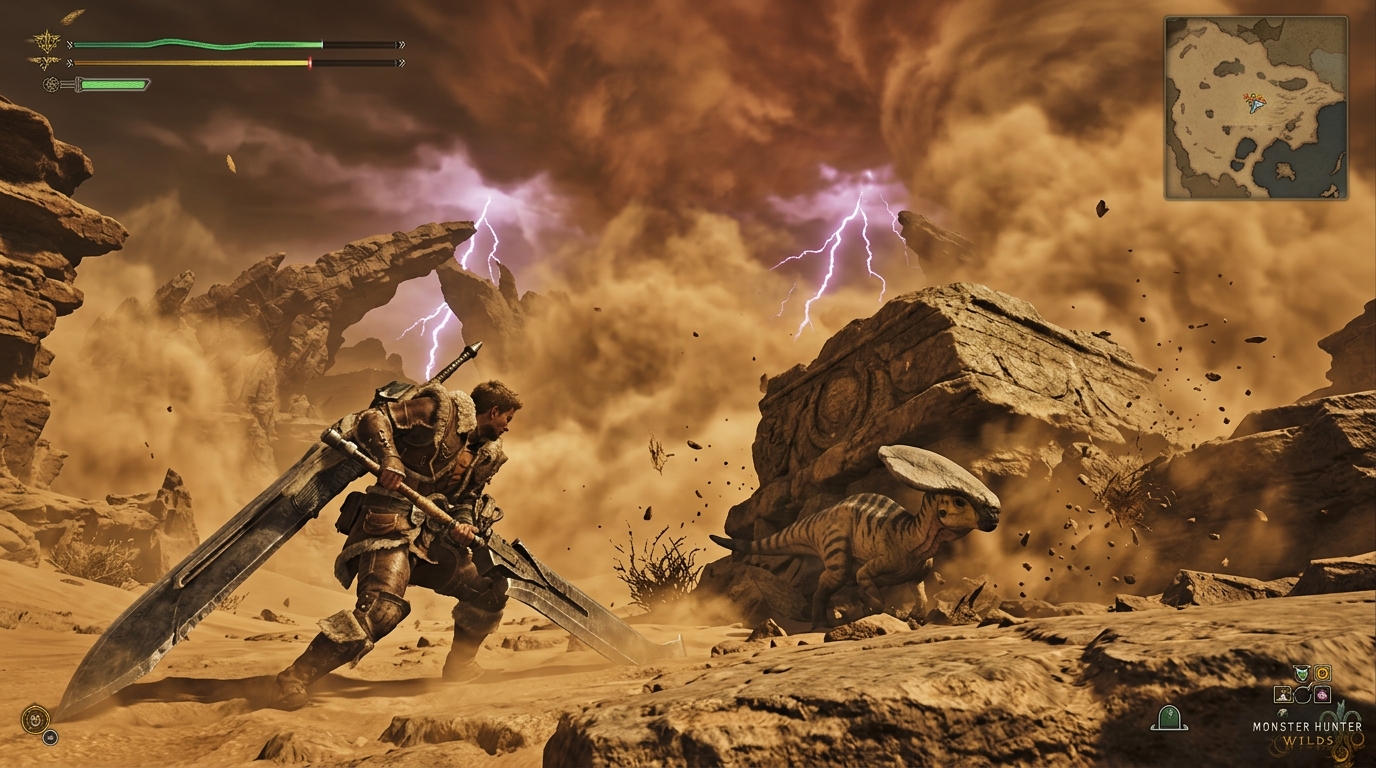
The most ambitious shift in Monster Hunter Wilds is the introduction of a three phase environmental cycle that finally makes the map feel like more than just a glorified arena. Instead of a static backdrop, each locale rotates through the Inclemency, Fallow, and Plenty phases, fundamentally changing how you interact with the world. During the Inclemency phase, the ecosystem throws a literal tantrum with sandstorms or lightning strikes that make visibility a nightmare and survival a genuine chore. It is a chaotic mess that forces you to respect the environment rather than just treating it like a sandbox for your oversized sword. This is not just a visual filter, as the weather actively dictates which apex predators decide to show up and ruin your afternoon.
Once the storm breaks, the map settles into the Fallow phase, a gritty period of scarcity where resources are thin and monsters are desperate. This is the survivalist portion of the loop that rewards players who actually pay attention to the map layout instead of just mindlessly following a trail. You will find yourself scavenging for every herb and whetstone while avoiding packs of hungry small monsters that are suddenly a lot braver when food is low. It is a refreshing change of pace that adds a layer of tension often missing from the older, more predictable titles. If you can survive the hunger games of the Fallow, you are eventually rewarded with the Plenty phase, where the land turns lush and rare materials practically fall into your lap.
This dynamic system is a massive middle finger to the lazy design we have seen cluttering the industry lately. The developers are actually using the larger map size to create a living, breathing cycle that impacts gameplay rather than just filling space with mindless map markers. You cannot just hunt whatever you want whenever you want, because the ecosystem might have other plans for your schedule. It adds a necessary layer of unpredictability that keeps the grind from feeling like a second job. If the final game can balance these shifts without making the Inclemency phases feel like a total slog, we might finally have an evolution of the formula that actually justifies the move to a seamless world.
Focus Mode And The Two Weapon Strategy
Focus Mode is easily the most significant mechanical shift in Monster Hunter Wilds, and it finally gives us a reason to stop swinging blindly at a monster’s thickest hide. By holding a trigger, you can now pinpoint specific wounds or glowing weak spots with surgical precision, which feels like a godsend for anyone tired of their weapon bouncing off a metal-plated tail. It is not just about aiming, though, as this mode opens up unique Focus Strikes that deal massive damage and can trigger cinematic flinches. This adds a layer of tactical depth that was missing from the older games where the strategy was basically just hitting the feet until the lizard fell over. It is a smart way to make combat feel more deliberate without slowing down the breakneck pace we expect from the series.
The real shift is the ability to carry two different weapon types on your Seikret mount, effectively ending the era of being stuck with a bad matchup mid-hunt. I have always hated the feeling of bringing a slow Great Sword to a fight against a monster that moves like it is on a caffeine bender, but now you can just whistle for your bird and swap to a Bow on the fly. This system encourages actual experimentation rather than forcing you to trudge back to a camp just to change your gear. You can use a heavy hitter to create wounds and then swap to a faster blade to exploit them, which makes the gameplay loop feel much more fluid. It is a bold move that respects the player’s time while adding a layer of strategic preparation that the franchise desperately needed.
While some purists might argue that being able to swap weapons makes the game too easy, I think it actually highlights how much more complex the encounters have become. You are no longer just managing one moveset, but rather thinking about how two different tools can compliment each other in a dynamic environment. Imagine softening up a flying wyvern with a light bowgun before switching to a hammer to finish the job once it hits the dirt. This level of versatility is exactly what the series needs to keep the formula from feeling stale in such a massive open world. It is a refreshing evolution that rewards players for being versatile hunters instead of just one-trick ponies with a favorite stick. Understanding the weapon tier list and mechanics will be essential for mastering these new dual-loadout strategies.
Wilds Finally Makes Open Worlds Useful
Ultimately, Monster Hunter Wilds looks like it is successfully evolving the series rather than just tacking on trendy gimmicks to stay relevant. While I am usually the first person to roll my eyes at seamless maps and dynamic weather, these features actually serve the core loop here by making the hunt feel like a genuine survival exercise. The weather phases, especially those brutal lightning storms, add a layer of unpredictability that forces you to actually pay attention to your surroundings instead of just mindlessly chasing a trail. It is clear that the developers are not just making the world bigger for the sake of a marketing bullet point, but are instead using that space to let the ecosystem breathe and occasionally try to eat you.
If you are worried that the new mechanics are just shiny distractions from the satisfying crunch of a Great Sword impact, you can probably breathe a sigh of relief. The focus on Inclemency and Plenty cycles creates a rhythmic tension that mirrors the preparation and execution phases we have loved for decades, just on a much grander scale. This is not some lazy live-service pivot or a hollow map-clearing simulator, but a confident step forward for a franchise that finally has the hardware power to match its ambition. Mark February 28, 2025, on your calendar because this is looking like a mandatory day-one purchase for anyone who enjoys turning prehistoric nightmares into fashionable pants.
I am going into this release with high expectations because the game seems to understand that a bigger world only matters if it is more dangerous, not just more tedious to walk across. By removing the loading screens between the village and the field, the developers are cutting out the fluff and keeping you strapped into the action for longer stretches. It is a bold move that respects the player’s time while simultaneously demanding more of their skill and adaptability. Unless the technical performance falls off a cliff at launch, Wilds is shaping up to be the definitive monster-slaying experience that makes everything before it feel like a dress rehearsal.
Frequently Asked Questions
1. Is Monster Hunter Wilds actually an open world game now?
It is finally a seamless experience where the village and the hunting grounds are one and the same. You can ride your mount straight from the hub into the action without a single loading screen to ruin your immersion. The maps are roughly twice the size of what we saw previously, so prepare to actually do some traveling.
2. How do the new weather cycles work?
The environment is actively trying to end your career through a system of Inclemency and Plenty phases. You will deal with brutal sandstorms and lightning that turn the hunt into a survival horror match before things settle back into a lush, peaceful state. It forces you to actually use your brain and adapt to the map instead of just hitting things until they stop moving.
3. Are loading screens finally a thing of the past?
The developers have finally ditched the progress bars that have been eating our lives for decades. Moving between zones or leaving the village happens in real time, meaning no more staring at a blank screen while your hunter contemplates their existence. It is a massive win for anyone who values their sanity and wants a cohesive, living world.
4. Does the game feel different from previous entries?
It takes the established formula and evolves it by removing the invisible walls and stop-and-go pacing. The seamless transition between the hub and the hunt makes the game feel like one continuous experience rather than two separate mini-games. It is a blunt fix for the clunky pacing that has plagued this series since the beginning.
5. Will I need to pay more attention to the environment this time?
You can no longer just mindlessly swing a giant slab of iron at a monster’s face and hope for the best. The dynamic weather and shifting biomes mean the environment is just as dangerous as the creatures you are tracking. If you ignore the lightning and sandstorms, you are going to have a very bad time.
6. Is the map size significantly larger than previous entries?
The maps are roughly double the size of previous titles, giving you much more room to breathe and explore. Because everything is connected without loading breaks, the scale feels even more massive than the numbers suggest. It is a huge leap forward that makes the ecosystem feel like a real place instead of a series of small arenas.