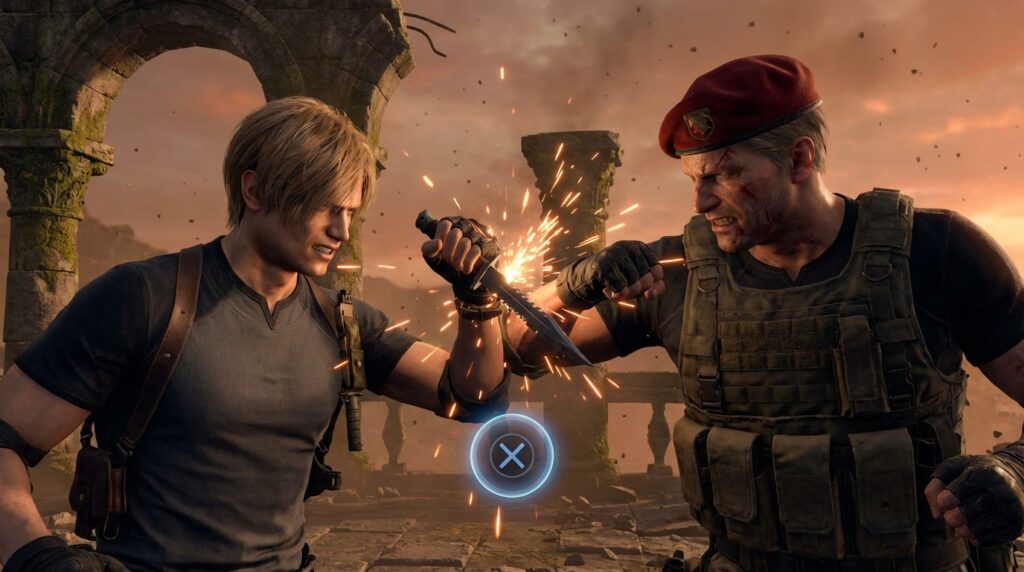
I’m mid-cutscene, leaning back to appreciate the cinematic lighting and dramatic dialogue, when suddenly a massive “X” flashes on the screen like a jump scare. Welcome to the polarizing world of quick time events, the industry’s favorite way to make sure you don’t put your controller down to eat a sandwich. Whether you’re dodging a boulder or frantically mashing buttons to pry open a door, these prompts are the thin line between a cool action sequence and a frustrating “Game Over” screen.
Ever since the mechanic was popularized, developers have used it to bridge the gap between watching a movie and actually playing a game. When done right, they add a rhythmic punch to a boss fight; when done wrong, they’re just a lazy substitute for actual gameplay. It’s a design choice that has survived decades of hardware cycles, proving that the industry just can’t quit its obsession with testing your reflexes during a dialogue scene.
Key Takeaways
- Quick Time Events (QTEs) function as a design shortcut that bridges the gap between cinematic cutscenes and interactive gameplay, often serving as a crutch for developers to simulate engagement without building complex mechanics.
- The ‘get it right or die’ philosophy originated with 1980s laserdisc games like Dragon’s Lair, establishing a trial-and-error precedent that prioritizes memorization over genuine player skill.
- Overuse of button-mashing prompts and ‘Press F to Pay Respects’ style mechanics diminishes narrative depth by reducing complex emotional moments and physical struggles to arbitrary, immersion-breaking inputs.
- True narrative innovation requires systemic consequences and player agency rather than superficial reflex tests that treat the player as a ‘human remote control’ for a scripted movie.
From Dragons Lair To Origins
Long before we were pressing F to pay respects, the price of life was a split-second reaction to a flashing yellow light. The 1983 classic Dragon’s Lair was essentially a high-stakes cartoon where the animator decided to murder you every six seconds for the crime of being human. It pioneered the art of the trial-and-error death trap, forcing players to memorize arbitrary sequences just to see the next five seconds of hand-drawn footage. You weren’t playing a game so much as you were acting as a glorified remote control for a temperamental laserdisc player. This was the birth of the “get it right or die” philosophy that would eventually haunt our controllers for decades.
The term Quick Time Event actually stayed in the oven until 1999, when developers decided their epic sagas needed a fancy name for sudden button prompts. The goal was to bridge the gap between watching a movie and actually playing one, but it inadvertently opened a Pandora’s box of cinematic laziness. Suddenly, every developer on the planet thought that replacing a boss fight with a series of flashing icons was the pinnacle of immersion. While some used them to add flavor, the rest of the industry saw an easy way to make players feel involved without actually having to program complex mechanics. It turned out to be the ultimate design shortcut for designers who wanted the spectacle of a cutscene with the thin veneer of interactivity.
We have now reached a point where high-budget titles treat us like toddlers learning our shapes, flashing a giant blue X on the screen to make sure we are still awake. It is a bizarre design choice that assumes the player is too incompetent to handle a real fight but too impatient to just watch a movie. There is nothing quite like having a dramatic, emotional moment ruined because you failed to mash a button fast enough to help a character open a door. These prompts have evolved from innovative experiments into a crutch for cinematic storytelling that refuses to let the gameplay speak for itself. We are still stuck in that 1980s loop, waiting for the screen to tell us when it is okay to actually have fun.
The Button Mashing Era
The mid-2000s were a dark time for my controller and an even darker time for the skin on my palms. Action heroes didn’t just kill mythological gods, they forced us to lobotomize our hardware by mashing buttons until our thumbs went numb. It was the peak of the cinematic action era, where every developer decided that the only thing standing between a player and a cool kill animation was a frantic, rhythmic seizure of the thumb. We weren’t really playing the game anymore, we were just performing a very aggressive form of digital CPR on a piece of plastic.
Naturally, because these titles made a billion dollars, every other developer in the industry decided that this was the pinnacle of game design. Suddenly, you couldn’t open a door, lift a rock, or finish off a boss without a giant neon prompt screaming at you to hammer a button like your life depended on it. It was the ultimate “fake it till you make it” mechanic, pretending to offer deep engagement while actually just giving us carpal tunnel. We transitioned from actual combat mechanics to a high-stakes game of Simon Says where the reward was a pre-rendered cutscene of something we should have been allowed to do ourselves.
This era paved the way for the most insulting evolution of the trend, the infamous “Press F to Pay Respects” style of gameplay. Designers became so obsessed with these scripted moments that they forgot games are supposed to be interactive, not just a series of prompts to keep you from falling asleep during a movie. We went from ripping monster heads off to performing mundane tasks like mourning or walking through a door via QTEs. It is a lazy substitute for actual gameplay that trades genuine agency for a cheap trick of participation, and my controller still hasn’t forgiven me for the abuse.
Press F To Pay Respects Syndrome
Back in the day, a Quick Time Event was a reward for surviving a grueling boss fight, giving you a front row seat to a choreographed finishing move that looked way cooler than anything you could pull off with a standard light attack. It was the cinematic cherry on top of a skill-based sundae, used sparingly to make you feel like an action movie star. Somewhere along the line, developers decided that if a little bit of button mashing was good, then replacing actual gameplay with a series of flashing icons was even better. We went from epic decapitations to the dark ages of gaming where you cannot even open a rusty door or climb a ladder without the screen screaming at you to oscillate the thumbstick.
The absolute peak of this design laziness arrived when the industry decided that complex human emotions could be distilled into a single keyboard input. Nothing kills the dramatic tension of a digital funeral faster than a giant prompt telling you to press F to pay respects, turning a somber narrative beat into a meme that will haunt the internet forever. It is the ultimate participation trophy for players, a way for designers to force you through a cutscene while pretending you are still in control of the character. Instead of writing a scene that actually makes us feel grief or regret, they just give us a button to toggle the “sadness” animation and call it immersive storytelling.
This trend has turned what should be high-stakes drama into a glorified game of Simon Says where the consequences are nonexistent and the logic is baffling. We are now expected to believe that mashing X is the mechanical equivalent of a heartfelt goodbye or an intense psychological struggle. It is a crutch for titles that want to be movies but are terrified the audience will fall asleep if they do not have to tap a button every thirty seconds. When you strip away the agency and replace it with a flashing prompt, you are not making a game more cinematic, you are just admitting that your gameplay is not interesting enough to stand on its own.
Branching Paths And Modern Cinematic Failure
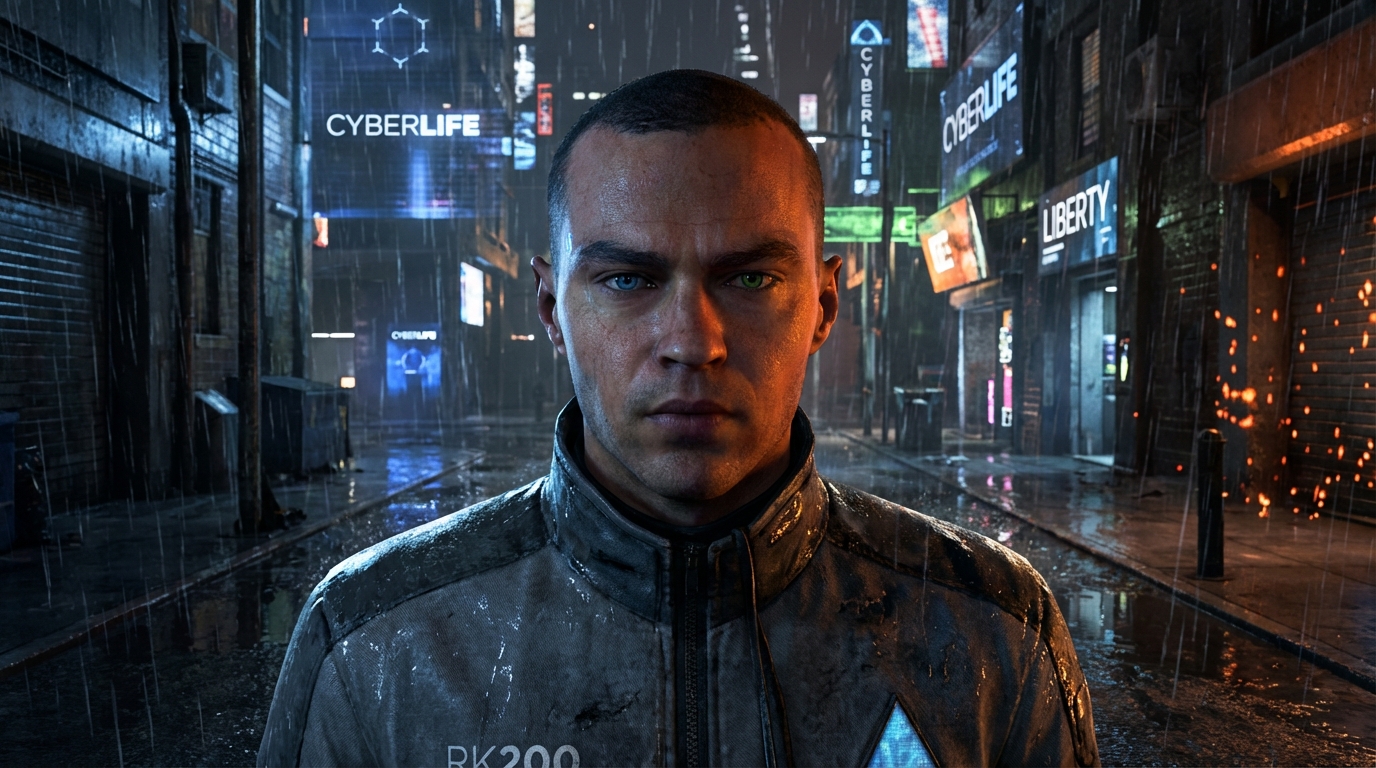
We need to have a serious talk about the illusion of choice in modern cinematic gaming, specifically when it comes to the “Press X to Not Die” school of design. Narrative-heavy games love to dress up their quick time events in high-production suits, promising that every twitch of your thumb determines the fate of the world. In reality, most of these sequences are just glorified games of Simon Says that pause the movie until you prove you are still awake. You are not really “playing” a character so much as you are acting as a human remote control for a very expensive puppet show. If the only thing standing between a masterpiece and a game over screen is my ability to mash a circle button, we have a fundamental problem with the storytelling.
The industry has become obsessed with these prompts because they are a cheap way to make a passive cutscene feel interactive without actually building complex gameplay systems. It is the ultimate “Press F to Pay Respects” syndrome, where meaningful emotional beats are reduced to a single, arbitrary button prompt that creates zero ludonarrative harmony. You can have the most photorealistic facial animations in the world, but the immersion immediately breaks the second a giant, neon prompt starts hovering over a character’s forehead. It feels less like a branching narrative and more like a toddler’s toy where you have to put the square block in the square hole to hear the next sound bite. Calling this “innovation” is a stretch when we have been doing the exact same thing since the days of laserdisc arcade cabinets.
True branching paths should be built on the back of player agency and systemic consequences, not just whether you reacted to a prompt in 0.5 seconds. When a game relies on QTEs to drive its most dramatic moments, it admits that its actual mechanics are too shallow to handle the weight of the story. We are basically being asked to applaud a movie for letting us turn the digital pages, which is a pretty low bar for a medium that is supposed to be interactive. There is a place for cinematic flair, but let us stop pretending that mashing a button to escape a factory is the pinnacle of narrative depth. Even in the most linear narrative games, if I wanted to test my reflexes on command without any creative input, I would just go back to playing Bop It.
The Industry’s Favorite Participation Trophy
Ultimately, quick time events are the industry equivalent of a participation trophy for people who would rather be watching Netflix. We have reached a point where developers seem terrified that if they let a cutscene play for more than thirty seconds without forcing us to mash X, our collective brains will simply shut down. There is no actual skill involved in reacting to a giant glowing prompt that takes up half the screen, yet we continue to pretend that pressing a button to pay respects is a meaningful gameplay loop. It is a lazy bridge between cinema and interaction that usually ends up failing at being both.
If a developer wants to tell a story, they should have the confidence to just let the movie play or, better yet, let us actually play the game. Shoving a frantic joystick wiggle into the middle of a dramatic monologue does not increase immersion, it just makes me worry about the structural integrity of my controller. There is a place for cinematic flair in modern gaming, but it should not come at the cost of basic logic or player agency. It is time to retire the glorified Simon Says mechanics and focus on making games that are actually fun to play without a tactical pause reminder to breathe.
Frequently Asked Questions
1. What exactly is a Quick Time Event anyway?
A Quick Time Event, or QTE, is a sudden button prompt that pops up during a cutscene to make sure you haven’t fallen asleep or left to make a sandwich. It is the developer’s way of forcing you to participate in a movie by testing your reflexes with a giant flashing letter on the screen.
2. Who is responsible for inventing this mechanic?
You can blame early 1980s arcade titles for the concept of ‘press this or die’ gameplay, which was basically a beautiful cartoon that hated you. However, later developers in the late 90s are responsible for giving it the official name and making it a staple of modern gaming.
3. Are QTEs just a lazy way to design a game?
Sometimes they are a total cop out used to replace actual gameplay mechanics with a simple rhythmic button press. When done poorly, they are just a way to bridge the gap between a movie and a game without actually putting in the work to make the scene interactive.
4. Why do developers keep putting them in cutscenes?
The goal is to keep you engaged so you do not just put the controller down and tune out during long stretches of dialogue or action. It is a design choice intended to give a cinematic sequence a bit of punch, even if it occasionally feels like a jump scare for your thumbs.
5. Can a Quick Time Event actually be a good thing?
They can be great when they add a rhythmic flow to a boss fight or make a scripted action sequence feel more visceral. The problem is not the mechanic itself, but rather the lazy execution that turns a cool moment into a frustrating game over screen.
6. What happens if I fail a QTE?
Usually, you get a front row seat to a humiliating death animation and a prompt to try the entire sequence over again. It is a trial and error system that rewards memorization over actual skill, which is exactly why they remain one of the most polarizing features in gaming history.