Remember when playing a game meant actually playing the game, rather than managing a second career as a digital errand boy? Modern gaming has traded fun for a checklist of chores, all wrapped up in the shiny, manipulative bow of predatory battle passes. These systems are designed to weaponize your FOMO, turning your free time into a desperate race against a ticking clock just to unlock a hat you will never use. It is not a reward for playing; it is a ransom note for your dopamine.
The industry’s “oops, we accidentally took your money” era is finally hitting a wall of cold, hard reality. Between the FTC slapping HoYoverse with a $20 million fine for misleading odds and the crackdown on virtual currencies that make real money look like Monopoly bills, the mask is slipping. We have reached a point where developers spend more time engineering psychological traps for teenagers than they do refining hitboxes. If a game requires a spreadsheet and a parental consent form just to navigate its storefront, it isn’t a hobby, it is a heist.
Key Takeaways
- Modern battle passes function as psychological traps that weaponize FOMO and time-gating to transform leisure time into mandatory digital labor.
- Developers use virtual currencies as a ‘shell game’ to obscure real-world costs and manipulate players into spending more than they intended.
- Progression systems are often intentionally designed to be frustratingly slow, creating a ‘problem’ for which the developer sells the ‘solution’ via paid tier skips.
- Increased regulatory scrutiny and multi-million dollar fines against companies like HoYoverse signal a necessary shift toward demanding transparency and respect for player time.
The Psychological Trap Of FOMO And Time Gating
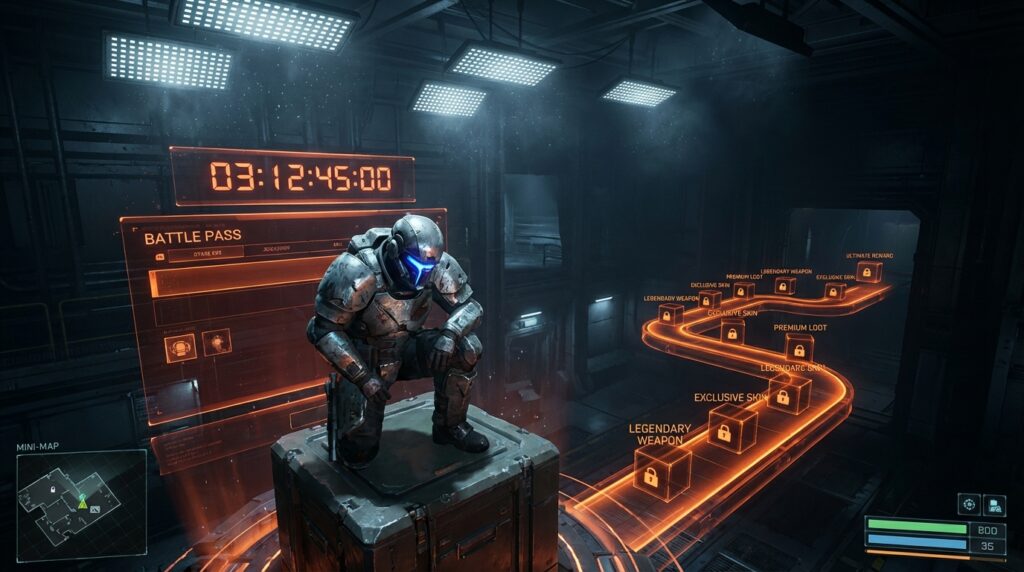
Modern battle passes are less about rewarding your skill and more about holding your free time hostage with a digital leash. Developers have mastered the art of the “daily login” requirement, transforming your evening wind-down into a mandatory shift at the content factory. If you miss a week because of something trivial like a job or a social life, those high-tier rewards you technically paid for simply vanish into the ether. It is a brilliant, albeit scummy, way to ensure their active user metrics stay high while you stress over whether you will hit level 100 before the season resets. This is not a hobby anymore, it is a second job where the boss pays you in glowing shoulder pads and weapon skins.
The psychological hook of FOMO is the industry’s favorite way to treat players like open wallets with no impulse control. By labeling every cool cosmetic as “seasonal” or “limited time,” studios trigger a panic response that overrides your better judgment. You are not buying a skin because it looks good, you are buying it because you are terrified of being the only person in the lobby without it next month. Even the Federal Trade Commission is finally waking up to these dark patterns, as seen in the recent twenty million dollar penalty against HoYoverse for their predatory tactics and obscured costs. When a game forces you to navigate a maze of virtual currencies just to figure out the real-world price of a hat, you are being manipulated, not entertained.
We need to stop pretending that expiring content is a technical necessity rather than a calculated trap designed to exploit human psychology. These systems are built to keep you tethered to the server through artificial scarcity and the constant threat of missing out on the “best” gear. If a game was actually fun to play, the developers would not need to threaten you with a countdown clock just to keep you logged in. It is high time we start calling out these tiered progression systems for what they actually are, which is a desperate attempt to monetize your anxiety. Stop letting these companies dictate how you spend your weekends and start demanding games that respect your time instead of trying to own it.
Obscured Costs And The Virtual Currency Shell Game

Modern battle passes love to play a shell game with your money by forcing you to convert real cash into meaningless “fun bucks” before you can actually buy anything. This isn’t just a quirky design choice, it is a calculated psychological tactic meant to disconnect your brain from the reality of your bank account. When you see a cool skin for 1,200 Primogems or V-Bucks, your lizard brain does not immediately translate that into fifteen dollars of hard earned grocery money. By the time you realize you have been overcharged, the transaction is already buried under layers of digital fluff. This intentional confusion is exactly why regulators finally stepped in to slap HoYoverse with a twenty million dollar penalty.
The real kicker is the math gymnastics these developers force you to perform just to unlock a basic reward tier. You can almost never buy the exact amount of currency you need, meaning you are always left with a useless leftover balance that goads you into spending more. It is a classic move from the predatory playbook designed to keep you trapped in a loop of micro-transactions. The recent FTC settlement proves that these virtual currencies and bundles are often deliberately misleading, especially when they target younger players who do not understand how fast these small amounts add up. If a developer refuses to show you a direct price in your local currency, it is because they know you would never pay that much for a digital hat.
We need to stop pretending that virtual currencies are anything other than a middleman designed to pick your pocket while you are distracted by shiny icons. The industry has spent years perfecting these dark patterns to ensure you lose track of your spending until the monthly credit card statement arrives. Mandating direct price disclosures and odds transparency is a great start, but the responsibility still falls on us to call out this nonsense when we see it. If a game treats its players like a series of ATM withdrawals rather than fans, it does not deserve your time or your wallet. It is high time we demand that games stop hiding behind fake gold coins and just tell us what things actually cost.
Exploitative Progression Walls And The Paid Solution
Modern battle passes have evolved into a digital treadmill designed to break your spirit before they break your bank account. Developers have mastered the art of creating the problem and then conveniently selling you the cure in the form of tier skips. They intentionally tune the experience gain to a glacial crawl, turning what should be a fun hobby into a second job that pays in digital hats. By the time you realize you are fifty levels behind with only three days left in the season, that ten dollar shortcut starts looking less like a microtransaction and more like a ransom payment. It is a cynical cycle where the game stops being a playground and starts acting like a debt collector.
The psychological pressure relies on the predatory trio of time gating, artificial scarcity, and the ever present fear of missing out. You are not just playing for rewards, you are playing to avoid the social stigma of having a default skin because the grind was too steep for a person with an actual life. This manufactured misery is a calculated move to push players toward virtual currency bundles that intentionally obscure the real world cost of your progress. Recent regulatory scrutiny, like the massive FTC settlement against HoYoverse, prove that these systems often target the most vulnerable players with misleading odds and scams that ruin fair play for everyone involved. When a game requires a spreadsheet and a part time salary to complete its seasonal content, it has officially stopped being a game.
We need to stop pretending that these progression walls are a natural part of game design or a necessary evil for live service titles. There is a massive difference between rewarding loyalty and exploiting a player’s schedule to extract extra cash through frustration. If the only way to make your battle pass feel rewarding is to make the base gameplay feel like a chore, you have failed as a designer. These companies are betting on the fact that you value your time more than your money, and they are rigging the clock to make sure they win either way. It is time to call out this industry nonsense for what it is, which is a transparent attempt to treat players like open wallets rather than fans.
Stop Paying for Chores and FOMO
It is time to stop acting like we are just ATMs with legs for every greedy publisher that wants to turn our hobbies into a second job. If a game uses a battle pass that expires before you can reasonably finish it, you are not playing a game, you are being managed by a spreadsheet. These systems are designed to trigger a primal fear of missing out, forcing you to log in daily just to get the digital shirt you already paid for. We have to draw a line in the sand against developers who prioritize engagement metrics over actual fun. Any title that treats your time like a resource to be harvested deserves a one way ticket to your recycle bin.
The red flags are usually waving right in your face the moment you open the main menu. Watch out for virtual currencies that come in awkward bundles, leaving you with just enough leftover points to feel like you are wasting money if you do not buy more. If the progression feels like a slog that can only be fixed by purchasing a level skip, the developer has intentionally broken the game to sell you the solution. Recent legal crackdowns on companies like HoYoverse show that even regulators are tired of these obscured costs and misleading odds. You should never need a degree in macroeconomics just to figure out how much a single character skin actually costs in real money.
Ultimately, your hard drive space is far too valuable to waste on software that views you as a mark rather than a player. When a game stops rewarding your skill and starts demanding your constant attention through time-gated chores, it is officially overstaying its welcome. We should be celebrating titles that respect our schedules and offer transparent, direct purchases instead of psychological traps. Uninstalling a predatory live service game is not just about clearing space, it is about reclaiming your dignity as a consumer. Let the publishers know that if they want our cash, they need to stop grinding and start making games that are actually worth playing. Let the publishers know that if they want our cash, they need to stop the endless grind and start making games that are actually worth playing. Much like how bloated open worlds can drain the joy out of exploration, these battle passes turn every session into a chore. If you want to escape the treadmill, look for pure, unfiltered FPS mayhem where the only thing that matters is your aim and your reflexes.