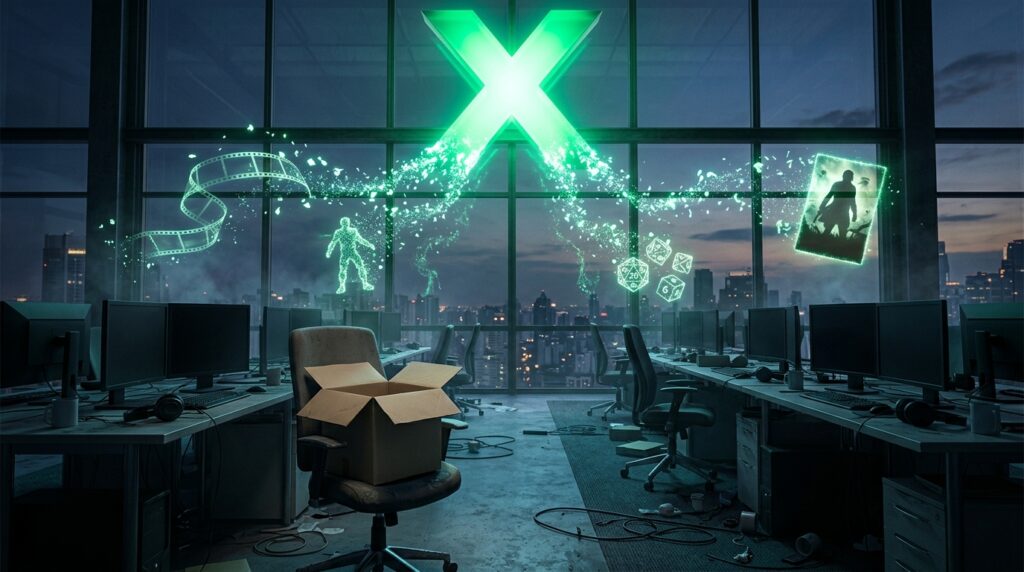
Xbox’s franchise expansion now has its own department. On October 8, 2026, Xbox announced XP, a division led by Kayleen Walters with four lanes: Xbox Pictures for film and television, Xbox Products for consumer goods, Xbox Places for live experiences, and Xbox Partnerships for brand deals. Xbox says games remain at the heart of the brand, and XP is meant to build more ways to experience those game worlds. Walters’s credibility comes from Mojang, where Xbox says Minecraft sales grew from 350 million to more than 425 million units and its merchandising business became one of the world’s top 20.
The timing is the awkward part. PC Gamer reported that Xbox announced XP while laying off thousands of employees who make games, which turns a branding reshuffle into a question about priorities. The template for all this is A Minecraft Movie. The film opened to $157 million domestically and $301 million worldwide in April 2025, on a production cost of $150 million before global marketing. Opening weekends make great headlines. Box-office revenue is not profit, though, and that gap is where the real answer to XP’s value will be found.
TL;DR: Xbox has launched XP, a division led by Kayleen Walters that will stretch its franchises into film, TV, consumer products, live experiences, and brand deals, using Minecraft as the template. The strategy leans on Minecraft’s merchandising success and A Minecraft Movie’s $301 million worldwide opening, though box-office revenue is not profit. Announced alongside thousands of game-developer layoffs, XP’s real test is whether its earnings ever reach the people who make the games.
Microsoft Launches XP to Stretch Xbox Franchises Past Games
Xbox now has a department for turning its games into things you can watch, wear, visit, and sign brand deals around. On October 8, 2026, the company announced XP, a division led by Kayleen Walters. It has four areas: Xbox Pictures, Xbox Products, Xbox Places, and Xbox Partnerships.
Those areas map onto four ways Xbox plans to stretch its franchises past games: film and television, consumer products, partnerships, and live experiences. Each gets its own lane, and each will presumably get its own slide in a presentation somewhere.
The official line is that games stay at the heart of Xbox, and XP exists to build more ways to step inside those game worlds. That sounds reasonable. It also sounds like the sentence every publisher says right before it starts selling lunchboxes.
Walters’s pitch rests on her time at Mojang, the studio behind Minecraft. She is the reason the company thinks it can turn a blocky sandbox into a business that lives well outside the game.
The first live test is already on the calendar. The Atlanta Minecraft Experience: Villager Rescue is scheduled to begin November 20, 2026, and runs about 55 minutes. Public ticket sales start October 21, 2026. Attendees get a code for an exclusive in-game Minecraft cape afterward, which is linked to the Bedrock Edition game. So you pay for nearly an hour of walking around and receive a cape. Fair enough, as long as nobody pretends it’s a deeper gameplay experience.
Partnerships are the other half of the machine. The promotional campaign for A Minecraft Movie involved 45 brands, including McDonald’s, Doritos, Oreo, and Poppi Soda. That is a lot of logos for one movie about a game about blocks.
The scale behind all this is huge. Microsoft reported 500 million monthly active users across gaming platforms and devices in fiscal year 2025. Xbox Game Pass generated nearly $5 billion in annual revenue, and cloud gameplay passed 500 million hours. When a business has numbers like that, it shouldn’t need a movie studio to justify its existence. It wants one anyway, because growth targets don’t care whether the company already has enough players.
The company has done this before on a much bigger scale. Microsoft bought Activision Blizzard in 2023 for $75.4 billion, which the Associated Press described as a major expansion of its gaming business. XP is a smaller bet by comparison, but it follows the same instinct: find more places to sell the same worlds.
The question is not whether XP can make money. It probably can. The question is whether any of that money flows back to the people building the games.
Why Xbox Chose Minecraft as Its Test Case
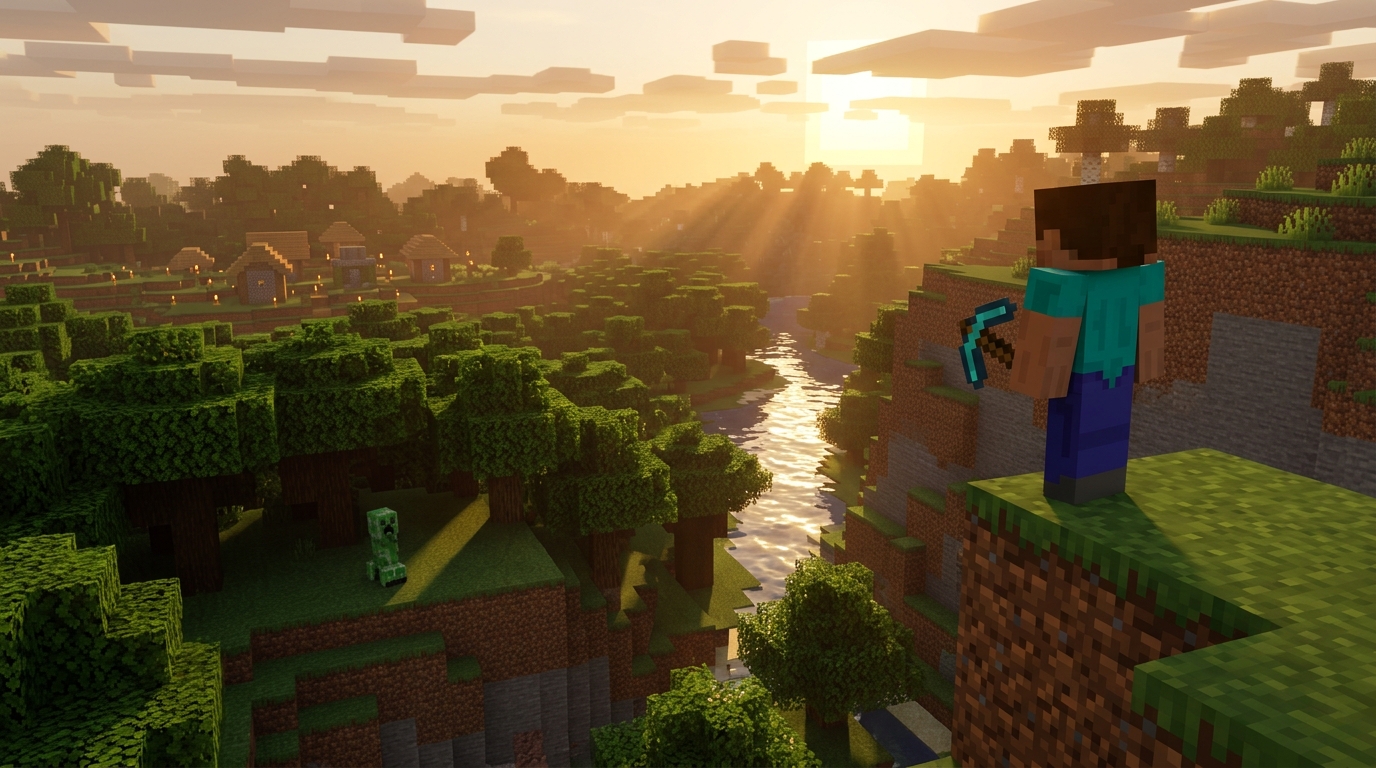
Before XP existed, Xbox already had a franchise that behaved like a franchise. Minecraft is the reason Kayleen Walters gets to pitch a division at all. During her time at Mojang, the company says Minecraft sales grew from 350 million to more than 425 million units, and its merchandising business became one of the world’s top 20. Those are the numbers XP wants you to remember, and they are impressive for a game where the main activity is placing blocks next to other blocks.
The reason it worked is less mysterious than the marketing makes it sound. Minecraft is a game parents trust and kids beg for, and that combination is rare. A family can buy a shared world, a plushie, a lunchbox, and a movie ticket without anyone feeling like they’re being sold something they didn’t ask for. The audience is wide, young, and very willing to keep asking for more Creepers.
That is the blueprint XP is copying. The game sits at the center, the merchandise and film orbit around it, and the live experience gives people a reason to show up in person. The Atlanta Minecraft Experience: Villager Rescue is the smallest version of that idea, a roughly 55-minute walkthrough that ends with a cape code. It’s a clever way to turn a player into a visitor, and it’s also an admission that the company wants the game’s fans to spend money somewhere other than the game.
A Minecraft Movie is the big proof point. Warner Bros. distributed the film, and Legendary Entertainment helped bring it to the screen, with the film’s marketing stretching across dozens of brand partners. Nobody should be shocked that a movie about a blocky sandbox made money. The harder question is whether the franchise got better because of it, or whether the game simply became the warm-up act for a commercial.
Here is the catch. Minecraft is the exception that XP wants to treat as the rule. Most Xbox franchises don’t have a family audience that has been stacking up for years, and most don’t have a merchandising track record that can carry a retail division. Copying the template is easy. Copying the conditions that made it work is the part that takes years, and no slide deck can fake that.
Minecraft’s success came from the game first. The toys and movies followed a world that people already loved playing. If XP treats the games as the source and the merchandise as the reward, Minecraft is a fair model. If the games become the thing that gets less attention while the logos get more, the blueprint is missing its most important piece.
Does A Minecraft Movie Prove the Model Works
A Minecraft Movie is the strongest evidence XP has, and it’s worth looking at closely. Variety reported that the film opened to $157 million domestically and $301 million worldwide in April 2025, the biggest domestic opening for a video-game adaptation. That’s a serious number. It’s also a headline, not a balance sheet.
Box-office revenue is the money tickets bring in at the door. It isn’t what the studio keeps. Theaters take a large cut of every ticket before a dollar gets back to the people who financed the film. What’s left has to cover the production budget, which came to $150 million before global marketing expenses. That last phrase matters. A film that opens in multiple countries at once needs trailers, TV spots, billboards, and online campaigns in each market. Then there are distribution costs, which means getting prints or digital files to thousands of screens. None of those line items were reported as a single figure, so anyone who says the movie was a clean profit is doing math with missing numbers.
Opening weekends are a fine way to measure hype. They’re a poor way to measure whether a business got healthier. A movie can gross an enormous amount and still leave the studio with a modest return once every invoice arrives. The gap between the two numbers is where most of the interesting questions live, and most press releases skip right past it.
Then there’s the promotional campaign, which tells you less about profit and more about reach. The film’s marketing involved 45 brands, including McDonald’s, Doritos, Oreo, and Poppi Soda. Partnerships like these put the franchise on fast food packaging, snack aisles, and drink fridges, which is how a game about stacking cubes becomes something a kid recognizes at a drive-through. That kind of reach is real, and it’s the thing XP is trying to recreate on purpose.
The catch is that reach and profit aren’t the same thing either. A brand can be everywhere and still be expensive to keep everywhere. Every partner campaign, merchandise line, and live event has to earn back its cost, and none of them guarantee that the games get better. Microsoft’s fiscal 2025 performance-stock-award metrics gave Xbox content-and-services revenue growth a 15 percent weight. That tells you what the executives are rewarded for. It doesn’t tell you whether the next Xbox game gets the time, money, or staff it needs.
So does the movie prove the model works? It proves that Minecraft is a rare franchise with an audience that will show up in theaters, buy the snacks, and wear the shirt. It doesn’t prove that every Xbox franchise can follow the same path, and it doesn’t prove the money makes its way back to the studios building the games. A big opening weekend is a great way to sell a division. Whether it sells players a better game is a separate question, and the box office has nothing to say about that.
Live Experiences Bring Ticket Sales and Legal Obligations
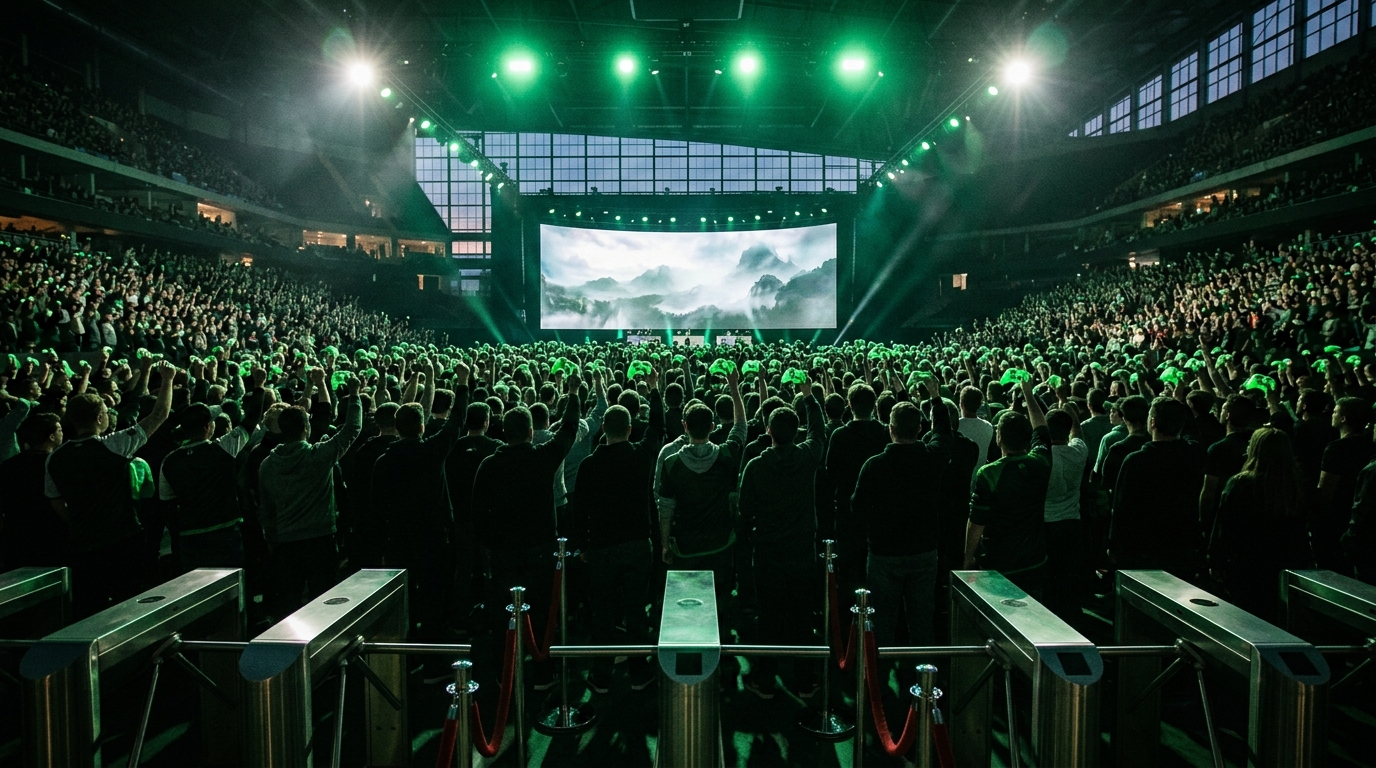
The Atlanta Minecraft Experience: Villager Rescue is the first XP live attraction with dates attached. Public ticket sales were scheduled to start October 21, 2026, and the experience is scheduled to begin November 20, 2026. It runs about 55 minutes, which is long enough that the venue has to plan for people who walk in, move through, and walk out.
That is where the rules start to matter. A ticketed attraction open to the public falls under Title III of the Americans with Disabilities Act, which covers businesses that serve the public. Those businesses cannot shut out people with disabilities. The technical requirements live in the 2010 ADA Standards for Accessible Design, which apply to covered public accommodations and commercial facilities.
In plain terms, the standards cover newly built facilities and altered ones. If a venue is built or renovated for the show, its entrances, routes, and rooms have to meet the accessibility requirements. A themed set doesn’t earn an exemption because it looks like a blocky world. Accessibility is a construction requirement, not a design flourish, and it doesn’t care how good the cape is.
The cape code raises a different set of rules. The Children’s Online Privacy Protection Act, or COPPA, applies to commercial online services directed to children under 13 that collect personal information. The Federal Trade Commission’s COPPA guidance says those services generally need a privacy policy, parental notice, and verifiable parental consent before they collect that information.
Personal information is broader than most people assume. An email address, a name, or a username that identifies a child can all count. So the question isn’t whether the reward is a pixel cape. The question is how the code reaches the attendee. A code printed on a ticket collects nothing. A code that requires an email form, an account login, or a message to a child’s inbox has to pass the COPPA test first.
Verifiable parental consent is the phrase doing the heavy lifting there. It means a service can’t simply ask a kid to click “I’m 12” and call it a day. A parent has to be involved before the child’s details are collected, and the service has to be able to show that process worked.
There’s a quiet irony here. A cape costs almost nothing to produce and gives the company a warm, fuzzy moment for the brand. The compliance paperwork around it is the expensive part, and it’s the part that rarely gets mentioned in a launch announcement. Nobody puts “privacy policy” on a promotional poster.
Parents and players can check a few things without a law degree. Look for a privacy policy on the ticket or code page. See whether the process asks a parent to approve anything before a child’s information is taken. And confirm that accessibility details are published before the November date, since those are the facts a family with a wheelchair user or a child with sensory needs will need to plan a visit.
None of this makes the attraction a bad idea. It makes it a regulated one. The rules exist because kids are a specific audience with specific protections, and a franchise that treats its young fans as a marketing channel has to meet the same standards as everyone else. Whether XP does that well will show up in the details, not the press release.
The Layoffs Sitting Next to the Launch
The timing is the uncomfortable part, and the XP press material would rather you didn’t dwell on it. The same day Xbox unveiled a division built to turn its games into films, products, and walk-through attractions, reports said the company was laying off thousands of employees who make games.
Let that sit for a second. A new department for brand expansion arrived in the same news cycle as cuts to the people whose work the brand depends on. You don’t need a conspiracy theory to see the problem. You just need to notice which of those two stories got a logo.
The bigger picture explains the instinct. Microsoft bought Activision Blizzard in 2023 for $75.4 billion, which made gaming a much larger part of the company. Acquisitions that size come with expectations, and those expectations push toward growth that shows up quickly on a chart. Games take years to build. A licensing deal can be announced in an afternoon.
Then there’s the pay side. Microsoft’s fiscal 2025 performance-stock-award metrics gave 15 percent weight to Xbox content-and-services revenue growth. Executives are rewarded when that number climbs. The metric counts revenue. It doesn’t count a studio shipping a game with the staff it needed, or a team keeping its job after a schedule slips.
Nobody should pretend a franchise expanding is a crime. A movie that sends people back to the game is a fine result. Still, when revenue growth is the scoreboard, the people making the games become the easiest place to find savings. That’s a system choice, not a personal failing of any one executive, and it’s the choice that deserves scrutiny.
The numbers make the question sharper. Microsoft reported 500 million monthly active users across gaming platforms and devices in fiscal year 2025, and Game Pass alone generated nearly $5 billion in annual revenue. That is an enormous audience and a very healthy subscription business. If the money is there, the real question is where it goes. Does it fund the next game’s team, or does it fund the next lunchbox?
Kayleen Walters’s Mojang record is not the problem here. Minecraft is a rare success, and her track record is the reason XP gets taken seriously at all. The problem is the structure around her, where a division can grow quickly while the studios that made the franchise possible are treated as a cost to manage.
So here’s the fair test. If Xbox means it when it says games remain at the heart of the brand, the layoffs are the first evidence that will matter. A franchise that keeps its builders employed, finishes its games, and then sells its world everywhere else is a healthy one. A franchise that cuts the builders to fund the showroom is just a logo with a payroll problem.
Where XP Goes Next and What Players Should Watch

XP launches in October 2026, and that date marks the start of a strategy, not the arrival of finished products. Xbox has a leader and four lanes. It doesn’t yet have a film people have watched, a product line people have bought, or a live show people have attended. So judge the plan by what follows it.
Xbox says games remain at the heart of the brand. Fine. Then the test is simple: are new game releases and updates keeping pace with the film, merchandise, and attractions? If the Xbox Pictures slate grows every quarter while the game calendar stays thin, that line about the heart is decoration.
The Atlanta Minecraft Experience: Villager Rescue is the first live proof point, and it has dates. Tickets go on sale October 21, 2026, and the show begins November 20, 2026. Before either date, check three things:
- Published accessibility details, including entrances, routes, and seating or viewing areas, not just a line saying the venue is accessible.
- A privacy policy attached to the cape code, with a plain answer on whether an email address or account is required to redeem it.
- A parental consent step if redeeming the code collects anything from a child under 13.
If the Atlanta listing skips those details, the next Xbox Places event will probably skip them too. The rules apply to every ticketed event, not just the first one.
Then watch the people. Xbox shouldn’t be allowed to announce a new lane without the studio side of the ledger attached to it. Put every XP announcement on a timeline next to developer headcount reports and studio closures. A closure followed by a licensing deal within weeks tells you what the company values. So does a flagship game that slips while a partnership gets announced on schedule.
Partnerships deserve their own watch. A Minecraft Movie used 45 brands, and XP is built to repeat that kind of campaign. Track how many Xbox Partnerships deals get announced in a quarter, then compare that count with how many game updates shipped in the same quarter. If the deals grow and the updates shrink, the priorities are visible even if the presentation never says so.
The cleanest sign that XP serves players will be boring. A game update lands in the same month as a Pictures or Products announcement, and the team that built the game is still on the payroll to finish it.
Judging XP by What Players Actually Get
Before you spend money on XP, run a simple test on a game you already own. Find the date of its last real content update, not a patch note that fixed a crash, and write it down. Then compare that date with the next XP announcement that lands.
If a kid in your life wants the Atlanta cape, ask one question before tickets go on sale October 21, 2026: does redeeming the code require an email address or an account? If it does, ask whether a parent has to approve it first. A cape costs almost nothing. A child’s personal information is worth a lot more.
Next, ask the Atlanta Minecraft Experience for its accessibility details in writing, covering entrances, routes, and viewing areas. A brochure that says “accessible” is not an answer. A specific answer is. If the venue can’t give you one, you’ve learned something useful before you’ve paid.
Then keep a plain list with two columns. In one, write each XP announcement and its date. In the other, write the updates your favorite Xbox game received in the same months. It takes almost no time, and it will tell you more about where the priorities are than any press release will.