The video game layoffs 2026 story is already ugly, with more than 3,700 verified job losses worldwide and the real number likely above 4,000. That is not a rounding error. Thousands of people have been tossed out while the industry pretends every closure is a “strategic realignment.” I am cutting through the corporate fog to separate confirmed cuts from inflated estimates and conveniently missing details.
The numbers vary because companies disclose layoffs as percentages, bury contractor cuts, or fold gaming losses into broader restructuring announcements. Translation: even the spreadsheet is having a nervous breakdown. Here is what the available evidence actually says about who was affected, why the cuts keep coming, and what this grim mess means for the games still in development.
Key Takeaways
- More than 3,700 video game jobs have been verifiably lost worldwide in 2026, with broader estimates exceeding 4,000. A projection of 14,259 affected roles is significantly less certain because it may include contractors, at-risk positions, and wider restructuring impacts.
- Layoff totals remain difficult to verify because companies report percentages instead of headcounts, bury gaming cuts in broader restructurings, exclude contractors, and quietly close studios.
- Publishers are cutting teams after aggressive hiring, costly acquisitions, oversized budgets, and failed live-service bets. “Strategic realignment” often masks canceled projects, studio closures, and workers bearing the consequences of management decisions.
- The fallout reaches players through delayed releases, canceled features, thinner post-launch support, rougher launches, and weaker experimentation. Developer insecurity is widespread, with 28% of GDC respondents—and 33% of U.S. respondents—reporting layoffs within the previous two years.
Video Game Layoffs 2026 Introduction
Video game layoffs in 2026 have become less of a shocking headline and more of an industry weather pattern, which is an awful way to describe people losing their jobs. As of September 20, conservatively verified cuts have surpassed 3,700 roles worldwide, while broader estimates put the real figure above 4,000. There is no official global registry, so every total comes with an asterisk roughly the size of a live-service roadmap. Some companies report percentages instead of headcounts, while others bundle contractors, support staff, and gaming cuts into wider corporate announcements.
The confirmed damage includes layoffs, studio closures, canceled projects, and reorganizations dressed up as “strategic realignment,” because apparently “we made bad bets” is too honest for a press release. Those decisions can delay games, shrink post-launch support, and leave promising projects trapped in development limbo. A tracker using a broader methodology has projected as many as 14,259 affected roles, but that number should be treated as an estimate, not a clean final count. I will separate verified losses from projections so the numbers do not become another industry magic trick.
Players should care because layoffs rarely stop at the office door. Fewer developers can mean rougher launches, thinner updates, abandoned multiplayer plans, and talented teams scattered just as they find their rhythm. Layoffs can also make the industry more cautious, pushing publishers toward familiar franchises while riskier, more interesting games get treated like suspicious packages. This breakdown focuses on what actually happened in 2026, who was affected, and which business decisions are quietly reshaping the games we will, or will not, be playing next.
2026 Layoff Totals And Tracking Problems
The most defensible 2026 total currently sits above 3,700 verified job losses worldwide, but that number is a floor, not a victory lap. Broader estimates push the figure past 4,000 once quiet studio closures, unreported reductions, and less tidy announcements enter the picture. A separate year-end projection lists 14,259 affected roles, though “affected” can include people at risk, contractors, or positions swept up in restructuring plans rather than confirmed layoffs. In other words, the spreadsheet is doing more storytelling than some executive press releases.
The totals disagree because the industry has no official layoff registry and apparently prefers counting jobs like a loot drop with missing items. Some companies announce percentages instead of headcounts, leaving trackers to estimate how many people were actually shown the door. Others bury gaming cuts inside wider corporate layoffs, while contractors may disappear from a project without appearing in employee numbers at all. Quiet closures create another blind spot, since a studio can effectively vanish before anyone publishes a neat final number.
I treat the 3,700-plus figure as the hard evidence and the 4,000-plus estimate as the more realistic warning sign. The 14,259 projection is useful for showing how severe the damage could become, but it should not be presented as a confirmed body count. For players, these distinctions matter because layoffs can mean delayed releases, canceled projects, thinner post-launch support, and familiar studios reduced to a logo on an old trailer. Behind every number is someone who lost a job, and behind every vague percentage is usually a spreadsheet trying very hard not to make that obvious.
Major Studio Closures And Publisher Cuts
By September 20, 2026, at least 3,700 game workers had lost their jobs worldwide, with broader estimates putting the real number above 4,000. One year-end tracker projects 14,259 affected roles, but the industry still lacks a proper global registry, because apparently counting human beings is harder than counting microtransactions. The gap exists because publishers report percentages, hide contractor cuts, or bundle game layoffs into wider corporate restructuring. That uncertainty is more than a bookkeeping problem, since every quiet closure can erase a team, a project, and years of work without a clear public explanation.
The biggest pattern is familiar and still rotten: publishers chased live-service jackpots, spent heavily on acquisitions, then treated development teams like replaceable stock when the numbers failed to perform. Canceled projects and shuttered studios reveal how little patience executives have for games that need time to find an audience, especially after budgets ballooned into blockbuster ransom notes. Restructuring can sound tidy in a financial presentation, but to developers it often means a canceled game, a severance email, and a portfolio of unfinished work that will never see daylight. Players feel the damage too, through fewer experimental releases, abandoned updates, and online games that launch with a countdown clock hidden behind the welcome screen.
I see these cuts as a warning about who gets protected when the business model breaks, and it usually is not the people making the games. Executives can blame market conditions, shifting player habits, or “strategic realignment,” but those phrases do not explain why ambitious bets were approved without a realistic exit plan. The lesson from the 2026 layoffs is not that games are too risky. It is that publishers kept putting the risk on workers while keeping the rewards at the top. Until companies stop treating studios as disposable inventory, every glossy acquisition announcement will come with the faint smell of an impending closure.
GDC Data And Developer Reality
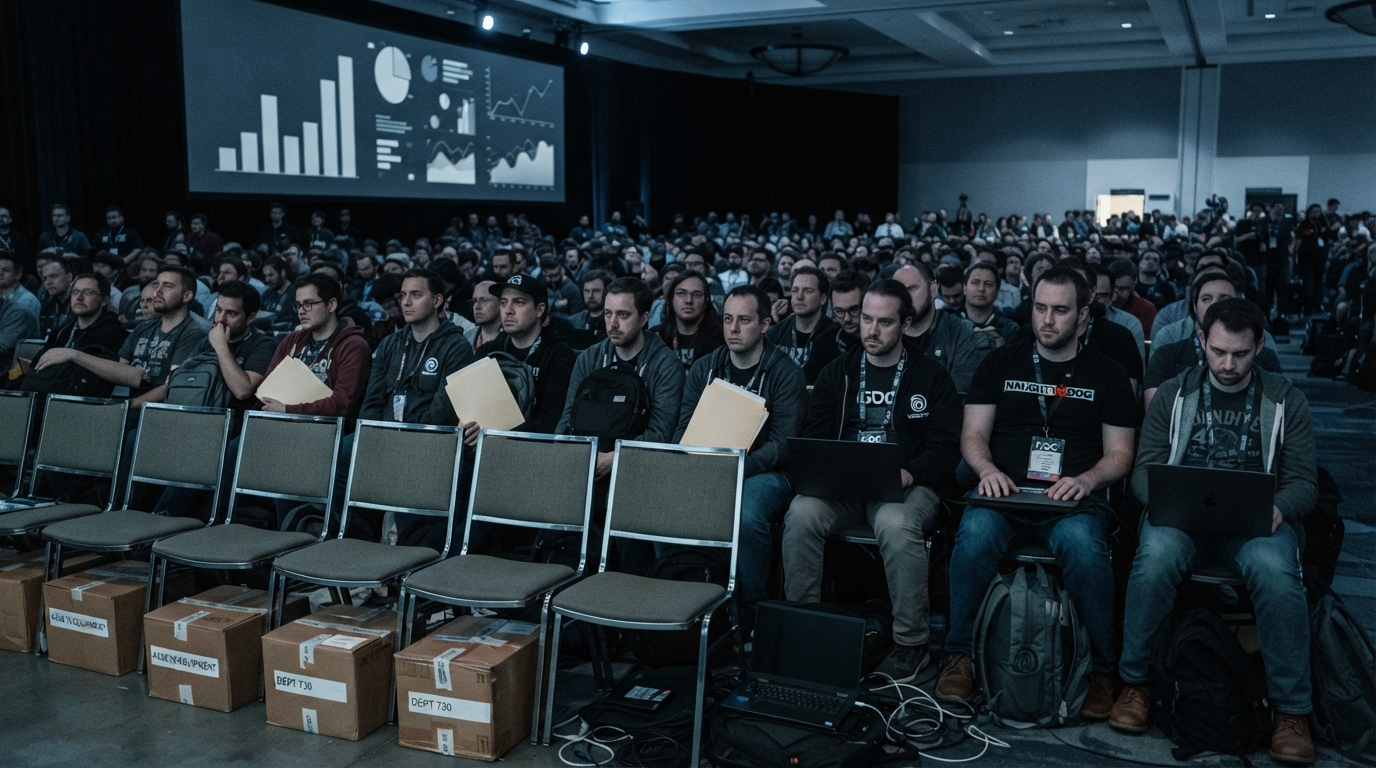
The 2026 GDC survey puts a number on what developers have been feeling in their bones: 28% of GDC respondents said they had experienced layoffs within the previous two years, rising to 33% among U.S. respondents. That is not a minor wobble in an otherwise healthy business. It is a huge chunk of the workforce being told their job was apparently an optional feature. The figure covers a two-year window rather than layoffs in 2026 alone, but it still shows how deeply job insecurity has settled into everyday development. Behind every percentage is someone watching a project shrink, a team disappear, or a carefully built career get treated like an inconvenient line item.
The damage does not stop when the email arrives, either. Smaller teams inherit the work of vanished departments, deadlines remain stubbornly enormous, and burnout becomes the unofficial project manager. Developers are expected to stay passionate while wondering whether the next milestone will be followed by a severance package, which is a difficult emotional balancing act when the reward for shipping is sometimes getting removed from the credits. Players feel the effects through delayed releases, canceled features, rough launches, and games that clearly needed six more months and a functioning human being to supervise them.
Then comes the increasingly grim ritual of updating a portfolio after being fired. Former developers polish screenshots, rewrite credits, and turn years of labor into a neat personal website, hoping an algorithm notices before another studio makes the same cuts. I have no issue with portfolios, but treating them as emergency flotation devices for an industry that keeps drilling holes in its own boat is absurd. The GDC figures make that reality harder to dismiss, because layoffs are not isolated scandals anymore. They are part of the background noise surrounding nearly every major release.
What 2026 Layoffs Mean For Players
Video game layoffs in 2026 are not just an industry spreadsheet problem, because players feel the cuts every time a release slips, a promised feature vanishes, or a launch arrives held together with digital duct tape. More than 3,700 job losses have been conservatively verified worldwide, with broader estimates putting the real figure above 4,000 as quiet closures and unreported reductions fill in the gaps. Fewer developers usually means less time for testing, polish, accessibility work, and the unglamorous server maintenance that keeps an online game from collapsing like a badly assembled loot box. The result can be delayed releases, thinner updates, slower bug fixes, and multiplayer stability that makes a loading spinner feel like a recurring character.
Players should also separate unavoidable financial pressure from management decisions that were avoidable from the start. Rising development costs, weaker sales, canceled projects, and investor demands can create genuine problems, but “the market was difficult” is not a magic spell that absolves executives of overexpansion, reckless acquisitions, or launching unfinished games. When a studio cuts staff immediately after demanding years of overtime for an unrealistic project, that is not weather. That is somebody steering the boat into the iceberg and blaming the ocean. I care less about polished statements promising “strategic alignment” than whether the people who built the game are still there to fix it.
Smaller studios face the sharpest danger because losing even a handful of specialists can turn a workable team into a skeleton crew with a logo. That can mean ambitious games being scaled back, post-launch support ending early, or promising developers abandoning the industry before they get another chance to make something great. Still, layoffs do not automatically doom every project, since focused teams can sometimes cut bloated plans and ship smarter games with better priorities. The warning sign is when cost-cutting reaches the people doing the actual work while bloated leadership remains comfortably insulated, because players can recognize the difference between a lean studio and a studio being hollowed out.
Video Game Layoffs 2026 Conclusion
As of September 20, 2026, the conservatively verified total for video game layoffs sits above 3,700 jobs worldwide. Broader estimates put the real figure above 4,000, while one alternative projection counts 14,259 affected roles. Those numbers are not interchangeable, because the industry still lacks a reliable global registry and companies keep their reporting as tidy as a corrupted save file. Contractors may be excluded, percentages may replace headcounts, and quiet studio closures can vanish from the public record entirely. The honest takeaway is simple: every total is a floor, not a final score.
The human cost is larger than any spreadsheet can show, because each “role eliminated” represents someone losing income, stability, health coverage, or a team they helped build. For players, the fallout usually arrives later and wearing a familiar disguise, with delayed releases, canceled projects, thinner updates, and support teams stretched until the game starts wheezing. I will be watching for studios that communicate clearly, protect teams before resorting to cuts, and treat developers as skilled people rather than numbers to delete during a quarterly panic attack. A polished investor statement does not make a mass layoff humane.
My final takeaway on video game layoffs in 2026 is that players should judge companies by what happens after the headline, not by how many times they say “strategic realignment.” Watch which promised games slip, which projects disappear, and which live-service titles lose the staff needed to keep them functional. Also watch for companies that preserve teams, offer meaningful support, and explain their decisions without hiding behind fog-machine corporate language. The best industry moves will be the ones that keep making good games while treating the people who make them like people.
2026’s Layoffs Aren’t Slowing Down
Video game layoffs in 2026 have not slowed into a tidy little footnote. As of September 20, at least 3,700 jobs have been verifiably lost worldwide, while broader estimates put the real figure above 4,000 and one year-end projection reaches as high as 14,259 affected roles. The numbers vary because companies disclose cuts inconsistently, contractors often vanish from the spreadsheet, and studio closures can happen quietly before anyone issues a polished statement about “strategic alignment.” I see the pattern clearly enough: the industry is still correcting years of aggressive hiring, bloated production plans, and risky bets that treated every game like it needed to become a permanent theme park.
Players feel the damage long after the press release disappears, through delayed launches, canceled projects, smaller support teams, and games released before they are properly finished. That does not mean every troubled project deserves endless funding, but it does mean workers are paying for decisions they rarely control, while audiences get fewer chances to discover something genuinely interesting. The best response is to judge publishers by how responsibly they manage people and projects, not by how enthusiastically they describe the next round of cuts. Until the industry stops treating experienced developers like disposable hardware, video game layoffs in 2026 will remain less a temporary correction than a warning siren with a quarterly earnings report stapled to it.