
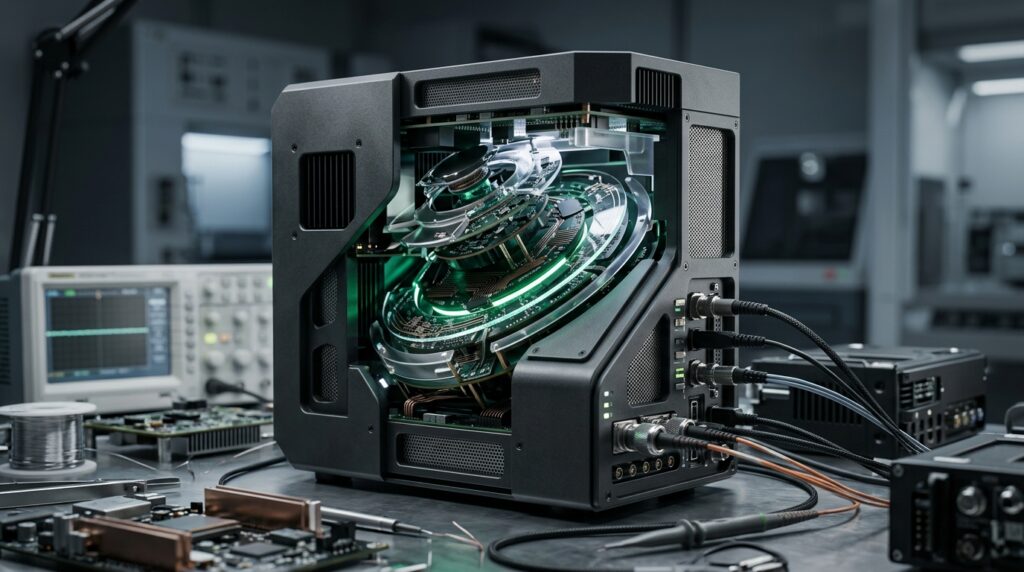
The latest Project Helix update is solid, but hardly launch-day fireworks. Alpha hardware is scheduled to ship to developers in 2027. According to the platform holder’s March 11 announcement, the next-generation console is being built to play both console games and PC games. I’m keeping the hype leash short, because there’s still no public launch date, price, final design, hardware specification, or confirmed game lineup.
More consumer-facing details are expected later in 2026, but the June showcase came and went without a Helix reveal. That leaves us with a promising hybrid console concept and a suspiciously large pile of unanswered questions. For now, Project Helix is real, active, and nowhere near ready to invade your entertainment cabinet.
TL;DR: Project Helix is real and in active development, with alpha hardware shipping to developers in 2027 for a next-generation console designed to run both console and PC games. A consumer launch date, price, design, specifications, and game lineup remain unannounced, so Helix is a promising hybrid concept, not a retail-ready console.
Helix Alpha Hardware Arrives In 2027
Project Helix’s next confirmed milestone is alpha hardware shipping to developers in 2027. The platform holder announced that timeline on March 11, 2026, describing Helix as its next-generation, first-party console. That means developers will get early hardware to build and test games, not that shoppers can start measuring their TV cabinets. I’m treating 2027 as a development milestone, not a secret retail launch date wearing a fake moustache.
The bigger idea is Helix’s planned console and PC focus, with the platform holder aiming for one machine that can handle both types of games. That could make the platform more flexible, but it also raises obvious questions about the operating system, compatibility, performance targets, and how much of the PC experience players will be expected to tolerate. The company has not confirmed a consumer launch date, price, final design, hardware specifications, or launch lineup. Until those details arrive, anyone presenting Helix as a fully defined product is filling in the blanks with optimism and possibly a suspicious amount of fan art.
As of August 16, 2026, Helix remains in active development, and the platform holder has indicated that more consumer-facing information will arrive later in 2026. The June showcase did not include a Helix reveal, so there is still no retail announcement hiding behind the 2027 developer schedule. My takeaway is simple: the project is real, the alpha hardware date is real, and the rest is still wrapped in corporate fog. That is progress, but it is not yet a new console launch.
Console And PC Games Under One Roof
Project Helix remains in active development, with alpha hardware scheduled to begin shipping to developers in 2027, according to the platform holder’s March 11, 2026 update. The company has confirmed that its next-generation console is being designed to run both console games and PC games, making the old console-versus-computer divide look increasingly like paperwork nobody bothered to recycle. I still do not know the consumer launch date, price, final specifications, retail design, or launch lineup. More consumer-facing details are planned for later in 2026, but the June showcase did not provide the big Helix reveal some fans were waiting for.
The hybrid approach could make game libraries far less fragmented, especially if purchases, saves, achievements, and backward compatibility carry cleanly between console and PC. It may also give players more freedom over storefronts, settings, peripherals, and performance, although the platform holder has not explained exactly how those systems will work on Helix. That missing detail matters, because “PC games on a console” can mean convenient access or a settings menu with the emotional warmth of a tax form. I am watching for clear answers on whether existing console games will run natively, whether PC releases need separate purchases, and how the company plans to keep the experience simple from the sofa.
For traditional console players, deeper PC integration is both the most exciting and most potentially annoying part of Project Helix. A flexible machine could offer broader compatibility and a larger library without forcing everyone to become their own unpaid technical-support department. The risk is that Helix becomes a small gaming PC wearing a console badge, complete with confusing storefront rules, inconsistent interfaces, and the occasional driver-shaped headache. Until the platform holder shows the hardware and explains the software layer, I see a promising direction rather than a finished product, which is a polite way of saying the brochure has arrived before the console.
Custom Silicon And Missing Helix Details
The platform holder has confirmed that Project Helix will use a custom system-on-chip from a major semiconductor partner, with alpha hardware scheduled to ship to developers in 2027. The March 11 announcement also described Helix as a next-generation console built to run both console games and PC games, making the old console-versus-PC boundary look increasingly like a suggestion. That is the strategy the company has shared, not a secret hardware spec sheet smuggled out of a lab. Everything beyond those broad details remains unannounced.
The major blanks are still the ones that matter when deciding whether to care, save, or start selling spare furniture. The company has not revealed Helix’s price, final retail design, consumer launch timing, or launch-game lineup. The June showcase did not provide a Helix reveal, although the platform holder has indicated that more consumer-facing information will arrive later in 2026. Until then, anyone presenting exact performance figures or a locked release window is seasoning an empty plate with rumor dust.
For now, Helix is best understood as an active project with a clear direction and a suspicious amount of fog around the destination. The custom chip suggests the platform holder is shaping hardware around its hybrid console and PC ambitions, but it tells us nothing definite about power, thermals, storage, or the size of the box under the television. I’ll treat those details as unknown until the company puts them on the record, because inventing a launch lineup before one has been announced is not analysis. It is fan fiction with a GPU budget.
Console Strategy Takes Shape
As of August 16, 2026, Project Helix remains in development, with alpha hardware scheduled to ship to developers in 2027. The platform holder did not reveal Helix during the June 2026 showcase, so the promised consumer-facing update is still somewhere in the corporate fog machine. There is no public launch date, price, final design, hardware specification, or launch-game lineup yet. I would normally call that a thin update, but at least “not ready to show” is more honest than pretending a logo counts as a console.
The March 11 announcement described Helix as a next-generation first-party console built to run both console games and PC games. That points to a broader strategy of making the two platforms feel less like separate ecosystems and more like two doors into the same room. The idea is sensible: fewer artificial walls, wider access to games, and less time spent figuring out which version of a title your hardware is allowed to understand. It also raises the obvious question of what makes a console a console when it is expected to behave like a gaming PC with better marketing.
For now, Helix is more strategic promise than consumer product, which is a polite way of saying the platform holder has given us a direction but not much to put on a shelf. The 2027 developer-hardware milestone suggests the company is still working through the unglamorous details before showing the machine properly. More consumer information is expected later in 2026, but the June showcase made clear that “later” did not mean “now.” I’ll be watching for specifics rather than vibes, because the future of this platform needs fewer grand statements and more answers about what players are actually buying.
Helix Exists, But It’s Not Buyable
Project Helix is real, active, and still nowhere near a product you can pre-order. The March announcement confirmed that alpha hardware is scheduled to ship to developers in 2027, but the platform holder has not revealed a consumer launch date, price, final design, or launch-game lineup. That makes the project more than a vague concept, but less than something shoppers can sensibly judge. Right now, buying advice would be like reviewing a restaurant using only the architect’s napkin sketch.
The interesting part is the plan to make Helix play both console games and PC games, continuing the push to blur the line between the two platforms. That could be genuinely useful if it produces a simple, coherent experience instead of another settings maze dressed up as innovation. The company said more consumer-facing information would arrive later in 2026, yet the June showcase passed without a Helix reveal. The silence is not proof of trouble, but it does leave the platform holder asking customers to get excited about a machine that currently exists mostly as a promise with a codename.
For now, the practical takeaway is patience, not pre-order panic. The next meaningful Project Helix update needs to explain the consumer timetable, hardware design, pricing strategy, and how this console that also wants to be a PC will work in everyday use. If it makes switching between console and PC games painless, Helix could be a smart evolution rather than another menu system wearing a trench coat. Until the platform holder shows the hardware and explains the catch, I would keep my wallet safely holstered and my skepticism fully charged.