
One brand, six ways to play: the Xbox multiplatform strategy is turning console exclusivity from a fortress into a suggestion. Xbox games now stretch across consoles, PC, cloud, handhelds, and rival hardware, because selling games to more people is apparently better than guarding them in a digital basement. I see the logic. The real prize is no longer the box under your TV, but the account, community, cross-save, cloud access, and Game Pass ecosystem wrapped around it.
That does not mean every blockbuster is escaping the Xbox fence. Multiplayer hits, established franchises, and games desperate for a bigger audience are the obvious travelers, while select exclusives still have to justify buying the hardware. The result sounds contradictory until you follow the money: Xbox wants to sell consoles, but it really wants to own the relationship wherever you play.
Key Takeaways
- Xbox is shifting from a console-first business to a cross-platform ecosystem built around games, Game Pass, cloud access, cross-save, achievements, and a shared account identity.
- The multiplatform strategy is selective: multiplayer titles, live-service games, established franchises, and community-dependent releases are more likely to reach rival platforms, while select prestige games remain exclusive to drive hardware demand.
- The 2024 releases of Sea of Thieves, Grounded, Hi-Fi Rush, and Pentiment tested whether broader audiences could increase software revenue and strengthen communities without undermining Xbox’s identity.
- Wider availability can grow revenue, subscriptions, and multiplayer populations, but it also weakens the console’s purpose; Xbox hardware must remain the best or most compelling way to experience the ecosystem.
The Four Game Multiplatform Experiment
Four previously Xbox-exclusive games became the February 2024 experiment in selling the fence instead of guarding it: Sea of Thieves, Grounded, Hi-Fi Rush, and Pentiment crossed onto rival consoles. That was not a sudden attack of generosity. It was a test of whether bigger audiences could produce more software revenue without weakening Xbox’s identity. Each game was chosen for its multiplayer pull, broad appeal, or obvious critical value. Sea of Thieves was the loudest trial because a shared pirate sandbox only gets better when more pirates show up, although it also gets worse when someone steals your treasure and logs off.
The experiment challenged the old idea that an Xbox game is valuable mainly because it gives people a reason to buy an Xbox. In this model, the game can earn money and build a community on more hardware, while Xbox keeps the larger relationship through Game Pass, cloud access, cross-play, cross-save, and account identity. Exclusivity becomes less like sacred law and more like a tool used when it serves the business. The question was never simply whether Grounded or Pentiment deserved wider audiences, because obviously they did. The real question was whether Xbox could expand its reach without turning its own console into an expensive plastic shortcut to the settings menu.
By 2026, the answer looks selective rather than absolute. Xbox is becoming a platform that follows players across console, PC, cloud, and other devices, while some major releases still have to carry the hardware brand. The broader strategy favors multiplayer games, established communities, and titles that benefit from every extra player, while keeping certain projects positioned as reasons to stay inside the Xbox ecosystem. That gives the company more ways to sell games, subscriptions, and services, but it also creates a branding problem that cannot be patched with a cheerful dashboard update. If the best Xbox experience is no longer tied to an Xbox console, the audience may grow while the box that gave that audience its name quietly dissolves.
Xbox Exclusivity Gets Selective

The Xbox multiplatform strategy now treats exclusivity like a spice rack, not a religion. Multiplayer games, live-service titles, established franchises, and games that need enormous communities are the most likely to appear on rival consoles, while Xbox keeps selected releases such as Gears of War: E-Day and Clockwork Revolution behind its hardware wall. The valuable product is no longer just the box under your television, but the Xbox account, Game Pass library, cloud access, cross-save, and social network that follow you around. That broader approach is increasingly visible across console, PC, cloud, and handheld devices. The old exclusivity playbook is not dead, but it has been demoted from king to middle management.
| Game type | Likely strategy | Why it matters |
|---|---|---|
| Multiplayer and live-service games | More likely to launch on rival platforms | Larger player pools mean healthier matchmaking and longer revenue tails |
| Established franchises | More likely to expand beyond Xbox | Recognizable brands can earn more by reaching players everywhere |
| Community-hungry new games | Broad availability is favored | A multiplayer game with no players is just an expensive menu screen |
| Selected prestige releases | Remain Xbox console exclusives | They give the hardware and Game Pass a reason to exist |
That distinction matters because it answers the uncomfortable question hiding under the strategy: what is an Xbox actually selling in 2026? If every game eventually escapes to another screen, the console risks becoming a particularly stylish access point for services the company wants everywhere. On the other hand, keeping games like Gears of War: E-Day and Clockwork Revolution exclusive gives Xbox hardware a few sharp teeth instead of turning it into a branded HDMI cable. I think the selective approach is smarter than locking every release in a vault, but it only works if the remaining exclusives are genuinely excellent, not merely available on one machine. Expand access, absolutely, but do not quietly dissolve the console brand and then act surprised when nobody knows what the box is for.
Xbox Becomes A Cross-Platform Ecosystem
Nearly 5,000 Xbox-related jobs were reportedly cut during the 2026 restructuring, a grim backdrop for a strategy that says Xbox is bigger than a plastic box under the television. The Xbox multiplatform strategy now pushes first-party games across console, PC, cloud gaming, and handheld-friendly devices wherever the audience happens to be hiding. That is not charity. It is a sales funnel with better lighting: sell the game, the Game Pass subscription, and the account instead of demanding a hardware purchase first. The shift reflects a broader effort to expand Xbox’s commercial reach while trimming its traditional console assumptions.
The real product is increasingly the Xbox identity, with cross-save, achievements, friends, cloud access, and Game Pass following players from a living-room console to a laptop or handheld device. That makes hardware less of a locked gate and more of an especially expensive doorway, which is probably progress unless you enjoy buying the same game three times to keep your save file alive. Xbox can still reserve some major releases for its hardware, particularly when a game is meant to sell consoles or subscriptions, while putting multiplayer and audience-driven titles on more platforms. The result is a selective strategy, not an extinction notice for exclusives. Xbox wants the community to feel permanent even when the hardware becomes optional.
That flexibility expands access, but it also creates the uncomfortable question of whether the Xbox brand is being strengthened or quietly dissolved. If every screen can become an Xbox screen, the company gains reach, recurring revenue, and a larger multiplayer population, but the console loses some of its reason to exist. My blunt takeaway is this: Xbox may no longer need to sell every player an Xbox console if it can sell that player an Xbox account, subscription, game, and place in the community. In 2026, owning an Xbox could mean owning the ecosystem, not necessarily the box. That is excellent news for players and mildly terrifying news for anyone whose entertainment center has already become a shrine to HDMI cables.
The Console Brand Problem
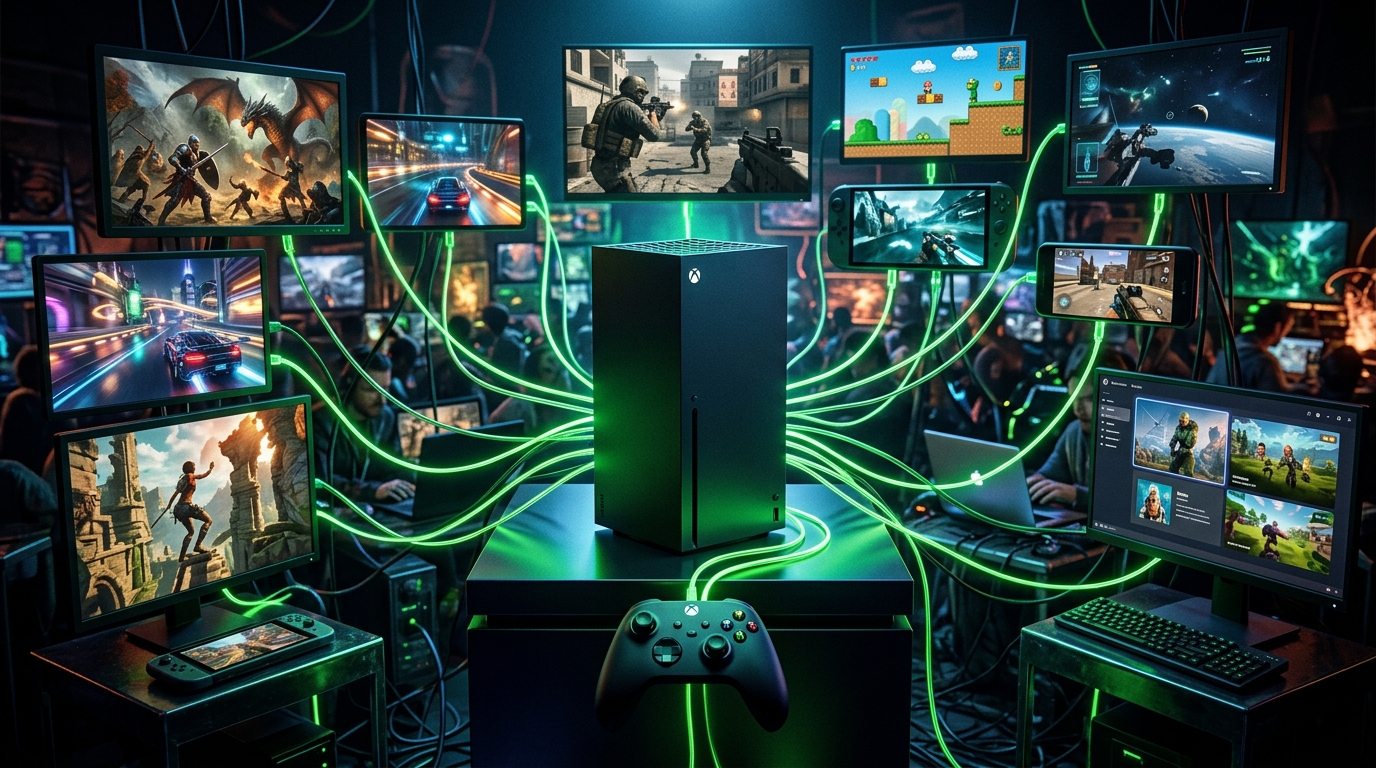
Xbox now stretches across four major access points: console, PC, cloud, and handheld or mobile devices. That is excellent news for players and slightly terrifying news for the box itself. The 2026 Xbox multiplatform strategy treats Game Pass, cross-save, cloud access, and a shared identity as the real moat instead of locking every game behind one piece of hardware. I understand the logic: more screens mean more players, more multiplayer matches, and more chances to sell subscriptions or games. The problem is that a console is not just a delivery pipe. It is the reason someone spends hundreds of dollars on the pipe. If Xbox keeps removing the reasons to own one, the hardware risks becoming the gaming equivalent of a decorative bread basket: present, harmless, and mostly useful for confusing guests.
| Factor | Potential upside | Potential downside |
|---|---|---|
| Game Pass growth | More devices can mean more subscribers and lower friction. | If access is everywhere, the console may feel optional. |
| Software sales | A larger audience can turn strong games into bigger earners. | Fewer exclusive purchases weaken hardware appeal. |
| Multiplayer population | Cross-platform communities make games healthier and harder to abandon. | Xbox becomes less essential to finding a full server. |
| Publisher confidence | A broad audience makes Xbox a safer place to launch. | Publishers may prioritize reach over Xbox-specific investment. |
| Console identity | Xbox can stand for access, continuity, and convenience. | Convenience is not always a compelling reason to buy a box. |
| First-party differentiation | Selective exclusives can still create genuine hardware pull. | Too few standout exclusives make the lineup feel interchangeable. |
| Hardware value | The console remains the simplest, most dependable Game Pass machine. | It risks becoming an expensive decorative bread basket. |
My verdict is that the strategy works only if Xbox hardware remains the best version of the Xbox experience, not merely one version among many. That means faster access, better performance, meaningful exclusive features, and a first-party lineup with enough personality to make ownership feel like a choice rather than a clerical error. Broader availability can grow revenue, multiplayer populations, and publisher confidence, but those gains are not free. Every game released elsewhere spends a little of Xbox’s hardware identity, and the company needs to know how much currency is left in the jar. If the answer is “the subscription is the product now,” fine, but then Xbox is no longer primarily a console brand, and it should stop pretending the plastic box is the main character.
Xbox’s Console Kingdom Goes Multiplatform
Nearly 5,000 employees were reportedly affected by July 2026 cuts across Xbox commercial and sales teams, a grim reminder that this strategy is about efficiency as much as access. Xbox is no longer treating the console as the entire kingdom, but as one useful doorway into a larger platform built around PC, cloud gaming, Game Pass, cross-save, and a shared account. That is not a total surrender of exclusives, because some major releases still need to make the hardware feel special. It is also not a traditional console comeback, because Xbox increasingly wants its games in as many hands as commercially sensible. The old “buy this box or miss out” pitch is being replaced with “play here, there, or somewhere else, just stay in the Xbox ecosystem,” which is less romantic but probably more practical.
I think that makes Xbox’s future both smarter and shakier. Wider availability can grow communities, make multiplayer games healthier, and give players fewer reasons to uninstall something they actually enjoy, while Game Pass and cloud access turn the brand into a service rather than a plastic rectangle under the television. The catch is obvious: if Xbox works almost everywhere, the console must offer enough speed, value, convenience, or exclusive software to remain essential instead of becoming the expensive optional accessory nobody dusts. The company is betting that the Xbox platform can survive even when the Xbox machine is no longer the only place to find it. By 2026, the real question is not whether Xbox has abandoned exclusives, but whether players still feel they are buying into a destination rather than merely renting a familiar logo from whatever screen is nearest.