
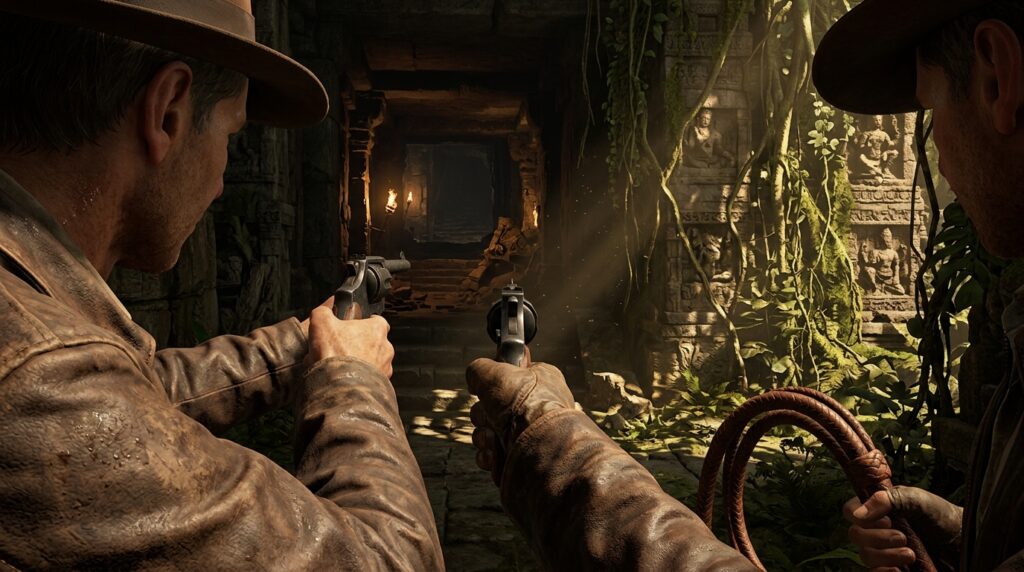
Dust off your fedora and try to ignore the creak in your knees, because Indiana Jones and the Great Circle is finally here to prove that whip-cracking isn’t just for circus performers and people with very specific hobbies. Set right between the movies that actually mattered, the developers have handed us a first-person adventure that manages to make 1937 look less like a history lecture and more like a high-stakes fistfight. It’s a bold move putting us behind Indy’s eyes, but seeing Troy Baker do his best “grumpy young Harrison Ford” impression while you punch Nazis in the face is exactly the kind of therapy the doctor ordered.
With over 4 million players already digging through the dirt, it’s clear I’m not the only one who missed a good old-fashioned globe-trotting mystery. This isn’t some lazy cash-in designed to rot on your hard drive; it’s a punchy, cinematic brawler that respects the source material enough to actually be fun. Whether you’re playing on Xbox or waiting for the eventual rollout on other consoles, the verdict is simple: it’s time to find out if you’re actually a legendary archaeologist or just a guy who’s really good at falling into spike pits.
Key Takeaways
- The first-person perspective transforms the iconic whip into a manual, tactical tool for snapping ankles and disarming enemies rather than a scripted cinematic animation.
- Set in 1937 between Raiders and Last Crusade, the narrative captures the authentic pre-war tension and globetrotting scale of the original film trilogy.
- Combat prioritizes visceral, desperate brawling and environmental interaction over generic gunplay, forcing players to use fists and objects to survive high-stakes encounters.
- Troy Baker delivers a grounded performance that successfully channels the academic brilliance and scruffy charm of a young Harrison Ford.
First Person Combat And The Whip Mechanic
The developers made a bold call by locking us into first person, but it is the only reason the whip feels like a legitimate tactical tool instead of a scripted animation. When you are looking through Indy’s eyes, the whip becomes a versatile extension of your reach that requires actual intent to master. You aren’t just tapping a button to watch a canned cinematic play out from a distance. Instead, you are manually snapping ankles to trip charging guards or snatching rifles right out of their hands before they can get a shot off. It transforms the iconic weapon from a cosmetic gimmick into a precision instrument that makes the environment your playground.
The combat shines brightest when you put the guns away and lean into the messy, desperate scrap of a fistfight. Most adventure games turn into generic third person shooters the second a pebble drops, but this game understands that Indy is a brawler who wins by the skin of his teeth. Punching Nazis feels weighty and impactful, forcing you to use the environment to gain an upper hand rather than hiding behind a crate for twenty minutes. There is a visceral satisfaction in parrying a strike and following up with a heavy right hook that a boring headshot simply cannot replicate. It captures that classic cinematic chaos where every fight feels like a frantic struggle for survival.
Choosing this perspective was clearly a move to distance the experience from the mindless gunplay that plagues modern action titles. By forcing you into the thick of the fray, the team ensured that every encounter feels personal and high stakes. You can’t just spray bullets from across the room and call it a day when the game constantly pushes you to get creative with your surroundings. Whether you are smashing a bottle over a guard’s head or using the whip to swing into a group of enemies, the gameplay remains consistently engaging. It is an unapologetic stance on how an Indy game should play, and frankly, it is exactly the shakeup the genre needed.
Exploring The Great Circle Narrative Map
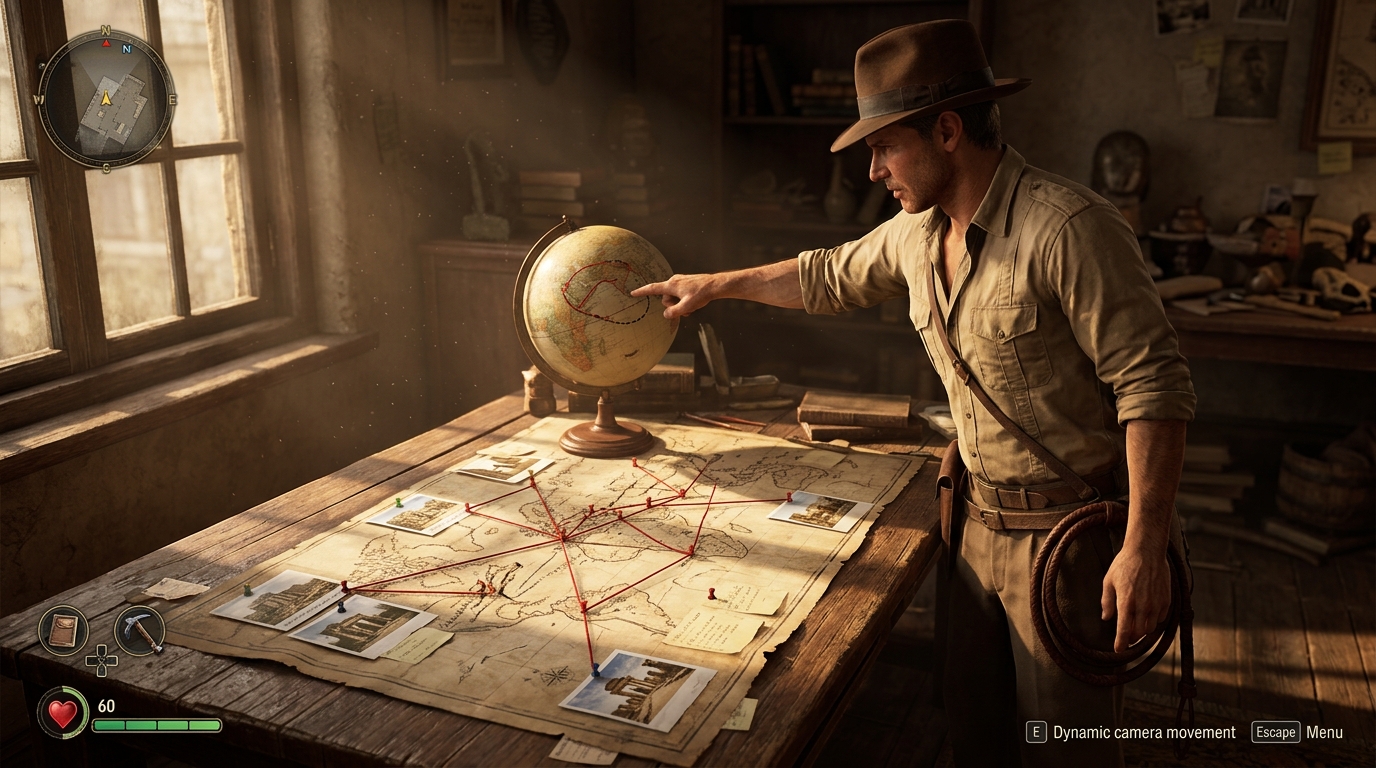
The Great Circle drops us right into 1937, wedging itself perfectly between the gritty charm of Raiders and the father-son therapy session that was Last Crusade. The studio clearly understood the assignment because traveling from the dusty halls of the Vatican to the freezing peaks of the Himalayas feels exactly like the globetrotting chaos we grew up watching. It is a relief to see a narrative that does not feel like a cheap imitation but rather a missing chapter of Indy’s prime years. The game manages to capture that specific brand of pre-war tension where every shadow hides a fascist with a bad haircut and an obsession with the occult. You can practically smell the old parchment and airplane fuel as the map unfolds across your screen.
I know what you are thinking because I thought it too, seeing Indy through a first-person lens sounds like a recipe for a motion sickness disaster or a generic shooter. However, being stuck right behind those iconic spectacles actually makes the scale of the environments hit harder. When you are dangling off a ledge in a remote temple, the perspective forces you to appreciate the sheer verticality of the world in a way a zoomed-out camera never could. It turns out that seeing the world through Indy’s eyes makes the fistfights feel more personal and the whip-cracking feel less like a gimmick. It is a bold choice that pays off by making you feel like the protagonist rather than just his chaperone.
The narrative map is not just a list of levels to check off, it is a cohesive journey that respects the intelligence of the audience. Moving between these massive, open-ended hubs allows the story to breathe without losing the breakneck pace of a classic Saturday morning serial. Whether you are deciphering codes in a sun-drenched courtyard or sneaking through a Nazi camp, the transition between locations feels earned and atmospheric. Troy Baker does a surprisingly decent job of channeling that specific brand of Harrison Ford grumpiness without it becoming a parody. It is a genuine bridge between the films that proves first-person adventure can handle a legendary IP without dropping the ball.
The Art Of Nazi Smashing
The development team has spent the last decade perfecting the art of turning fascists into fine paste, so they were the only logical choice to handle Indy’s latest globetrotting excursion. While some skeptics worried that a first-person perspective would feel disconnected, the creators have successfully translated their signature punchy combat into something that feels uniquely archaeological. You aren’t just watching a cinematic hero do the work, because the perspective forces you to actually look for the hidden levers and crumbling masonry yourself. The environmental storytelling is top notch, filling every dusty corner of 1937 with the kind of lived-in detail that makes you want to poke at every vase and parchment. It turns out that the studio’s knack for creating oppressive atmospheres works just as well for ancient booby-trapped tombs as it does for dystopian concrete bunkers.
The real magic happens when the stealth breaks down and the whip comes out for some high-stakes chaos. The game understands that Indiana Jones isn’t a superhero, so the combat feels desperate, scrappy, and wonderfully tactile. There is a weight to every punch and a satisfying crack to the whip that makes the first-person view feel like an inspired choice rather than a limitation. You get to see the fear in a villain’s eyes right before you yank a pistol out of their hand or toss a heavy bottle at their skull. It is a refreshing departure from the floaty combat found in many modern adventures, proving that these developers know exactly how to make a physical impact. They have managed to capture the frantic energy of the films while giving players the mechanical precision they expect from a premier action title.
Between the tense sneaking and the cinematic brawls, the game manages to feel like a genuine piece of history rather than a hollow licensed product. The developers have leaned into their expertise with satisfying movement mechanics, making everything from reading maps to reloading felt-heavy revolvers feel incredibly grounded. It is clear they didn’t just skin a shooter with a fedora, as the pacing prioritizes clever puzzles and atmospheric exploration over mindless gunplay. This is a game that respects your intelligence and your nostalgia in equal measure, delivering a world that feels dangerous and worth investigating. If you were worried that the masters of the modern shooter couldn’t handle a whip and a fedora, you can rest easy knowing they have nailed the landing. This is the definitive way to experience the era, provided you don’t mind getting a little dirt and Nazi blood on your sleeves.
Final section: Conclusion
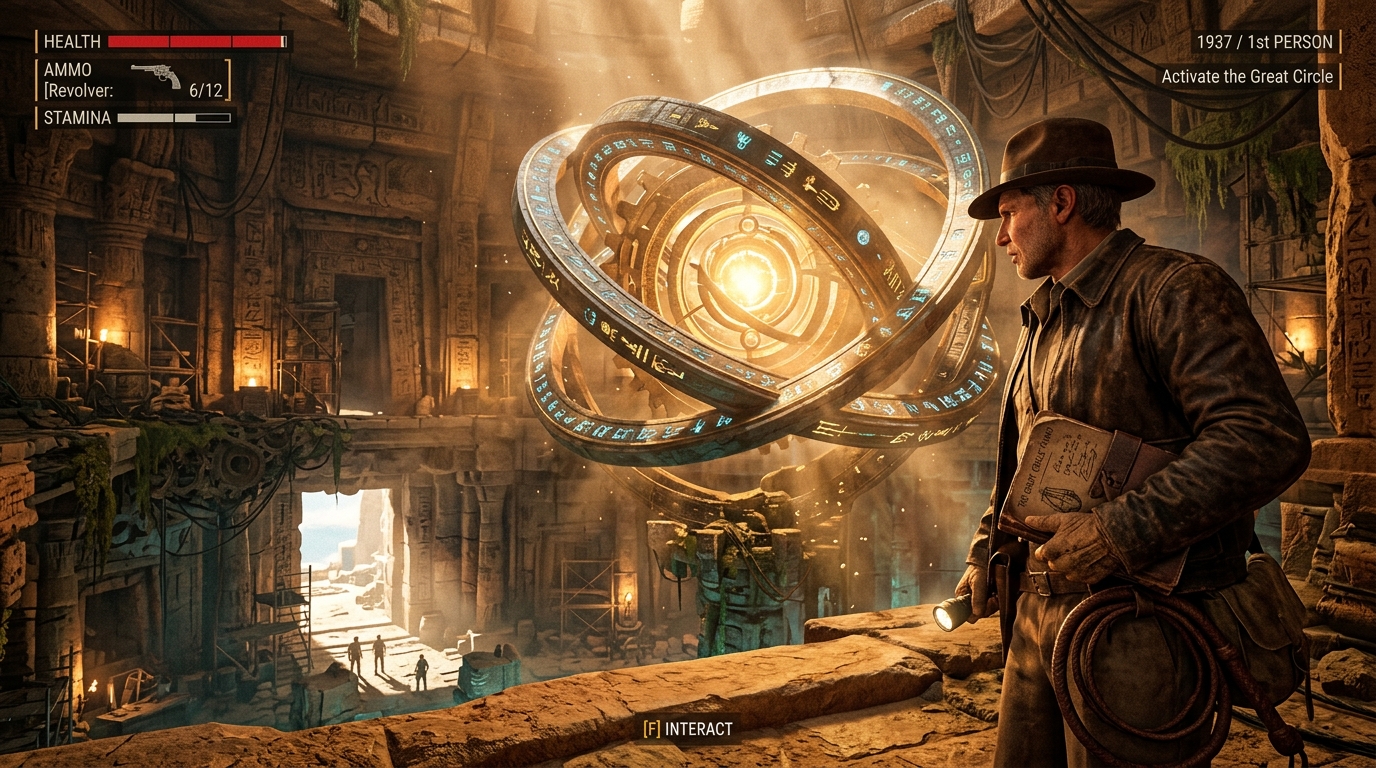
Ultimately, Indiana Jones and the Great Circle is a legendary artifact that deserves a spot on your hard drive rather than being buried in a desert. The studio took a massive gamble by forcing us into a first-person perspective, but it actually pays off by making the whip feel like a physical extension of your arm rather than a scripted button prompt. The combat has that messy, desperate weight you expect from a guy who is constantly getting punched in the face while trying to solve ancient riddles. Troy Baker does a commendable job channeling the scruffy charm of a young Harrison Ford without falling into a cheap parody. It is a confident, punchy adventure that remembers Indy is a scholar who happens to be good at improvising with a revolver, not a generic superhero.
The game manages to dodge the curse of modern bloat by focusing on atmosphere and tactile gameplay that respects the source material. While the first-person view might still annoy the traditionalists who want to see Indy’s leather jacket at all times, the sheer immersion of staring down a Nazi officer before cracking a whip across his ankles is hard to beat. It is rare to see a licensed game that does not feel like a cynical cash grab designed by a committee of bored executives. The puzzles are clever enough to make you feel like a genius, and the stealth mechanics actually reward patience instead of forcing a shootout. If you have been waiting for a game that captures the soul of the original trilogy, this is the closest you will get without finding a time machine.
Stop overthinking the camera angle and just go play the thing because it is easily the best use of the license in decades. With over four million players already jumping into the fray, the consensus is clear that the first-person experiment was a risk worth taking for the sake of innovation. It is not perfect, and the occasional clunky platforming section might make you grit your teeth, but the overall experience is undeniably fun. The publishers and developers delivered a polished, cinematic journey that honors the character while pushing the genre forward in meaningful ways. Grab your fedora and clear some space on your console because this is one relic you definitely do not want to leave behind.
Putting the POV Skeptics in Their Place
Ultimately, Indiana Jones and the Great Circle proves that the first-person perspective was the right call for this whip-cracking adventure. While skeptics worried that losing sight of Indy’s iconic silhouette would ruin the immersion, the team used that viewpoint to put us directly behind those famous dusty spectacles. You aren’t just watching a cinematic hero do cool things, you are the one actually miscalculating jumps and feeling the frantic weight of a desperate fistfight in a Nazi-filled tomb. The game manages to capture that specific brand of 1930s pulp action without feeling like a generic shooter or a clunky platformer. It is a bold design choice that pays off by making the world feel tangible and dangerous rather than just a backdrop for a movie tie-in.
The narrative fits perfectly into the timeline of the original trilogy, providing a story that feels like it was ripped straight from a forgotten script between Raiders and Last Crusade. Troy Baker does a phenomenal job channeling a younger Harrison Ford, delivering lines with that perfect mix of academic brilliance and “I am making this up as I go” charm. With over four million players have already experienced this globe-trotting mystery, it is clear that the appetite for a competent Indy game remains massive. Whether you are solving intricate puzzles or using your whip to swing across crumbling ruins, the gameplay loop stays fresh and avoids the typical bloat found in modern open-world titles. It is a confident, punchy experience that values your time and honors the source material without being afraid to try something new.
If you have been waiting for a reason to dust off your fedora, this is the definitive excuse to finally do it. It is rare to see a licensed game take such a massive risk with its camera angle and actually stick the landing with such grace. The Great Circle succeeds because it understands that being Indiana Jones is about the tension of the discovery and the chaos of the escape, not just looking at a leather jacket from behind. It is a polished, high-stakes journey that reminds us why we fell in love with this grumpy archaeologist in the first place. Stop overthinking the perspective shift and just go punch some bad guys in the face, because this is easily the best Indy experience we have had in decades.
Frequently Asked Questions
1. Where does this game fit into the Indiana Jones timeline?
We are heading back to 1937, wedged right between the movies that actually matter. It is the sweet spot where Indy is young enough to punch Nazis without his back giving out, but old enough to be properly grumpy about it.
2. Is the first-person perspective actually good or just annoying?
It is the boldest move the developers made, and it actually pays off because it makes the whip feel like a tactical tool rather than a canned animation. Being stuck behind Indy’s eyes means you are manually snapping ankles and snatching rifles, which is way more satisfying than watching a cutscene.
3. Do I have to use guns, or can I just whip my way through?
You can certainly try to be a pacifist, but the combat is at its best when you embrace the messy, desperate brawling. The game rewards you for using the environment and your fists, making every fight feel like a frantic struggle for survival rather than a generic shooter.
4. Is Troy Baker a convincing Indiana Jones?
He does a stellar job of channeling a grumpy, young Harrison Ford without it feeling like a cheap parody. You will quickly forget you are listening to a voice actor and start believing you are actually the world’s most overqualified archaeologist.
5. Can I play this on PlayStation 5 right now?
Currently, this is an Xbox and PC party, so PlayStation fans will have to sit on their hands for a bit. There is an eventual rollout planned for other consoles, but for now, the fedora is firmly in the other camp.
6. Is the game actually popular or just riding on brand recognition?
With over 4 million players already digging through the digital dirt, it is clear this isn’t just a lazy cash-in. People are sticking around because it is a punchy, cinematic adventure that actually respects the source material instead of just wearing its skin.