Dust off the fedora and try not to trip over your own whip, because we finally have an indiana jones game that doesn’t feel like a cheap knockoff found in a bargain bin. Set right between the films that actually mattered, The Great Circle puts you behind the dusty spectacles of a 1937 Indy to punch Nazis and loot ruins for “preservation.” It’s developed by the studio that made shooting fascists a digital art form in the modern Wolfenstein series, so you know the combat has actual weight behind it.
With over four million players already jumping into this globe-trotting scavenger hunt, the hype is officially larger than that boulder from the opening credits. Troy Baker does a scarily good impression of a young Harrison Ford, making it easy to forget you’re playing a first-person adventure instead of watching a movie. Whether you’re a die-hard fan or just someone who enjoys outsmarting ancient booby traps, this title is currently the closest thing we have to a playable blockbuster that doesn’t insult your intelligence.
Key Takeaways
- The first-person perspective transforms tomb raiding into a tactile, immersive experience that prioritizes environmental storytelling and earned discovery over simple button prompts.
- Troy Baker delivers a masterful performance that captures the weary charm and academic soul of a 1937 Indiana Jones, avoiding the pitfalls of a cheap imitation.
- The gameplay successfully balances brain and brawn by mixing heavy, physics-based combat with intricate detective work and stealth-focused level design.
- The whip serves as a versatile, snappy tool for both traversal and combat, effectively anchoring the game’s cinematic identity within the first-person viewpoint.
First Person Perspective And The Whip Dilemma
Choosing a first-person perspective for Indiana Jones and the Great Circle was a bold move that pays off beautifully during the quiet moments of tomb raiding. When you are squinting at ancient inscriptions or manipulating dusty levers, the camera placement makes you feel like you are actually wearing the fedora. The developers excel at environmental storytelling, and seeing Indy’s weathered hands interact with a journal or a compass adds a layer of immersion that a third-person camera simply cannot match. It turns every puzzle into a tactile experience rather than just a series of button prompts. This viewpoint forces you to pay attention to your surroundings, making the discovery of a hidden trap feel earned and personal.
The honeymoon phase with the camera usually ends the moment you have to swing a fist or a whip in a crowded room. While the whip functions brilliantly as a traversal tool to cross chasms, using it in a frantic brawl can feel like trying to operate a fly swatter while wearing a blindfold. First-person melee combat is notoriously difficult to get right, and here it often devolves into a clumsy bar fight where you are flailing at Nazi guards who seem just as confused as you are. There is a strange disconnect when you try to time a parry or land a cinematic punch without seeing Indy’s full range of motion. It is less of a graceful dance and more of a desperate scramble to find where the enemy’s face went.
Despite the occasional motion sickness during a chaotic scuffle, the perspective shift serves the core identity of the franchise better than I expected. You aren’t just watching an action hero do cool things, because you are the one stuck in the mud trying to figure out how to not get flattened by a giant stone block. The game manages to capture that signature Indiana Jones vibe of barely surviving by the skin of your teeth through sheer luck and a bit of grit. Even if the combat feels like a drunken wrestling match at times, the thrill of seeing a legendary ruin through Indy’s eyes is a trade-off I am willing to accept. It is a refreshing change of pace that proves this series doesn’t need to be another generic cover shooter to be engaging.
Troy Baker Versus The Ghost Of Harrison Ford
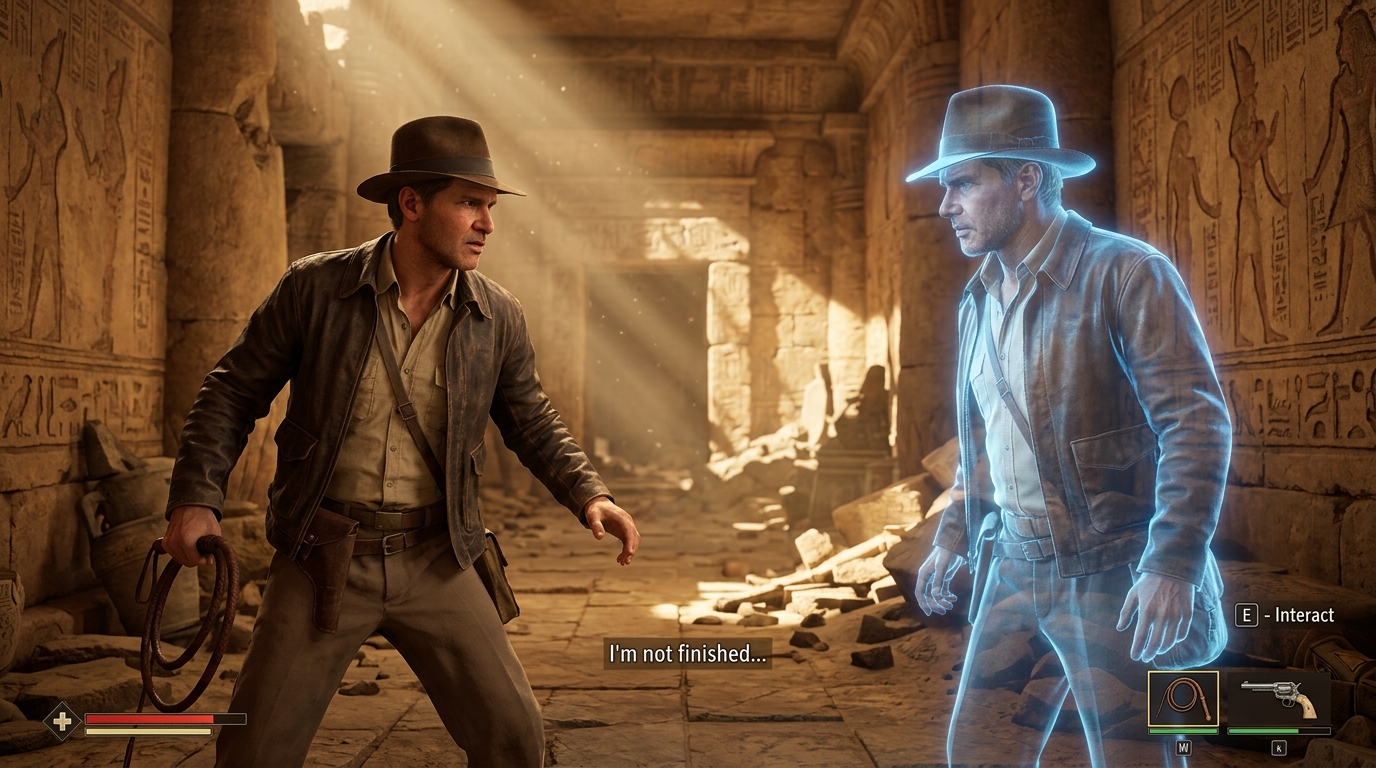
Stepping into the boots of a legend is a death trap for most actors, especially when you are trying to channel the specific, grumbly magic of 1930s Harrison Ford. In Indiana Jones and the Great Circle, Troy Baker takes on the impossible task of voicing a man whose entire personality is built on half-smirks and sighs of exhaustion. To my genuine surprise, Baker manages to dodge the “cheap impersonator” trap by focusing on the character’s soul rather than just doing a Saturday Night Live bit. He nails that specific brand of academic arrogance mixed with a guy who is clearly one punch away from a permanent nap. It is a relief to find that the performance feels like a genuine extension of the films rather than a hollow echo.
The decision to pair Baker’s voice with a digital recreation of a young Ford is a bold move that could have easily fallen into the uncanny valley. Thankfully, the developers understand that Indy is defined by his vulnerability, so the character model actually looks like he is feeling every hit and tumble. While the first-person perspective keeps you behind the eyes for most of the gameplay, the cinematic transitions show a hero who carries the weight of the world on his dusty shoulders. It does not feel like a generic action hero wearing a licensed skin, but a tired archaeologist who would really rather be in a library. This version of Indy has enough grit and charm to convince me that the fedora still fits perfectly.
What really seals the deal is how the dialogue avoids the cringe-inducing quips that plague modern blockbusters. The writing captures that classic pulpy energy without trying too hard to be “Marvel-ized” for a modern audience. There is a dry, sarcastic wit present in every interaction that feels earned because it mirrors the source material so closely. When Indy complains about a trap or bickers with a rival, it sounds like the man we grew up watching, not a corporate approximation. It is a rare case where the performance and the digital likeness work in total harmony to preserve a legacy instead of tarnishing it.
Nazi Punching And The Great Circle Mystery
The development team has spent years perfecting the art of the first person fistfight, and they clearly brought that expertise to 1937. While most licensed titles fail to capture the soul of their source material, Indiana Jones and the Great Circle manages to make every punch feel like it has the weight of a heavy leather jacket behind it. The game leans heavily into its first person perspective to immerse you in Indy’s boots, though it occasionally pulls back to a third person view for climbing to remind you that you are indeed playing as a young Harrison Ford. It is a bold choice that actually pays off, making the inevitable scuffles with goose-stepping goons feel personal rather than detached. You are not just pushing buttons to win, you are actively dodging swings and looking for environmental hazards to end the fight quickly.
The narrative loop takes us on a globetrotting journey that feels like a genuine lost chapter between the first and third films. It avoids the trap of repetitive ruins by mixing up the pacing with genuine detective work and clever environmental puzzles that require more than just a quick whip crack. Stealth is a major pillar here, and while the AI can sometimes be as dense as a temple wall, the tension of sneaking through a Nazi camp keeps the gameplay from becoming a mindless slog. I was worried the first person view would make the whip feel like a gimmick, but it serves as a versatile tool for both traversal and combat. Whether you are swinging over a pit or disarming a guard, the mechanics feel snappy enough to justify the perspective shift without losing that cinematic flair.
By the time you reach the later stages of the journey, the mystery of the Great Circle actually holds its own against the legendary MacGuffins of the past. The level design cleverly balances wide open areas with tight, claustrophobic corridors that demand a mix of brawn and brains. The studio did not just reskin their previous shooters, they built a genuine adventure game that respects the intellectual side of the world’s most famous archaeologist. It is refreshing to see a AAA title that does not rely solely on a massive body count to keep the player engaged. If you can stomach a few awkward platforming transitions, the experience offers a level of polish and character that most licensed games buried in the sand decades ago.
A Rare Win for Licensed Gaming
Ultimately, Indiana Jones and the Great Circle is a rare example of a licensed game that actually understands its source material instead of just wearing its skin. The developers took a massive risk by forcing us into a first-person perspective, but the gamble paid off by making the whip feel like a functional tool rather than a scripted gimmick. While the combat can occasionally feel a bit clumsy when things get crowded, the sense of discovery and the punchy, tactile nature of the puzzles kept me hooked. It manages to capture that specific Saturday morning serial energy without falling into the trap of being a mindless cover shooter. This is a polished, confident adventure that proves Indy still has plenty of miles left on the odometer.
You can officially stop worrying about whether Troy Baker can fill Harrison Ford’s dusty boots, because he absolutely nails the weary but determined tone required for the role. The game avoids the lazy tropes of the genre by prioritizing clever environmental interaction over endless waves of brainless enemies. It is not a perfect experience, but it is easily the best digital outing the archaeologist has had in decades. If you have any love for the franchise or just want a break from the usual open world bloat, this one is a mandatory play. This title definitely belongs in your permanent collection rather than being left to rot in a digital bargain bin.
Frequently Asked Questions
1. When does this game actually take place in the timeline?
The Great Circle is squeezed right into 1937, placing it between the movies that people actually care about. You are playing as a prime Indy who is still busy punching Nazis and looting ruins for preservation before the world went to hell.
2. Is it weird playing an Indy game in first-person?
It is a bold choice that makes tomb raiding feel incredibly tactile and personal, especially when you are squinting at ancient traps. It only gets slightly awkward when you start swinging your fists in a crowded room, but for the puzzle solving, it is a massive win for immersion.
3. Does Troy Baker actually sound like Harrison Ford?
He does a scarily good impression that captures the grit and charm of a young Ford without feeling like a cheap parody. It is convincing enough that you will quickly forget you are playing a digital character and start feeling like you are in a playable blockbuster.
4. Who developed this and should I trust them?
A veteran studio is at the helm, the same team that turned shooting fascists into a high art form with their previous action titles. They know how to make combat feel heavy and satisfying, so you can rest easy knowing the action is in capable hands.
5. How is the whip handled in the game?
The whip is your primary tool for both navigation and combat, allowing you to swing across gaps or disarm enemies. While the first-person camera can make close-quarters brawling a bit chaotic, the whip remains the most satisfying way to interact with the environment.
6. Is the game actually popular or just riding on nostalgia?
With over four million players already jumping in, the hype is backed by actual numbers rather than just fond memories of the eighties. As the immersive sim revival continues to influence modern design, this is a legitimate adventure that respects your intelligence instead of just being another lazy movie tie-in found in a bargain bin.