The 2026 game layoffs tally has already reached 9,781 confirmed job losses across 105 events, with roughly 14,259 expected by year’s end, because apparently the industry’s favorite live service is “cutting payroll.” Those figures come from the best available public tracking as of August 20, 2026. They would put this year above 2022, 2023, and 2025, though still below 2024’s estimated peak of 15,631.
I’m treating these numbers as estimates, not sacred tablets. Global reporting is inconsistent, contractors often vanish from the count, and percentage-based announcements turn basic arithmetic into a boss fight. The important takeaway is blunt: layoffs are still an industry-wide problem, not a brief correction, and the people making games are paying for years of reckless growth, bloated bets, and corporate decisions that somehow keep surviving their own reviews.
Key Takeaways
- 2026 game-industry layoffs have reached 9,781 confirmed job losses across 105 events, with approximately 14,259 expected by year-end. That would make 2026 worse than 2022, 2023, and 2025, though still below 2024’s estimated peak of 15,631.
- The reported totals are a floor, not a complete count. Contractors, delayed filings, percentage-only announcements, and undisclosed studio-closure headcounts mean the actual human cost is likely higher.
- Layoffs remain an industry-wide crisis driven by pandemic-era overhiring, escalating development costs, canceled projects, failed live-service bets, and corporate restructuring focused on protecting margins.
- The damage is concentrated in major development markets: about 66% of reported events occurred in North America, while North America and Europe together accounted for roughly 95%, intensifying competition for remaining jobs and weakening local game-development communities.
Introduction To 2026 Game Layoffs
By July 26, 2026, 9,781 confirmed game-industry jobs had disappeared across 105 layoff events, with the year projected to reach 14,259 losses. That is not a tidy little correction. It is an ongoing industry crisis wearing a business-casual name tag. I see a sector still cutting teams, closing studios, and treating experienced developers like disposable inventory after a disappointing earnings call. The best available public tracker puts 2026 above the estimated totals for 2022, 2023, and 2025, although it remains below 2024’s estimated peak of 15,631. The numbers are ugly, and dressing them up with phrases like “strategic realignment” will not make anyone’s rent cheaper.
These figures are estimates, not an audited global census, because layoff reporting is about as consistent as a multiplayer launch weekend. Some companies announce percentages instead of headcounts, contractor losses often vanish from official totals, WARN filings can arrive late, and studio closures do not always reveal how many people were affected. Even with those limits, 105 reported events and nearly 10,000 confirmed losses are too large to dismiss as statistical noise. I’m treating the data as a floor rather than a final score, because the real damage is likely higher once unreported contractors and quietly shuttered teams are counted. For developers, the message is brutally clear: the talent bonfire is still burning, and the industry has not found the fire extinguisher.
2026 Layoff Numbers By The Numbers
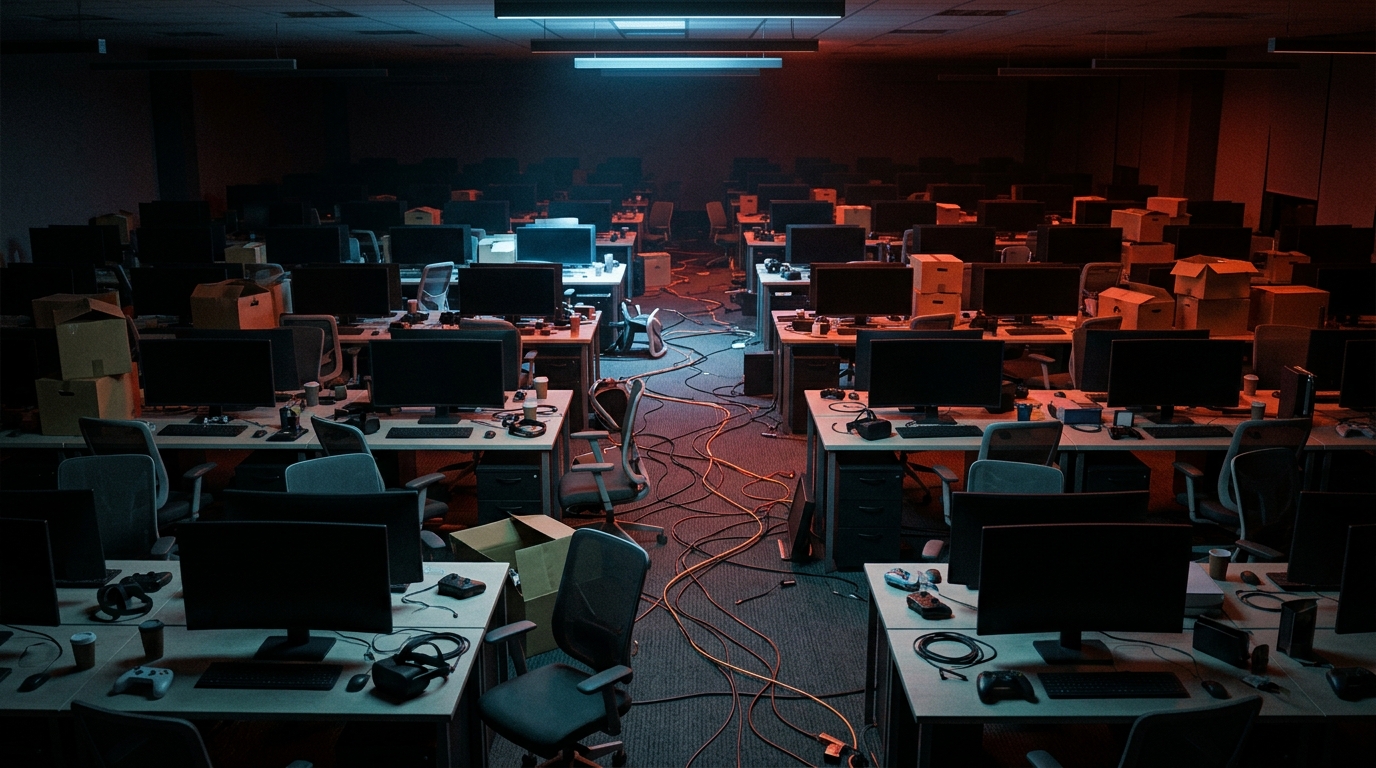
The headline number for 2026 is already ugly: 9,781 confirmed game-industry job losses across 105 reported layoff events through July 26. The current projection reaches 14,259 layoffs by year-end, which would make 2026 worse than 2022, 2023, and 2025, though still below 2024’s estimated peak of 15,631. Across 2022 through 2026, the estimated total reaches 58,087 lost jobs, a number large enough to qualify as its own unpleasant expansion pack. These figures come from a public industry layoff tracker, and they should be read as estimates rather than audited global totals.
| Measure | Figure | What it means |
|---|---|---|
| Confirmed 2026 layoffs | 9,781 | Reported job losses through July 26, 2026 |
| Reported 2026 layoff events | 105 | Separate publicly reported cuts or workforce reductions |
| 2026 projection | 14,259 | Estimated full-year total |
| Estimated 2022-2026 total | 58,087 | Combined estimated losses across five years |
| 2024 peak | 15,631 | Estimated high point in the current layoff wave |
The fine print matters because the games industry is remarkably good at making player counts visible and worker counts mysterious. Companies may announce percentages instead of headcounts, exclude contractors, delay formal filings, or describe a studio closure without saying how many people were affected. That means the confirmed figure is best understood as a floor, not a final score, and the projection can move as more information surfaces. In plain English, the bonfire may be larger than the spreadsheet says, because the spreadsheet is missing some chairs. The broader pattern is still impossible to dismiss: layoffs remain an industry-wide problem, not a brief correction that quietly packed its bags.
Biggest 2026 Game Layoff Events
The five largest 2026 layoff events account for about 56% of the tracker’s 9,781 confirmed job losses through July 26, or roughly 5,500 people. That is not a gentle market correction. It is the industry dropping a piano on the same five loading screens and calling it “realignment.” The tracker records 105 events and projects approximately 14,259 layoffs for the full year, which would put 2026 above the estimated totals for 2022, 2023, and 2025, though still below 2024’s estimated peak of 15,631. Because no official global census exists, I’m separating confirmed figures from reported cuts, estimates, and announcements that never supplied a headcount, as outlined in the available industry analysis.
| Rank | Major employer or closure category | Recorded impact | Evidence status |
|---|---|---|---|
| 1 | Five largest layoff events combined | About 56% of 9,781 confirmed losses, roughly 5,500 jobs | Tracker total, mixed event reporting |
| 2 | Large platform-owner cuts affecting established studios | No exact headcount publicly confirmed | Reported |
| 3 | Major studio closures | Headcount unclear or not disclosed | Confirmed closure, unconfirmed job total |
| 4 | Percentage-based workforce reductions | Exact number cannot be calculated from the announcement | Confirmed reduction, estimated impact |
| 5 | Smaller documented layoff events | Included in the tracker’s 105-event total | Confirmed figures where available |
The ugly takeaway is concentration: a handful of blockbuster cuts did more damage than dozens of smaller announcements, while studio closures made the human cost even harder to count. Some employers published a clean number, others offered a percentage, and plenty delivered the classic corporate magic trick of saying “streamlining” while refusing to say how many people lost their income. Contractors may be excluded, WARN filings can arrive late, and a closed studio does not always reveal whether every employee was cut or quietly moved elsewhere. I would treat the 9,781 figure as the best public baseline, not sacred scripture, but the direction is impossible to miss: 2026’s talent bonfire is being fed by a small number of enormous matches.
Where 2026 Game Layoffs Hit Hardest

Approximately 66% of recorded 2026 game-layoff events happened in North America, and North America plus Europe account for roughly 95% of the total. That is not a minor regional wobble. It is the industry’s financial alarm bell blaring in two major development markets. A public industry tracker counted 105 events and 9,781 confirmed job losses through July 26, with the full-year estimate reaching about 14,259. These figures remain estimates because contractors, delayed filings, and vague studio-closure announcements muddy the scoreboard. The geography matters because these regions contain dense networks of developers, publishers, contractors, outsourcers, and support businesses that all feel the blast when budgets suddenly discover gravity.
For developers, a concentrated downturn can turn a strong local job market into musical chairs, except someone removed half the chairs and called it “strategic realignment.” Contractors often get hit first or disappear from the official totals entirely, leaving the real damage larger than the spreadsheets suggest. Major publishers may have cash reserves, but smaller studios and local game hubs usually survive project by project, so a canceled contract or delayed funding round can threaten the entire operation. The result is a talent bonfire with a map attached: fewer nearby openings, more competition for remaining roles, and communities losing the creative momentum that made them worth building in the first place.
Why 2026 Game Layoffs Keep Happening
By July 26, 2026, the best available tracker counted 9,781 confirmed game-industry job losses across 105 events, with roughly 14,259 projected for the full year. That would make 2026 worse than 2022, 2023, and 2025, though still below 2024’s estimated peak of 15,631, according to the latest industry estimate. These figures are not a perfect census because contractors, delayed filings, and vague studio-closure announcements muddy the spreadsheet. Still, the trend is impossible to uninstall from reality. Major publishers are continuing to announce sweeping cuts and studio closures, while recent reporting shows even established development teams are being hit hard.
The causes overlap like a badly designed skill tree. Pandemic-era overhiring left companies with inflated teams just as player spending normalized, while development budgets kept climbing and investors became less interested in funding five-year bets with no guaranteed loot drop. live-service bets added another layer of pain, because a game can consume years of work and still discover that players would rather stare at a loading screen than buy its battle pass. Restructuring then turns those problems into tidy corporate language, with “realignment” usually meaning fewer people doing more jobs for less time. The result is a familiar industry checklist:
- pandemic expansion being reversed
- expensive projects being canceled or narrowed
- failed live-service plans being written off
- studios being closed to protect margins
What publishers call efficiency often means shipping fewer games with fewer people, then congratulating themselves for reducing the number of employees needed to make them. Recent workforce reductions and closures show that this is not just a temporary correction, but a strategy for insulating executive forecasts from the consequences of their own bets. The people who built the canceled projects lose their jobs, the remaining teams inherit the deadlines, and leadership discovers the revolutionary concept of consequences once again. I understand the need to control runaway budgets, but cutting talent after years of reckless expansion is not a business miracle. It is the bill arriving, with the developers being asked to pay it.
Conclusion On 2026 Game Layoffs

The headline for 2026 game layoffs is already grim: 9,781 confirmed job losses across 105 events through July 26, with a full-year projection of roughly 14,259. That would make 2026 worse than 2022, 2023, and 2025, while still falling short of 2024’s estimated peak of 15,631, according to the best available public tracker. In other words, this is not a quick trim after a bad quarter. It is a continuing industry-wide bonfire, fueled by studio closures, canceled projects, bloated production costs, and executives discovering that “efficiency” apparently means deleting the people who make the games. I would call that a crisis, not a correction wearing a tiny business-school tie.
Even those numbers are missing part of the damage, because there is no official global census and many cuts never arrive with a neat headcount attached. Percentage-based announcements, delayed filings, excluded contractors, and ambiguous closure totals all leave the tracker playing catch-up while thousands of careers fall through the cracks. The human cost is therefore larger than the spreadsheet suggests, stretching from sudden unemployment to lost expertise, abandoned projects, and fewer chances for new talent to get a foothold. My takeaway for readers and journalists is simple: treat 2026’s figures as incomplete estimates, not a final body count, because the industry’s talent bonfire is still burning.
2026 Layoffs: The Industry’s Chainsaw Solution
The 2026 game layoffs are not a blip. They are the industry’s latest attempt to fix bad planning with a chainsaw. As of July 26, an estimated 9,781 game-industry workers had lost their jobs across 105 layoff events, with roughly 14,259 layoffs projected for the full year, according to a public industry tracker. That would put 2026 above the estimated totals for 2022, 2023, and 2025, though still below 2024’s grim peak of 15,631. I find that hard to call a “correction” when the correction keeps deleting the people who actually make the games.
The numbers are estimates, not an official global census, because announced percentages, delayed filings, contractor exclusions, and vague studio closures make precise counting annoyingly difficult. Even so, the pattern is impossible to miss: publishers are protecting forecasts, chasing blockbuster economics, and treating experienced developers like disposable inventory. The real fix is not another round of cheerful restructuring announcements, but smaller scopes, saner production schedules, and leadership willing to cancel bad ideas before hundreds of people pay for them. Until that happens, 2026 game layoffs will remain less a temporary setback than a warning label slapped onto the entire business.