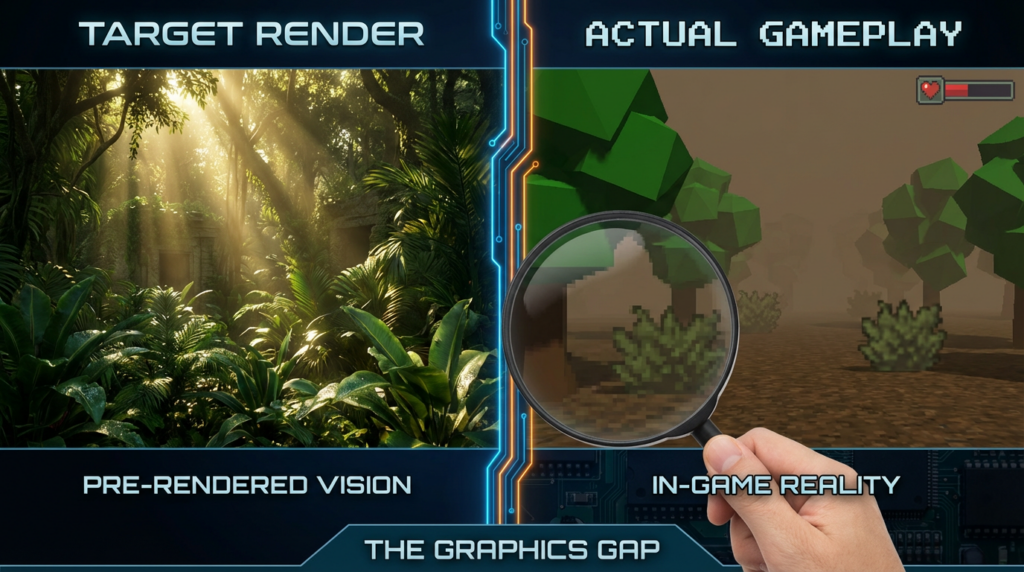
We’ve all been there. You watch a reveal trailer that looks like it was beamed down from a digital heaven, only to realize at launch that you’ve been catfished by a pre-rendered lie. These deceptive game trailers are the industry’s favorite way to sell us a steak and deliver a lukewarm slider. Whether it’s in-engine footage that requires a NASA supercomputer to run or cinematic emotional beats that never actually make it into the script, the gap between the hype and the hard drive is getting wider.
I’m tired of being told a game features advanced AI only to find NPCs that can’t navigate a doorway without a mental breakdown. From the vertical slice visuals of The Witcher 3 to the infinite emptiness of No Man’s Sky at launch, developers have turned misleading us into an art form. Stop treating these polished marketing scams like gospel and start calling out the pixels for what they really are. If the final product looks like a potato compared to the trailer, I’m going to be the one holding the deep fryer.
Key Takeaways
- Stop pre-ordering games based on cinematic trailers or ‘in-engine’ footage, as these are often fabricated ‘vertical slices’ that do not represent the final performance or visual quality.
- Identify marketing red flags such as the absence of a user interface (HUD), scripted camera movements, and emotional trailers that bear no resemblance to the actual gameplay mechanics.
- Recognize that developers frequently use ‘work in progress’ disclaimers as a legal shield to hide inevitable graphical downgrades and stripped-down AI routines required for console optimization.
- Demand raw, unedited gameplay footage and wait for post-launch reviews to ensure the game’s genre and core loop match the marketing promises before committing your money.
Pre-Rendered Lies And The Great Graphics Downgrade
We have all been victims of the high-budget vertical slice, that magical moment when a developer shows off a trailer that looks better than real life. These presentations are essentially the Tinder profile of the gaming world, using every filter and flattering angle to hide the fact that the actual product is a mess. When we saw the early footage of The Witcher 3, we were promised lighting and particle effects that could melt a high-end PC. By the time it hit our consoles, the foliage looked like it had been through a dehydrator to ensure the hardware didn’t actually explode. It is a classic bait and switch that treats our expectations like a disposable resource.
The industry loves to hide behind the work in progress watermark while showing us pre-rendered lies that are impossible to achieve on current hardware. Cyberpunk 2077 is the undisputed heavyweight champion of this nonsense, promising a dense urban paradise and delivering a glitchy slideshow for millions of players. They show us breathtaking textures and complex AI routines in a controlled environment, knowing full well those features will be gutted for the final build. It is not just a technical limitation, it is a calculated marketing tactic designed to generate pre-orders before the reality check hits. We are essentially paying full price to find out exactly how much the developers had to compromise.
This trend of the graphics downgrade has become so predictable that we practically expect the final game to look like a potato version of the announcement trailer. It is exhausting to watch a reveal and immediately start calculating how much of the visual fidelity will be stripped away for the sake of optimization. When the lighting gets flatter and the textures get muddier, it feels like a personal insult to our intelligence and our wallets. Stop showing us the Ferrari version of the game if you plan on delivering a beat-up sedan with a missing hubcap at launch. If you cannot make the game look that good on a standard console, do not put it in the trailer.
The Bait And Switch Of Fake Gameplay Mechanics
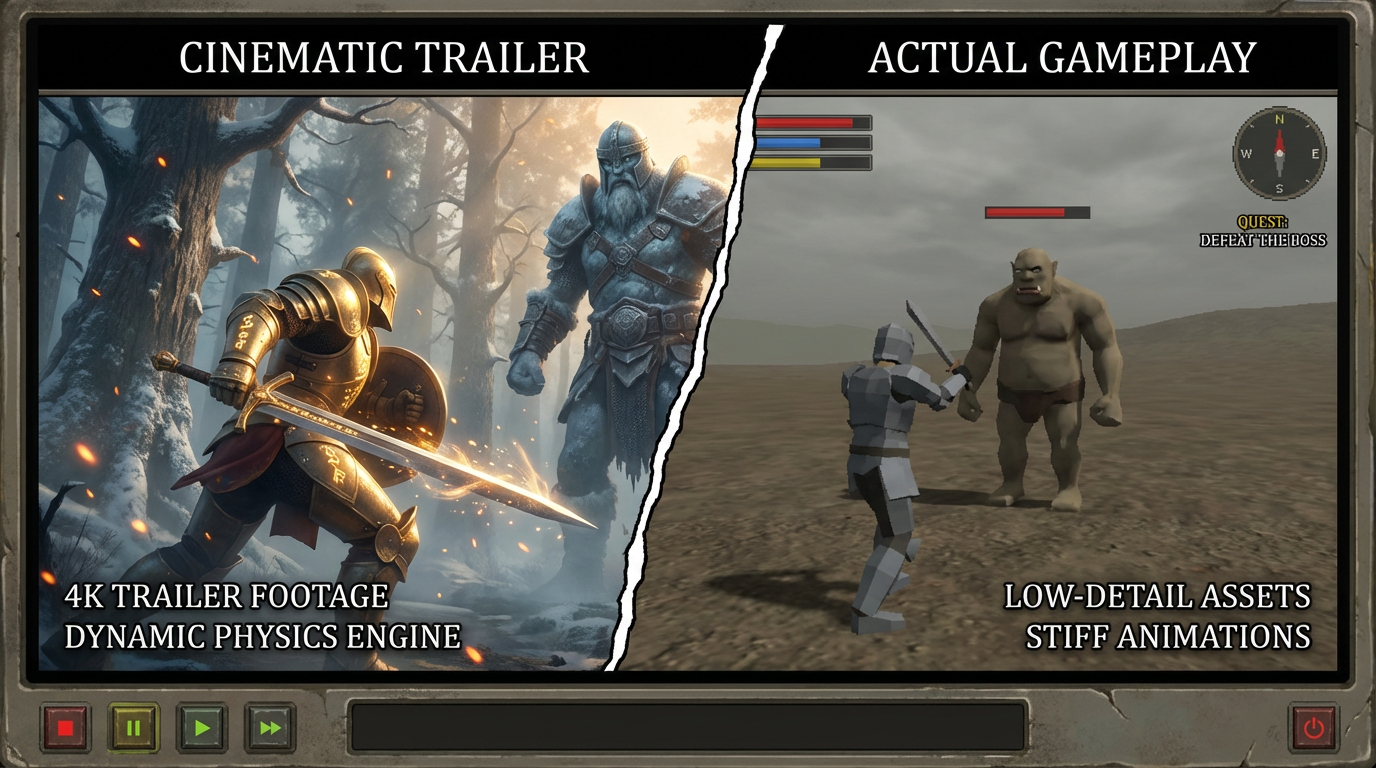
We have all been victims of the cinematic smoke screen where a trailer promises an experience that the actual code can’t deliver. Take the original Dead Island trailer, which was a slow motion masterpiece of familial tragedy and raw emotion that practically demanded an Oscar. When the game actually launched, we didn’t get a heartbreaking survival story, but rather a janky loot-fest where you kicked zombies into beach chairs for hours. It was a masterclass in emotional manipulation, selling us a vibe that the developers seemingly forgot to actually program into the game. The industry loves to sell us the dream of what a game could be while delivering a reality that feels like a budget knockoff.
No Man’s Sky is the undisputed heavyweight champion of the planetary bait and switch, at least regarding its disastrous launch state. We were promised a universe teeming with colossal sand worms, complex ecosystem interactions, and a multiplayer experience that turned out to be a lonely walk through a neon desert. The trailers showed us lush, vibrant worlds filled with life that reacted to our presence, but the No Man’s Sky at launch offered mostly repetitive rocks and creatures that looked like they were generated by a broken blender. It took years of frantic updates for the game to resemble those early lies, but the initial deception remains a permanent stain on the industry’s record.
The problem is that these developers aren’t just showing us early footage, they are actively fabricating mechanics that do not exist. When a studio shows a vertical slice of gameplay that features deep social systems or physics-based destruction that gets scrapped before gold, it is essentially a high-budget prank at the consumer’s expense. We are expected to pre-order based on these fever dreams, yet the final product often feels like it was stripped for parts to make it run on a standard console. If a game needs a three-minute CGI movie to explain why it is fun, there is a high probability the actual gameplay is about as deep as a parking lot puddle. Stop falling for the shiny renders and start demanding to see the actual UI and clunky movement before opening your wallet.
Genre Identity Crisis And Marketing Misdirection
Marketing departments love to treat game genres like loose suggestions rather than actual promises. We have all been there, sitting through a high octane trailer only to realize the final product is a glorified spreadsheet or a rhythmic clicking simulator. Brutal Legend is the poster child for this particular brand of bait and switch, selling us a heavy metal action adventure before pivoting into a clunky real time strategy game. It takes a special kind of audacity to hide the core loop of your game behind Jack Black and a pile of guitar solos. By the time you realize you are managing units instead of decapitating demons, your refund window has probably already slammed shut.
Then there is the classic bait and switch involving the person you actually control on screen. Metal Gear Solid 2 pulled off the ultimate cinematic heist by putting Snake in every trailer only to swap him for Raiden about an hour into the experience. While Hideo Kojima called it subverting expectations, most players called it a massive headache. It is a bold move to market a legendary hero and then force players to spend twenty hours as a rookie with a questionable haircut. This kind of narrative misdirection might be clever for a film, but in gaming, it usually just feels like you were sold a ticket to a concert only to find a tribute act on stage.
This trend of hiding a game’s true identity is not just artistic flair, it is often a calculated move to avoid niche labels. Publishers know that a pure RTS or a bloated open world might scare away the casual crowd, so they dress the game up in a more palatable costume. They want the sales of a blockbuster action title while delivering something entirely different under the hood. It is a dishonest way to do business that treats the audience like they are too narrow minded to handle the truth. If your game is good, you should not have to lie about what it actually is to get people to buy it.
Spotting The Red Flags Before You Pre-Order
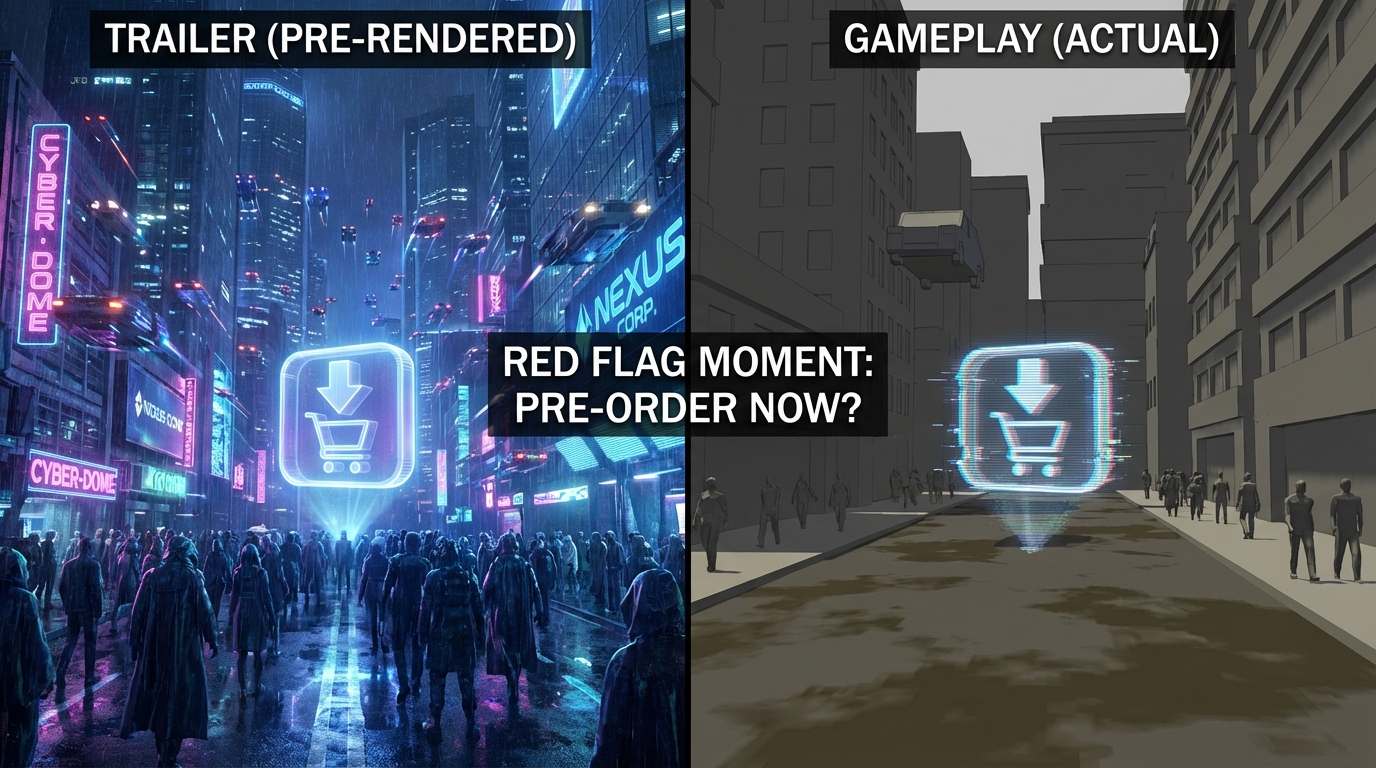
The first thing you need to realize is that a cinematic trailer is basically a high-budget hallucination designed to pickpocket your wallet. When you see a video labeled as in-engine footage, remember that a game engine can render a single blade of grass to look like a masterpiece if it does not have to worry about puny things like physics or AI. Developers love to show you a vertical slice that features lighting effects and particle physics that would make a NASA supercomputer explode. If the trailer looks too good to be true, it usually is, and your console will likely be wheezing just to hit thirty frames per second at launch. Stop falling for the glossy sheen of pre-rendered lies that disappear the moment you actually press start.
Look closely for the absence of a user interface, because a lack of health bars and ammo counters is a massive red flag. Real gameplay is messy and cluttered, not a choreographed ballet of smooth camera pans and perfectly timed explosions. When a developer shows you a five-minute sequence where the protagonist walks slowly through a lush forest without a single frame drop, they are selling you a movie, not a product. We saw this with the early hype for No Mans Sky and the original Watch Dogs, where the final retail versions looked like they had been put through a visual dehydrator. If there is no HUD and the movement looks like it was scripted by a Hollywood director, keep your credit card in your pocket.
You should also be wary of emotional storytelling that has absolutely nothing to do with the actual mechanics of the game. The infamous Dead Island trailer won awards for its heartbreaking slow-motion tragedy, but the actual game was just a goofy romp about hitting zombies with electrified boat oars. This bait and switch tactic relies on your feelings to bypass your brain, making you forget that you are buying a repetitive looter-shooter and not a profound cinematic experience. Always identify marketing red flags by checking for raw, unedited footage from a real person playing the game before you commit to a pre-order. If the studio refuses to show a single second of genuine UI-heavy combat, they are probably hiding a fire over at the optimization department.
Stop Pre-Ordering Based on Pretty Lies
The gaming industry has turned the hype train into a high speed locomotive with no brakes and a missing bridge ahead. We have all been there, hovering over the pre-order button because a two minute clip of pre-rendered lighting made us forget every broken promise of the last decade. These trailers are not just artistic visions, they are calculated vertical slices designed to separate you from your cash before the reviews can warn you. If a studio spends more on their cinematic director than their quality assurance team, you are probably looking at a disaster in the making. Stop letting flashy CGI do the heavy lifting for your purchasing decisions and start demanding actual gameplay footage.
Staying cynical is not about being a miserable hater, it is about protecting your wallet from the next big visual downgrade. When a trailer looks too good to be true, it almost certainly is, especially if the developer has a history of over-promising. I prefer to wait for the day one patches and the inevitable digital autopsy videos before I decide a game is worth my time. There is a certain zen like peace in ignoring the marketing noise and only playing the titles that actually respect your intelligence and function at launch. You will find that the games that do not lie to you are usually the ones that do not need a massive advertising budget to begin with.
Ultimately, the best way to enjoy this hobby is to treat every promotional video like a suspicious email from a long lost relative. If the footage looks like it was rendered on a supercomputer from the future, assume your console will sound like a jet engine trying to run it. We have seen enough empty planetary ecosystems and missing mechanics to know that the final product rarely matches the polished fantasy. Let the early adopters deal with the frame rate drops and the broken quests while you play something that is actually finished. True gaming satisfaction comes from playing great titles, not from falling in love with a carefully edited lie.
Frequently Asked Questions
1. What exactly is a vertical slice and why should I care?
A vertical slice is a polished, tiny portion of a game built specifically to look amazing for trade shows and trailers. It represents a theoretical perfection that the full game can almost never maintain across thirty hours of gameplay. When you see one, remember you are looking at a controlled lab experiment, not the final product.
2. Does the Work in Progress disclaimer actually mean anything?
It is a legal get-out-of-jail-free card that developers use to show you impossible graphics without getting sued. While things do change during dev, that watermark is usually there to cover their tracks when they inevitably have to turn the lighting settings down from Godlike to Potato for the actual launch.
3. Why do games like The Witcher 3 or Cyberpunk 2077 look worse at launch?
Consoles and average PCs have hardware limits that a pre-rendered trailer simply ignores. Developers over-promise to build hype and then have to aggressively strip away features like particle effects and advanced lighting so the game doesn’t turn your hardware into a very expensive space heater. Some players hope a shiny new GPU will solve these optimization issues, but often the problem lies in the software itself.
4. How can I tell if a reveal trailer is actually gameplay or just a movie?
Look for the UI or HUD elements, though even those can be faked these days. If the camera movement looks too cinematic and smooth, or if the NPCs are acting with advanced AI that seems too good to be true, you are likely watching a pre-rendered lie. Real gameplay is usually clunkier and less choreographed.
5. Is it ever okay for a developer to use cinematic trailers?
Cinematics are fine for setting a mood or telling a story, but they should never be used to imply how the game actually plays. The problem starts when a studio uses in-engine footage to trick you into thinking the graphics will look that way on your screen at home. If they aren’t showing a person holding a controller, don’t trust the pixels.
6. What should I do to avoid getting catfished by the next big hype train?
Stop pre-ordering games based on a two-minute clip and wait for actual reviewers to get their hands on the retail build. If the marketing team is hiding the console version or banning early footage, that is a massive red flag. Your wallet is your only real vote, so stop spending it on promises and start spending it on proven performance. It is also worth investigating recent ports to see if the developer has a history of releasing unoptimized software that ignores high-end hardware capabilities.