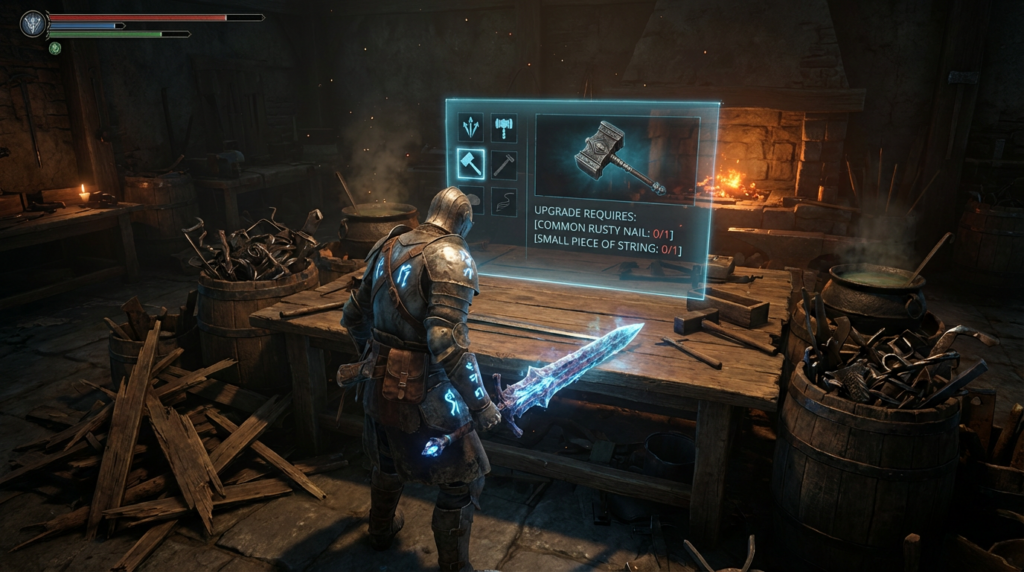
I just spent four hours scouring a virtual forest for pristine wolf kidneys only to craft a pair of boots that provide a staggering 0.5% boost to my walking speed. We’ve reached a point where developers feel legally obligated to shove useless crafting mechanics into every title, regardless of whether the game actually needs them. It’s not a feature; it’s a chore list bolted onto your UI to trick you into thinking a twenty-hour game is actually sixty.
If I wanted to spend my weekend managing a spreadsheet of copper ore and leather scraps, I’d get a job in logistics and actually get paid for it. Most of these systems are just box-ticking filler designed to distract you from the fact that the core gameplay loop is thinner than a wet paper towel. You aren’t surviving or specializing when you’re forced to pause a high-stakes adventure to pick bluebells for a minor health potion. It’s time we stop pretending that turning 500 rocks into one slightly better rock is a meaningful design choice.
Key Takeaways
- Modern crafting mechanics are often transparent filler designed to artificially inflate game length rather than provide meaningful strategic depth.
- Complex, multi-tiered recipe trees act as ‘recipe bureaucracy’ that transforms heroic protagonists into unpaid logistics managers and blacksmiths.
- Constant inventory management and the collection of marginal loot distract from core gameplay loops and treat the player’s time as a renewable resource.
- Meaningful game design should prioritize rewarding exploration and skill-based encounters over incremental stat boosts earned through mindless gathering and menu navigation.
The Mindless Grind For Common Dirt
There is a special circle of hell reserved for developers who think holding down a button to watch a circular progress bar fill while my character picks a weed is a gameplay loop. Every open world title feels obligated to include a crafting system regardless of whether it adds a shred of value to the experience. I am not an adventurer in these games; I am a glorified janitor wandering through a digital forest to collect five hundred identical sprigs of lavender just so I can make a potion that gives me a three percent defense boost. It is a blatant insult to my limited free time, masquerading as content when it is really just a way to pad the runtime of a mediocre story. If the core mechanic of your game is fun, you should not need to force me into a menu to manage a spreadsheet of dirt and twigs.
The primary issue is that these systems are almost always a box-ticking exercise designed to satisfy a checklist rather than provide meaningful player choice. You spend hours scouring the map for rare minerals only to craft a sword that becomes obsolete the moment you finish the next main quest and find a better one in a random chest. This creates a cycle of inventory tedium where you are constantly deleting stacks of useless garbage just to make room for more useless garbage. It is a mindless grind that adds zero strategic depth and serves only to keep your hands busy while your brain slowly turns to mush. Designers seem to have forgotten that the reward for exploration should be a sense of wonder, not a heavy bag full of rocks and a recipe for a slightly sharper stick.
Most of these systems could be deleted entirely without losing anything of substance, yet they persist like a bad rash. When I see a massive recipe tree filled with incremental upgrades and opaque requirements, I do not feel excited; I feel like I am being assigned unpaid overtime. It is lazy design that relies on the player’s lizard brain to find satisfaction in watching numbers go up rather than actually engaging with interesting mechanics. We need to stop pretending that this busywork is a feature and start calling it what it actually is: a desperate attempt to distract us from a lack of genuine innovation. If I wanted to spend my Friday night organizing a backpack and picking up trash, I would just stay at work and clean my desk.
Recipe Bureaucracy And Multi-Tiered Menu Hell
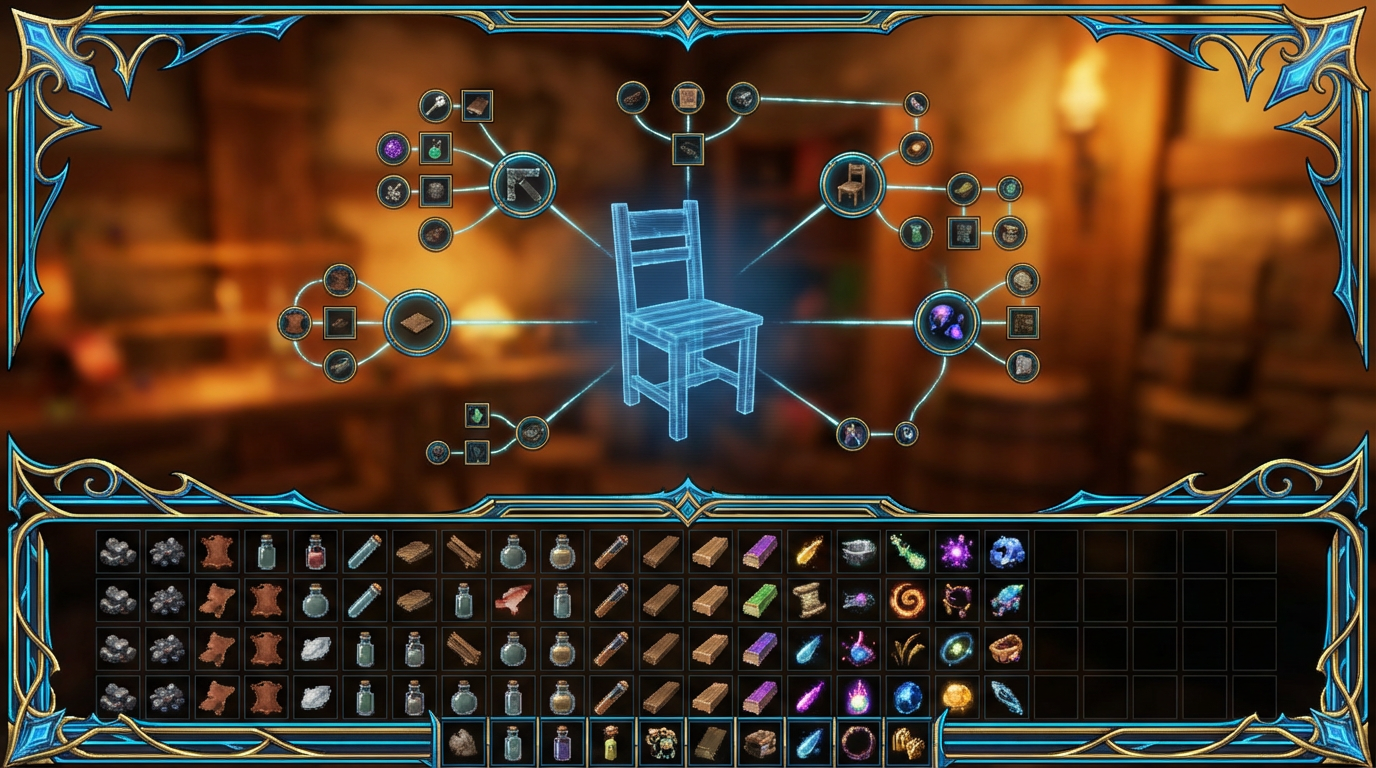
There is a special kind of hell reserved for developers who think a five-tier crafting tree constitutes actual gameplay. We have all been there, staring at a screen because we need a Steel Sword, but first we have to craft the Refined Hilt, which requires a Polished Leather Grip, which can only be made from Tanned Hide. You aren’t playing a legendary hero at that point; you are just an unpaid intern for a medieval supply chain. It is a nested doll of boredom designed to inflate playtimes without adding a single second of genuine fun. By the time you finally click the button to make the item you actually wanted, the sense of accomplishment is completely buried under a mountain of menu-scrolling fatigue.
This brand of recipe bureaucracy exists solely to mask the fact that the game has nothing better for you to do. Instead of giving us a meaningful quest or a challenging encounter, designers force us to navigate clunky UI windows to turn Component A into Component B so it can eventually become Component C. It is the digital equivalent of filling out tax forms just to unlock the ability to swing a piece of metal. If I have to spend twenty minutes in a submenu just to assemble the basic tools of the trade, the game has failed its primary job of being entertaining. We are here to slay dragons and explore worlds, not to act as a middle manager for a virtual blacksmith shop.
The most insulting part of this multi-tiered menu nightmare is how it treats your time like a renewable resource. These systems frequently hide behind the guise of immersion or depth, but there is nothing deep about clicking through three different screens to refine raw ore into ingots. It is just a series of busywork hurdles meant to slow your progress and distract you from the thinness of the actual core loop. If your crafting system requires a spreadsheet and a flowchart just to make a pair of boots, you haven’t built a mechanic; you have built a chore. Real depth comes from making choices that matter, not from surviving an endurance test of repetitive mouse clicks.
Inventory Management Is Not A Skill Tree
Let’s be honest, nobody actually enjoys spending forty percent of their playtime staring at a grid of icons while deciding which monster gallbladder to discard. Developers seem to think that forcing us to juggle rusted nails and moldy bread constitutes a survival experience, but it is really just a glorified chore simulator. Instead of focusing on the boss fight or the environment, I am stuck playing a high-stakes game of Tetris with items that have zero impact on my character’s power. If your inventory management is more complex than your actual combat system, you have failed at game design. We are here to be legendary heroes, not unpaid warehouse logistics managers.
The sheer volume of useless junk we are forced to hoard is a blatant attempt to mask a lack of meaningful content. You spend three hours scouring a forest for rare pebbles only to craft a sword that provides a negligible two percent increase to your critical hit rate. This is not progression; it is a psychological trap designed to keep you clicking until your mouse gives out. The industry has become obsessed with these bloated loot tables that serve no purpose other than to fill up digital space. If a crafting material exists solely to take up a slot and force me to buy an inventory upgrade, it should not be in the game.
Stop pretending that scavenging for scrap metal in a dumpster is a core gameplay pillar that adds depth to the narrative. Most of these systems are just lazy box-ticking exercises meant to pad out the total playtime for marketing bullet points. Real depth comes from making difficult choices about gear and strategy, not from deleting twenty stacks of wolf pelts so you can pick up a quest item. We deserve better than menu-heavy busywork that treats our time like a renewable resource. If I wanted to organize a cluttered mess for hours on end, I would simply clean my actual closet for free.
Stop Turning Protagonists Into Part-Time Blacksmiths
We need to stop pretending that every protagonist needs to be a part-time blacksmith with a pocket full of scrap metal. Developers seem to think that adding a crafting menu magically transforms a shallow experience into a deep one, but usually it just adds ten hours of chores to a twelve-hour game. There is no joy in pausing a high-octane action sequence just to combine three rusty nails and a roll of duct tape into a slightly better stick. If your core gameplay loop is actually fun, you do not need to distract us with a shove useless crafting grocery list of digital junk. We are here to play a game, not to manage a simulated recycling center.
More stuff rarely equals more fun, and it is time for the industry to realize that bloat is a bug, not a feature. A hundred different crafting components do not provide meaningful player choice if they all lead to the same predictable stat boosts. Most of these systems are just transparent attempts to pad out playtimes and keep us staring at menus instead of interacting with the world. I would much rather find a legendary sword at the bottom of a dangerous dungeon than spend three hours clicking on bushes to earn a five percent damage increase. Let us get back to focused design where every mechanic actually serves a purpose.
If a game forces me to pick up every piece of literal trash I find on the ground, it is failing to respect my time. Inventory management has become a primary gameplay pillar in genres where it has no business existing. Stop bolting these half-baked systems onto every release like they are a mandatory checkbox on a corporate spreadsheet. We want tight mechanics, memorable encounters, and stories that move at a decent pace. If I wanted to stop grinding and sorting through a pile of useless garbage, I would finally go out and clean my garage.