We’ve all been there: you’re crouching in a bush, heart racing, only to have a guard spot your pinky toe through a brick wall and ruin the entire mission. But while we usually blame lazy coding for broken stealth mechanics, it turns out the real world is currently failing the stealth check even harder than a glitchy open-world RPG. From billion-dollar jets missing their eyes to overhyped tech that’s about as invisible as a neon sign in a basement, the modern military industrial complex is basically playing a buggy alpha build.
I used to think stealth meant being a silent predator, but the military is currently redefining it as delivering a fighter jet without its actual radar. Imagine buying a premium skin for your favorite shooter, only to realize the developers forgot to include the hitboxes or the ability to actually see your enemies. It’s one thing when a game glitch ruins your K/D ratio, but it’s a whole different level of disaster when the most advanced aircraft on the planet are basically flying blind because someone messed up the hardware compatibility.
Key Takeaways
- Broken AI logic and ‘Psychic Guard Syndrome’ destroy player immersion by replacing consistent detection rules with omniscient, x-ray vision.
- The modern military-industrial complex mirrors buggy game design by delivering billion-dollar stealth hardware, such as fighter jets, without functional radar or sensor integration.
- Binary fail states and instant detection are lazy design choices that rob players of the most engaging part of stealth: the frantic scramble to recover after a mistake.
- True stealth mechanics must prioritize player agency and consistent logic over random number generation to ensure failures are the result of player error rather than technical shortcomings.
The Psychic Guard Syndrome And X-Ray Vision
We have all been there, crouching behind a massive stone pillar while holding our breath as if the NPC can actually hear our real world respiration. You are perfectly hidden, the light meter is at zero, and you haven’t made a sound for three minutes. Suddenly, a guard three hundred yards away snaps his head ninety degrees and enters full combat mode because he apparently smelled your character’s choice of deodorant through a foot of solid masonry. This isn’t clever AI design or a challenging difficulty spike, but rather a total collapse of the game’s internal logic. It turns a tense tactical exercise into a frustrating game of trial and error where the rules are made up and your cover doesn’t matter.
The sheer audacity of a guard with X-ray vision is enough to make anyone want to uninstall a game immediately. These psychic sentinels don’t just see you, they seem to possess a divine connection to your exact coordinates the moment a single pixel of your hitbox clips through a wall. Instead of searching the area or investigating a noise, they move with terrifying, robotic precision directly to your hiding spot. It feels less like playing a high stakes infiltration game and more like being bullied by a physics engine that decided you aren’t allowed to have fun today. When the developers replace actual stealth mechanics with omniscient AI, they are basically admitting they couldn’t figure out how to make the game challenging without cheating.
What makes this syndrome even worse is the total lack of consistency in how these broken systems actually function. One moment you are invisible while standing directly in front of a guard in broad daylight, and the next you are being sniped by a pistol from across the map because your pinky toe was visible. This inconsistency destroys the player’s trust in the game world and forces a playstyle based on exploiting glitches rather than using skill. If I wanted to be tracked by an all seeing eye that ignores the laws of physics, I would go stand in front of a traffic camera. Stealth should be about outsmarting the enemy, not praying that the AI’s psychic powers are on a coffee break.
Inconsistent Detection Meters That Make No Sense
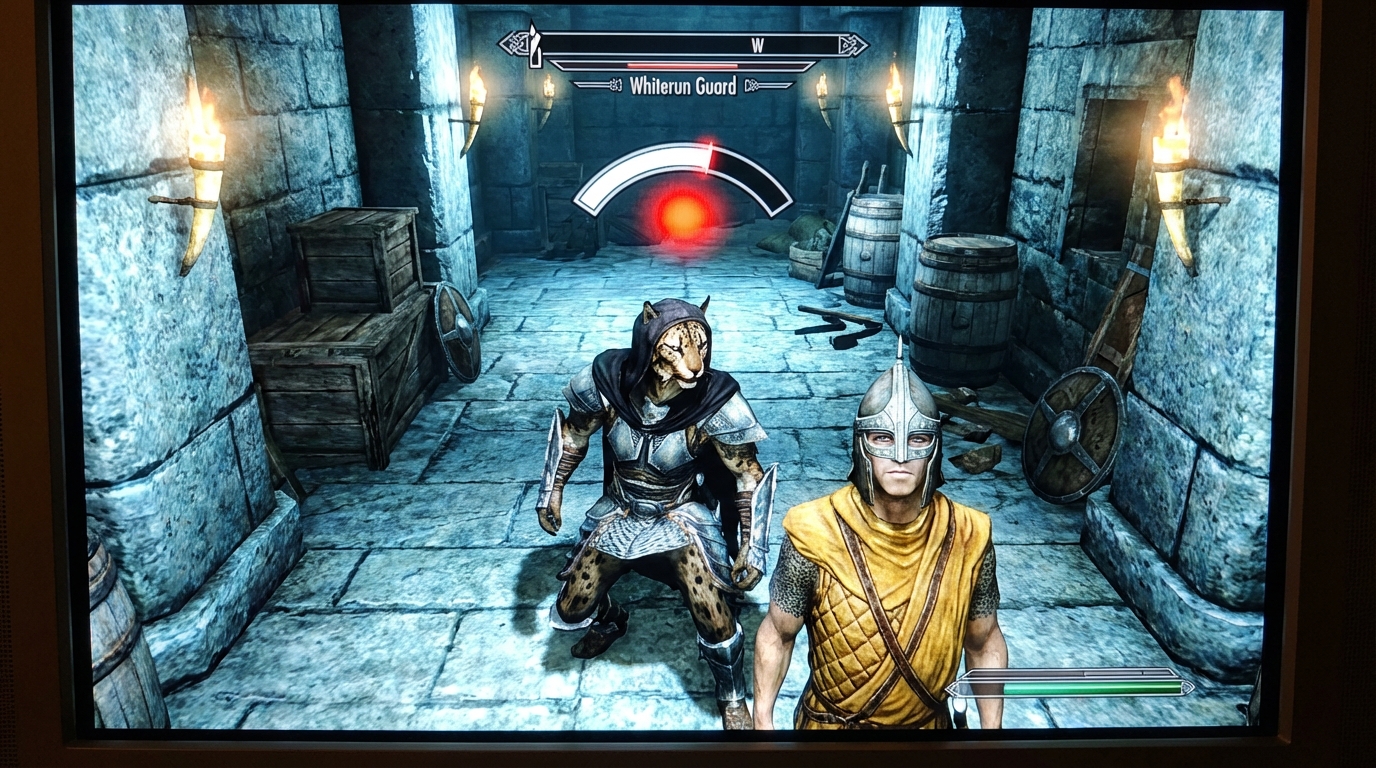
We have all been there, crouching in the pitch-black corner of a basement while a guard stares directly at our soul from three inches away without seeing a thing. Then, two minutes later, you are belly-crawling through a dense thicket of bushes in the dead of night and a sniper three zip codes away suddenly develops x-ray vision. These detection meters are less about tactical feedback and more about a random number generator deciding when it is time for you to die. It is a special kind of design failure when hidden is a subjective term that changes based on whether the AI had its morning coffee. The UI promises a clear binary of seen or unseen, but the actual gameplay feels like trying to negotiate with a moody toddler who keeps changing the rules.
The visual feedback in these games is often a total lie that treats the player like a sucker for following the established logic. You can be standing in the middle of a sun-drenched courtyard, practically waving at the security cameras, and the meter remains a blissful, empty white. Yet the moment you step into a shadow that should make you invisible, the meter spikes to a panicked red because a pixel of your shoelace clipped through a texture. This inconsistency completely kills the tension because you stop playing the game and start playing the janky UI. Instead of feeling like a master infiltrator, you end up feeling like a confused pedestrian wondering why the world’s most elite guards are blind until they suddenly aren’t.
Modern stealth systems frequently cheat by giving the AI omniscience the moment a single script fails to trigger correctly. It is infuriating to watch a detection bar fill up through a solid stone wall just because the developers forgot to tag that specific asset as an opaque object. You are forced to endure this bizarre dance where you are simultaneously a ghost and a neon sign depending on which way the wind is blowing. When the mechanics are this broken, the only winning move is to stop playing trash and start looking for titles that actually respect the player’s time. If the game refuses to play fair with its own detection rules, I see no reason to respect the stealth path it clearly didn’t bother to polish.
The Binary Fail State Of Instant Detection
There is nothing that kills my gaming buzz faster than a stealth mission where the guards have psychic powers and a hair trigger. We have all been there, crawling through the shadows for twenty minutes only to have a single pixel of our elbow graze a line of sight, resulting in an immediate Game Over screen. It is the ultimate lazy design choice because it robs me of the most exciting part of the genre, which is the desperate, sweaty-palmed scramble to vanish back into the darkness. When a game forces a reload the second you are spotted, it is not a stealth simulator, it is just a high-stakes game of Simon Says where the punishment for a sneeze is death.
I want the chance to mess up and actually deal with the consequences instead of being teleported back to a loading screen. A truly great stealth system should feel like a conversation between the player and the AI, where getting caught kicks off a frantic chase through the rafters or a smoke-bomb-fueled disappearance. Instead, many modern titles treat detection like a binary fail state that flickers from invisible to dead with zero middle ground. It is immersion-breaking and frankly insulting to my intelligence when I cannot even attempt to bribe, punch, or outrun a guard who just happened to glance in my general direction.
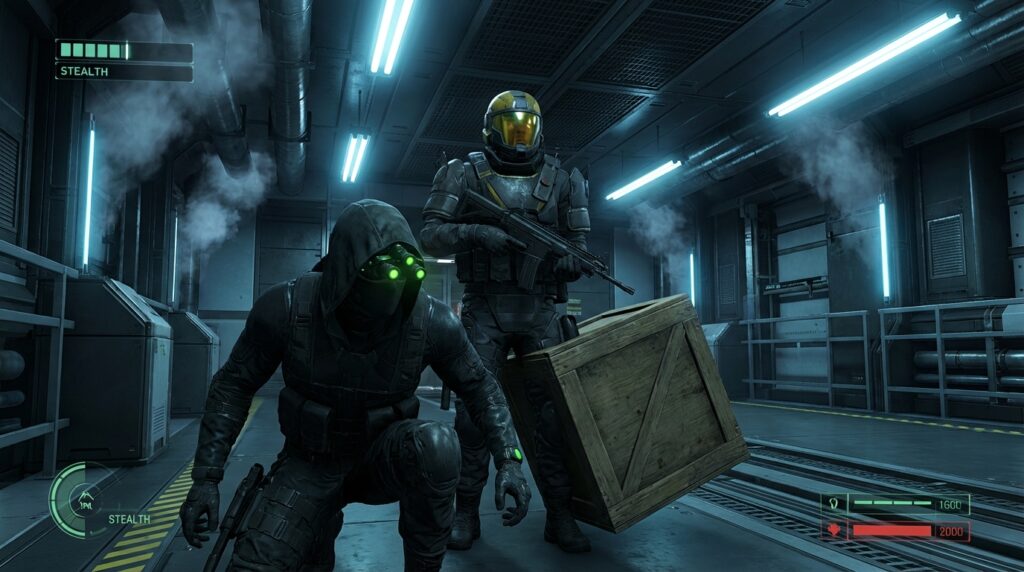
The irony is that these rigid systems often feel more broken than the experimental mechanics of the past. We are seeing real-world stealth tech struggle with basic integration, like high-tech jets being delivered without their primary eyes, yet video game guards are still expected to be perfect terminators. If a multi-million dollar aircraft can have an engineering mismatch that limits its vision, surely a hungover digital sentry can be allowed to doubt whether he actually saw a man in a tactical vest roll behind a crate. Give me the chaos of a botched heist any day over the sterile perfection of a forced restart because the developer was too lazy to code a proper escape loop.
Fix the Stealth or Stop Pretending
Ultimately, stealth shouldn’t feel like a roll of the dice where the house always wins. We have all been there, crouching in a dark corner only to have a guard pull a 180 degree turn and spot us through a solid brick wall. It is high time developers stopped treating these mechanics as a back of the box feature to be checked off and started treating them as a core pillar of engagement. If I am playing a high tech ghost, I should not feel like I am fighting against a broken physics engine and inconsistent line of sight triggers.
Modern detection systems often feel like they were designed by people who have never actually tried to hide in real life. There is nothing more frustrating than a hidden meter that jumps from zero to one hundred because a pixel of your shadow touched a guard’s peripheral vision. We need AI that reacts with nuance, shifting from curiosity to suspicion before jumping straight into an all out firefight. When stealth is an afterthought, it turns what should be a tense tactical experience into a tedious cycle of quick loading until the RNG finally decides to cooperate.
If you are going to put a crouch button in your game, make sure the world actually reacts to it in a way that makes sense. We want systems that reward creativity and positioning rather than punishing us for the game’s own technical shortcomings. It is not about making things easy, it is about making the rules of engagement clear and consistent so that when we fail, it is our fault and not the software’s. Stop giving us broken tools and start giving us the polished, shadow creeping fantasies we actually paid for, rather than another bloated open world that prioritizes quantity over quality. Thankfully, the immersive sim revival is finally here to remind us that emergent gameplay and player agency are still possible when developers actually care about systemic depth.
Frequently Asked Questions
1. Why do guards in some games seem to have psychic powers?
It is usually a total collapse of the game’s internal logic where the AI ignores physical barriers like walls or darkness. Instead of simulating actual sight lines, the code just gives the NPC a global awareness of your coordinates the moment you trigger a specific radius. It is lazy design that turns a tactical mission into a frustrating mess of trial and error.
2. Is the military actually dealing with broken stealth tech?
Yes, and it is even more embarrassing than a developer glitch. The military is currently shipping billion-dollar fighter jets that are missing their actual radar systems, essentially making them fly blind. It is the real-world equivalent of buying a premium DLC skin only to realize the developers forgot to include the hitboxes or the ability to see your enemies.
3. What makes a stealth mechanic truly broken versus just difficult?
Difficulty is when you get caught because you made a mistake, while a broken mechanic is when you get caught despite doing everything right. If you are hidden in a bush with a zero light meter and a guard still spots your pinky toe through a brick wall, the game is failing to follow its own rules. True stealth should be about player agency, not rolling the dice against a buggy AI.
4. Why is the Psychic Guard Syndrome so common in modern gaming?
Developing sophisticated AI that understands lighting, sound, and line-of-sight is expensive and time-consuming for developers. Many studios take the shortcut of giving NPCs X-ray vision because it is easier than coding a nuanced detection system. It is a classic move from the buggy alpha build playbook that treats the player like a target rather than a participant.
5. How does hardware incompatibility affect modern stealth aircraft?
The modern military industrial complex is currently struggling with the same compatibility issues you see in a rushed PC port. Advanced aircraft are being delivered without functional sensors because the hardware and software simply refuse to talk to each other. It proves that even with a massive budget, you can still end up with a high-tech paperweight if the integration is handled poorly.
6. Should I keep playing a game if the stealth mechanics are this bad?
If a game treats your cover like it is made of glass and your silence like a neon sign, it is usually time to hit the uninstall button. There is no point in mastering a system where the rules are made up and your tactical choices do not actually matter. Life is too short to play a buggy alpha build that someone had the audacity to label a finished product.