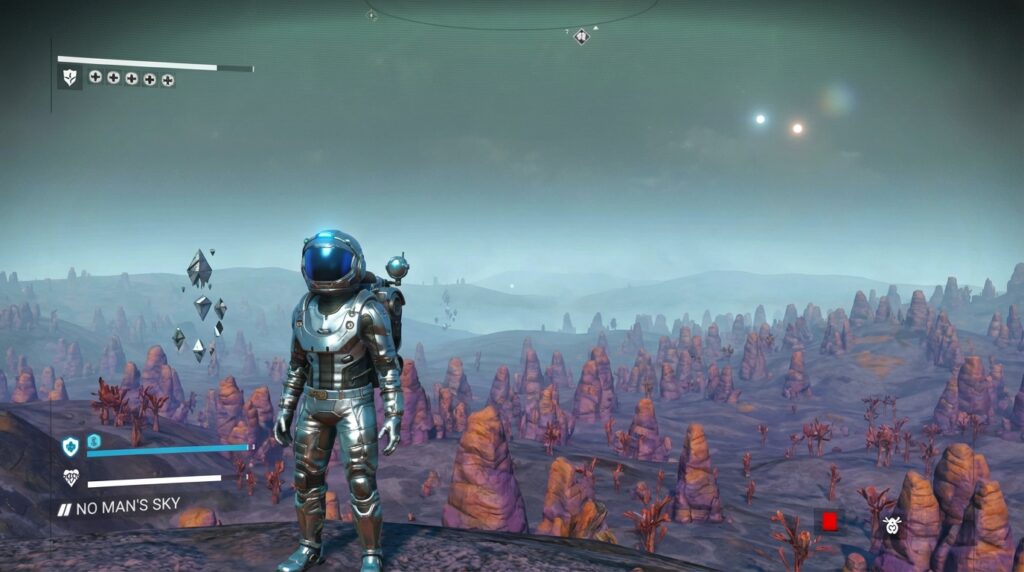
We’ve all been sold the lie of infinite replayability, but lately, that infinite universe feels about as vast as a parking lot. I’m calling it procedural generation fatigue, and it’s the reason why your tenth hour in a billion-star galaxy feels exactly like your first. Algorithms are great at math, but they’re miserable at making me care about a cave system that looks like every other cave system I’ve explored since 2015.
It’s the Oatmeal Problem in digital form: you can give me a million bowls of oats with the grains shifted three millimeters to the left, but I’m still just eating mush. Without human intent or a designer actually placing a rock for a reason, these worlds feel hollow and hauntingly predictable. We’re trading soul for scale, and frankly, I’d rather have one hand-crafted room that matters than a trillion planets that don’t.
Key Takeaways
- The ‘Oatmeal Problem’ proves that mathematical variety is not the same as substantive content; a billion unique variations are worthless if they all result in the same bland, repetitive experience.
- Procedural generation is increasingly used as a developer crutch to prioritize infinite scale over human intent, replacing thoughtful level design with soulless, predictable algorithms.
- Pattern recognition quickly destroys player immersion by revealing the recycled assets and mathematical shortcuts behind generated worlds, turning exploration into a tedious chore.
- A tightly crafted, short experience with specific design intent is inherently more valuable than hundreds of hours of algorithmically generated bloat.
The Oatmeal Problem And Algorithmic Boredom
The Oatmeal Problem is the perfect metaphor for the current state of infinite gaming. An algorithm can generate a trillion bowls of oatmeal, each with every individual oat placed in a mathematically unique position, but you are still just staring at a bowl of mush. It does not matter if the rock on the left is three inches taller or if the enemy has a slightly different shade of green skin when the core experience remains identical. This is the illusion of variety that developers use to pad out playtime without actually adding any substance. When every planet or dungeon feels like a remix of the same five assets, the infinite world starts to feel incredibly small.
We are currently drowning in a sea of procedurally generated bloat that lacks a human soul. Hand-crafted levels have intent, flow, and specific challenges designed to test your skills, whereas an algorithm just fills space to keep you busy. You can tell when a developer has checked out and let the math do the heavy lifting because the exploration starts to feel like a chore. There is no joy in discovery when you realize that the unique legendary sword you found is just the same base model with a 2 percent fire damage modifier. It is lazy design masquerading as value, and most of us are tired of pretending that a million variations of nothing is the same thing as actual content.
The result of this algorithmic laziness is a specific type of procedural generation fatigue that makes you want to uninstall a game before the first act is even over. Once you see the strings of the puppet, the magic of the world completely vanishes. You stop looking at the scenery and start seeing the repetitive patterns, the recycled textures, and the predictable enemy spawns. True adventure requires surprises that a computer simply cannot dream up on its own. If a game boasts about having billions of planets, you can usually bet that about five of them are actually worth your time, while the rest are just cold, dry oatmeal.
Pattern Recognition Killing The Sense Of Discovery
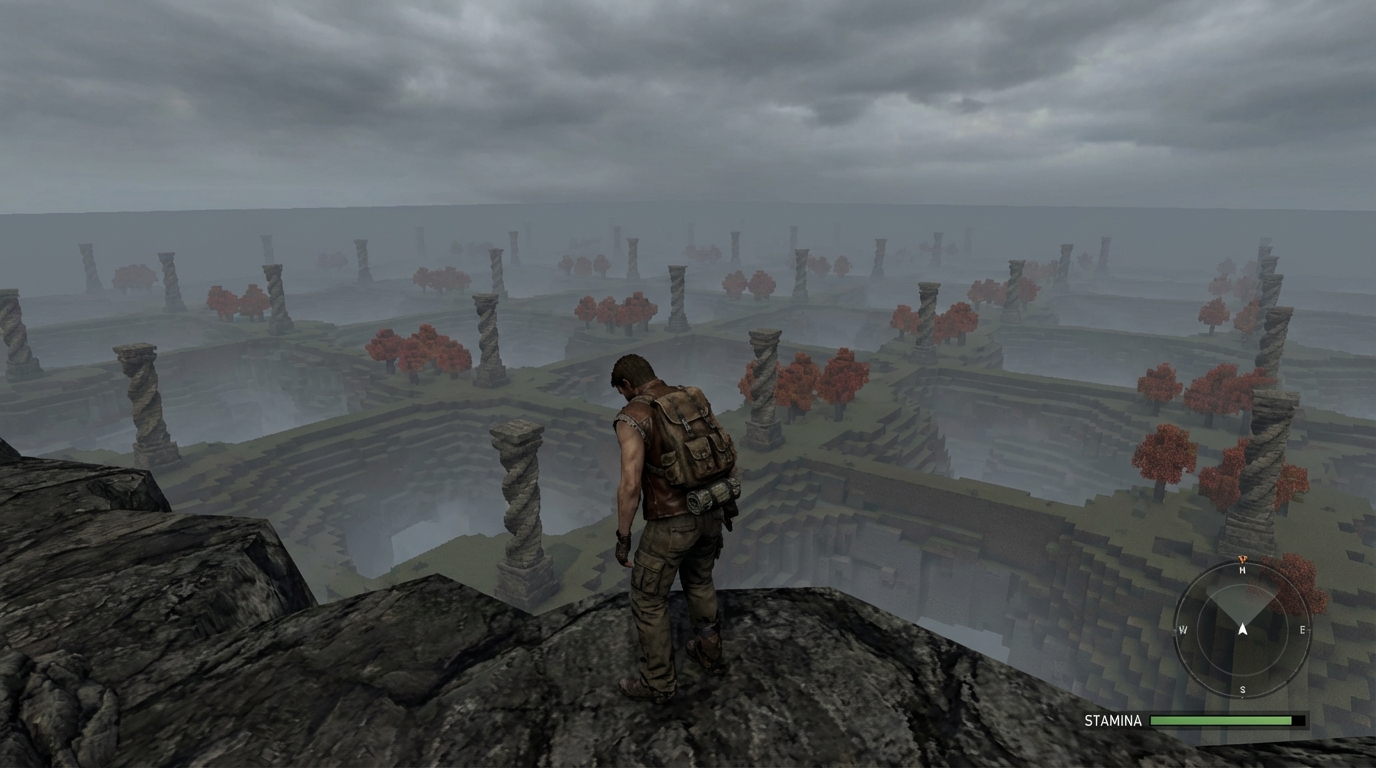
Our brains are remarkably efficient at sniffing out the shortcuts taken by lazy developers who rely on infinite algorithms to do their heavy lifting. You might spend the first hour of a game marveled by the scale of a procedurally generated planet, but by hour three, the magic trick falls apart completely. You stop seeing a lush alien forest and start seeing the specific Tree Variant B assets placed at predictable intervals by a math equation. Once that pattern recognition kicks in, the sense of wonder evaporates and is replaced by the realization that you are just walking through a spreadsheet with a coat of paint. It is the gaming equivalent of seeing the wires holding up a movie monster, which immediately kills any hope of staying immersed.
The industry loves to sell us on the dream of endless exploration, but most of these systems suffer from the oatmeal problem. An algorithm can give you a million bowls of oatmeal with every single oat in a slightly different position, but you are still just looking at a bowl of beige mush. Human-designed levels have intent, pacing, and a specific why behind every corridor and enemy placement that code simply cannot replicate. When a game lacks that soul, every new discovery feels like a chore because you already know exactly what the math is going to spit out next. We do not need more space to explore if every single inch of it feels like a carbon copy of the last planet we just left.
Seeing the seams of a game’s code is the ultimate immersion breaker for anyone who actually values their time. Instead of feeling like a pioneer in an untouched frontier, you feel like a quality assurance tester checking for clipping errors in a repetitive loop. There is a massive difference between a world that feels lived-in and one that feels like it was generated five seconds before you arrived on the scene. If a developer cannot be bothered to hand-craft a meaningful experience, I usually cannot be bothered to finish it. We have reached a point where bloated open worlds are just a polite way of saying the game is shallow, and desperately needs a human touch.
Human Intent Versus The Soulless Math Loop
The magic of a human designer lies in the subtle art of placement, where every health pack or enemy ambush serves a specific narrative or mechanical purpose. When you walk through a handcrafted level, you can feel the developer nudging you, teasing a secret around the corner or building tension through deliberate architecture. Procedural generation, by contrast, replaces that thoughtful guidance with a soulless math loop that values quantity over quality. It turns the thrill of exploration into a chore because the algorithm doesn’t care if a room is interesting, it only cares that the room exists. You end up wandering through a trillion star systems that all feel like the same empty parking lot in different shades of neon beige.
This obsession with infinite content has birthed the Oatmeal Problem, where everything is technically unique but functionally identical. An algorithm can toss a million different toppings into a bowl, but you are still just staring at a pile of mush. Real gameplay depth comes from friction and intentionality, things a randomized script simply cannot simulate regardless of how many variables it crunches. We have reached a point where infinite replayability is usually just code for “we didn’t want to hire a level designer.” It is time to stop pretending that a mathematical dice roll can replace the brilliance of a person who actually knows how to make a game fun.
The industry needs to realize that a tight, three hour experience with a soul is worth more than a thousand hours of generated noise. Fatigue sets in the moment you recognize the pattern, turning a supposed epic adventure into a predictable sequence of assets being swapped in and out. There is no joy in discovering a new planet when you know it is just the previous planet with the gravity turned up and the trees dyed purple. We are being drowned in content that lacks a heartbeat, proving that more is almost never better when the more is being handled by a calculator. If a game doesn’t have the decency to respect my time with human intent, I would rather just uninstall it and play something that does.
Infinite Boredom is Not a Feature
Ultimately, we have to stop pretending that infinite content is a feature when it usually feels like a chore. While procedural generation can be a fantastic tool for creating unpredictable encounters, too many developers are using it as a crutch to avoid doing the actual work of level design. We have reached a point where seeing a randomly generated tag on a store page feels less like a promise of adventure and more like a warning that we are about to play through a thousand variations of the same beige hallway. It is the gaming equivalent of a banquet where every dish is just a slightly different shape of unseasoned mashed potatoes. If there is no human intent behind the placement of a chest or an enemy, there is no real reason for me to care about finding them.
The industry needs to realize that a tightly crafted five-hour experience will always beat forty hours of algorithmically generated bloat. We are tired of the Oatmeal Problem where every unique bowl tastes exactly the same because the ingredients lack any soul or flavor. Developers should focus on using these systems to enhance handcrafted worlds rather than replacing them entirely with math and spreadsheets. When everything is special, nothing is, and players are finally waking up to the fact that their time is worth more than a never-ending loop of repetitive assets. Let us get back to linear narrative games that actually have something to say instead of games that just refuse to end.
Frequently Asked Questions
1. What exactly is the Oatmeal Problem in gaming?
It is the phenomenon where a game gives you a billion variations that all feel exactly the same. An algorithm can shift a rock three inches or change a monster’s hue, but if the core experience doesn’t change, you are still just staring at a bowl of bland mush.
2. Why does procedural generation feel so boring after a few hours?
You are experiencing the death of human intent. When a computer tosses assets together based on math rather than design, the world loses its soul and becomes a predictable loop of things you have already seen a thousand times.
3. Is procedural generation just a lazy way for developers to make games?
It is often used as a cheap shortcut to pad out playtime without actually building a game worth playing. While it is a powerful tool for background tasks, using it to replace hand-crafted level design is just a way to let the math do the heavy lifting while the developers check out.
4. Can a procedurally generated world ever be as good as a hand-crafted one?
Not if you value quality over quantity. A hand-crafted room has a specific purpose and a flow designed to test your skills, whereas a generated planet is just digital noise meant to keep you busy while you wait for something interesting to happen. Instead of settling for filler, you should look for Steam gems that prioritize quality and creative vision.
5. Does infinite replayability actually exist?
It is a marketing lie sold to people who mistake scale for substance. True replayability comes from deep mechanics and tight design, not from an algorithm that generates a trillion empty parking lots for you to walk across.
6. How can I tell if a game is suffering from procedural bloat?
If your tenth hour in the game feels identical to your first despite visiting new locations, you are drowning in bloat. When the scenery changes but the gameplay remains a stagnant remix of the same five assets, it is time to hit the uninstall button.