
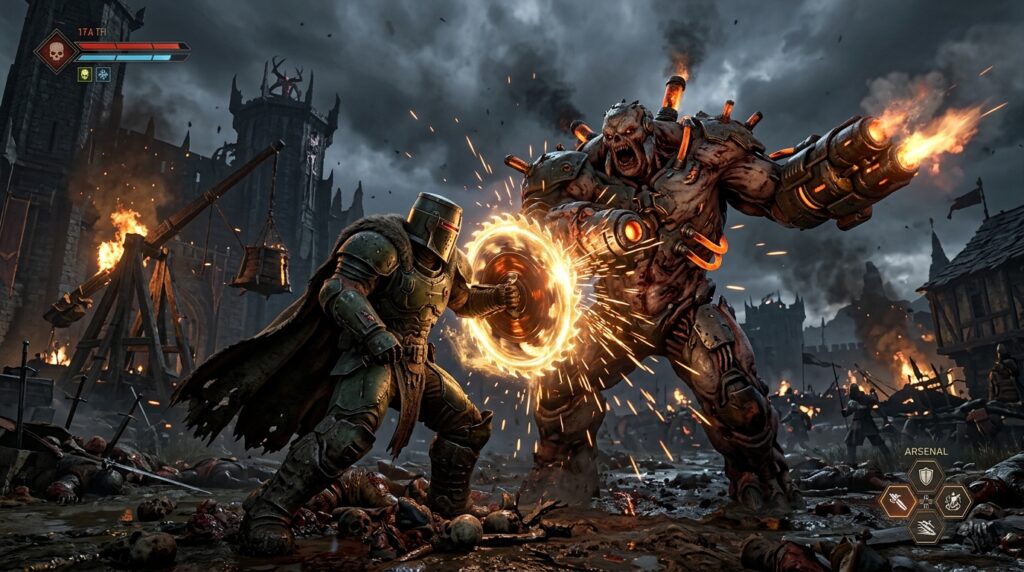
Forget everything you thought you knew about the Slayer’s resume before he started punching holes into Mars. Since its release, Doom: The Dark Ages has been busy shattering every record id Software spent the last 34 years building, proving that people really just want to hit demons with a spiked shield. It hit three million players in five days, seven times faster than its predecessor, because apparently, everyone was collectively tired of modern firearms and ready for some medieval ultraviolence.
This isn’t just another prequel cash-grab designed to fill a gap in the lore; it’s a masterclass in how to strip a franchise down to its blood-soaked bones. By trading jetpacks for gritty Year Zero origins, the game manages to feel heavier and more rewarding than the frantic platforming of recent entries. Whether you’re playing on PC or snagged it as a Day One treat on Game Pass, it’s clear that the Slayer’s “Dark Ages” are the brightest spot the series has seen in years.
Key Takeaways
- DOOM: The Dark Ages has achieved unprecedented commercial success, reaching three million players in five days and outperforming its predecessor’s launch speed sevenfold.
- The gameplay marks a fundamental shift from high-speed platforming to a grounded, ‘heavy tank’ combat style that emphasizes deliberate movement and visceral medieval brawling.
- New mechanical innovations like the Shield Saw and pilotable Atlan mechs successfully evolve the franchise formula by prioritizing defensive parrying and tactile, large-scale warfare.
- This prequel serves as a masterclass in franchise reinvention, stripping away modern gadgets to focus on a ‘Year Zero’ aesthetic that values raw feedback over complex skill trees.
Heavy Metal Warfare In The Year Zero
While the previous entry felt like playing a high-speed game of floor-is-lava with a rocket launcher, The Dark Ages drags us back down into the blood-soaked mud where we belong. This isn’t just a change in scenery, it is a fundamental shift in how the Slayer interacts with the world, trading mid-air dashing for the heavy, clanking weight of a heavy tank. The movement feels grounded and deliberate, making every step toward a demon feel like an inevitable death sentence for whatever poor soul is in your path. It is a refreshing pivot away from the frantic twitch-shooting of the past, focusing instead on a visceral brand of combat that feels more like a medieval brawl than a gymnastics routine. You can practically feel the grit in your teeth as you grind through the Year Zero setting, proving that id Software knows how to reinvent their own wheel without losing the axle.
The star of this heavy metal show is undoubtedly the Shield Saw, a tool that makes the previous games’ chainsaw look like a kitchen utensil. Instead of just dodging projectiles like a caffeinated ninja, you are now actively parrying attacks and shredding faces in close quarters with a hunk of jagged metal. This mechanic forces a more intimate style of warfare, where you aren’t just clearing a room, you are methodically dismantling it. Every skull-crush feels personal because the game forces you to stay in the pocket, trading blows rather than zipping across the arena. It is a bold move to slow things down in an era obsessed with speed, but the sheer impact of the combat makes the “neon speed” of the past feel almost flimsy by comparison.
This prequel raises the inevitable question of whether the franchise is truly innovating or just recycling its own legacy for a new coat of paint. By stripping away the high-tech gadgets and focusing on raw, mechanical brutality, the developers have managed to create something that feels both ancient and entirely new. The success of this launch proves that there is a massive hunger for games that prioritize feel and feedback over complex skill trees or bloated open worlds. It is a confident, middle-finger salute to modern gaming trends, delivering a focused experience that values a well-timed shield bash over a dozen unnecessary movement mechanics. Whether this is a one-time detour or the new standard for the series, it is clear that the Slayer’s origin story has more teeth than anyone expected.
Shield Saws And Dragon Piloting Mechanics
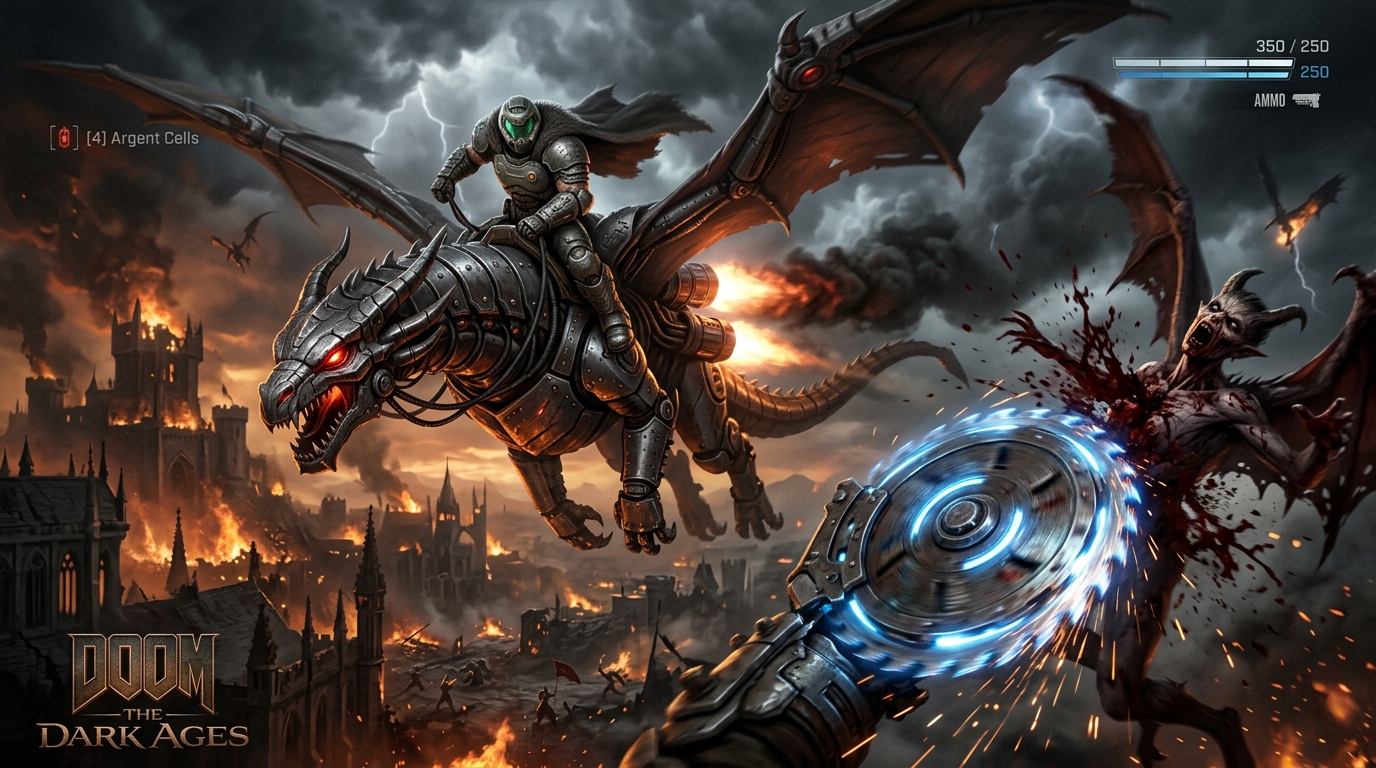
The Shield Saw is the kind of mechanical genius that makes you wonder why id Software waited thirty years to give us a motorized frisbee. It perfectly bridges the gap between the frantic resource management of the previous games and the grounded, heavy hitting combat of this prequel. Instead of just being a defensive tool, the Shield Saw functions as a projectile and a melee buzzsaw that rewards you for getting into the dirt. It feels like the developers finally stopped trying to make us play “the floor is lava” and instead encouraged us to stand our ground like a medieval tank. This addition alone justifies the shift in gameplay pace, turning the Slayer into a walking fortress that punishes anything bold enough to get close.
Taking control of the Atlan mechs and piloting a fire breathing dragon could have easily been a gimmicky disaster, but the execution is surprisingly tactile. The mechs actually feel like they have weight, shaking the screen with every punch and making you feel the scale of the carnage without the controls feeling sluggish. Flying the dragon is equally impressive, avoiding the floaty physics that usually plague aerial combat in first person shooters. It does not feel like a scripted mini game, but rather a natural extension of the Slayer’s power on a much larger scale. These segments prove that id Software is not just repeating the same glory kill loop, but is actually willing to take big, loud swings at new ideas.
Innovation Versus The Doom Legacy Cycle
The massive success of DOOM: The Dark Ages proves that id Software still knows how to command a crowd, but it also forces us to look closer at what we are actually playing. With three million players jumping in within the first five days, the hype is undeniable, yet I cannot help but wonder if we are witnessing a true evolution or just a polished victory lap. The game swaps the high flying gymnastics of the previous entries for a grounded, heavy metal medieval aesthetic that feels fresh on the surface. However, the core loop of smashing demons into bloody confetti remains the same reliable formula we have seen for decades. It is a masterclass in presentation, but beneath the shield saw and the dragon riding, the skeletal structure of the franchise is starting to show its age.
Innovation in this industry often feels like a buzzword used to sell us the same game with a different coat of paint. While the Dark Ages introduces the Year Zero origins of the Slayer and shifts the combat tempo, it still leans heavily on the legacy of its predecessors to do the heavy lifting. We are getting the same visceral thrills, just wrapped in a gritty, rusted aesthetic that appeals to anyone who misses the simplicity of old school shooters. It is undeniably fun to parry a Hell Knight with a literal shield, but part of me feels like id Software is playing it safe by sticking to the hits. They have perfected the art of the reboot, but at some point, the cycle of nostalgia needs to offer more than just a new way to pull a trigger.
Ultimately, the question of whether this is a genuine step forward or a legacy trap depends on how much you value familiarity over true disruption. The game is a technical marvel and a commercial juggernaut that justifies its existence through sheer, unadulterated polish. It avoids the trap of being a lazy sequel by completely retooling the movement mechanics, yet it refuses to stray too far from the altar of the Slayer. If this is the “Doom Legacy Cycle” in action, at least the developers have the decency to make the repetition feel like a premium experience. Whether it stands as a pillar of innovation or just a very expensive tribute act remains to be seen as the dust settles on this massive launch.
Heavy Metal Medieval Violence Done Right
Ultimately, DOOM: The Dark Ages proves that the Slayer does not need a jetpack or a neon-soaked skyscraper to feel relevant. While some feared id Software might just be reskinning the same old glory kills, the shift toward a more grounded, heavy metal medieval aesthetic breathes fresh life into the formula. It successfully avoids the trap of being a mere historical footnote by introducing mechanics like the shield saw that actually change how you approach a crowd of demons. You are not just repeating history here, you are reclaiming the heavy, deliberate pace that made the original shooters feel so impactful decades ago. If you have been craving a game that respects your intelligence while letting you ride a mechanical dragon, this is the one.
Three million players did not just show up for the nostalgia, they showed up because this game respects the core tenets of what makes a shooter worth playing. It is rare to see a franchise this old manage to innovate without losing its soul or turning into a bloated, microtransaction-filled mess. The Dark Ages manages to feel like a lost relic from a better era of gaming while maintaining the technical polish we expect from a modern powerhouse. Your hard drive space is a precious commodity, but clearing out some generic open-world fluff to make room for this brutal masterpiece is the easiest decision you will make all year. The Slayer should definitely not have stayed in retirement, because he is currently doing the best work of his long, bloody career.
Frequently Asked Questions
1. Is Doom: The Dark Ages just another DLC expansion?
Not even close. This is a full-blown prequel that strips the franchise down to its gritty, blood-soaked bones to show you the Slayer’s Year Zero origins. It is a complete reinvention that trades frantic platforming for heavy, grounded medieval ultraviolence.
2. How does the movement feel compared to previous entries?
The days of playing floor-is-lava with a jetpack are over. You are now a walking tank in the mud, meaning the movement is deliberate, heavy, and feels like an inevitable death sentence for anything in your way. It is a visceral brawl that focuses on power rather than gymnastics.
3. Can I play this on Game Pass on the first day?
Yes, you can snag this as a Day One treat on Game Pass if you are playing on PC or Xbox. Some might argue the Game Pass gold rush is over, but it is easily the brightest spot the series has seen in years, making it a mandatory download for anyone with a subscription.
4. Is the game actually popular or is it just hype?
The numbers do not lie. It shattered records by hitting three million players in just five days, which is seven times faster than its predecessor. People are clearly exhausted by modern firearms and ready to hit demons with a spiked shield instead.
5. What kind of weapons can I expect in this prequel?
Expect a fundamental shift toward heavy metal warfare that fits the medieval setting. The star of the show is the spiked shield, proving that id Software knows how to make primitive tools feel just as devastating as a BFG.
6. Do I need to know the lore of the previous games to enjoy this?
You do not need a PhD in demonology to enjoy punching holes in monsters. While it fills gaps in the Slayer’s resume, the focus is squarely on the rewarding combat and the grim atmosphere of the Dark Ages. Many classic franchise reboots fail to capture this balance, but id Software has managed to keep the Slayer’s legacy intact.