
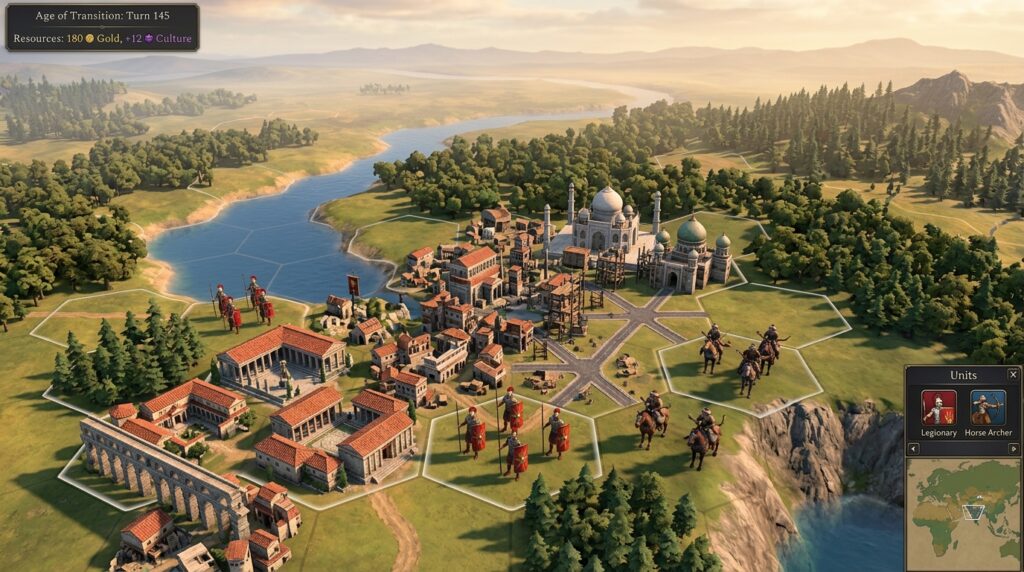
start_thought
Remember when we all collectively lost our minds because the developers decided your glorious Roman Empire had to magically morph into something else just because the calendar flipped? The launch era was a weird time of identity crises and forced swaps, but the recent civilization 7 strategy changes have finally brought some sanity back to the hex grid. With the 1st Anniversary Update and the Test of Time expansion, the studio finally admitted that maybe, just maybe, some of us actually want to finish a game as the same leader we started with.
The new “One Civ” mode is the star of the show, effectively killing the most hated mechanic in recent strategy history. Instead of being forced into a mid-game costume change, you can now drag your favorite civilization kicking and screaming through all three ages with brand-new unique units and buildings designed for the long haul. It is a massive win for historical continuity and a middle finger to the forced variety that almost tanked the game’s reputation. Finally, we can stop playing musical chairs with our national identities and get back to the important business of nuking our neighbors.
Key Takeaways
- The new ‘One Civ’ mode restores historical continuity by allowing players to lead a single civilization from Antiquity through the Modern Era without forced identity swaps.
- Unique era-specific units and buildings have been added for every culture, ensuring that civilizations remain strategically viable and visually distinct even in late-game stages.
- The Test of Time expansion balances the meta by making ‘tall’ playstyles competitive through Legacy Projects that allow small, efficient empires to outpace sprawling ones.
- Victory conditions and long-term planning are no longer disrupted by age transitions, as early-game choices now scale meaningfully across the entire timeline.
The Death Of Forced Age Swapping
Let’s be honest, being forced to trade in your Egyptian chariots for Mongolian horsemen just because the calendar hit a certain year felt less like a strategic evolution and more like a forced identity crisis. The launch version of the game tried to convince us that changing clothes mid-game was the future, but most of us just felt like we were losing the empire we actually spent hours building. Thankfully, the One Civ mode introduced in the 1st Anniversary Update finally lets us keep our dignity by sticking with one culture from the mud huts of Antiquity to the neon lights of the Modern Era. It turns out that players actually enjoy historical continuity, and the developers finally stopped trying to fix a problem that never existed in the first place.
This shift back to unified progression is a massive win for anyone who values actual immersion over arbitrary game mechanics. To make this work, the designers had to stop being lazy and actually design unique units and buildings for every era, ensuring your chosen culture does not just become a generic placeholder in the late game. You can now take a civilization like Rome and see what their architectural style would look like in a skyscraper filled metropolis instead of being forced to turn into a completely different country. It makes the journey feel like a legitimate experience again rather than a series of disconnected mini-games stitched together by a confusing menu screen.
Strategically, this change means your long term planning actually carries weight because you are not constantly worried about your unique bonuses evaporating during an age transition. You can lean into a specific playstyle from turn one and watch it snowball authentically without the game pulling the rug out from under your feet. It is the kind of common sense update that reminds us why we fell in love with this franchise, proving that sometimes the best innovation is just listening to the fans and admitting when a bold new direction was actually a dead end. We wanted to build an empire that lasted forever, and we can finally do it without a mandatory mid-game makeover.
Strategy Beyond The Age Transition Mechanic
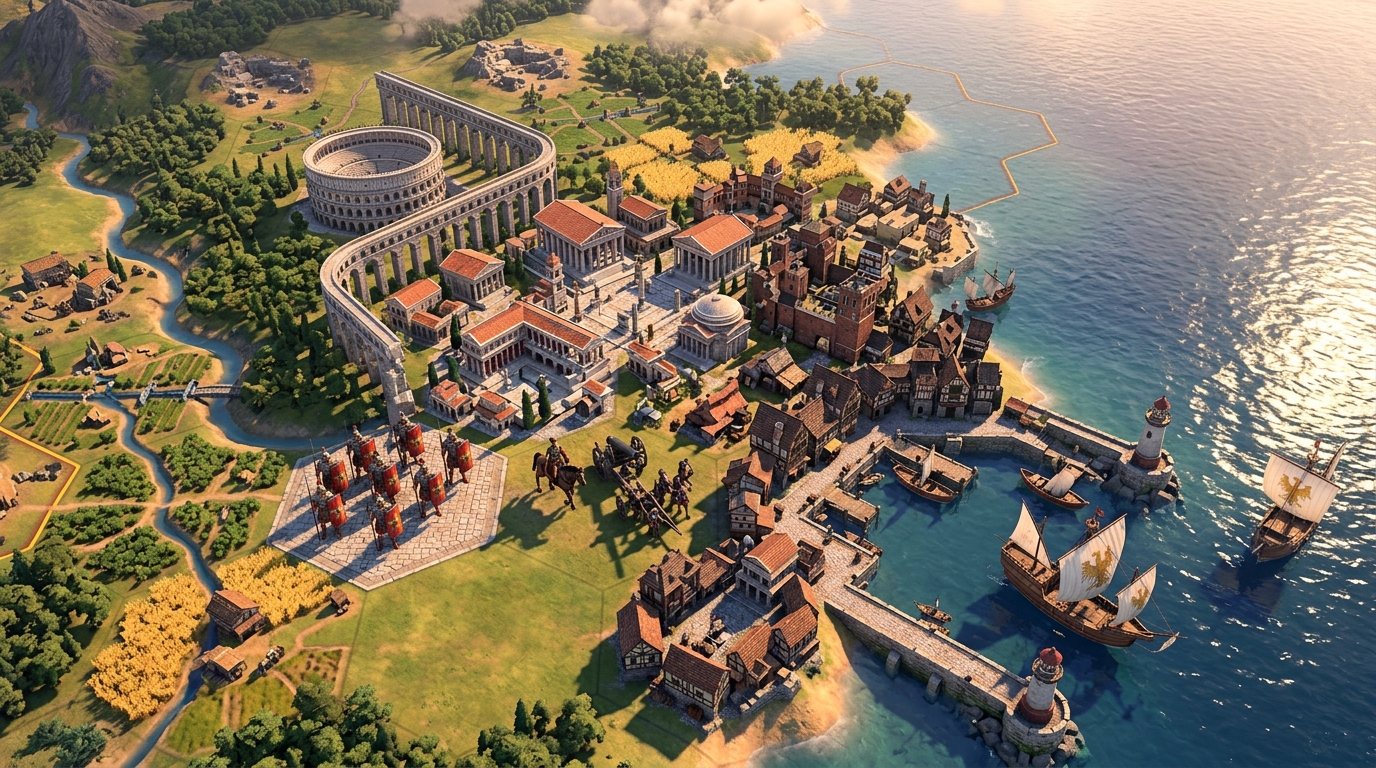
The 1.3.2 update and the Test of Time expansion finally killed the one size fits all strategy that made the initial launch feel like a choreographed dance routine. By decoupling victory conditions from the rigid age transition mechanic, the team actually remembered that some of us like to plant our flag and stay put. The new system rewards you for leaning into your civilization’s specific strengths rather than forcing you to pivot your entire identity every few hours. It is a massive win for anyone who felt like the mandatory civ-swapping was just a fancy way of saying your early game choices did not actually matter. You can finally build a legacy that feels earned instead of just being a series of disconnected era-specific bonuses.
If you are a tall player who loves micro-managing a handful of super-cities, you can breathe a sigh of relief because the viability gap has finally closed. The Test of Time expansion overhauled the cultural and scientific victory paths so that a compact, highly efficient empire can actually outpace a sprawling mess of colony cities. I found that the new Legacy Projects allow smaller nations to stack permanent buffs that keep them competitive even when the map painters try to gobble up every neutral tile. It is refreshing to play a strategy game where more does not always equate to better for once. You actually have to think about your infrastructure instead of just spamming settlers until your keyboard breaks.
Wide playstyles still have their place for the warmongers among us, but the update added some much-needed friction to prevent mindless expansion. Managing a massive empire now requires genuine logistical foresight because the new administrative strain mechanics will eat you alive if you do not plan ahead. The beauty of the 1.3.2 changes is that neither style feels like a handicap anymore, which is a miracle considering how lopsided the meta was at launch. Whether you are nurturing a single jewel of a city or crushing the world under your boots, the game finally respects your time and your tactical choices. It took a year of complaining, but we finally have a version of the game that feels like it was designed by people who actually play strategy games.
New Era Specific Units And Buildings
When the game first launched, the forced civ-swapping felt like being told your favorite ancient empire had suddenly decided to go through a mid-life crisis and become someone else entirely. Thankfully, the 1st Anniversary Update finally stopped treating history like a game of musical chairs by introducing the One Civ mode. The studio realized that if I want to play as Rome from the first turn to the last, I should not be penalized with a generic, flavorless experience once the industrial revolution hits. They have actually put in the legwork to backfill unique content for every era, ensuring that your chosen civilization stays relevant instead of turning into a hollow shell.
The real magic is in how they handled the era-specific unique units and buildings for civilizations that historically tapped out early. It is honestly impressive to see the creative ways they reimagined ancient cultures with modern military tech and architecture that actually fits their aesthetic. You are no longer stuck with generic infantry just because your civ peaked in 200 BC, as the new expansion adds specialized assets that maintain your unique identity through the Modern Age. This change fixes the biggest strategic headache of the launch version, where your specialized bonuses would simply evaporate the moment the calendar flipped.
I have to give credit where it is due because these new additions do not feel like lazy reskins or low-effort filler. Each building and unit feels like a logical evolution of that culture’s specific strengths, bridging the gap between the Exploration and Modern eras with genuine style. It is a massive relief to see a developer actually listen to the fan base and fix a mechanic that felt fundamentally broken at the start. Now, the strategy is less about planning which identity to steal next and more about how to leverage your unique legacy across the entire timeline. Sometimes, you just need to slow down and use tactical pause mechanics to map out your next fifty turns of infrastructure development.
Fixing the Mid-Life Crisis One Civ at a Time
So, is the game finally the masterpiece we were promised, or is it just a shiny coat of paint on a mid-tier strategy game? With the 1st Anniversary Update and the Test of Time expansion, the developers have basically admitted that forcing us to swap nations mid-game was a bit of a strategic identity crisis. The introduction of the One Civ mode is a massive win for anyone who actually cares about historical continuity and does not want their Egyptian empire to suddenly start speaking Mongolian. It feels like the team finally listened to the veteran players who just wanted to build a legacy that actually makes sense from the Stone Age to the Space Age. If you were holding out because the Age mechanic felt like a forced gimmick, these updates have officially bridged the gap between innovation and the classic feel we love.
That being said, you should only jump back in if you are ready to embrace a much more complex layer of management than what you found in previous entries. The new unique units and buildings for the Exploration and Modern eras mean that sticking with one civilization is no longer a handicap, but a fully fleshed-out path to victory. It is refreshing to see a studio actually fix a disastrous launch instead of just doubling down on bad design until the player base evaporates. While the game still has its quirks, the current state of the civilization 7 strategy changes makes it a genuine contender for your weekend-long gaming marathons. If you have been clinging to the older titles out of spite, it is probably time to put down the nostalgia and see how much better things are when the best expansion packs make the One Civ dream actually an option.
Frequently Asked Questions
1. What is the One Civ mode and why should I care?
One Civ mode is the glorious end to the identity crisis forced on us at launch. It lets you pick one civilization and actually stay as that civilization from the stone age to the space age. It is the only way to play if you value historical continuity over nonsensical mid-game costume changes.
2. Do I still get new stuff if I refuse to swap civilizations?
You absolutely do. The update added unique units and buildings for every era specifically for players who stick with one culture. You get the progression without the annoying requirement of pretending your Romans suddenly became Mongolians.
3. Is the forced age swapping mechanic gone for good?
It is dead and buried if you want it to be. While the original musical chairs mechanic still exists for people who enjoy chaos, the One Civ mode makes it entirely optional. We finally have the choice to play the game the way it should have been designed in the first place.
4. How does the Test of Time expansion change the early game?
It adds depth to the long haul by ensuring your early game choices actually matter in the modern era. Instead of your Antiquity progress being a disposable tutorial for your next civ, everything you build now scales. It turns the game back into a marathon rather than a series of disconnected sprints.
5. Can I still win the game using the old swapping mechanics?
Yes, the game still allows for the original era-hopping if you actually liked that mess. However, the new strategy changes mean you are no longer penalized for having a favorite culture. You can now chase a victory screen without a forced personality transplant every few hundred turns.
6. What was the biggest problem with the launch version of the game?
The launch version felt like it was trying to solve a problem that did not exist by forcing variety down our throats. It broke the immersion of building an empire when your national identity changed based on a calendar flip. These recent changes finally prioritize player agency over gimmicky design choices.