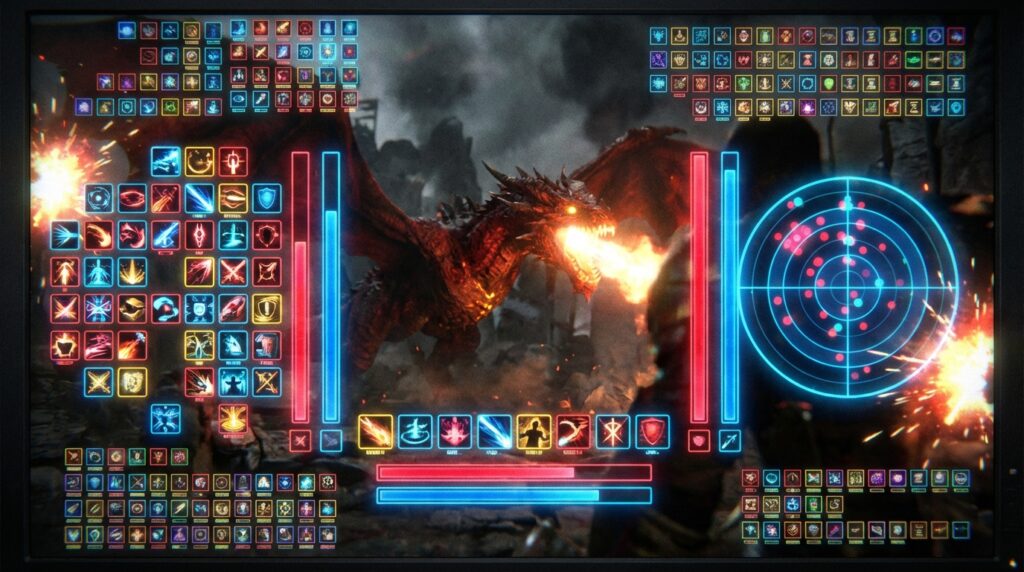
I just paid seventy bucks for a gorgeous next-gen title with ray-traced puddles so realistic I can practically smell the digital asphalt. Too bad I can’t actually see any of it. Instead, my screen is buried under a landslide of flashing XP bars, premium currency pop-ups, and a minimap screaming at me to collect three glowing bear pelts. The plague of cluttered game HUDs has reached critical mass. It turns what should be an immersive visual experience into a malfunctioning casino slot machine. Developers seem terrified that if my retinas aren’t being actively assaulted by three different cooldown timers, I might suddenly remember I have a real life and turn the console off.
I know modern games are packed with complex mechanics. I still absolutely do not need a seasonal event tracker blocking my crosshairs during a boss fight. We have hit a point where monitoring health, stamina, loot drops, and a 3D compass simultaneously requires the manic multitasking skills of a caffeinated air traffic controller. It is pure, unfiltered lazy design masquerading as player convenience. If your game requires a spreadsheet’s worth of neon widgets just to let me walk down a hallway, you haven’t built a deep RPG. You have just built a spreadsheet with better lighting.
Key Takeaways
- Excessive UI clutter in modern video games ruins immersion by burying high-fidelity graphics under unnecessary notifications and trackers.
- Relying on glowing objective markers and minimaps is lazy design that strips away natural environmental cues and destroys organic exploration.
- Developers must implement dynamic, contextual HUDs that fade away during casual gameplay and only appear when strictly necessary.
- Providing a master toggle to disable all HUD elements should be an industry standard to let players navigate without intrusive handholding.
The Clutterification Of Modern Screen Real Estate
Developers are currently locked in an arms race to create the most breathtakingly realistic 4K landscapes possible, only to immediately bury them under a mountain of neon digital garbage. I genuinely do not understand the logic of spending eighty million dollars rendering individual blades of grass if you are just going to slap a giant glowing objective marker right over it. You boot up a highly anticipated release hoping to immerse yourself in a beautifully crafted world. Instead, you are greeted by a user interface that looks like a malware-infected popup ad. We finally have the hardware to make virtual worlds look indistinguishable from reality, yet studios seem terrified that we might actually want to look at them. It feels like a massive slap in the face to the art department when their stunning vistas are perpetually blocked by a flashing notification telling me I leveled up my crafting skill.
It is completely absurd that modern games demand we stare at a minimap, a compass, and a floating 3D waypoint all at the exact same time just to walk fifty feet down a linear hallway. Add in the obligatory XP bar, a constantly ticking combo counter, and a blinking icon reminding you to visit the premium currency shop, and you have a recipe for instant sensory overload. This level of aggressive handholding treats players like toddlers wandering through a grocery store who need a glowing path to find the cereal aisle. I am trying to play an epic fantasy adventure, not pilot a commercial airliner through a severe thunderstorm with twelve different instrument panels screaming at me. The sheer volume of screen vomit is exhausting. It forces players to spend half their playtime digging through settings menus just to make the game visually tolerable.
The worst part of this visual plague is that turning off these intrusive trackers often renders the game completely unplayable. Because developers rely so heavily on these crutches, they strip away all natural environmental cues. You cannot actually navigate the world without their obnoxious neon breadcrumbs. If I disable the giant glowing arrow hovering over an objective, I should still be able to find it by listening to character directions or reading a physical signpost. Instead, we are trapped in a bizarre paradox where games are more mechanically complex than ever, yet require absolutely zero critical thinking to navigate. Until studios figure out how to design an organic world again, I will be over here installing minimalist UI mods just to see the skybox.
Treating Gamers Like Completely Lost Toddlers
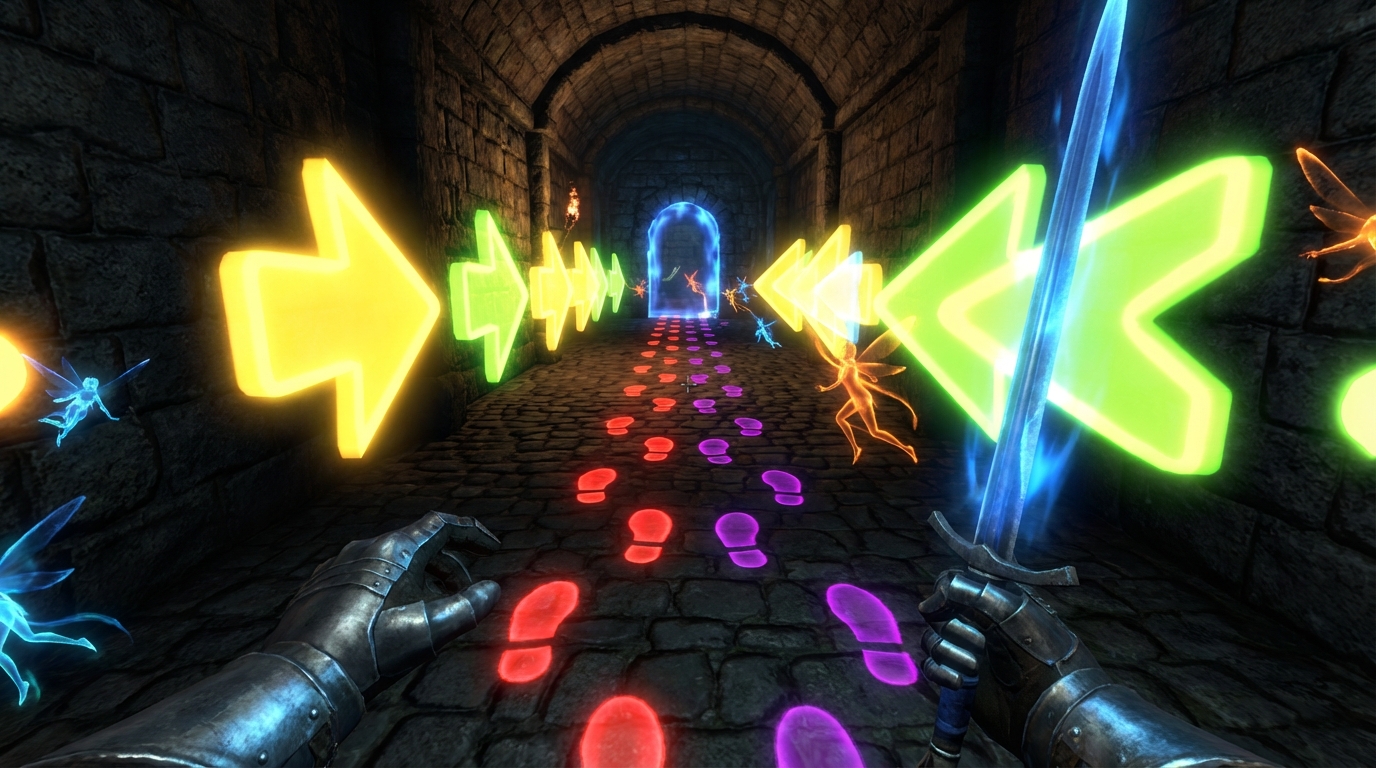
I honestly cannot remember the last time a major studio trusted me to walk ten feet without a glowing breadcrumb trail holding my hand. Modern game developers seem utterly terrified that if we are not constantly bombarded with directional arrows, we will instantly burst into tears and uninstall their precious product. Instead of letting us actually look at the beautiful worlds they spent millions of dollars rendering, they slap a massive compass, a rotating minimap, and three different floating objective markers right in the middle of our view. It is an incredibly insulting design philosophy. We absolutely do not need a giant flashing neon sign to tell us a door is locked, especially when we just watched our character rattle the handle.
The sheer amount of absolute screen vomit in games today completely destroys any organic sense of natural exploration. You cannot take two steps into a mysterious cave without a massive loot tracker popping up to announce that you just picked up three pieces of common iron ore. Add in the constant live service notifications, seasonal event trackers, and premium currency advertisements, and you are left squinting through a chaotic spreadsheet just to see the actual gameplay. I play video games to escape the overwhelming noise of the real world, not to manage a flashing dashboard of cooldown timers and daily login rewards. If a game requires this much aggressive user interface clutter just to keep your attention, the core mechanics are probably fundamentally broken anyway.
Dynamic Fading And The Contextual Cure
Thankfully, a few brave developers have finally realized that treating the player screen like a spreadsheet is a terrible idea. The cure to this modern sensory overload is surprisingly simple, and it comes in the form of dynamic fading. Instead of permanently burning a minimap and twenty different quest trackers into my retinas, contextual HUDs only show up when they are actually needed. This brilliant mechanic respects my intelligence by assuming I do not need a constant reminder of my exact stamina percentage while I am just standing still. It is the perfect antidote to the screen vomit that plagues so many modern releases.
I have to give massive credit to a few recent open-world titles for actually getting this right. When I am swinging through a digital metropolis or cruising down neon-lit streets, the interface completely fades into the aether. The screen is left totally clean. This allows me to actually look at the stunning world the artists spent years building instead of staring at a cluttered cluster of icons. The moment I enter combat or tap a scanner button, the necessary information snaps back into place instantly. These games prove that you can have deeply complex mechanics without forcing players to look through a digital pilot visor at all times.
This approach definitively proves that less really is more when you are not actively fighting for your virtual life. I do not need my hand held with a permanent compass and three different loot notifications while I am just taking a casual walk to the next objective. By hiding the math and the live service trackers until they are strictly relevant, these contextual systems cure player fatigue entirely. Other studios desperately need to take notes on this minimalist philosophy before they release yet another bloated title. If your game is beautiful, you should probably let us actually see it.
Stop Burying the Game Under Screen Vomit
Let us get one thing perfectly straight before another developer decides to slap a glaring neon compass on my forehead. When I hand over seventy bucks for a modern gaming experience, I am paying to see the actual video game, not a spreadsheet of cooldown timers and flashing loot notifications. We have reached an era of unprecedented graphical fidelity, yet studios insist on burying those gorgeous environments under a mountain of persistent screen vomit. I do not need a glowing minimap, three different quest trackers, and a constant reminder of my premium currency balance just to walk from one village to the next. The gaming industry needs to stop treating players like toddlers who will forget how to breathe if there is not an on-screen prompt telling us to inhale.
The solution to this sensory overload is ridiculously simple, yet developers act like we are asking them to rewrite their entire physics engine. Giving players a master toggle to turn off every single piece of heads-up display clutter should be a mandatory industry standard by now. If a studio wants to design an interface that looks like a cheap mobile casino, that is their choice, but they must give the rest of us the basic respect of an off switch. We deserve the option to explore these massive digital worlds relying entirely on our own eyes and instincts instead of a handholding breadcrumb trail of glowing icons. Until developers figure out how to design an interface that respects our intelligence, they need to let us wipe the screen clean and actually enjoy the view.
Frequently Asked Questions
1. What exactly is a cluttered game HUD?
A cluttered game HUD is when developers cram your screen with so much neon garbage that you can barely see the game itself. It is a landslide of flashing XP bars, premium currency popups, and minimaps screaming at you. We are basically playing a spreadsheet masquerading as an RPG.
2. Why do developers keep making user interfaces like this?
Developers seem absolutely terrified that you might forget what to do for three seconds and turn the console off. They treat us like caffeinated air traffic controllers who need constant stimulation to stay awake. It is pure lazy design disguised as player convenience.
3. Can I just turn off the HUD elements in most modern games?
You can usually dig into the settings and turn off the digital clutter, but the game rarely actually supports it. Modern titles are designed around these neon widgets, so turning them off usually means you will wander aimlessly for hours. It is a total trap that just leaves you frustrated and lost.
4. What is the Clutterification of screen real estate?
It is the industry obsession with rendering breathtaking 4K landscapes and then immediately covering them with giant glowing objective markers. You pay eighty bucks for gorgeous graphics, but your screen ends up looking like a malware-infected popup ad. It totally defeats the purpose of having high-end hardware.
5. Does a busy UI mean a game has deep mechanics?
Absolutely not. If your game requires a dozen glowing widgets just to let me walk down a hallway, you have not built a deep RPG. You have just built a spreadsheet with better lighting and worse math.
6. How do these messy interfaces affect gameplay immersion?
They completely shatter it. You cannot get lost in a beautifully crafted virtual world when a seasonal event tracker is actively blocking your crosshairs during a boss fight. It turns an immersive visual experience into something resembling a malfunctioning casino slot machine.
7. Are there any games that actually get the HUD right?
Yes, plenty of games understand that less is more. Titles that use diegetic UI integrate your health and ammo directly into the world or your character model. It proves that developers can respect our intelligence without treating our retinas like a punching bag.