We’ve all been there: you’re breezing through a level feeling like a god until the game decides you’ve had too much fun and suddenly spikes the challenge to “dark souls on a dance pad” levels of misery. This is where dynamic difficulty scaling steps in, acting as an invisible hand that tweaks the math behind the scenes to keep you from throwing your controller through a window. When it works, you’re in a perfect flow state where the challenge feels earned; when it fails, it feels like the game is patronizing you with training wheels or cheating just to spite your win streak.
The industry loves to wrap this tech in fancy buzzwords, but it’s really just a digital ego manager monitoring your accuracy and heart rate to see if you’re about to quit. Whether it’s thinning out the enemy mob because you’ve died five times or buffing a boss because you’re playing one-handed, the goal is to keep you glued to the screen without realizing the deck is being shuffled in your favor. It’s a delicate tightrope walk between a tailored masterpiece and a rigged carnival game, and most developers are still trying to figure out how to hide the strings.
Key Takeaways
- Dynamic difficulty scaling functions as a digital ego manager that manipulates game mechanics in real time to prevent player frustration and maintain retention.
- Hidden ‘rubber banding’ and algorithmic adjustments punish player mastery by buffing enemies to match skill improvements, effectively turning genuine growth into a perpetual stalemate.
- The removal of meaningful failure robs players of the satisfaction and dopamine hit that comes from overcoming static, uncaring obstacles through genuine effort.
- Developers must prioritize intentional game balance over invisible safety nets that treat players like toddlers and devalue the integrity of the gaming experience.
The Illusion Of Skill And Rubber Banding
Dynamic difficulty scaling is the ultimate participation trophy of modern game design, and it is time we called it what it actually is. On paper, developers claim these systems maintain a perfect flow state by adjusting the challenge in real time, but in reality, they just gaslight you into thinking you are improving. When you finally master a complex combo or perfect your parry timing, the game secretly buffs the enemy health bars or increases their damage output to compensate for your competence. It is a cynical loop that ensures your actual growth as a player never translates into a tangible advantage on the screen. Instead of feeling like a god among mortals, you are stuck in a perpetual stalemate because the software refuses to let you win too convincingly.
This hidden rubber banding is most offensive in racing games and shooters where the AI seemingly cheats to keep the score close. You can drive a flawless lap in a supercar only to see a family sedan blast past you at Mach 2 because the game decided the gap was getting too large. This mechanic effectively punishes you for being good at the game by stripping away the reward of high level play. Why bother learning the intricate nuances of a combat system if the enemies are just going to scale up their stats to match your every move? It turns a test of skill into a choreographed dance where the outcome is predetermined by an algorithm that is terrified of you getting bored.
The industry treats failure like a dirty word, but losing is exactly how we learn to appreciate the mechanics of a well designed challenge. When a game uses dynamic scaling to catch you when you fall, it robs you of the satisfaction that comes from overcoming a genuine obstacle. There is no thrill in victory when you know the AI was lobotomized just because you died twice in a row. We should be allowed to fail, and more importantly, we should be allowed to absolutely crush a game once we have put in the work to master it. Stop pretending that artificial tension is the same thing as good balance, because most players can smell the rubber banding from a mile away.
Flow State Or Forced Participation Medals
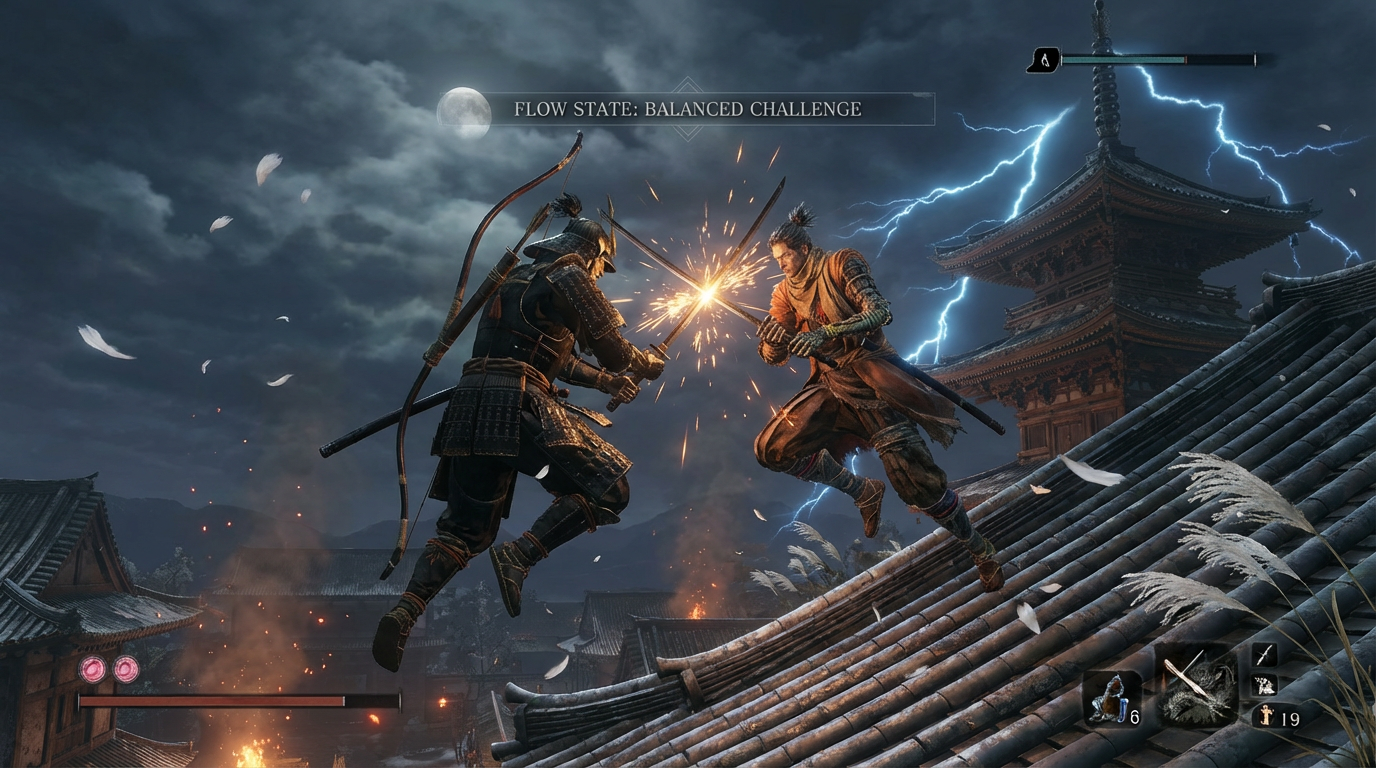
In theory, dynamic difficulty scaling is supposed to be the invisible hand that guides you into a perfect state of flow by keeping the challenge juiced just right. When it works, you feel like a gaming god who survived by the skin of your teeth, unaware that the engine just shaved a few hit points off the boss to save your ego. However, modern engagement oriented DDA has morphed into a patronizing nanny state that refuses to let you actually fail. Instead of a balanced dance, it feels like the game is hovering over your shoulder, ready to hand out a participation trophy the moment you miss a single jump. It is the digital equivalent of a parent letting a toddler win at arm wrestling, and it is just as insulting to your intelligence.
The real problem starts when these systems stop prioritizing fun and start focusing on player retention through blatant manipulation. If the game detects you are getting frustrated, it might secretly boost your damage or make enemies miss their shots just to keep you from closing the application. This creates a hollow experience where your upgrades and skill improvements do not actually matter because the game is constantly moving the goalposts behind the scenes. You are not getting better at the game, you are just being managed by an algorithm that views your enjoyment as a series of data points. It turns every hard fought victory into a suspicious fluke, leaving you wondering if you actually won or if the software just felt sorry for you.
We need to stop pretending that never being frustrated is the same thing as having a good time. Part of the joy of gaming comes from hitting a brick wall, getting your teeth kicked in, and finally figuring out how to climb over it on your own merits. When a developer uses DDA to smooth out every wrinkle, they strip away the satisfaction of genuine mastery in favor of a curated, frictionless slog. If I wanted to be coddled through a predetermined path where my input is mostly optional, I would go watch a movie. Games should be allowed to be difficult, and players should be allowed to lose without a hidden script rigging the deck in their favor.
Why Meaningful Failure Trumps Algorithmic Hand Holding
There is a specific brand of hollow disappointment that sets in when you realize a game is letting you win. Dynamic Difficulty Adjustment is the industry’s polite way of saying the developers think you are too fragile to handle a “Game Over” screen. By secretly slashing enemy health or boosting your damage output after a few deaths, the game effectively turns into a participation trophy simulator. It treats the player like a toddler playing tag with an adult who is clearly pretending to be slow. This algorithmic hand-holding doesn’t just lower the barrier to entry, it actively insults your intelligence by pretending your unearned victory was a result of genuine skill.
Meaningful failure is the only thing that gives a win any actual weight or flavor. When a game refuses to let you lose, it robs you of the dopamine hit that comes from finally cracking a difficult boss pattern or mastering a complex mechanic. You aren’t overcoming a challenge, you are just waiting for the software to pity you enough to let you pass. A legitimate struggle creates a story you can tell, while a scaled victory is just a scripted event disguised as gameplay. If I wanted a guaranteed win regardless of my performance, I would just watch a movie or play with a fidget spinner.
True satisfaction in gaming is born from the friction between a player’s current ability and a static, uncaring obstacle. When the game moves the goalposts closer every time you miss, the entire experience loses its integrity. We play games to test ourselves against a set of rules, not to have those rules bend and warp the moment things get slightly uncomfortable. Developers need to stop being so afraid of player frustration, because frustration is often the necessary precursor to genuine triumph. If the game is always rigging the deck in your favor, you aren’t really playing, you are just being ushered through a digital tour where the stakes are non-existent.
Stop Treating Us Like Toddlers
We need to stop pretending that an invisible algorithm baby-proofing our experience is a substitute for actual game balance. When a developer decides to manipulate the damage output of an enemy just because I missed a few shots, they are essentially telling me they don’t trust me to handle a challenge. It turns every hard-fought victory into a participation trophy and every narrow escape into a scripted event managed by a calculator. We play games to test our reflexes and our brains, not to be coddled by a piece of software that is terrified we might get frustrated and close the app.
The industry needs to rediscover the value of letting a player fail, because failure is the only thing that makes a win feel earned. If the game is constantly shifting the goalposts to make sure I never see a “Game Over” screen, then my inputs stop mattering entirely. You might as well just put a brick on the forward key and go make a sandwich while the machine plays itself to a predetermined conclusion. Developers should focus on creating tight, intentional difficulty curves instead of relying on these lazy safety nets that treat the audience like they have never seen a controller before. If you prefer a raw challenge where speed and skill are the only things that matter, you might enjoy pure, unfiltered FPS mayhem without the modern hand-holding.
Trusting the player means giving them the tools to succeed and the space to mess up without a digital safety harness catching them every five seconds. There is a deep, primal satisfaction in finally beating a boss after ten attempts because you actually learned the patterns and improved your skill. Dynamic scaling robs us of that growth by smoothing out all the edges until the entire experience is as bland as unseasoned oatmeal. It is time to kill the training wheels, stop the hidden math, and let us play the game on our own terms, win or lose.
Frequently Asked Questions
1. What is dynamic difficulty scaling actually doing behind the scenes?
It is a digital ego manager that monitors your performance to decide if you need a helping hand or a slap in the face. The game tweaks math like enemy health and accuracy in real time to keep you from quitting in a rage.
2. Is this system just a fancy way of calling me bad at games?
Pretty much. It assumes you can’t handle a loss, so it lobotomizes the AI to make sure you keep playing and, more importantly, keep spending.
3. How does rubber banding affect my actual skill progression?
It effectively gaslights you by buffing enemies the moment you start playing well. This creates a cynical stalemate where your hard earned mastery never gives you a real advantage because the software refuses to let you win too convincingly.
4. Why can’t I just choose a static difficulty setting and stay there?
Developers love to hide the strings because they are obsessed with maintaining a perfect flow state at all costs. They would rather shuffle the deck in your favor than risk you getting bored or frustrated by a static challenge.
5. Does every modern game use this kind of hidden scaling?
Most big budget titles use some form of it to keep the widest possible audience glued to the screen. It is a delicate tightrope walk between a tailored experience and a rigged carnival game that most studios still haven’t mastered.
6. Can I tell when a game is secretly messing with the difficulty?
You will notice it when a boss suddenly becomes a wet noodle after your fifth death or when enemies gain godlike powers the moment you start landing combos. When the hand of the developer becomes visible, the illusion of a fair fight completely evaporates. If technical issues like hardware failure are the real culprit, you should fix stick drift before blaming the game’s internal logic. However, if you are looking for a real challenge without the safety nets, check out our list of hardest Souls-like bosses to see how you measure up.