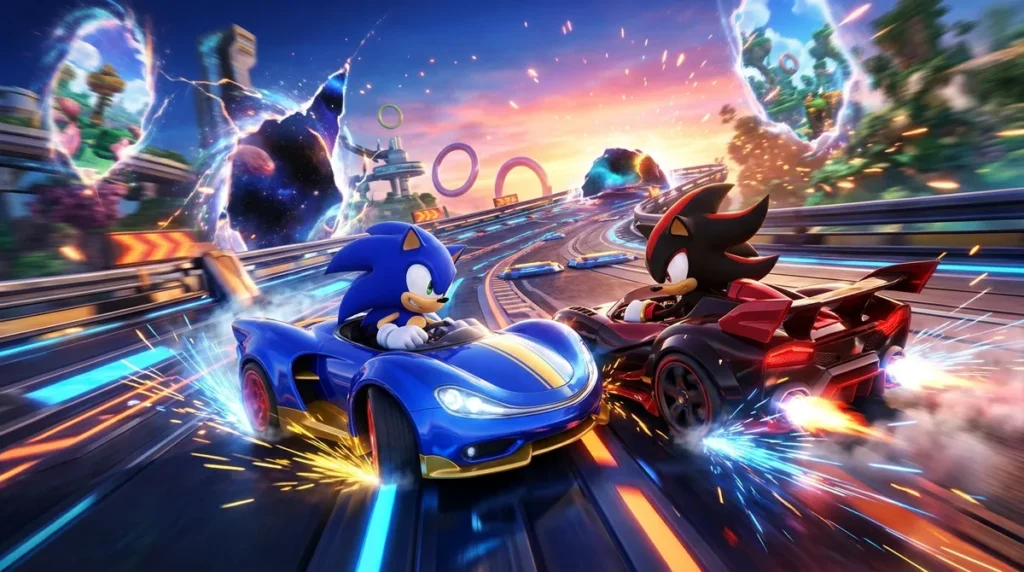
Sonic Racing CrossWorlds Year Two kicks off with Version 2.0.0, and the headline addition is Duel Mode, a one-on-one race format that works online and offline. PlayStation’s November 3 announcement put the Standard Edition at $39.99, with the Digital Deluxe Edition and Year Two Digital Deluxe Edition each at $59.99.
Year Two also adds a seventh Gadget slot, the Super Slot, but you have to earn it: 40 races and the Grand Master Plate. SEGA’s patch notes add 15 new Gadgets and promise six crossover DLC packs and eight free updates.
Key Takeaways
- Sonic Racing CrossWorlds Year Two’s Duel Mode is a focused one-on-one format that works online and offline, but it turns into homework the moment it gates progression.
- Sonic Racing CrossWorlds Year Two’s Super Slot requires the Grand Master Plate, which means racing 40 times, so the race count is a grind rather than a measure of skill.
- Sonic Racing CrossWorlds Year Two’s Standard Edition costs $39.99, while the Digital Deluxe Edition and Year Two Digital Deluxe Edition each cost $59.99, so either deluxe option adds $20 to the base price.
- Sonic Racing CrossWorlds Year Two’s balance pass drops Ring Engine’s standard stat boost from +12 to +8 and caps Rocket Punch wall ricochets at 2 in both directions, which is the right call for a stacked build.
- Sonic Racing CrossWorlds Year Two’s eight free updates matter more than its six crossover DLC packs, and the driving has to earn your return.
Duel Mode Turns Sonic Racing Into a Head-to-Head Game
Head-to-head racing is one of the oldest ideas in the genre, and it works for a simple reason: nobody can blame the rubber-banding AI when the person in front of you is a sweaty goblin who cuts you off on the last corner. Sonic Racing’s second year leans into that idea with a dedicated duel format that pits two racers against each other instead of burying you in a crowded field of twelve. The pitch is clean and easy to understand. Stripped of the item-spam chaos that fills a standard grid, every lap becomes a personal grudge match. When it clicks, it’s the most focused the series has felt in years.
The problem is that focus cuts both ways. A duel is only as good as the track and the opponent, and a one-on-one format exposes every weak corner and dull shortcut that a 12-car pileup would have hidden. It also makes the lack of depth in the core handling more obvious, because there’s nowhere to hide when it’s just you and one rival. Some duel courses feel like they were picked for their scenery rather than their racing lines, which is a shame when the whole mode depends on tight, readable circuits. Still, when the track layout works, the back-and-forth genuinely earns its tension.
Here’s the part the publisher probably hopes you won’t think too hard about: a mode that’s fun in short bursts becomes a chore when it’s bolted on as a requirement for progression. If the duel format gates unlocks or rewards, it stops being a bonus and starts being homework. Duel Mode is at its best as an optional sparring ring for players who want a clean, personal challenge. As a forced hoop, it’s another reminder that fun and grind are not the same thing. Play it because you want to beat your mate, not because a progress bar told you to.
Super Slot and Fifteen Gadgets Behind a Race Grind
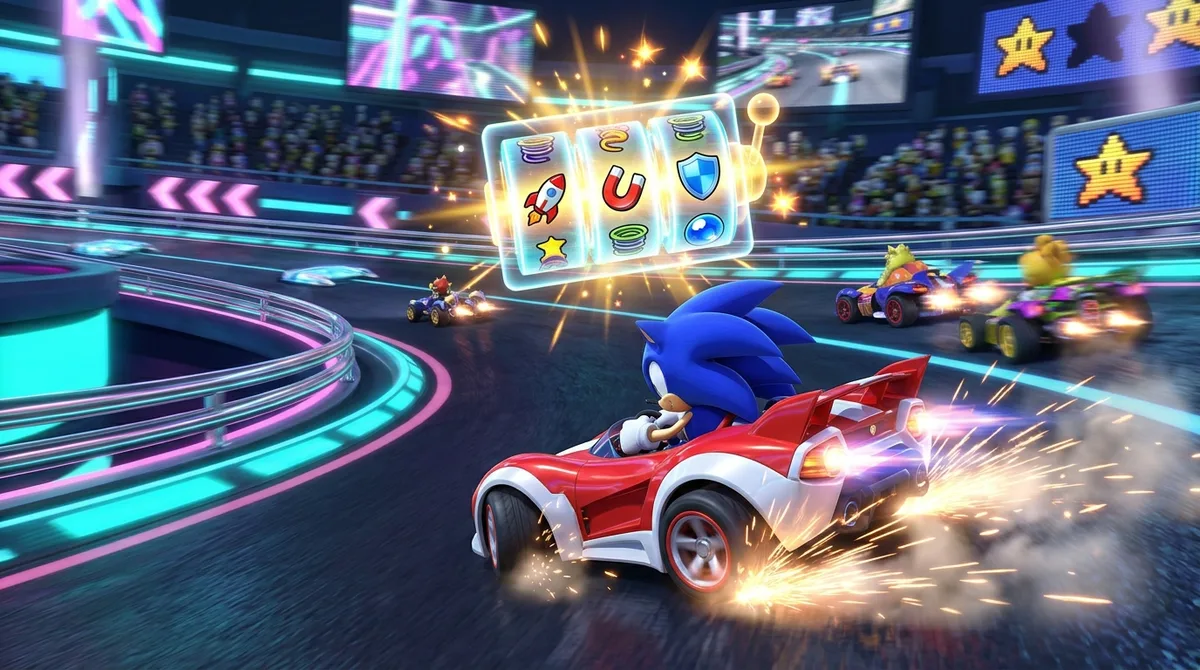
The Super Slot is a seventh Gadget slot that amplifies whatever Gadget you equip in it, so it’s where your best tools live. To earn it, you need the Grand Master Plate, which means racing at least 40 times before the slot opens.
Version 2.0.0 adds 15 new Gadgets, but they stay locked until a Gadget Plate reaches Grand Master Plate or higher. Customization gets a boost too. Once you unlock the Grand Master Plate, your Gadget customization plates rise from 5 to 10.
Here’s the problem. Forty races measures how long you’ve sat in the driver’s seat, not how well you drive. A player who has never won a Festival can log 40 laps of mediocre finishes and unlock the same toys as someone who wins every duel. The race-count gate is a grind dressed up as progression, and it keeps you playing out of inertia rather than because the racing gets better.
Ring Nerfs and Rocket Punch Cuts Target Ring Builds
Ring builds were the obvious problem, and the fix is overdue. Ring Engine’s standard stat boost drops from +12 to +8, and its top-speed bonus shrinks from +3 km/h to +2 km/h. Only a Super Slot-equipped Ring Engine climbs back to +3 km/h, so the strongest version now sits behind the same race grind that gates the slot itself.
Ring Evolution now needs 15 Rings to activate, up from 10. The Super Slot version still triggers at 10, which tells you exactly where the designers want players to spend their time.
Rocket Punch took the cut that changes how the game feels. Its wall ricochets are capped at 2 in both throw directions, down from up to 6 forward and 3 backward. The gap between a missile that bounces down an entire corridor and one that clips a wall twice is huge.
The balance pass goes beyond numbers. It also changes item behavior, machine types, and course layouts, so the adjustments reach past the Gadgets into the tracks and vehicles themselves.
Are the nerfs deserved? Yes. When one build stacks reliable boosts with ricochet chains, every other playstyle starts to look like a suggestion. Trimming that stacking is the right call, even if the Super Slot still rewards players who already put in the hours.
Six Crossover Packs and Eight Free Updates Ahead
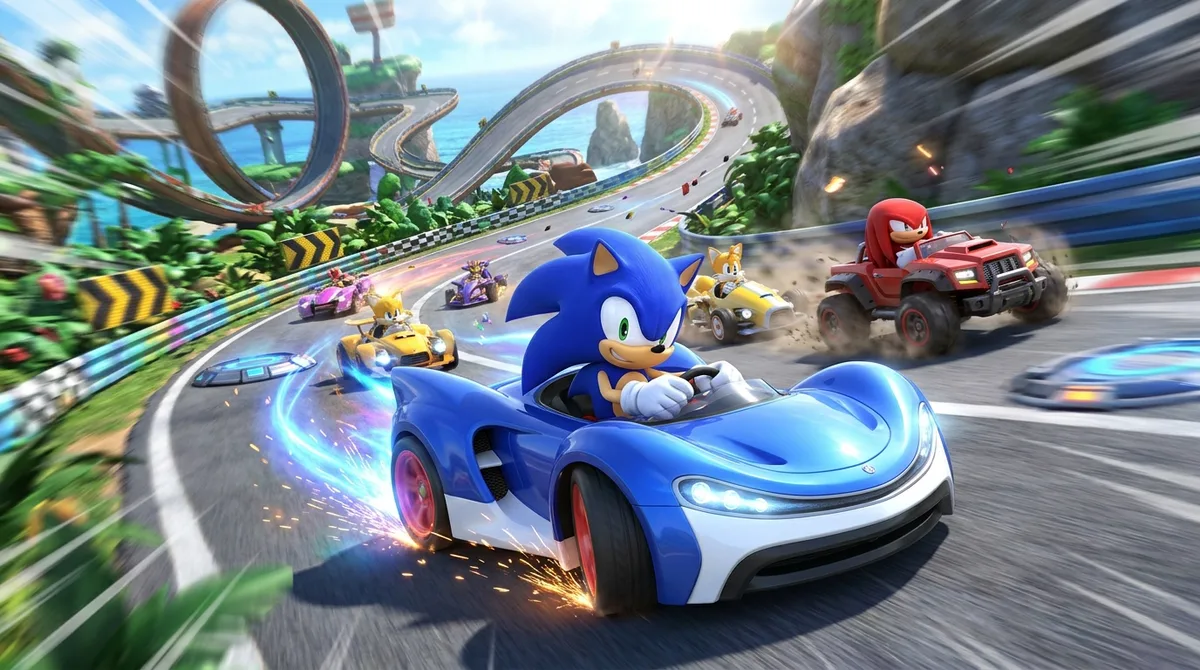
SEGA plans six crossover DLC packs and eight free updates across Year Two. The crossover packs are the flashy part of that plan, and they look like cosmetic crossover bait, and they probably are.
The free updates matter more. Eight patches over a year is where balance tuning, new modes, and fixes will decide whether the roster stays healthy or slowly rots. Festivals also change. Each one now runs 10 days instead of 3, and rankings are based on win streaks rather than Festival Points. A longer window rewards people who log in regularly, and a streak rewards sustained wins over one lucky weekend. Shop rewards are expanded as well.
Skins won’t decide whether Year Two is worth your time. The free updates will.
What Year Two Costs on PlayStation and Other Editions
The Standard Edition costs $39.99 in the U.S., while the Digital Deluxe Edition and the Year Two Digital Deluxe Edition each cost $59.99. That means either deluxe option adds $20 to the base price. If you only want to race, the Standard Edition is the cheaper way in. If you want the extras that come with a deluxe edition, check what each listing includes before you pay the difference.
Should You Jump Back Into Sonic Racing This Year
Sonic Racing CrossWorlds has been around long enough to shake off its launch-day wobbles, which makes this a good time to ask whether it deserves another look. The question isn’t really whether the game is a good kart racer. The question is whether a second year of updates has turned a decent launch into something you’d want to keep installed. Kart racers live or die on the moment-to-moment feel of the drift, the item roulette, and the track design, so those are the parts to judge first.
Here’s the thing about live-service-adjacent racers: the content calendar is doing a lot of heavy lifting. Every update brings a new reason to open the store, and every store tab is another chance to sell you something. We’re happy to see free content arrive, and we’ll cheer for any update that adds real tracks instead of recolored ones. We’re less happy when the store tab shows up looking like a casino lobby, and we’ll say so every time it does.
So should you jump back in? If you enjoyed the core racing and want a reason to fire it up with friends, a return visit makes sense, especially if you can grab the content without paying extra for what should be standard. If you bounced off it at launch because the handling felt floaty or the tracks felt like filler, a year of patches won’t change the fundamentals, and you should spend your time elsewhere. Racing games are a simple promise, and a second year only matters if the driving keeps its end of the bargain.