
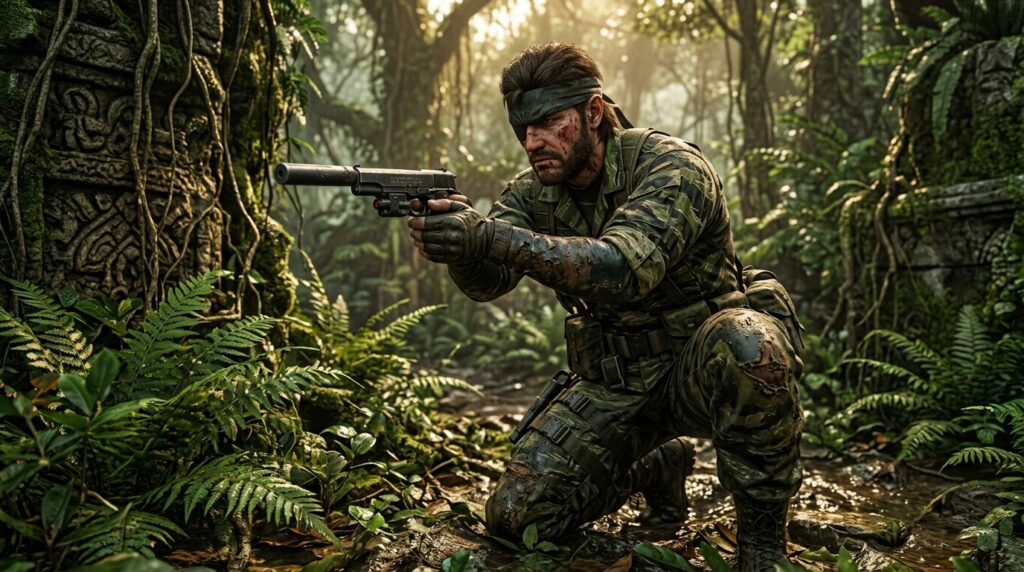
After twenty years of eating snakes and hiding in cardboard boxes, Big Boss is finally getting the facelift he deserves. Metal Gear Solid Delta: Snake Eater hit the shelves on August 28, 2025, and while it is the same jungle survival story we love, the mgs delta changes under the hood are doing some heavy lifting. The developers managed to keep the original soul intact while dragging the mechanics out of the PS2 era and into the modern world.
The most noticeable upgrade is that Snake finally learned how to walk and aim at the same time, thanks to a new control scheme. You can still use the Legacy controls if you enjoy fighting with the camera like it is 2004, but the addition of persistent battle damage adds a brutal layer of realism. Every scar and bullet hole stays with you, serving as a permanent, painful receipt for every time you failed a stealth run.
Key Takeaways
- Metal Gear Solid Delta: Snake Eater replaces the archaic ‘claw’ grip and rigid PS2-era controls with a modern third-person overhaul that allows for fluid simultaneous moving, aiming, and shooting.
- The addition of crouch-walking and tactical movement transforms the stealth experience, allowing players to remain mobile and low to the ground without relying on slow belly-crawling.
- A new persistent battle damage system ensures that every bullet hole, knife slash, and scar remains on Snake’s character model for the duration of the campaign as a visual record of player performance.
- The shift to Unreal Engine 5 introduces a reactive environment where foliage physically displaces, mud realistically cakes onto uniforms, and real-time lighting affects camouflage and stealth strategy.
Modern Controls and Tactical Movement Overhaul
We need to have a serious talk about the claw, that ergonomic nightmare we all endured just to keep a camera centered while navigating the Soviet jungle. For years, playing Snake Eater meant wrestling with a control scheme that felt like trying to perform surgery with oven mitts on. This remake finally kills off that legacy of frustration by introducing a modern third-person overhaul that actually respects your tendons. You can now move, aim, and shoot with the fluid over-the-shoulder perspective we expect from any game released in the last two decades. It is a massive relief to see actual playability prioritized over some misplaced sense of retro suffering.
The real shift here is the inclusion of crouch-walking and tactical movement. In the original, Snake apparently had the knees of a ninety-year-old, forcing you to either stand tall like a target or belly-crawl through the mud at a snail’s pace. Now, you can stay low and mobile, making the transition between cover feel natural rather than a chore. This change alone transforms how you approach enemy outposts, allowing for the kind of aggressive stealth that was previously impossible. It is the perfect example of how a remake should function, keeping the soul of the original while stripping away the clunky mechanical baggage that aged like milk.
If you are a purist who actually enjoys fighting your controller, there is a legacy mode, but I cannot imagine why you would use it. The new tactical overhaul makes the boss battles and jungle infiltrations feel like they were always meant to be played this way. Instead of fighting your thumbsticks and fumbling with pressure-sensitive buttons just to aim a pistol, you are free to focus on the actual strategy of the encounter. It turns a classic that was once great despite its controls into a masterpiece that is just plain great to play. This is not a lazy remaster that just slaps on a 4K coat of paint, it is a fundamental mechanical upgrade that finally brings Snake into the modern era.
Persistent Battle Damage and Visual Scars
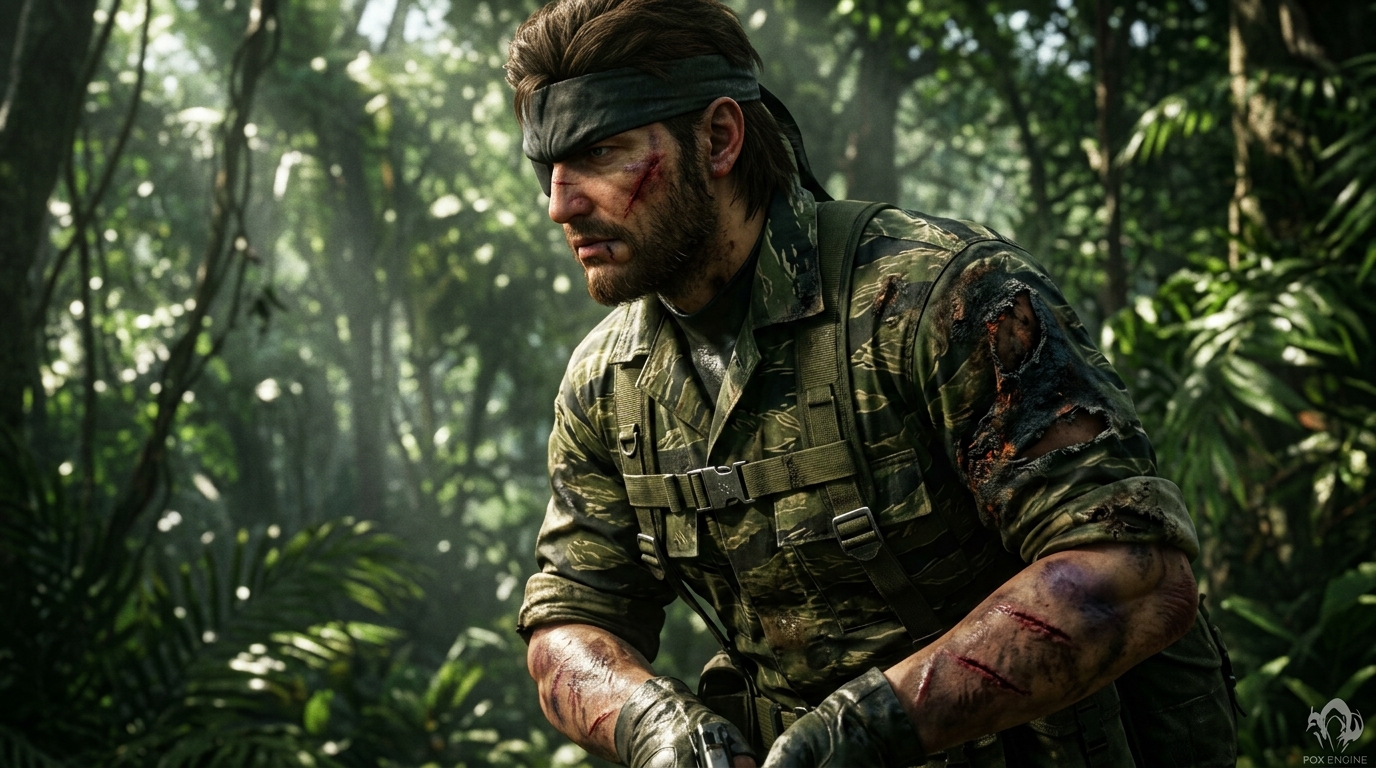
The persistent battle damage system is a brutal, visual reminder that your stealth skills might actually be a bit rusty. Unlike the original where injuries were buried in a menu and Snake looked pristine after a quick bandage, every bullet hole and knife slash now leaves a permanent mark on his character model. If you decide to play the game like a mindless action hero, you are going to end up looking like a patchwork quilt of scar tissue by the time you reach the final boss. It is a brilliant way to hold the player accountable for tactical blunders without relying on a simple game over screen.
This mechanical shift transforms the environment from a playground into a place that actively punishes sloppy execution through visual storytelling. Seeing a jagged scar on Snake’s arm from a run-in with an Ocelot Unit soldier three hours ago adds a layer of weight to the experience that the PS2 version simply could not achieve. It is exactly the kind of upgrade I want to see in a remake because it respects the source material while using modern hardware to enhance the immersion. You are no longer just managing a health bar, you are managing a physical history of every mistake you have made in the jungle.
The developers could have easily slapped a high-resolution skin on the old model and called it a day, but this persistent damage shows they actually understood the survival theme. Every bruise and burn stays with you for the duration of the campaign, serving as a receipt for your failures and a trophy for your survival. It forces you to actually care about the Cure menu because the consequences of your injuries are staring you right in the face during every cutscene. This is not just a cosmetic gimmick, it is a constant, sarcastic reminder that you really should have used a distraction instead of charging in headfirst.
Unreal Engine 5 Jungle Fidelity Improvements
The shift to Unreal Engine 5 is not just a fresh coat of paint for Snake’s jungle excursion, it is a fundamental overhaul of how the environment actually functions. In the original version, the foliage was mostly a static set of sprites that you clipped through like a ghost, but this remake treats every leaf and vine as a physical object. Now, as you crawl through the undergrowth, the grass realistically parts and snaps back, meaning your heavy-handed sneaking actually leaves a visible trail for guards to spot. It is the kind of tactile upgrade that makes the world feel dangerous rather than just looking pretty in a screenshot. If you were worried this would be a lazy texture swap, the way the jungle reacts to your every move should put those fears to rest.
The developers finally realized that if you spend half the game rolling around in the dirt, that dirt should probably stick to you in a way that makes sense. The new procedural mud and grime system is a standout feature that tracks exactly where Snake makes contact with the swampy terrain. If you crawl through a bog on your stomach, your chest and thighs will be caked in filth that persists until you find a way to wash it off or change your gear. This is not just a visual gimmick either, as the accumulation of muck actually affects your camouflage index and physical appearance over time. It adds a layer of grit that the old hardware could only dream of simulating, making the survival aspect feel much more grounded.
Beyond the dirt, the lighting and weather effects in this remake do the heavy lifting to create a claustrophobic, humid atmosphere that feels genuinely oppressive. Unreal Engine 5 allows for light to filter through the canopy in real time, shifting shadows as the wind tosses the trees around and changing how you hide from patrols. When the rain starts to fall, you can see the water slicking down Snake’s face and saturating his uniform, which is a massive leap from the flat textures of the past. It is clear the focus was on the small, messy details that define a jungle instead of just smoothing out the edges of the PS2 geometry. This is exactly what a remake should do, taking the core identity of the original and making it feel like a living, breathing space.
More Than a Lazy Paint Job
Metal Gear Solid Delta is not just a fresh coat of paint slapped onto a twenty-year-old skeleton to trick you into spending sixty bucks. While the industry loves a lazy remaster that only adjusts the resolution, this remake actually puts in the work by modernizing the clunky controls that used to make sneaking a chore. Being able to move while crouching and aim over the shoulder transforms the experience from a wrestling match with your controller into a fluid tactical shooter. It manages to feel exactly how you remember it in your head, rather than how it actually played on a dusty PS2.
The new battle damage system and hyper-realistic environments prove that this project was more than a simple cash grab. Seeing Snake physically carry the scars of your mistakes adds a layer of weight to the survival mechanics that the original hardware simply could not handle. It is rare to see a developer respect the source material enough to keep the original voice acting while completely rebuilding the mechanical foundation from the ground up. This version successfully bridges the gap between old-school charm and modern standards without losing the eccentric soul of the franchise.
If you were worried that this was just a shiny distraction for nostalgic fans, you can officially breathe a sigh of relief. The changes are meaningful enough to justify a replay for veterans while being accessible enough that newcomers won’t bounce off the archaic design of the past. It is a masterclass in how to handle a remake by cutting the fat and polishing the muscle without changing the DNA of what made the game a masterpiece. This is easily the definitive way to experience the Big Boss origin story, and it sets a high bar for what a faithful reimagining should look like.
Frequently Asked Questions
1. Did they finally fix the terrible camera and controls?
Yes, the claw grip is officially dead and buried. You can now move, aim, and shoot simultaneously with a modern third-person perspective that does not require a degree in gymnastics to operate.
2. Can I still play with the original PS2-style controls?
If you are a masochist who misses fighting the camera more than the guards, the Legacy control scheme is still there for you. It is a terrible way to live, but I won’t stop you from reliving your 2004 frustrations.
3. What is the deal with the new battle damage system?
Every time you screw up a stealth run and take a bullet, Snake keeps the receipt. Scars, bruises, and uniform tears are now persistent, meaning you will carry the physical evidence of your incompetence through the entire game.
4. Is crouch-walking actually in the game now?
Snake finally discovered he has functioning knees and can move while crouched. This tactical movement means you no longer have to choose between standing like a target or belly-crawling like a slug.
5. Did they change the story or the voice acting?
They had the sense to leave the original soul alone, keeping the story and voice lines intact. It is the same legendary jungle survival drama, just without the archaic mechanical baggage that used to hold it back.
6. Is this just a lazy texture pack or a real remake?
This is a full-blown overhaul that drags the game into the modern era without losing its identity. It is a massive relief to see actual effort put into making the game playable for humans instead of just slapping a new coat of paint on old problems. We’ve seen plenty of upcoming UE5 games promise the world, but Delta actually delivers on the technical front.