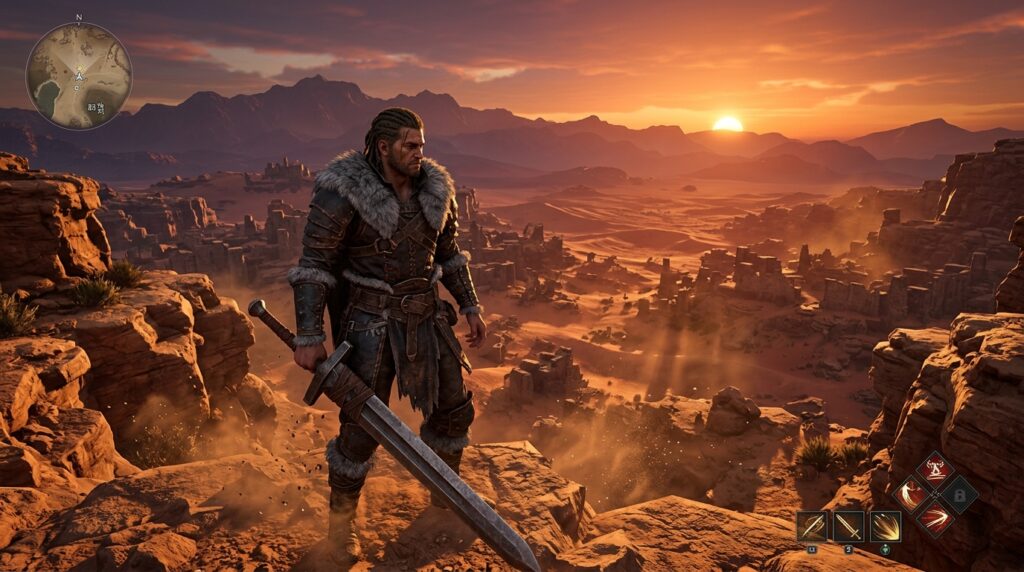
After years of watching trailers that looked more like fever dreams than actual gameplay, the crimson desert release finally hit on March 19, 2026. The developers stopped pretending this was just a prequel to their older work and delivered a standalone, single-player epic that actually justifies the wait. It is out now on PS5, Xbox Series X|S, and PC, proving that some studios still remember how to make an open world that isn’t just a glorified chore list.
I have spent enough time in Pywel to tell you that this isn’t your typical fantasy slog. While the studio is already scrambling to patch out the inevitable launch-day jank, the core combat and grit are undeniably there. If you have been looking for a reason to finally put down the live-service trash and play something with an actual pulse, this is it. It is brutal, it is beautiful, and for once, the hype didn’t lead us directly into a brick wall.
Key Takeaways
- Crimson Desert marks a shift from the MMO genre to a standalone, single-player epic that prioritizes gritty, physics-based combat over traditional live-service mechanics.
- The game’s proprietary engine delivers industry-leading visuals and lighting, but it imposes a heavy performance tax that results in frame rate instability and stutters on consoles.
- Combat mechanics blend cinematic wrestling-inspired takedowns with high-stakes strategy, though the game’s long-term success depends on whether this depth outweighs its reliance on flashy animations.
- Post-launch patches have significantly improved the experience by eliminating long loading screens and introducing functional legendary mounts that make navigating the sprawling world of Pywel more efficient.
Pywel Architecture And The Performance Tax
The developers clearly spent a fortune making Pywel look like a high-end tech demo, but your console might actually scream for mercy the moment you step into a crowded town. The proprietary engine is a technical marvel that delivers some of the most impressive lighting and textures I have seen this year, yet that beauty comes with a hefty performance tax. On the PlayStation 5 and Xbox Series X, achieving a stable sixty frames per second feels like a distant dream during heavy combat sequences. I noticed frequent stutters when the screen filled with particle effects, making me wonder if the developers prioritized a pretty screenshot over a playable experience. It is the classic industry trap where the visuals act as a shiny distraction for a frame rate that chugs like a lawnmower.
The architecture in Crimson Desert is undeniably grand, though I have to ask if the gameplay substance was sacrificed at the altar of high-resolution bricks. Navigating the sprawling cities is a visual treat until the pop-in starts reminding you that your hardware is struggling to keep up with the ambition. While the March 19 release brought us a gorgeous world of Pywel, the post-launch patches are already working overtime to fix the stuttering that should have been ironed out months ago. I appreciate a game that pushes boundaries, but I would trade a few volumetric clouds for a consistent level of fluidity any day of the week. If you are playing on PC with a rig that costs more than a used car, you might be fine, but console players are definitely feeling the weight of this engine.
Combat Mechanics And The Substance Gap
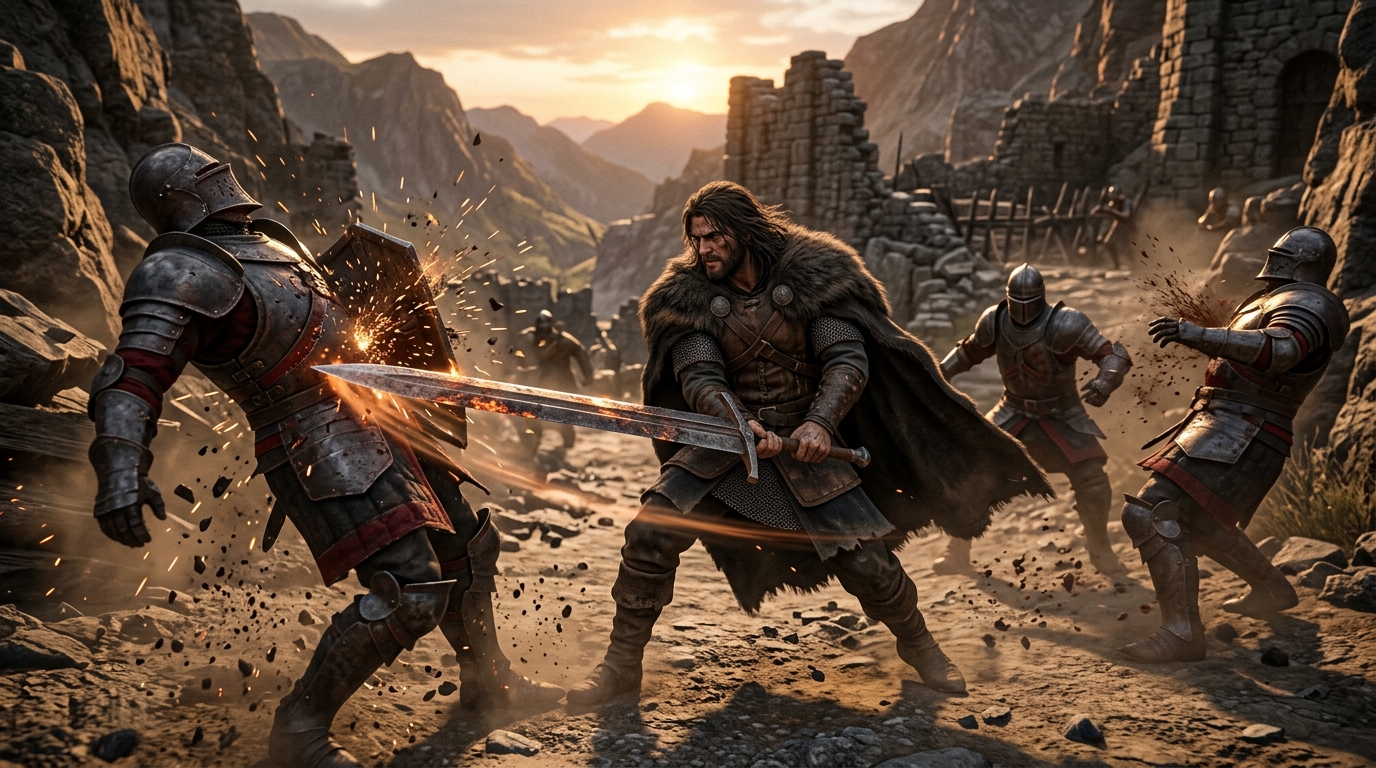
Ever since the first trailers dropped, I have been skeptical about whether Crimson Desert is an actual video game or just a very expensive tech demo for a physics engine. The combat looks like a fever dream where a medieval knight decided to quit sword fighting and join a professional wrestling circuit instead. You are constantly seeing flashy suplexes, spinning kicks, and environmental takedowns that look incredible in a scripted montage, but they often leave me wondering if I am actually playing or just watching a movie. There is a very thin line between satisfying tactile feedback and a “press X to win” simulator that plays itself while you hold a controller.
The real test is whether these cinematic animations translate into a deep mechanical system that rewards actual skill. It is easy to make a protagonist look like a god when the camera is doing all the heavy lifting, but I need to know if the timing and positioning actually matter during a chaotic boss fight. If the game is just a series of canned animations that trigger regardless of my input, the novelty of powerbombing a goblin is going to worry off in about twenty minutes. We have seen plenty of ambitious titles fall flat because they prioritized screenshots over substance, and I am not ready to give this one a pass just because the capes flutter realistically in the wind.
Ultimately, the substance gap is what separates a legendary open world adventure from a forgotten bargain bin occupant. While the post-launch patches have tried to smooth out some of the clunkier interactions, the core question of combat depth remains the primary concern for anyone who values gameplay over graphics. I want to feel every hit and earn every victory through complex combos rather than relying on a flashy cutscene to finish the job for me. If the developers managed to bake real strategy into this wrestling-inspired chaos, we might actually have something worth keeping on the hard drive.
Navigating The Open World Post Patch
The 1.01.00 patch finally killed the loading screens that were long enough to let me contemplate my entire life’s failures, and for that, I am eternally grateful. Before this update, using the fast travel system felt like a punishment for not wanting to trek across the continent on foot, but now the transitions are actually snappy. It is a massive relief because, let’s be honest, even the prettiest open world becomes a slog when you are staring at a spinning icon for two minutes straight. The studio clearly realized that players were spending more time in menus than in combat, and this fix finally lets the game’s ambitious scope breathe without the technical chokehold.
The new legendary mounts have arrived just in time to prove that bigger and flashier isn’t always a chore, though they do come with their own set of quirks. These beasts turn the act of crossing the map from a tedious commute into something that actually feels like gameplay, mostly because they don’t get stuck on every pebble like the starter horses did. While some might call the taming process a bit of a grind, the payoff is a creature that handles with enough precision to make navigating those vertical cliffs less of a suicide mission. It is a rare case where the developers actually listened to the complaints and gave us a solution that feels rewarding rather than just a band-aid.
Whether this makes the world feel substantial or just a very expensive wallpaper is still up for debate, but at least we can now move through it without losing our minds. The identity of Crimson Desert is still a bit of a chaotic mess, blending single-player narrative with mechanics that feel suspiciously like an MMO minus the friends. However, with the travel times fixed and the mounts actually functioning as intended, the exploration side of the equation is finally leaning toward joy rather than unpaid labor. If they keep trimming the fat like this, we might actually end up with a game that values our time as much as our hardware specs.
A Gorgeous Mess That Melts PCs
The verdict is finally in, and Crimson Desert is a beautiful, chaotic beast that doesn’t quite know if it wants to be a cinematic masterpiece or a technical stress test. While the studio has delivered some of the most jaw-dropping combat mechanics I have seen in years, the initial launch felt like my PC was trying to achieve fusion energy just to keep up with the frame rate. It is clear that the transition from an MMO prequel to a single-player epic left some messy scars on the game’s optimization. If you have a rig that can handle the heat, the substance is definitely there, but for everyone else, the early patches are doing some heavy lifting. I would call this a day-one essential only if you are the type of person who enjoys watching your GPU fans scream for mercy.
There was a lot of chatter about whether this game was just a glorified tech demo, but the actual gameplay loop manages to shut down those doubts pretty quickly. The world is dense and the physics-based combat feels incredibly weighty, even if the UI occasionally looks like it was designed by someone who hates your eyeballs. It is a rare case where the ambition actually matches the hype, provided you can look past the occasional stutter when the screen fills with fire and particle effects. The developers are patching things at a breakneck pace, which shows they actually care about the state of the game rather than just cashing out. If you are on the fence, waiting another month for a few more stability passes is the smart play, but the core experience is far from the hollow shell many skeptics predicted.
Ultimately, Crimson Desert is a title that demands your attention but doesn’t always respect your hardware. It avoids the typical empty open world trap by filling every corner with meaningful, albeit occasionally clunky, interactions that make the environment feel alive. You aren’t just following a quest marker, you are wrestling with a system that actually reacts to your presence in ways that put most big-budget titles to shame. It is messy, loud, and demanding, but it is also one of the most refreshing action adventures to hit the shelves in a long time. Grab it now if you are impatient and well-equipped, but don’t feel bad about letting it sit in the oven for a few more weeks to reach that perfect golden brown.
Frequently Asked Questions
1. When did Crimson Desert actually come out?
The game finally dropped on March 19, 2026, after years of trailers that looked like fever dreams. The developers stopped teasing us and actually delivered the full experience on PS5, Xbox Series X|S, and PC.
2. Is this just an expansion for an older MMO?
Absolutely not. This is a standalone, single-player epic that moves away from the MMO grind of its predecessor. It is a gritty fantasy adventure that justifies the wait by ditching the chore list for actual substance.
3. How does the game perform on consoles?
Your console might actually scream for mercy because the performance tax is real. While the engine looks incredible, hitting a stable sixty frames per second on PS5 or Xbox Series X is a distant dream during heavy combat.
4. Is the combat worth the technical headaches?
The core combat and grit are undeniably there if you can stomach the launch-day jank. It is brutal, beautiful, and provides a legitimate reason to stop playing live-service trash in favor of something with a pulse.
5. Does the game world feel alive or is it just a tech demo?
Pywel is a technical marvel with impressive lighting, but the developers definitely prioritized pretty screenshots over smooth frame rates. The architecture is grand, even if the frame rate occasionally chugs like a lawnmower when the screen gets busy.
6. Should I buy Crimson Desert right now?
If you want a gorgeous open world that isn’t a glorified checklist, this is the one. Just be prepared for some inevitable day-one patches while the studio scrambles to patch the particle-effect chaos. We have seen disastrous launches before that eventually found their footing, and this game seems to be on that same trajectory.