
There was a time when seeing a massive map revealed on my screen filled me with a sense of wonder. Now it just triggers a deep exhaustion that makes me want to crawl into bed and stare at the ceiling. We have reached a point where developers seem to think that quantity is a personality trait and clutter is content. Opening the world map in a modern AAA title looks less like a navigation tool and more like a teenager’s face during a severe acne breakout. I am tired of treating video games like a second job where the only paycheck is a meaningless digital trophy and mild carpal tunnel.
Marketing departments love to brag about how their latest release offers over a hundred hours of gameplay as if that is actually a good thing. In 2025, reading that a game demands three months of my free time feels less like a promise of value and more like a hostage situation. We all know that those triple digits are usually ten hours of story stretched over ninety hours of collecting feathers or liberating generic outposts. I would rather pay full price for a tight ten-hour experience than play a bloated mess that respects my time about as much as a cat respects personal space. The industry obsession with dollar-per-hour value has turned art into an endless checklist of busywork designed to numb our brains.
The Icon Vomit Epidemic
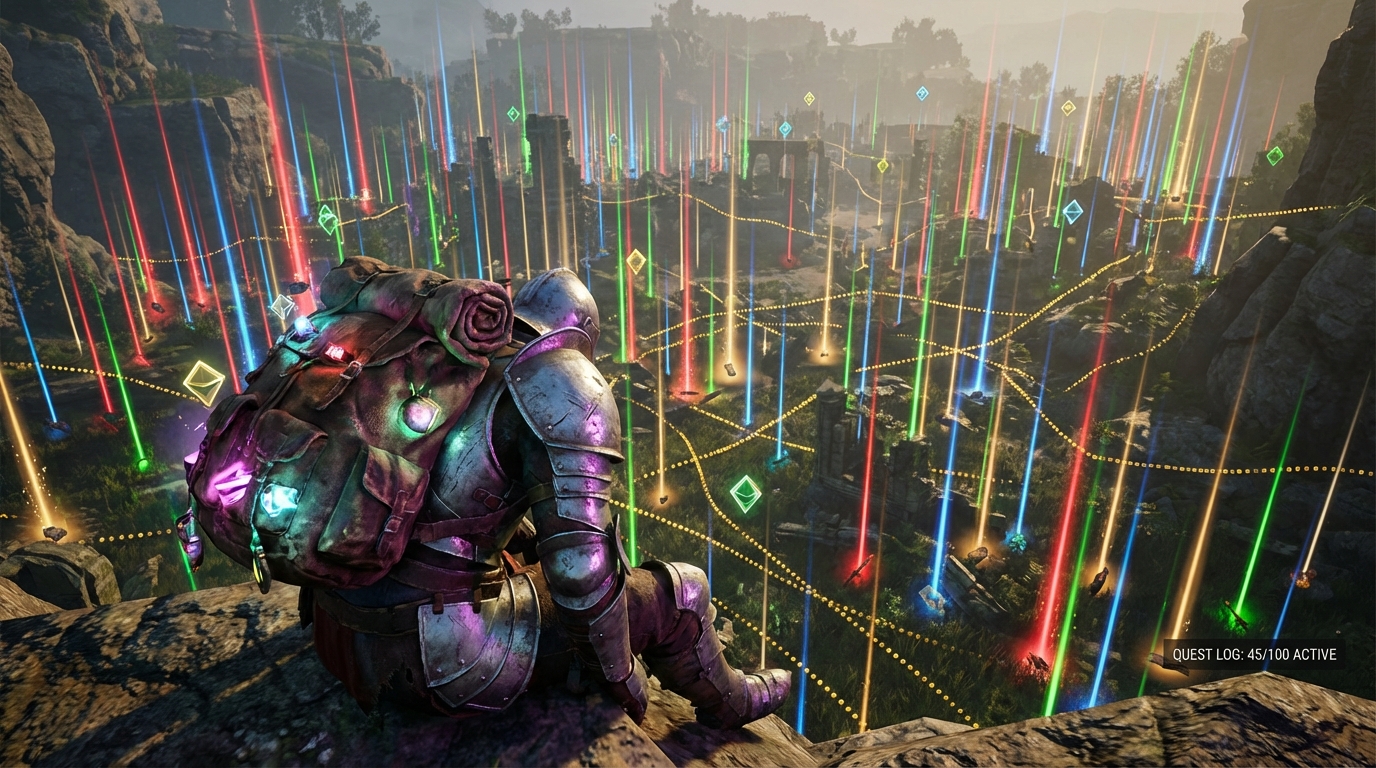
There is a specific kind of dread reserved for that exact moment you finish the tutorial and finally press the map button. Instead of a vast frontier begging to be explored, you get slapped in the face by a neon confetti explosion of question marks and diamonds. It looks less like a navigational tool and more like a rash that needs immediate medical attention. Developers seem to think that covering every square inch of topography with an icon proves there is plenty to do, but it usually just proves they don’t know when to stop. My blood pressure shouldn’t spike just because I wanted to set a waypoint to the next story mission.
If you actually zoom in on this chaotic mess, you quickly realize that ninety percent of these markers are absolute garbage. We are talking about climbing the same copy-pasted radio tower for the fiftieth time or hunting for collectible pigeons that offer zero narrative value. This isn’t meaningful content designed to enrich the world. It is distinct, low-effort padding meant to artificially inflate the runtime. You aren’t playing a hero saving the realm anymore. You are an unpaid janitor cleaning up a digital wasteland cluttered with busywork. I don’t need five hundred different icons telling me where to find a slightly different colored herb.
This approach turns what should be an adventure into a glorified grocery list that triggers a very specific type of completionist anxiety. You end up spending more time staring at the mini-map to clear fog than actually looking at the expensive graphics the art team slaved over. It creates a loop where you feel compelled to visit every single white dot just to make them go away, even though you stopped having fun four hours ago. Games are supposed to be an escape from our daily grind, not a chore simulator where the only payment is a bronze trophy. If your world is only interesting because you covered it in stickers, maybe the world wasn’t that interesting to begin with.
The Completion Percentage Trap
Developers have weaponized our basic human need to tidy up messes by slapping a giant percentage counter right on the main menu. It sits there mocking you, turning what should be a leisure activity into a shift at the fulfillment center where nobody cares about your output. This isn’t game design. It is a psychological Skinner box designed to keep your engagement metrics high enough to please their shareholders. You aren’t actually having fun collecting those last three hundred pinecones, but your brain refuses to let you sleep until that number hits triple digits. We have traded genuine excitement for the dopamine hit of checking items off a glorified grocery list.
If you strip away the busywork required to max out that meter, most of these sprawling maps are emptier than a gym in February. Studios pad out a twelve-hour campaign with fifty hours of repetitive fetch quests because they are terrified you will trade the game in too early. Instead of writing compelling side stories or designing unique dungeons, they copy-paste the same bandit camp across four different biomes and call it content. It is the video game equivalent of watering down a fancy scotch so it lasts longer. You ruin the flavor just to fill the glass. You end up spending more time looking at minimap icons than actually looking at the expensive graphics your hardware is sweating to render.
Commuting Is Not Gameplay
Somewhere along the line, developers decided that holding the analog stick forward for twenty minutes constitutes a game mechanic. It is not immersive to ride a horse across a barren field while absolutely nothing happens for miles. I already have a boring commute in real life, so I definitely do not need a second one in my fantasy escapism. If the most exciting thing that happens between mission markers is a stamina bar recharging, you have failed as a designer. We are wasting hours of our lives traversing empty geometry just to pad out the playtime counter for marketing purposes.
Studios love to brag about map sizes that rival actual European countries, but they conveniently forget to fill them with anything to do. There is a reason why players unlock a fast travel point and never walk that path again. We are trading tight, curated level design for procedurally generated wastelands that look pretty but feel completely dead. Walking past the same three rock assets for an hour does not make me feel like an explorer. It makes me feel like a beta tester. The industry needs to learn that a smaller map packed with secrets is infinitely better than a continent filled with air.
Open World As A Default Setting
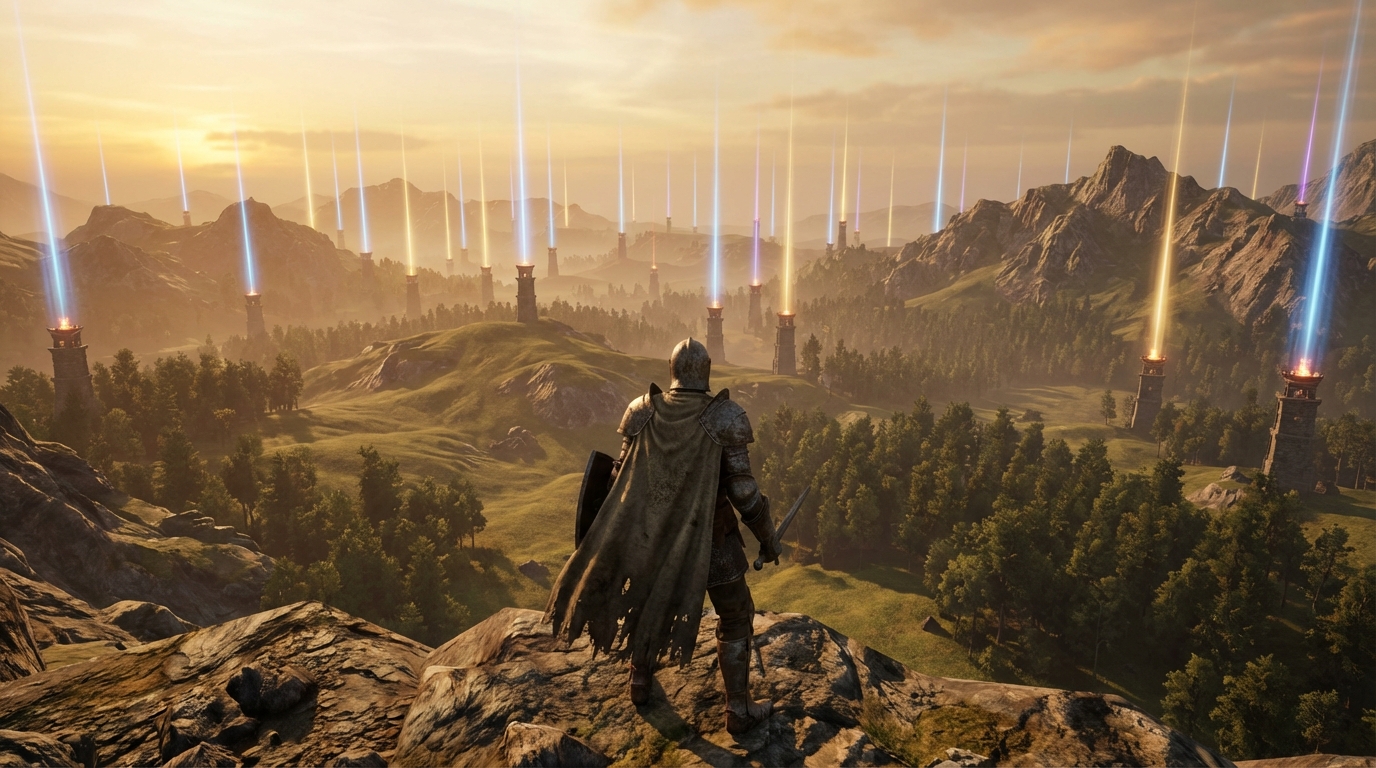
It seems major publishers decided that a linear experience was a dirty word that scares off shareholders. We have reached a depressing point where perfectly good narrative games are being stretched thin over massive, empty maps just to tick a box on a marketing spreadsheet. It feels like every studio is terrified that if their game takes less than a hundred hours to beat, the internet will riot and demand refunds. Instead of a tight and well-paced story, we get a bloated mess where the urgency of saving the world is constantly undermined by the need to collect random crafting materials. This isn’t game design anymore. It is insecurity masquerading as value.
Forcing open-world mechanics into genres that do not need them is the quickest way to kill dramatic tension. There is nothing quite like a high-stakes plot about an imminent apocalypse that pauses so you can climb a radio tower to reveal icons on a map. When you take a focused concept and dilute it with miles of commuting between mission markers, you aren’t adding depth to the experience. You are just giving the player a glorified chore list and calling it content. Developers need to realize that bigger does not always mean better, especially when “bigger” just means more empty fields between the actual fun parts.
Quantity Over Quality Marketing
We need to talk about the marketing executives who think “biggest map ever” is still a valid selling point in 2025. Every major showcase feels like a desperate contest to see who can generate the largest empty grid of terrain assets before the release date. They proudly announce a map three times the size of their last game, but they conveniently forget to mention it has the population density of the moon. It is baffling that publishers still believe we want to spend twenty minutes holding the analog stick forward just to find a single chest containing a rusty sword. We do not need another digital continent that is ninety percent grass and ten percent loading screens.
A massive world means absolutely nothing if the only thing to do in it is climb generic towers to reveal more repetitive icons. I would much rather play a game set in a single dense city block where every door opens than explore a sprawling kingdom made of copy-pasted forests. Marketing teams love to dazzle us with impressive numbers about square kilometers, yet they hide the fact that their quest design was clearly outsourced to a random number generator. Meaningful interaction is what keeps a player awake at night, not the ability to ride a digital horse for an hour without seeing a distinct landmark. If your game world is wide as an ocean but deep as a puddle, you should probably keep the map size off the box art.
Stop Turning Open Worlds Into Second Jobs
It is high time developers realized that a map twice the size of Rhode Island isn’t impressive if it is mostly empty space. Padding out a tight thirty-hour narrative with fifty hours of mindless fetch quests does not make a game epic. It just makes it a second job that doesn’t pay. We are not teenagers with infinite summer vacations anymore, and I would much rather play a focused experience than slog through another repetitive bandit camp. If your design philosophy relies on copy-pasting the same tower mechanic forty times, you need to go back to the drawing board immediately. Respecting our time is the single most valuable feature you can implement in 2025.
For the players staring at a map full of icons, you need to accept that the uninstall button is a tool for liberation rather than defeat. There is absolutely no shame in walking away from a title the exact second the fun stops and the checklist grinding begins. That completion percentage hovering at the top of the menu is just a psychological trap designed to keep you engaged with mediocrity. You do not owe a generic NPC five hundred collected pinecones just because a shiny trophy icon might eventually pop up on your screen. Reclaim your hard drive space for something that actually respects your intelligence and move on to the next adventure.