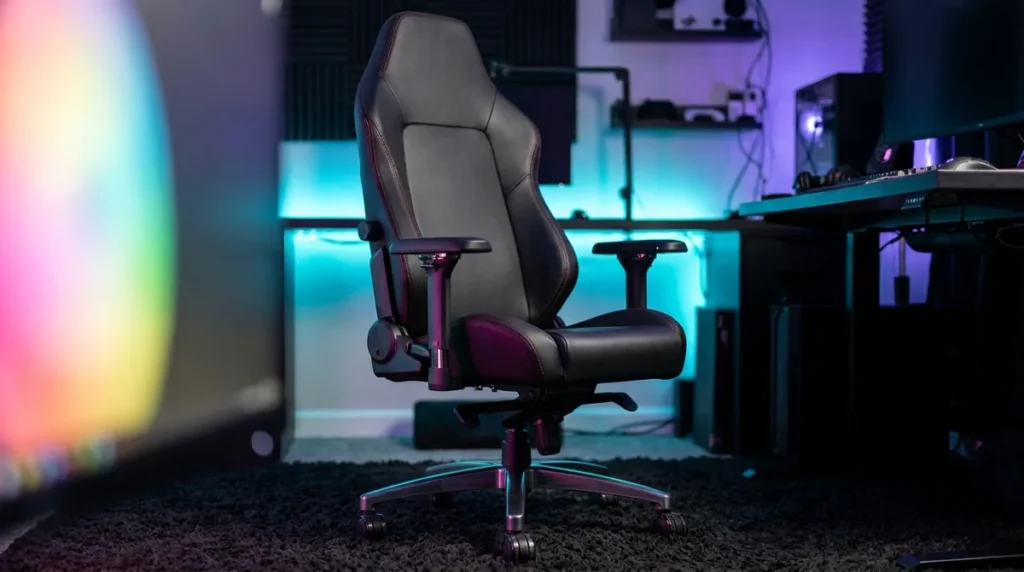
The best gaming chair is the one that fits your body, not the one with racing stripes and a price tag that makes your wallet wince. Most current buying guides have caught on and now favor adjustable, well-fitting seats over anything with “gaming” printed on the box. In Tom’s Guide’s November 2026 roundup, prices run from $449 for the DXRacer Craft to $899 for the DXRacer Martian Pro, with the Secretlab Titan Evo starting at $549. That’s a lot of money for something you’ll sit in for hours, and the label on the box tells you almost nothing about whether your back survives the session.
Start with the basics that OSHA’s computer-workstation guidance has pushed for years. You want a seat height you can adjust, a backrest with lumbar support, at least 15 degrees of recline, and your whole sole flat on the floor. The seat should support your thighs without the edge digging into the back of your knees. If a chair can’t manage that, the RGB lighting is just a very expensive nightlight. Also, don’t assume an office standard covers gaming seats. ANSI/BIFMA X5.1 tests general-purpose office chairs for safety and durability, not gaming chairs specifically. Premium materials don’t fix fit either. Secretlab’s Titan Evo NanoGen starts at $799, against $579 for the original, and a higher price guarantees neither comfort nor durability.
Key Takeaways
- Assemble any gaming chair alone, then sit in it for one full workday before you trust it.
- Secretlab’s $220 price bump buys a new material story, not proof of better durability.
- If your lower back is the problem, Razer’s Iskur V2 is the chair to test first.
- Corsair’s TC100 RELAXED wins the budget fight with a 54 cm wide seat and room to move.
- Secretlab’s Regular size suits riders from 5’7″ to 6’2″, so check your height before buying.
How to Test a Gaming Chair Before You Spend Money
Count the stripes last. Start with the things that decide whether you’ll be comfortable three hours in: assembly, adjustment, and how the chair feels after a long session.
Assembly is the first test, and it tells you something. One hands-on review of the $899 DXRacer Martian Pro found that its experienced reviewer needed 42 minutes to assemble it while working alone. Nobody needs a chair that takes that long to build, but a chair you can’t assemble properly is one you’ll never adjust properly.
Sit all the way back and check the seat depth. If the front edge presses into the back of your knee, the chair fails. Tall sitters find this out first, because short seats run out of thigh support before the session even starts.
Then find the lumbar support. It should sit in the hollow of your lower back, not at your belt line or your shoulder blades. If you can’t move it up, down, or in and out, you’re buying someone else’s spine.
Breathability is easy to ignore in a showroom and impossible to ignore by the second hour. Sit in the chair in the clothes you actually game in, and pay attention to whether the fabric or synthetic leather traps heat against your back.
The office-seating standard, ANSI/BIFMA X5.1-2017(R2022), covers general office and institutional seating. It was written for office chairs, not gaming chairs, so a mention of it on a gaming chair’s box doesn’t certify anything. Treat it as a rough signal of durability and nothing more.
Use this checklist: assemble the chair alone, adjust every knob and lever, and then spend one full work day and one full game night in it. Stand up every hour and see how your back feels. The chair that still feels good on the second day is the one worth keeping.
Why the Priciest Chair Isn’t Automatically the Winner

Here’s the trick the marketing department hopes you miss. Tom’s Hardware reports that the Secretlab Titan Evo NanoGen starts at $799, compared with $579 for the original Titan Evo. That’s a $220 gap for a newer material story. The reviewer could not yet verify the manufacturer’s durability claim, which is a polite way of saying the jury is still out.
New materials are not proof of better durability. A fancy fabric can feel wonderful in a showroom for ten minutes and still sag after a few weeks of real use. Nobody sells you the chair’s behavior on day forty.
A higher price and new materials don’t automatically make a chair more comfortable or durable. Judge what you actually get. Sit in it and check the seat depth, the lumbar support you can move, the recline you can set, and whether the armrests and height controls are reachable without standing up and wrestling with them.
Budget chairs can win this fight when they get the basics right. A seat that adjusts for height, a backrest with lumbar support you can actually use, and enough width that your hips aren’t pinched will cover most of what your back needs. A cheap chair that nails those three things beats an expensive one that doesn’t. That’s the bar the Corsair TC100 RELAXED has to clear, and we’re going to check whether it does.
Secretlab TITAN Evo: The Safe All-Rounder Pick
The Secretlab TITAN Evo is the chair we’d hand to someone who wants one purchase that covers gaming and desk work without drama. It has a sturdy steel frame and premium upholstery, and its lumbar support is built in. Two dials adjust it vertically and horizontally, so you can place it in the hollow of your lower back instead of balancing a loose pillow.
The seat is medium-firm, and that’s the trade-off. In a multi-week test, Notebookcheck found the seat felt too firm at first but became comfortable after a few hours, and the reviewer could sit for long stretches without discomfort. If you want plush, sink-in cushioning, expect the first hour to feel like a park bench. The armrests adjust in height, depth, and width, and the backrest locks at multiple recline angles.
Size matters more than the marketing. Secretlab sells Small, Regular, and XL, and its size guide puts Regular at 5’7″ to 6’2″ and under 220.5 lb, with XL covering 5’11” to 6’9″ and 175 to 395 lb. A November roundup lists a 290-pound weight limit, a 165-degree recline, and a five-year warranty. Secretlab’s own US warranty terms give three years standard, extendable to five. Upholstery is the other choice you have to make, between NEO Hybrid Leatherette and SoftWeave Plus Fabric. PC Gamer reports its leatherette review chair stayed in excellent condition through years of constant office use.
At a glance
- Best for: Gaming and desk work, especially long sessions with firm support
- Price: $549 for the Regular SoftWeave Plus on Secretlab’s US listing during a Black Friday sale, down from $599
- Sizes or Specs: Small, Regular, and XL; 290-pound weight limit; 165-degree recline
- Warranty: Three years standard, extendable to five through the extended warranty program
Razer Iskur V2: The Lumbar Support Benchmark
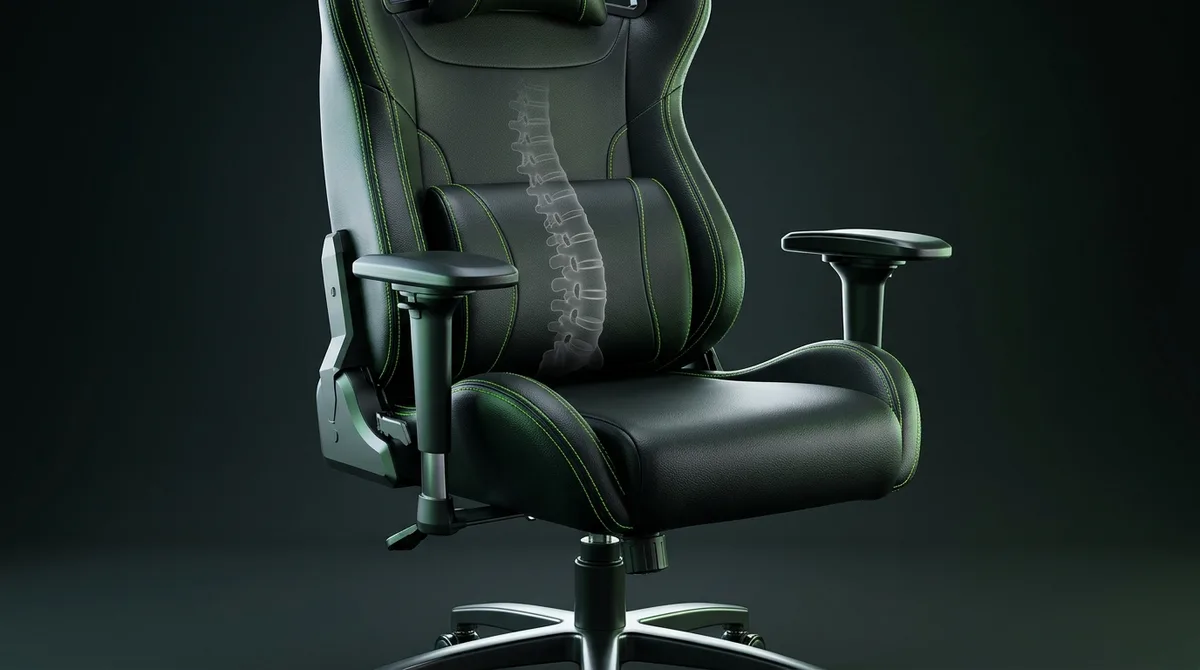
Most of the Iskur V2’s back support lives inside the chair. Its lumbar system is built in rather than a detached pillow, and it adjusts in height and depth and pivots with you as you move. A November 2026 Tom’s Guide roundup describes its lumbar as six-way adjustable, and Windows Central’s reviewer praised its adjustable lumbar support. If your lower back is the reason you’re shopping, start here.
Seat comfort is where opinions split. TechRadar found the seat and backrest comfortable through sessions lasting hours. Windows Central’s reviewer found the padding hard from the start and still hard after more than 100 hours. Tom’s Hardware called the 40 cm seat depth short for thigh support, and Windows Central noted that the depth can’t be adjusted. Tall sitters should take that seriously.
Razer lists a recommended user height of 165–200 cm and a weight limit below 136 kg (300 lb), so check your measurements before you buy. The build is a strength: a steel frame, a powder-coated five-star aluminum base, and high-density foam under an EPU-leather cover. Tom’s Hardware found it sturdy and quiet, but the faux leather doesn’t breathe well, so expect your back to get warm in a long session. Wipe up spills quickly and skip harsh cleaners, since Razer’s guide warns that both can stain or damage the material.
The November roundup listed the Iskur V2 at $649. Prices move, though. When Razer’s U.S. product page was accessed, the Iskur V2 NewGen was on promotion at $399.99 against a stated original price of $649.99. That discount applied to the NewGen variant, so check which version you’re looking at before you compare sticker prices.
At a glance
- Best for: Gaming and desk work where you want a reclining seat and adjustable built-in lumbar support
- Price: $649 in the November 2026 roundup. For current pricing, see Razer’s official support page.
- Specs: Backrest reclines up to 152 degrees; recommended height 165–200 cm; weight limit below 136 kg (300 lb)
- Warranty: Three years
Razer Iskur X: Firm Racing Seat With a Break-In Period
The Razer Iskur X is a racing-style chair for people who want a firm seat and can wait for it to settle. Its high-density molded foam feels hard at first. A GamesRadar reviewer found the seat rather hard initially, but said the foam and hugging sides became cozier after days of work use.
Lumbar support is the weak spot. The Iskur X has no built-in adjustable lumbar and ships without a lumbar or head pillow, so if your lower back already complains after long sessions, you’ll be improvising. The backrest reclines about 139 degrees, enough to lean back but not to lie flat.
Fit matters more than the spec sheet. Razer recommends the chair for people 170 to 190 cm (5 ft 6 in to 6 ft 2 in) tall and under 136 kg (299 lb). The six-foot reviewer found the back supported his spine and shoulders but left his head unsupported. Shorter or lighter sitters may find it runs large for their build.
The frame is metal and plywood, and the upholstery is PVC leather. Razer’s user guide lists a 3-year limited warranty and advises wiping spills promptly and air-drying the chair to help avoid stains.
At a glance
- Best for: Firm-seat fans who can wait for the foam to soften and don’t need lumbar adjustment
- Price: $399 U.S. MSRP as listed in GamesRadar’s review, a historical figure rather than a current offer. Present-day availability of the original model is unclear.
- Sizes: 170 to 190 cm tall, under 136 kg (299 lb)
- Specs: High-density molded foam, PVC leather, 2D armrests, about 139° recline
- Warranty: 3-year limited
Razer Enki X: Roomy Seat With Fixed Lumbar
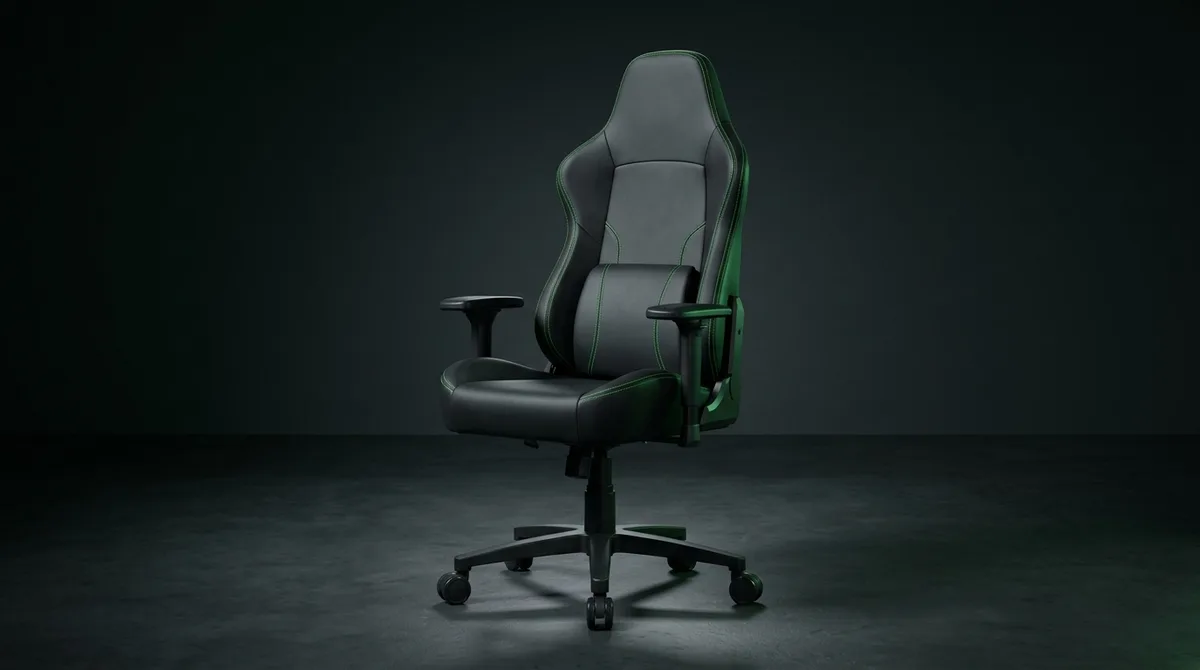
The Razer Enki X gives you a 21-inch seat base and a 20.7-inch seat depth, which is plenty of room for bigger frames. The cushion is softer on top and sits over firmer seat backing, built from high-density molded PU foam. One Windows Central reviewer found it comfortable for hours. CGMagazine’s reviewer wanted more padding during long workdays, so your mileage on the seat will depend on your taste.
The lumbar support is a built-in arch, not a detached pillow, and it’s the chair’s best feature when it fits. It’s also fixed. You can’t slide it up or down to find your spine. CGMagazine’s reviewer said the position suited her but warned it might not suit other body sizes. With fixed lumbar, the chair has to match your back, so sit in it before you commit.
Recline reaches about 152 degrees, and the 2D armrests adjust in height and rotate inward or outward, though they don’t slide sideways. Razer rates the chair for riders 5 feet 2 inches to 6 feet 4 inches tall and under 299 pounds.
The upholstery is EPU synthetic leather with textured fabric on the central contact areas, sitting on a steel frame and wheelbase. A CGMagazine reviewer found the leather easy to clean and said it held up in a house with children. Razer’s care guide advises cleaning spills right away to help prevent stains. Razer lists a three-year warranty on mechanisms and moving parts, excluding wear and tear.
At a glance
- Best for: Long sessions and buyers who want premium styling at a sensible price, provided their back matches the fixed lumbar arch
- Price: $399.99 at preorder in Razer’s US store, with shipping scheduled to begin November 30, 2026
- Sizes or Specs: 21-inch seat base, 20.7-inch seat depth, about 152-degree recline, riders 5 feet 2 inches to 6 feet 4 inches and under 299 pounds
- Warranty: Razer.com’s extended-warranty program can add two years of limited coverage
E-WIN Champion Series: Metal Frame and Adjustable Everything
The E-WIN Champion is a racing-style chair built on a carbon structural steel frame, and you pick your cover from Brisa Ultra PU leather or SoftWeave fabric. E-WIN calls the Brisa cover stain-resistant and easy to clean, which helps when snacks keep ending up on the seat. Choose PU leather if your room stays cool and you don’t sweat much. Choose fabric if your gaming sessions run hot.
Comfort depends on which version you buy. One reviewer testing an earlier Champion model found its cold-molded foam supportive without sagging and comfortable through a full workday, though the wraparound shape pushed their shoulders slightly forward. A Windows Central reviewer of the Upgraded model had the opposite experience and found the seat uncomfortably hard during extended use. The Classic has no built-in lumbar, just a separate foam cushion. The Upgraded adds four-way adjustable lumbar support plus a memory-foam cushion, but that same reviewer said the cushion felt too flat.
Fit comes first. The Upgraded lists users from 5 feet 3 inches to 6 feet 5 inches and up to 400 pounds, so measure yourself before you buy. Its padded 4D armrests and 155-degree recline give you plenty of room to tune your posture. Do the sit test before you start screwing things together. The limited warranty covers 60 days for the Classic and Revolutionary Upgrade chairs, extendable to five years if you register for the extended program.
At a glance
- Best for: Riders who want adjustable lumbar and wide armrest control, especially on the Upgraded version
- Price: When checked, E-WIN’s US Champion collection listed chairs from $399 to $459, with Upgraded options sold directly by E-WIN
- Sizes or Specs: Carbon structural steel frame; 155-degree recline; 5 feet 3 inches to 6 feet 5 inches; up to 400 pounds
- Warranty: 60 days for Classic and Revolutionary Upgrade chairs under the limited warranty, extendable to five years with registration
E-WIN Knight Series: Sleek Look, Thinner Padding
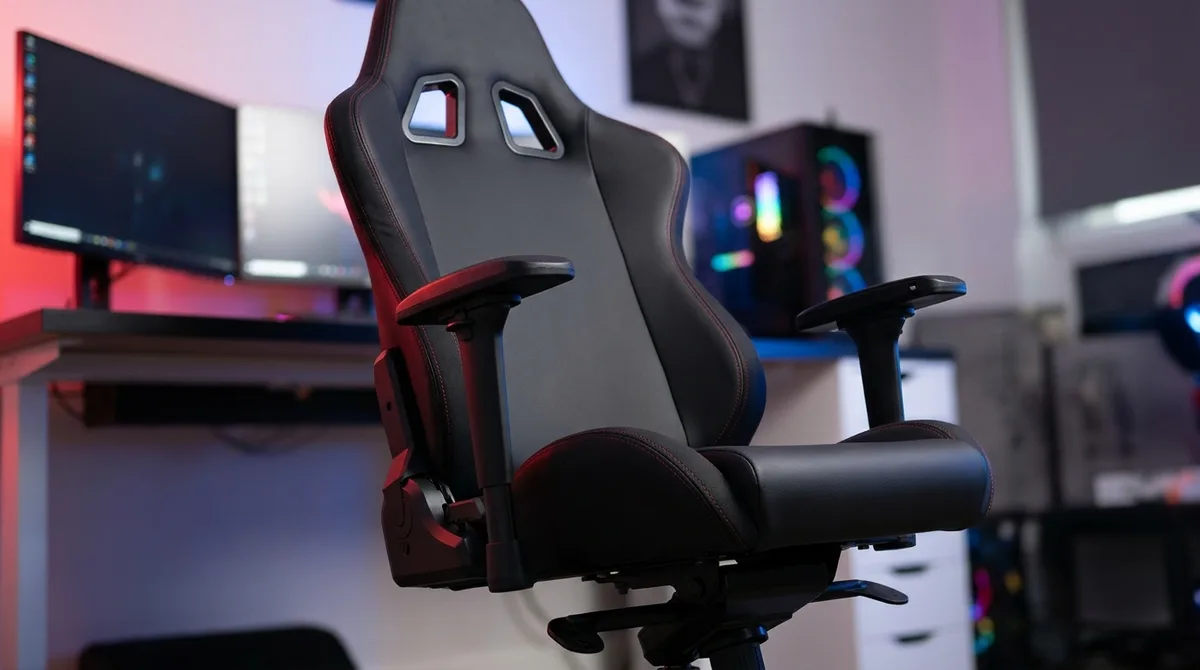
The E-WIN Knight Series looks like it wandered out of a race paddock and into a professional office, and that’s a compliment. Its clean lines are the strongest point here. Nobody will mistake it for a bedroom prop.
The seat is where opinions split. The Knight uses high-density cold-cure foam under PVC-leather upholstery. The Gadgeteer found the foam still somewhat stiff after several weeks, but the wide recline helped it find a comfortable position for long games. GameCritics called the padding very firm with little give and said the chair became uncomfortable beyond a weekend. Some buyers will call that supportive firmness. Others will call it a thin seat with a racing stripe.
The back support is detachable. The head and lumbar pillows come in the box, so your lower back depends on where you wedge the pillow. GameCritics reported the lumbar pillow slipped out of position during movement. The backrest reclines through a locking tilt, and the armrests adjust in height, though the maker describes them as 2D adjustable.
Check the numbers before you click buy. E-WIN recommends the Knight KTA for people 5’3″ to 6’1″ and rates it for up to 400 lb. The chair is sold on E-WIN’s official Knight collection page, though availability varies by model.
At a glance
- Best for: Buyers who want a racing look with a cleaner, more professional finish
- Sizes or Specs: Recommended for 5’3″ to 6’1″, rated up to 400 lb; KTB measures 22 × 21.7 × 54 inches; backrest reclines 85 to 155 degrees
- Price: Several models listed at $299 when the collection page was checked, with the KTB sold out at that time
- Warranty: Extendable from three to five years
E-WIN Flash XL Series: Built for Taller and Heavier Riders
The Flash XL’s seat is firm, and it stays that way. One reviewer spent about 50 hours in it and found the seat and back foam firm but supportive, with no numbness or soreness. The foam supports well through long sessions, but the Brisa Ultra PU upholstery gets warm during extended sitting, so expect a sweaty back on a marathon night.
The lumbar support is built in and adjustable in four ways, which is the right call. The upgraded edition also ships with a separate lumbar cushion, and that pillow felt too stiff and aggressively curved to the reviewer, who preferred the chair’s own support. The upgraded model reclines to 155 degrees and has 4D armrests. E-WIN recommends it for riders 5’7″ to 7’0″ and up to 550 lb. A Windows Central reviewer at 5’8″ felt close to too short for it and suggested shorter users may need a footrest.
The frame is high-durability carbon structural steel, and E-WIN calls the upholstery stain-resistant and easy to clean. It still picks up skin and hair oils. Durability is the open question. The same Windows Central reviewer said the lumbar cushion flattened after a few days and the seat-tilt lock began failing after a few weeks. The bigger safety concern is tipping. The oversized seat and relatively small wheelbase can tip you forward when you lean toward the front edge, so look at the base and wheel setup before a long sit-down session.
At a glance
- Best for: Taller and heavier players who want a roomy seat that handles messy desks and snack habits
- Price: Upgraded editions currently $549 to $599 and classic editions $509 to $549, sold directly through E-WIN’s official site
- Sizes or Specs: 5’7″ to 7’0″, up to 550 lb, reclines to 155 degrees
- Warranty: 2-year base, extendable to 3 years by publicly posting a photo or 5 years by publicly posting a video and submitting the post link, subject to E-WIN’s terms
Noblechairs HERO: Big Frame, Firm Seat
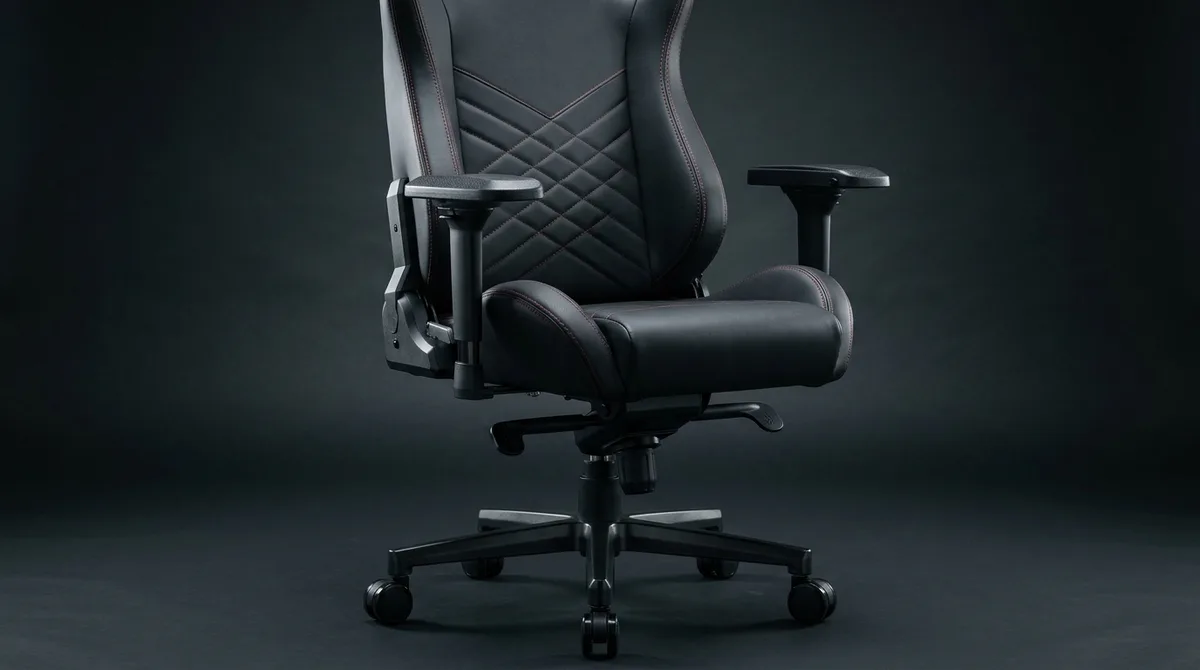
The noblechairs HERO is the big one in the lineup. Its seat is 20.5 inches wide and it’s rated for users up to 330.7 pounds. A reviewer around 6 feet 4 inches found the seat roomy, though close to that weight limit. The cold-foam cushion is firm. Tom’s Hardware found it very stiff with little cushioning, and the firmness reached the legs after the first day. Dexerto’s testers spent full workdays in it and felt it supported their posture during long sessions. If you want a sink-in seat, this isn’t your chair.
The lumbar support is built into the chair, not a pillow you strap on. A knob adjusts it, so you can move it into the hollow of your lower back. The 4D armrests adjust for height, depth, angle, and position, and the backrest reclines between 90 and 125 degrees. That’s enough to tilt back between matches, but not enough to lie flat. Size and firmness are the trade-off, and the HERO makes no apologies for either.
The frame is steel on an aluminum base, and the seat sits on a cold-foam core under faux-leather upholstery. The maker describes the covering as easy to clean and water-resistant, which helps when a drink spills during a clutch moment. The standard HERO Black is listed at $499.99 on the U.S. official store, and its U.S. limited warranty covers one year for qualifying purchases from noblechairs.com or an authorized seller.
At a glance
- Best for: Tall or broad gamers who want a no-nonsense seat with firm support
- Price: $499.99 for the standard HERO Black on the U.S. official store, which changes often, so the official site has current figures
- Sizes or Specs: 20.5-inch seat width, seat height 18.9 to 22.4 inches, maximum user weight 330.7 pounds
- Warranty: One-year U.S. limited warranty
Herman Miller Vantum: The Office Chair That Plays Games
The Vantum’s seat is where reviews split. A BTOD reviewer called the foam firm and not very soft, and said that firmness plus the limited recline wore on them during long sessions. Another reviewer lived with the chair for nearly a year of gaming and desk work and found it comfortable. Firm foam suits some people. If you plan five-hour raid nights, sit in it first.
The seat depth adjusts from 14.5 to 17.5 inches, and that shallow range is the catch. Run the seat-depth test from the testing section. If the front edge still digs into the back of your knee at the deepest setting, taller and long-legged users will feel it by the second match.
Back support is where the Vantum’s office roots show. Logitech G co-developed it with Herman Miller, and instead of racing bolsters it uses an office-chair shape. The lumbar support is built into the backrest and adjusted with knobs, so there’s no pillow sliding around under you, though it can’t move up and down. Passive thoracic support adapts to your upper back, and a headrest comes included. The breathable mesh back is the clear pick for readers who run hot.
The arm pads adjust three ways, but they can shift, and the recline is more limited than on many gaming chairs. Materials are polyurethane foam under 100% post-consumer recycled polyester fabric, a polyester suspension back, and a glass-filled nylon frame and base. There’s no leather or faux leather anywhere, and the warranty runs 12 years.
At a glance
- Best for: Readers who run hot and want office-grade ergonomics over gaming styling
- Price: $1,155 original and $808.50 sale price on the official U.S. store, where prices change often
- Sizes or Specs: 40.25 to 44.25 inches high, 30.5 inches wide, 29 inches deep; seat height 18 to 22 inches; 350-pound capacity
- Warranty: 12 years
Corsair TC100 RELAXED: Budget Comfort With Strap-On Lumbar
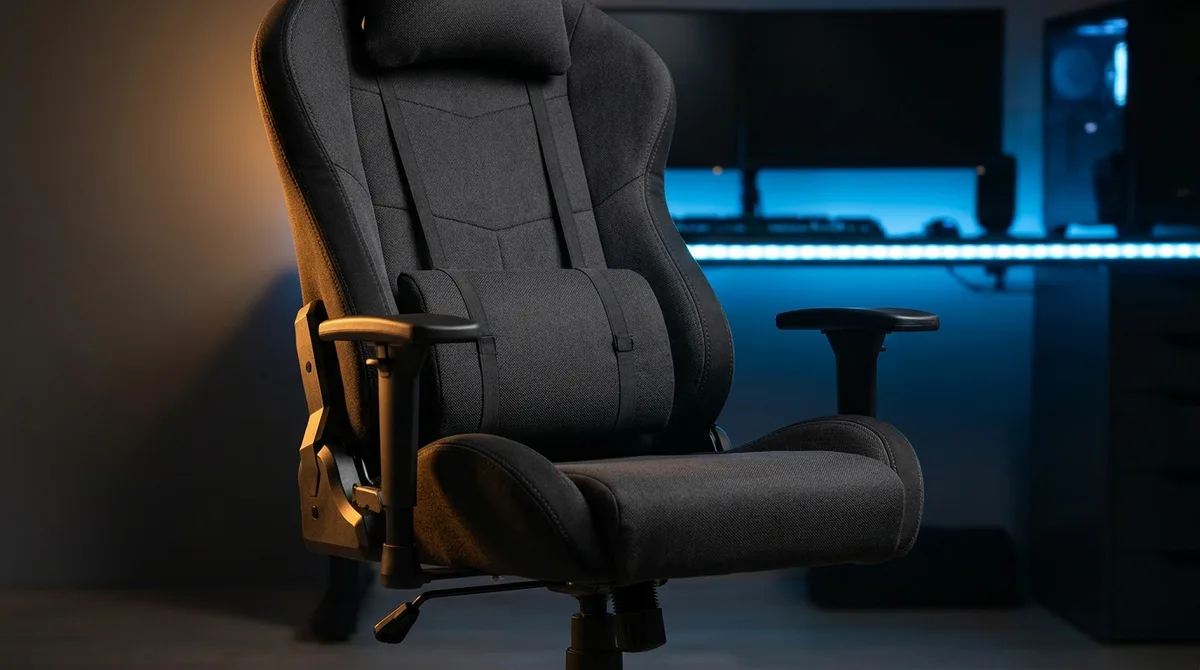
The Corsair TC100 RELAXED is the budget pick, and it wins on the thing cheap chairs usually get wrong: room. The seat measures 54 cm (21.2 in) wide and 50 cm (19.7 in) deep, and the bolstering is relaxed instead of hugging your ribs. TechRadar found it plush and decently padded, and its wider seat is far less confining than the aggressively shaped racing chairs that make you feel strapped into a go-kart. You can get it in soft fabric or leatherette. The fabric version has perforated sections that CORSAIR says help breathability, which matters once the second hour arrives.
Lumbar support is where the budget shows. It’s an adjustable cushion strapped to the backrest, not a built-in mechanism, so you’re positioning a pillow rather than turning a knob. GamesRadar’s reviewer found that cushion helpful for desk work after months of use, but thought the neck pillow was somewhat stiff. The armrests adjust in 2D, the backrest reclines from 90 to 160 degrees, and the seat height adjusts by 10 cm. The chair is rated for riders up to 188 cm (6 ft 2 in) and 120 kg (264 lb), so it suits a wide range of body types.
Build is where the compromises live. The seat frame is steel, the seat uses PU foam at 30 kg/m³, the base is nylon, and CORSAIR backs it with a two-year warranty. Reviewers point out that the budget construction and parts are real compromises, so don’t expect premium-chair materials at this price. For a wide seat, decent padding, and the basics covered, it’s still a sensible bet.
At a glance
- Best for: Budget buyers who want a wide seat and room to move, including taller or broader sitters
- Price: $199.99 for the fabric model on CORSAIR’s US product page, which listed it on backorder with expected shipment December 1–4, 2026. Prices change often, so the official site has current figures.
- Sizes or Specs: 54 cm wide and 50 cm deep seat; 90–160 degree recline; 10 cm seat-height adjustment; 120 kg (264 lb) capacity; riders up to 188 cm (6 ft 2 in)
- Warranty: Two years
Quick Picks by Body Type, Back Pain, and Budget
Not sure where to start? Find your situation in the table and jump to the matching section for the full breakdown.
| Reader Situation | Chair to Look At First | Why It Fits | Watch Out For |
|---|---|---|---|
| All-round default | Secretlab TITAN Evo | Built-in lumbar, sizes from Small to XL | Medium-firm seat |
| Lower back pain | Razer Iskur V2 | Six-way adjustable lumbar | Short seat depth, not adjustable |
| Long sessions on a budget | Razer Enki X | Roomy 20.7-inch seat depth | Fixed lumbar arch |
| Taller or heavier riders | E-WIN Flash XL Series | Rated to 7’0″ and 550 lb | Tipping risk, firm seat |
| Big and tall, firm seat | Noblechairs HERO | 20.5-inch seat, 330.7 lb rating | Very firm, recline stops at 125 degrees |
| Office-style ergonomics and breathability | Herman Miller Vantum | Breathable mesh back, 12-year warranty | Narrow seat-depth range |
| Tight budget | Corsair TC100 RELAXED | Wide seat, two-year warranty | Lumbar is a pillow, budget build |
Picking the Chair That Fits Your Body
Start with your height and weight, not the color scheme. Write both numbers down, then check them against the size range on the chair’s official page. Secretlab’s Regular fits 5’7″ to 6’2″, and its XL covers 5’11” to 6’9″, so a 6’0″ sitter has a real choice to make. Razer’s Iskur X is built for riders 170 to 190 cm, which leaves out a lot of people at either end.
Next, shortlist two or three chairs from the table above, matched to the problem you’re actually trying to solve. If your lower back already complains, start with the Iskur V2 or the E-WIN Flash XL Series. If your budget is tight, the Corsair TC100 RELAXED is the one to test first.
Then sit in each one with a plan. Run the seat-depth check and the lumbar check, adjust everything, and note how long it takes before your back starts filing complaints. If you can try them in a showroom or at a friend’s place, do it. Pay attention to the chair you’d reach for on a Tuesday night, not just the one that looks best under the store lights.
Finally, check the warranty terms on the manufacturer’s site before you buy. Prices in this article shift often, so confirm the current figure there too. The chair that survives your own test, and still feels right on day two, is the one to buy.