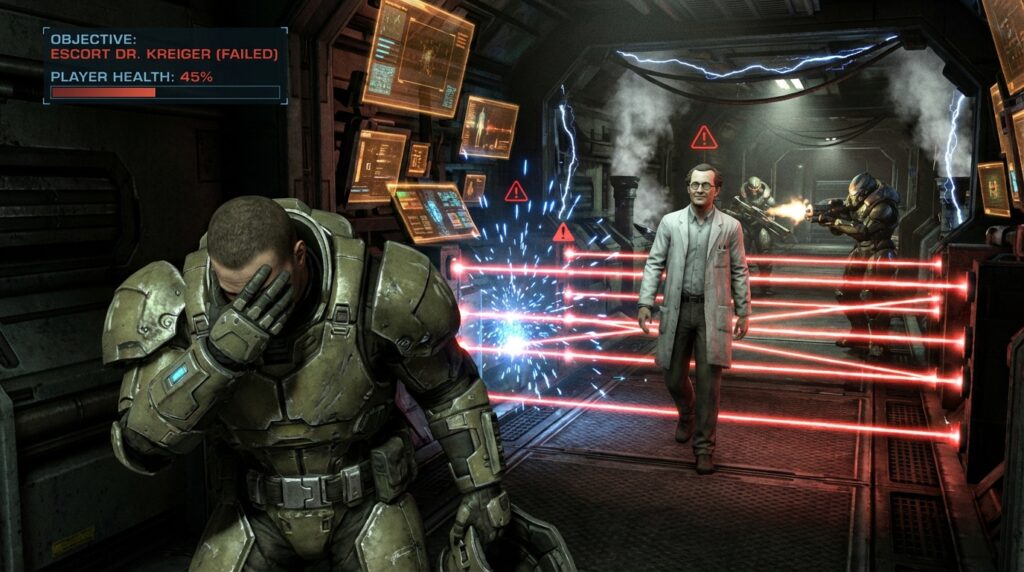
There is a special circle of gaming hell reserved exclusively for whoever invented the escort mission. I’ve lost count of how many times I’ve played as a heavily armed super-soldier, only to be reduced to babysitting a brain-dead NPC whose primary survival tactic is sprinting directly into enemy crossfire. It’s a mechanic so universally despised that recounting the worst escort missions in gaming history is practically a trauma-bonding exercise. Instead of feeling like a heroic protector, you usually end up wanting to shoot the VIP yourself just to end the misery.
The recipe for these digital nightmares is always the same: a fragile health pool, pathfinding logic written by a concussed squirrel, and a movement speed that is somehow slower than your run but faster than your walk. Whether it’s watching Natalya casually stroll into an exploding console in GoldenEye 007 or wrestling with the completely suicidal survivors of the original Dead Rising, the frustration is timeless. These aren’t just bad gameplay moments. They are monumental failures in game design that actively punish you for the developers’ inability to code basic self-preservation.
Key Takeaways
- Escort missions are universally despised because they rely on fragile NPCs with terrible pathfinding and frustrating movement speeds.
- Classic titles like GoldenEye 007 and Resident Evil 4 highlight the fundamental flaw of punishing players for a companion’s complete lack of basic self-preservation.
- Developers frequently use these agonizing babysitting sequences as a lazy design crutch to artificially inflate difficulty and pad out a game’s runtime.
- To fix this broken trope, modern game studios must either make escort companions completely invincible or banish the mechanic entirely.
Natalya Simonova In GoldenEye 007
If you want to pinpoint the exact moment an entire generation of gamers developed anger management issues, look no further than the Severnaya bunker in GoldenEye 007. We’re told Natalya Simonova is a brilliant computer programmer, yet her survival instincts suggest she has the cognitive function of a stunned pigeon. Instead of finding cover when the shooting starts, this supposed genius wanders directly into your line of fire like she’s trying to catch bullets with her teeth. You can spend ten minutes carefully clearing a room of Soviet guards, only for Natalya to casually stroll into a stray explosive blast just as you reach the exit. It’s a masterclass in terrible companion AI that turns a legendary stealth shooter into a frantic babysitting simulator.
The absolute worst part of this ordeal is the agonizing sequence where she must access the main computer terminal to stop a satellite weapon. She stands completely motionless in the center of the room while an endless clown car of heavily armed soldiers pours through the glass windows. I still have nightmares about desperately strafing around her to intercept gunfire with my own body because she stubbornly refuses to crouch. Since classic game design had zero respect for your time, failing to protect her impossibly fragile health pool means restarting the entire grueling mission from scratch. Escort missions are already a miserable trope, but protecting someone who practically begs the enemy to shoot her elevates this retro experience to pure psychological torture.
The Brainless Survivors Of Dead Rising
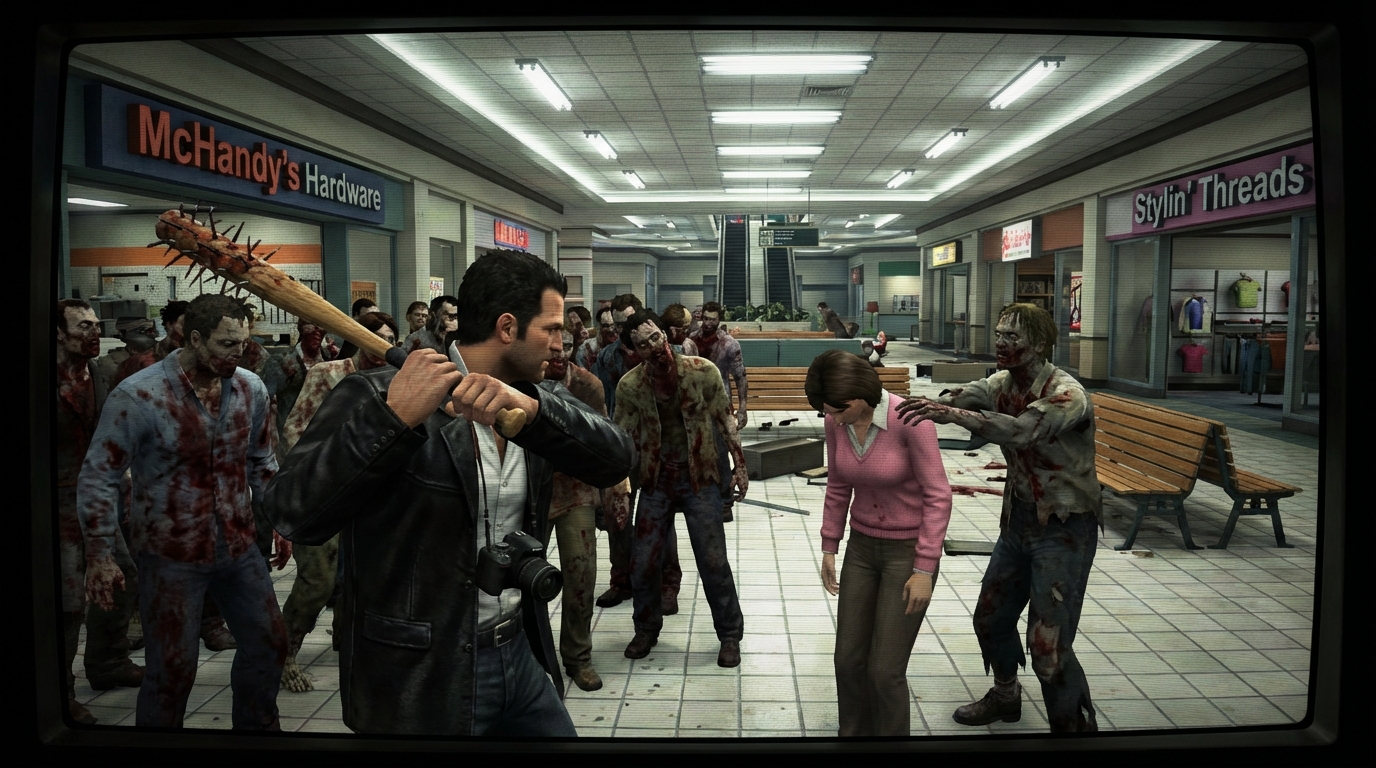
If there’s a VIP lounge in gaming hell reserved for terrible design, it’s entirely populated by the survivor AI from the original 2006 release of Dead Rising. I still wake up in a cold sweat remembering the sheer agony of trying to lead a supposedly sentient human being through a shopping mall infested with the undead. You’d think escaping a literal zombie apocalypse would instill some sense of urgency in a person. Instead, these walking meat sacks operate on the logic of a concussed toddler. Rather than following the heavily armed photojournalist clearing a safe path, they prefer to run directly into massive hordes or get outsmarted by a stationary potted plant. It takes a special kind of programming incompetence to make slow, shuffling zombies look like tactical geniuses compared to the people you’re actually trying to save.
Babysitting these digital lemmings quickly turns from an exciting rescue operation into an exercise in pure rage. You can hand them a shotgun or a baseball bat, but they will inevitably choose to stand perfectly still while a single zombie slowly gnaws on their shoulder. The game expects you to herd these braindead civilians across massive zones, constantly spamming the call button just to keep them from wandering off into a wall to die. When they inevitably get trapped behind a park bench and become undead chow, you’re heavily punished by a notoriously unforgiving save system. I eventually realized that letting these hopeless idiots fend for themselves wasn’t just a valid strategy. It was a necessary act of self-care.
Feeding Eva In Metal Gear Solid 3
Metal Gear Solid 3 is a masterpiece of stealth action right up until the exact moment you’re forced to babysit an injured Eva through the jungle. You have just survived a grueling battle with the Shagohod, the stakes are at an all-time high, and the game suddenly decides to hit the brakes so you can play a miserable game of virtual pet. Eva has a gaping wound, which apparently means her stamina bar drains faster than a cheap smartphone battery in the dead of winter. Instead of feeling like a legendary operative executing a tense escape, I felt like an exasperated camp counselor dragging a toddler through the woods. It completely shatters the cinematic tension when you have to pause every thirty seconds to deal with her refusal to take another step.
The absolute worst part of this agonizing trek is the downright comical feeding mechanic you have to abuse just to keep her moving. Because her stamina plummets so aggressively, you’re forced to constantly stop and shove instant noodles down her throat like she’s a malfunctioning woodchipper. If you run out of good rations, you’ll find yourself desperately hunting frogs and snakes just to keep your high-maintenance spy companion from sitting on a log and giving up on life. Even when she is fully fed, her pathfinding AI is an absolute disaster that practically begs enemy guards to spot her. I spent more time tranquilizing her and dragging her unconscious body through the mud than I did actually trying to sneak past the Russian military.
Escort missions are already a universally hated gaming trope, but this specific sequence feels like a deliberate punishment for enjoying the rest of the game. The developers clearly wanted to build emotional stakes, but this sluggish slog through the foliage achieves the exact opposite. You’re supposed to be feeling the heavy burden of the impending final duel with your mentor. Instead, you’re just praying Eva doesn’t wander directly into a tripwire while you’re busy digging a rotten ration out of your backpack. It’s a textbook example of how to completely derail an epic finale by turning a previously capable character into a helpless, bottomless pit for instant ramen.
Ashley Graham In Original Resident Evil 4

If there’s a VIP throne in the pantheon of terrible AI companions, Ashley Graham from the original Resident Evil 4 is sitting right on it. Just hearing her name is enough to trigger a phantom headache in anyone who survived that cursed Spanish countryside. Her shrill, ear-piercing scream of your name is permanently burned into the brains of an entire generation of gamers. I still wake up in a cold sweat sometimes because I swear I can hear her yelling for help from the foot of my bed. The developers somehow managed to create a character whose vocal cords are actually more dangerous to your sanity than the parasite-infected villagers trying to impale you.
Babysitting the president’s daughter quickly devolves into an exercise in pure anxiety management. Instead of running away from danger like a normal human being, her primary survival instinct is to drop to her knees and cower in the most inconvenient spots imaginable. You’ll spend half your playtime desperately trying to shoot around her while she decides to sit directly in the path of a revving chainsaw. It’s genuinely baffling how someone with a supposedly top-tier education believes the best tactical maneuver during a hostage situation is to crouch helplessly in the crossfire. You end up shooting her by accident almost as often as the enemies manage to grab her, forcing you back to a lazy checkpoint to endure the nightmare all over again.
The only saving grace in this entire miserable escort scenario is the ability to literally order her to hide in a nearby dumpster. I cannot overstate the absolute joy of finding a giant metal trash can and locking the most annoying character in gaming history safely inside it. It says a lot about a specific game design choice when your most rewarding mechanic is removing the companion from the gameplay loop entirely. While modern remakes have tried to fix these glaring flaws, the original Ashley remains the absolute gold standard for how not to program a sidekick. We survived the mission, but our eardrums and our patience will never truly recover.
Stop Forcing Us to Babysit Suicidal NPCs
We’ve suffered through enough suicidal companions to last several lifetimes. It’s absolutely baffling that developers still think babysitting a brainless digital toddler is a fun way to spend our weekend. We play video games to escape reality, not to experience the sheer panic of watching a fragile NPC slowly walk directly into enemy gunfire. The sheer number of broken controllers and uninstalled games caused by terrible pathfinding and lazy checkpoint design is practically a global tragedy. It’s time for this miserable gameplay trope to finally face the music.
I’m making a direct and desperate plea to every modern game studio currently designing a campaign. If you absolutely must include an escort mission in your game, you have exactly two acceptable options. You can either make the companion completely invincible, or you can banish this utterly lazy mechanic to the shadow realm forever. Nobody is going to complain that your game lacks realism just because the helpless scientist we are protecting ignores a grenade explosion. We will simply be too busy enjoying the actual gameplay to care about the missing babysitting simulator.
The gaming industry has evolved past the need for artificial difficulty spikes built around escorting helpless morons. We have stunning graphics, seamless open worlds, and incredible storytelling at our fingertips today. There’s zero excuse to pad out a runtime by forcing players to match the agonizingly slow walking speed of a doomed survivor. Until developers finally learn this lesson, I will happily keep slamming the uninstall button the second someone tells me to protect them. Let them fend for themselves while I go play something that actually respects my time.
Frequently Asked Questions
1. Why are escort missions universally hated in video games?
I can sum it up in three words: terrible artificial intelligence. You’re usually forced to protect a fragile character with the survival instincts of a suicidal lemming. Developers somehow think it’s fun to make these NPCs walk slower than your run but faster than your walk, ensuring maximum frustration.
2. What makes Natalya from GoldenEye 007 the ultimate example of bad companion AI?
Natalya is supposedly a genius programmer, but her primary defense mechanism is catching your bullets with her own face. You can spend ten minutes carefully clearing a room of Soviet guards only for her to casually stroll into a stray explosive. It’s a perfect example of how to turn a legendary stealth shooter into a pure rage simulator.
3. How do developers usually ruin the movement speed of escort NPCs?
Game designers love to employ a sadistic trick where the NPC moves at a speed completely incompatible with yours. If you run, you leave them behind to get chewed up by enemies. If you walk, you’re forced to stop every three seconds to let their sluggish pacing catch up to you.
4. Are the survivors in Dead Rising really that bad?
Yes, they are absolutely braindead and actively want to be eaten by zombies. Instead of following you to the safe room, they will aggressively hug a horde of the undead or get stuck behind a tiny potted plant. You’ll spend more time wrestling with their broken pathfinding than actually fighting the zombie apocalypse.
5. Is there any way to make an escort mission actually enjoyable?
The only good escort mission is one where the NPC can actually defend themselves or cannot be killed at all. If I don’t have to constantly monitor a babysitting gauge while fighting off an army, I might actually enjoy the game. Giving the companion a functioning brain and a basic sense of self-preservation is a wild concept the industry should try more often.
6. Why do game developers keep putting escort missions in their games?
I’m convinced it’s just a cheap way to pad out the runtime and add artificial difficulty to a campaign. Writing good pathfinding logic takes time and effort, so developers just slap a fragile health bar on a useless character and call it a day. It’s lazy design that punishes the player for the inability of a studio to code basic survival instincts.
7. What should I do if an escort mission is ruining a game for me?
Honestly, just look up a guide or cheese the mechanics however you can to get it over with. There is no shame in exploiting bad game design to save your own sanity. If the game wants to punish you with a terrible companion, you have every right to break the rules right back.