If you’ve spent the last decade trying to make fantasy combat feel like anything other than swinging a wet pool noodle, a lifeline has finally arrived. My avowed combat system review confirms that the Living Lands actually brings the crunch we’ve been craving, trading floaty animations for strikes that feel like they’re actually connecting with bone. It’s a masterclass in making first-person fantasy feel weighty without sacrificing the speed required to keep things from becoming a sluggish chore.
The real magic lies in the classless freedom that lets you stop pretending you have to choose between being a nerd with a book or a meathead with a mace. You can dual-wield a pistol and a grimoire like some sort of arcane gunslinger, swapping between full loadouts instantly when a situation goes sideways. It’s smooth, unapologetically aggressive, and finally gives us a combat loop that values player creativity over rigid stat sheets.
Key Takeaways
- The classless progression system eliminates rigid roles, allowing players to freely mix skills from Fighter, Ranger, and Wizard trees to create unique hybrid playstyles.
- A dual-loadout swap feature enables instant transitions between distinct combat setups, such as magic and melee, without the need for cumbersome menu navigation.
- Combat prioritizes physical weight and impact physics, ensuring that melee strikes and spells feel grounded and responsive rather than floaty or weightless.
- Elemental combo mechanics reward tactical depth by allowing players to stack status effects and exploit synergies between different magic and weapon types.
Classless Freedom And The Dual Loadout Swap
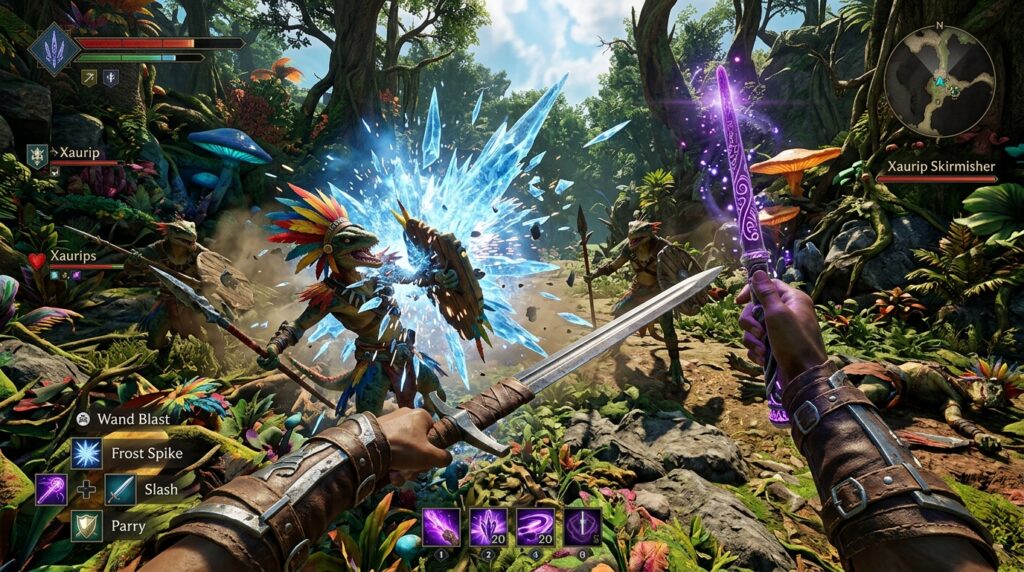
This title finally ditches the archaic tradition of making you pick a single personality trait at character creation and sticking with it for forty hours. The classless system is a breath of fresh air because it actually respects your intelligence, allowing you to pull from Fighter, Ranger, and Wizard trees whenever you feel like changing the vibe. I spent half my time poking holes in enemies with a rapier only to decide mid-fight that a flintlock pistol and a fireball were better suited for the occasion. It is the kind of mechanical freedom that makes you wonder why other RPGs still insist on locking you into a rigid role like it is a legally binding contract.
The real magic happens with the dual loadout swap, which is quite literally the get out of jail free card for combat boredom. With a single button press, you can transition from a long-range sniping position to a dual-wielding whirlwind of steel without the game ever tripping over its own feet. This creates a rhythmic flow that keeps those long dungeon crawls from feeling like a repetitive chore of clicking on heads until they explode. It is snappy, responsive, and lacks the clunky menu-diving that usually kills the momentum in first person adventures.
By giving us the ability to instantly pivot between playstyles, the developers have managed to make the combat feel crunchy and intentional rather than floaty. You are not just swinging a pool noodle at a health bar, you are strategically cycling through a toolkit that actually has some weight behind it. If a shield-bearing enemy is annoying you, swap to your magic loadout and melt their face off before switching back to finish the job with a blade. It is a simple system that works because it does not try to overcomplicate the fun with unnecessary barriers or corporate-approved grind.
Grimoires And Elemental Combo Mechanics
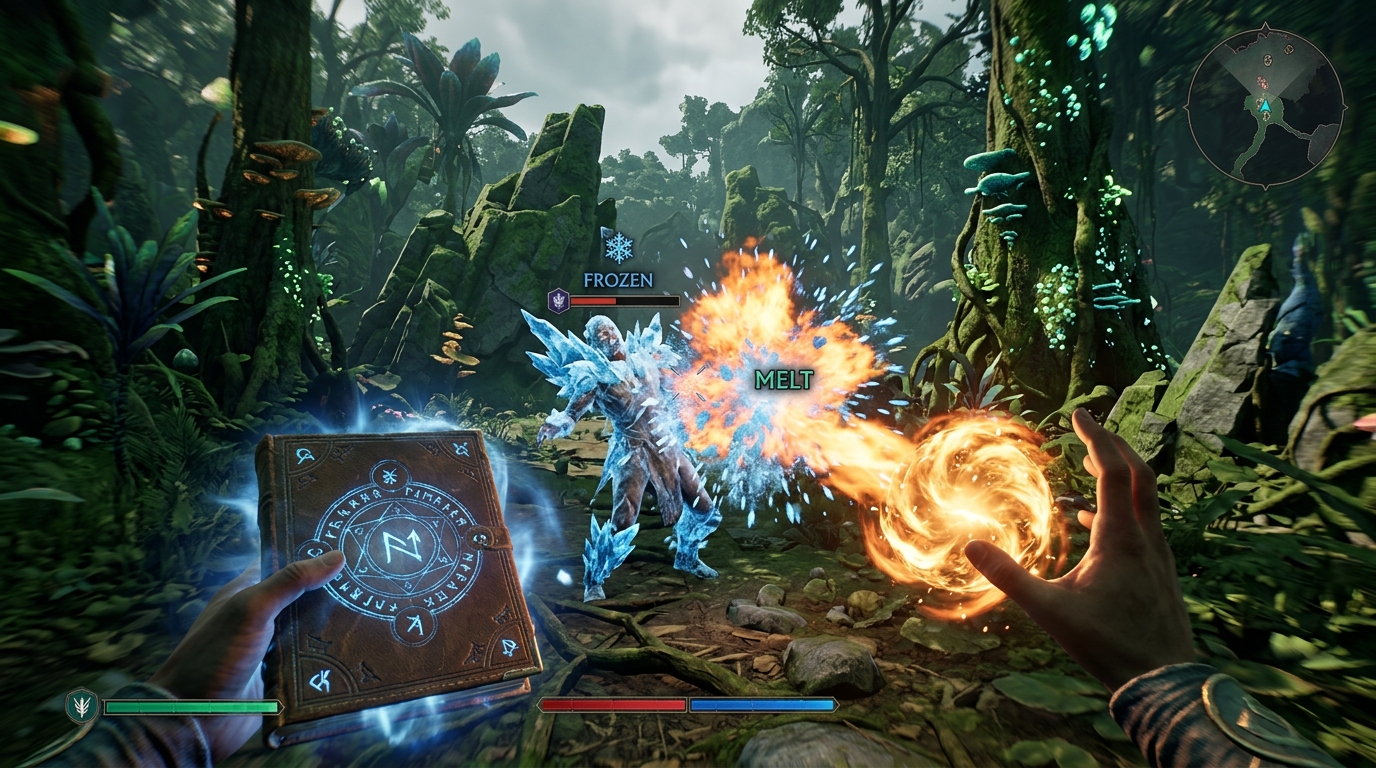
Manual spell-slinging in this game finally ditches the floaty, weightless nonsense that usually plagues first-person magic systems. When you crack open a grimoire and start tossing spells, there is a genuine sense of impact that makes you feel like a walking disaster rather than a budget party magician. The animations are snappy, and the feedback from a well-placed fireball or chain lightning actually feels punchy enough to justify the screen shake. It is a refreshing change from the industry standard of clicking a mouse and watching a glowing pixel lazily travel across the room. The team clearly understood that if I am going to be a wizard, I want to feel like I am tearing the fabric of reality apart with my bare hands.
The real genius of the system lies in how it rewards players who have more than two brain cells to rub together. You cannot just spam your strongest ability and hope for the best because the elemental combo mechanics demand actual tactical awareness. Stacking status effects, like freezing an enemy before shattering them with a physical blow, creates a satisfying gameplay loop that feels earned rather than gifted. It turns every encounter into a mini-puzzle where you are constantly weighing the benefits of your current loadout against the elemental weaknesses of the mob in front of you. This level of mechanical depth is exactly what keeps the combat from becoming a repetitive slog after the first ten hours.
Swapping between your dual loadouts is the glue that holds these complex elemental interactions together. You can initiate a fight by drenching a group of enemies with a spell and then instantly switch to a lightning-infused weapon to finish the job without missing a beat. This fluidity allows for a battlemage playstyle that actually functions in practice instead of just looking good in a trailer. It is a system that respects your intelligence by providing the tools for creative destruction while punishing anyone lazy enough to ignore the synergy between their spells. If you are tired of combat systems that hold your hand and ask for nothing in return, this crunchy approach to magic is going to be your new best friend.
Weighty Melee Versus The Floatiness Factor
The biggest fear with any first-person RPG is that the swordplay will feel like you are swatting at flies with a pool noodle. Thankfully, the impact physics in this title actually have some teeth, providing a crunch that has been missing from the genre for a decade. When you swing a mace, there is a tangible sense of weight that translates into enemies actually reacting to the force of the blow. It is a massive relief to see a studio prioritize the thud over the float, ensuring that every encounter feels grounded rather than like a ballet performed in zero gravity. You can finally stop worrying about that disconnected feeling where your blade passes through a monster like it is made of mist.
The hybrid flexibility of the classless system means you can pivot from heavy melee to chaotic magic without the gameplay losing its mechanical edge. Swapping between loadouts is snappy, allowing you to soften a target with a pistol before closing the gap to deliver a heavy, bone-shaking strike. This seamless transition is where the physics engine really shines, as it maintains the momentum of combat regardless of your chosen tools. It is refreshing to play a game that understands that power fantasy requires a bit of friction and resistance to feel earned. The developers did not just give us a shiny toy box, they gave us weapons that actually feel like they are hitting something solid.
While the industry often settles for floaty movement to keep things fast, the combat here chooses to lean into intentionality and deliberate timing. You cannot just spam the attack button and expect to win every trade, as the weight of your gear dictates how quickly you can recover from a missed swing. This creates a satisfying rhythm where you are constantly weighing the risk of a heavy blow against the safety of a quick parry. It is not quite a simulation, but it is a far cry from the skill bloat we have been stuck with in recent years. If you were looking for a reason to actually care about first-person melee again, this level of polish is exactly what the doctor ordered.
Finally, First-Person Combat That Doesn’t Suck
This game finally gives us a reason to stop pretending that clunky, weightless combat is a mandatory sacrifice for a good first-person RPG. While it doesn’t reinvent the wheel, it certainly puts some high-performance tires on it by ditching the floaty swinging and replacing it with genuine impact. The dual-loadout system is the real hero here, allowing you to go from a dual-wielding blender to a spell-slinging menace without fumbling through three different sub-menus. It feels like the developers actually sat down and realized that clicking a mouse button should feel like hitting something, not just waving a pool noodle at a brick wall. This is a massive step up from the stiff, dated mechanics we have been tolerating for the last decade in this genre.
You can officially stop downloading three dozen combat overhauls for your favorite ten-year-old fantasy sim because this title actually delivers that depth right out of the box. The classless progression means you are never locked into a boring choice, letting you experiment with grimoires and flintlocks until you find a flavor of chaos that suits your mood. It is refreshing to play a game that trusts the player to handle more than one tactical layer at a time without making it feel like a chore. If you have been waiting for a fantasy RPG that respects your time and your need to actually enjoy the moment-to-moment gameplay, this is it. It is a polished, punchy, and unapologetically fun evolution that proves you can have great writing and great combat in the same package.
Frequently Asked Questions
1. Is the combat in Avowed just another floaty fantasy clone?
Absolutely not. The developers finally fixed the wet pool noodle problem by giving strikes actual weight and crunch. When you hit something in the Living Lands, it feels like you are connecting with bone rather than swinging through thin air.
2. How does the class system work if I want to change my playstyle?
There are no rigid classes to lock you into a boring role for forty hours. You can pull skills from the Fighter, Ranger, and Wizard trees whenever you want. It treats you like an adult who can decide for themselves if they want to be a bookish nerd or a mace wielding meathead on the fly.
3. Can I use magic and guns at the same time?
You can and you should. The game lets you dual-wield a pistol and a grimoire like some sort of arcane gunslinger. It is the peak of mechanical freedom and makes most other RPGs look like they are stuck in the stone age.
4. How fast can I switch between different weapon setups?
The dual loadout swap lets you transition between setups instantly with a single button press. You can go from sniping enemies at long range to becoming a whirlwind of steel in melee without the game ever tripping over its own feet. It is the perfect cure for combat boredom.
5. Is the gameplay too slow or sluggish because of the added weight?
The combat is unapologetically aggressive and fast without feeling floaty. The team managed to find the sweet spot where every strike feels heavy and significant but the movement remains smooth. You get the crunch you crave without the sluggish chore of a typical heavy simulator.
6. Do I have to worry about stats more than actual skill?
This combat loop values your creativity over rigid stat sheets. While your build matters, the focus is on how you use your loadouts and swap between abilities in the heat of the moment. It is about making smart tactical choices rather than just staring at numbers all day.