
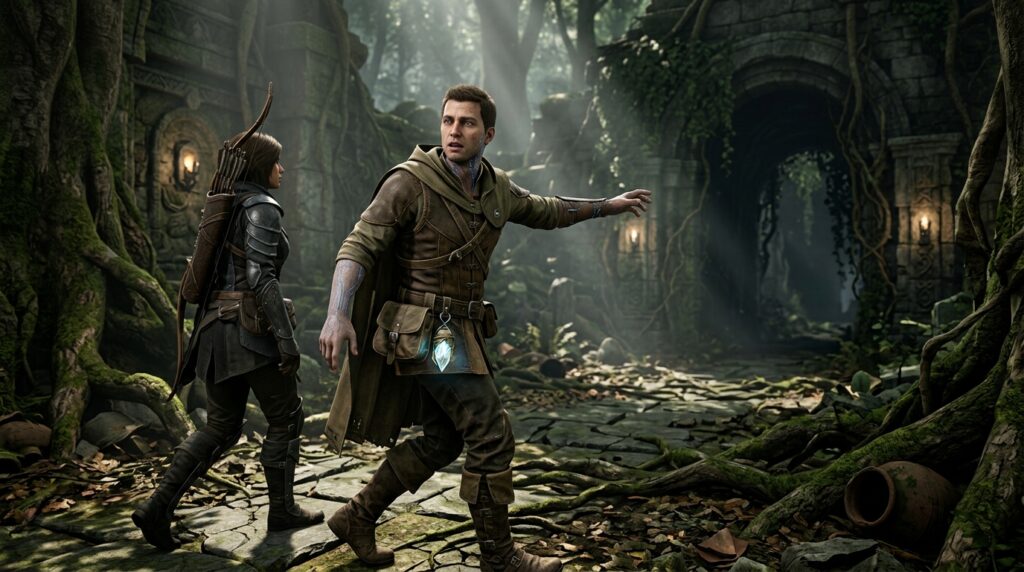
AI NPC companions are finally inching beyond flashy demos and into actual games, but I don’t expect every digital sidekick to become a tactical genius overnight. The best AI NPC companions can understand intent, coordinate attacks, remember useful details, and follow the rules of the game without turning into a chatty toaster with a sword. That’s a meaningful upgrade from NPCs whose greatest strategy is walking into a wall.
I’m interested in companions that make games better, not ones that exist solely so a publisher can slap “AI-powered” on a trailer. The real test is simple: do they help me play smarter, create memorable moments, and stay within the game’s world, or do they ramble, cheat, and ruin the illusion faster than a badly written quest giver?
Key Takeaways
- The best AI NPC companions turn player intent into useful gameplay actions: they understand commands, perceive game states, coordinate tactics, remember relevant context, and follow the game’s rules.
- Game-state awareness matters more than endless conversation. Access to objectives, maps, resources, health, enemies, and combat conditions enables companions to provide practical help instead of merely delivering convincing dialogue.
- Successful companions must improve teamwork, exploration, or problem-solving without stealing player agency or trivializing the challenge. Reliability, low latency, sensible failure recovery, and consistent behavior matter more than flashy demos.
- AI NPC technology remains promising but limited, so developers must address repetitive dialogue, hallucinated instructions, privacy, memory controls, and dependable performance before companions become standard features in major games.
Introduction To AI NPC Companions
The best AI NPC companion is not the one that can discuss everything from medieval politics to my breakfast order. It is the one that understands what I mean, coordinates useful actions, and obeys the game’s rules instead of turning every mission into an unsupervised improv exercise. That distinction matters because a character can sound impressively human while contributing about as much to gameplay as a talking loading screen. If all it does is deliver chatbot dialogue with a health bar, I’m not looking at a companion. I’m looking at a side quest with vocal cords.
AI NPC companions are moving beyond glossy demonstrations toward limited, player-facing deployments, but the technology still has plenty to prove. The strongest systems combine conversational AI with traditional game logic, speech recognition, memory, and tightly controlled access to the game world. That combination could let an ally understand commands such as “cover me,” “find another route,” or “save your abilities for the boss,” then respond within clear gameplay limits. It could also produce the digital equivalent of a teammate who nods thoughtfully before walking directly into lava, so execution matters more than the marketing trailer.
I’m treating these companions as a gameplay test, not a novelty showcase. Can the character make combat, exploration, or problem-solving more interesting without stealing control from the player or breaking the rules that give the game its shape? Does its memory create meaningful continuity, or merely preserve every awkward thing I said to an NPC three hours ago? The answers will separate genuinely useful AI NPC companions from glorified chatbot puppets, and I have no interest in praising the latter just because they can say my name.
From Chatbots To Teammates
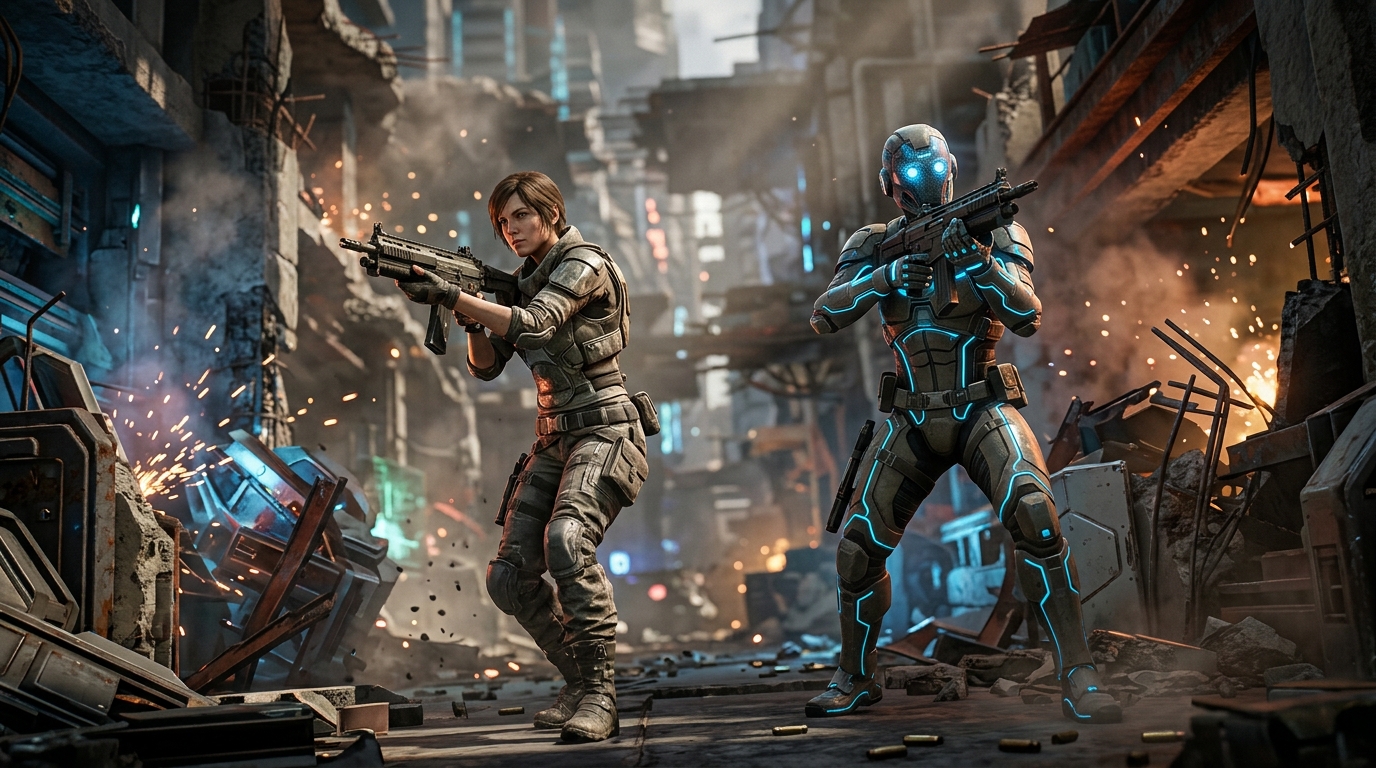
AI NPC companions only become interesting when they do more than produce plausible banter. A conversational NPC can answer free-form questions, but without memory or access to the game world, it is essentially a chatbot trapped in a side quest. An AI ally or teammate goes further by reading game states, coordinating plans, and choosing useful actions within rules the developers actually designed. A personal game assistant helps the player directly with tips, navigation, builds, or accessibility, while a simulation character exists mainly to make the world feel reactive rather than to win fights. The real prize is the co-playable character, an AI partner that talks, remembers, perceives, decides, and changes what happens on screen.
| System | Talks | Remembers | Perceives game states | Makes decisions | Directly affects gameplay |
|---|---|---|---|---|---|
| Conversational NPC | Yes | Limited | Rarely | Limited | Usually no |
| AI ally or teammate | Yes | Often | Yes | Yes | Yes |
| Personal game assistant | Yes | Often | Partly | Advises the player | Indirectly |
| Simulation character | Sometimes | Sometimes | Yes | Yes, within its routine | Usually indirectly |
| Co-playable character | Yes | Yes | Yes | Yes | Yes, as a gameplay partner |
The difference matters because a convincing voice is not the same thing as useful intelligence. I can ask a talkative NPC about the weather, receive a charming answer, and still watch it walk into a fire like it has an appointment there. A proper AI teammate should understand what I mean, notice threats, remember our previous plan, and act within clear gameplay boundaries instead of improvising nonsense. That usually means combining language models with traditional navigation, combat logic, speech tools, memory systems, and tightly controlled access to game data. The technology is moving toward limited real-world deployments, but the winning design is still the humble one: fewer magic promises, more reliable actions.
For players, the practical test is brutally simple: does the companion make the game better, or does it merely add another mouth to the party? The best systems reduce busywork, create tactical surprises, and make teamwork feel personal without stealing control from the player. The worst ones repeat your name, forget the mission, and call that an emergent relationship. I’ll take a companion that quietly spots an ambush over one that delivers a ten-minute monologue about its fictional childhood while the boss rearranges my skeleton.
Game State Beats Endless Dialogue
An AI NPC companion is only as useful as the game state it can understand. Give it access to your objectives, inventory, map, health, ammunition, enemy positions, and combat conditions, and it can turn “we should probably deal with that room” into an actual plan. Without that information, even the most charming voice is just guessing with confidence, which is how you end up receiving motivational speeches from a character who has no idea you are bleeding out. I’d rather have a quiet companion mark two threats and find a healing item than deliver a flawless monologue about friendship while I crawl toward a checkpoint.
The real test is whether the companion can translate player intent into permitted actions. “Scout ahead,” “cover me,” “revive me,” and “save the grenades for the boss” are useful instructions only when the NPC can read the map, track resources, understand objectives, and follow tactical rules. That requires a connection to the systems underneath the dialogue, not merely a language model wearing fantasy armor. A companion that remembers my favorite color but forgets the evacuation route is not intelligent. It is a chatbot trapped in a side quest.
Free-form conversation still has value, especially for personality, immersion, and the occasional terrible joke during a long trek. It should support gameplay rather than distract from the fact that the character cannot open a door, scout a room, or revive the person keeping the mission alive. Otherwise, the AI NPC companion becomes a digital roommate who refuses to do chores, offers unsolicited commentary, and somehow still expects credit for helping. Clever dialogue is nice, but useful behavior is the feature that earns a permanent party slot.
AI NPC Companions In 2026
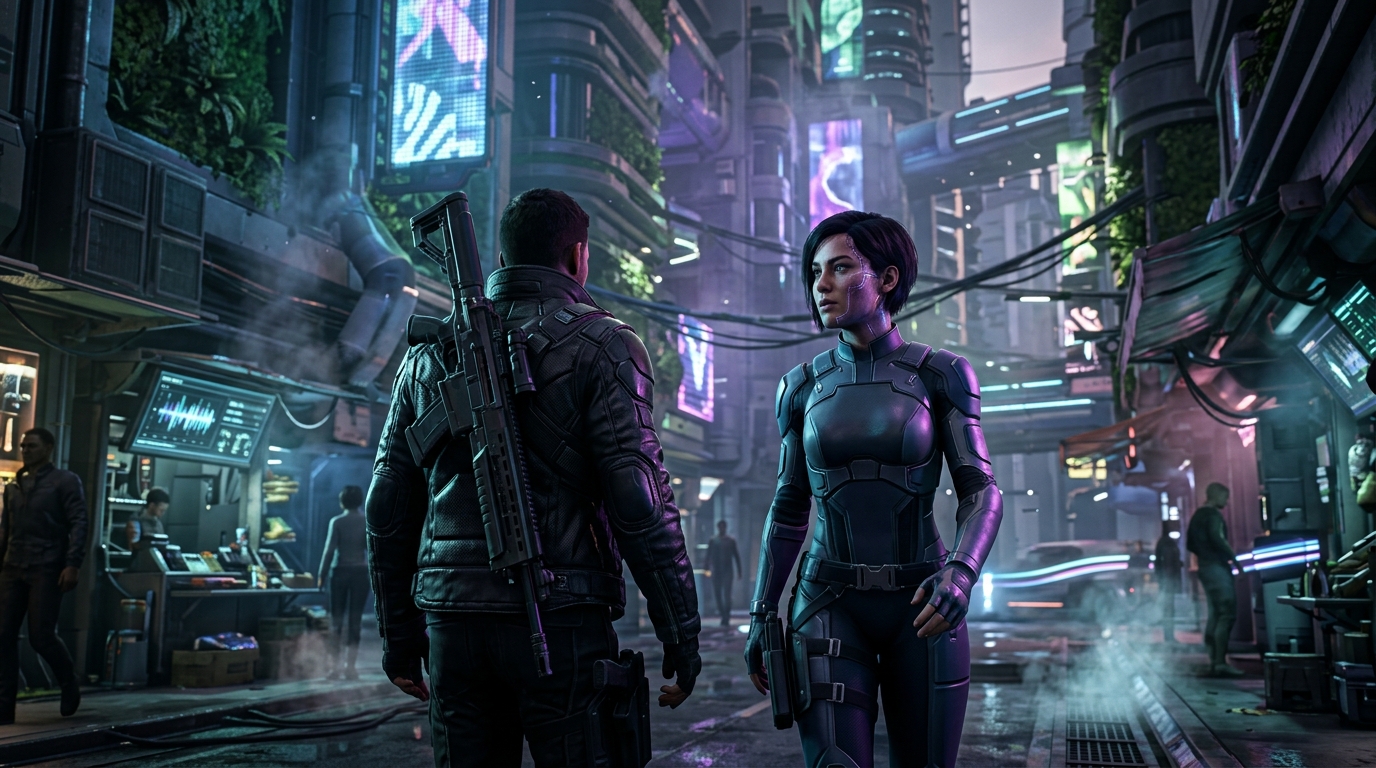
AI NPC companions in 2026 are finally creeping out of the tech demo booth and into limited player-facing tests, although “groundbreaking” remains the industry’s favorite word for “we made it answer a microphone.” The strongest systems combine conventional game AI with speech recognition, text-to-speech, memory, and tightly restricted access to game state. That makes the useful version less like an all-knowing virtual best friend and more like a teammate that understands “cover me” and does not wander into a pond to discuss philosophy. Current co-playable character concepts point toward this practical direction, with AI companions designed to participate in play rather than merely recite dialogue. It is a promising idea, but a concept is not the same thing as a companion that survives a full campaign without becoming digital luggage.
My 2026 scorecard looks more cautious than the trailers do. Limited deployments and working prototypes belong in the “real but narrow” column, especially when the character can understand intent, coordinate actions, and obey clear gameplay rules. Early concepts sit in the controlled-experiment column until players can use them consistently in a shipped or genuinely accessible game. Announcements for AI-driven games belong in the glossy-promise column for now, moving upward only when players can test the systems and report interactions that go beyond chatbot patter. That distinction matters because a character that talks smoothly is not automatically an intelligent companion, just as a parrot with a headset is not a squad leader.
The real test is whether these companions create meaningful choices, useful teamwork, and memorable friction instead of dumping infinite small talk into a side quest. Developers still need to solve latency, hallucinated instructions, repetitive personalities, privacy concerns, and the awkward moment when the AI forgets the player’s name for the sixth time. For now, AI NPC companions are emerging as targeted features in controlled experiments and limited products, not as the default furniture of major games. I’d happily take one companion that understands tactics over ten that can explain its tragic backstory on demand. Until these systems prove they can improve the game rather than merely fill silence, the uninstall button remains undefeated.
The Companion Test Players Actually Need
I judge AI NPC companions by what they do in a fight, not by how convincingly they order a virtual coffee. A keeper understands plain-language intent, follows gameplay rules, spots useful opportunities, and helps without turning every encounter into a group project. I also test reliability over several sessions, because an ally that remembers my strategy on Tuesday and forgets it by Wednesday is not a companion. It is a goldfish with voice acting. Personality matters too, but charm cannot excuse bad pathfinding, repetitive chatter, or a memory system that treats private player details like collectible loot.
Latency is the silent deal-breaker: a clever response arriving ten seconds after the ambush is just a historical account. I want clear privacy controls, transparent data handling, and an easy way to delete remembered information, because my NPC does not need a psychological profile to open a locked door. When the system fails, it should admit confusion, recover quickly, and hand control back to me instead of confidently sprinting into lava. My rule is simple: if the companion improves decisions, teamwork, or immersion without stealing the spotlight, it stays installed. If it behaves like a chatbot trapped in a side quest, it gets the uninstall button.
| Test | Worth keeping installed | Immediate uninstall |
|---|---|---|
| Usefulness | Understands intent and provides practical help | Talks constantly without improving play |
| Reliability | Repeats useful behavior consistently | Forgets commands or breaks basic objectives |
| Personality | Distinct, responsive, and funny in moderation | One-liners on loop, fake enthusiasm included |
| Memory | Remembers relevant preferences with player control | Stores personal details without clear controls |
| Gameplay impact | Creates better teamwork without making the game trivial | Steals agency or ruins the intended challenge |
| Latency | Responds fast enough for the situation | Answers after the boss fight is already over |
| Failure recovery | Admits mistakes and offers a useful fallback | Doubles down while marching confidently into danger |
Conclusion On AI NPC Companions
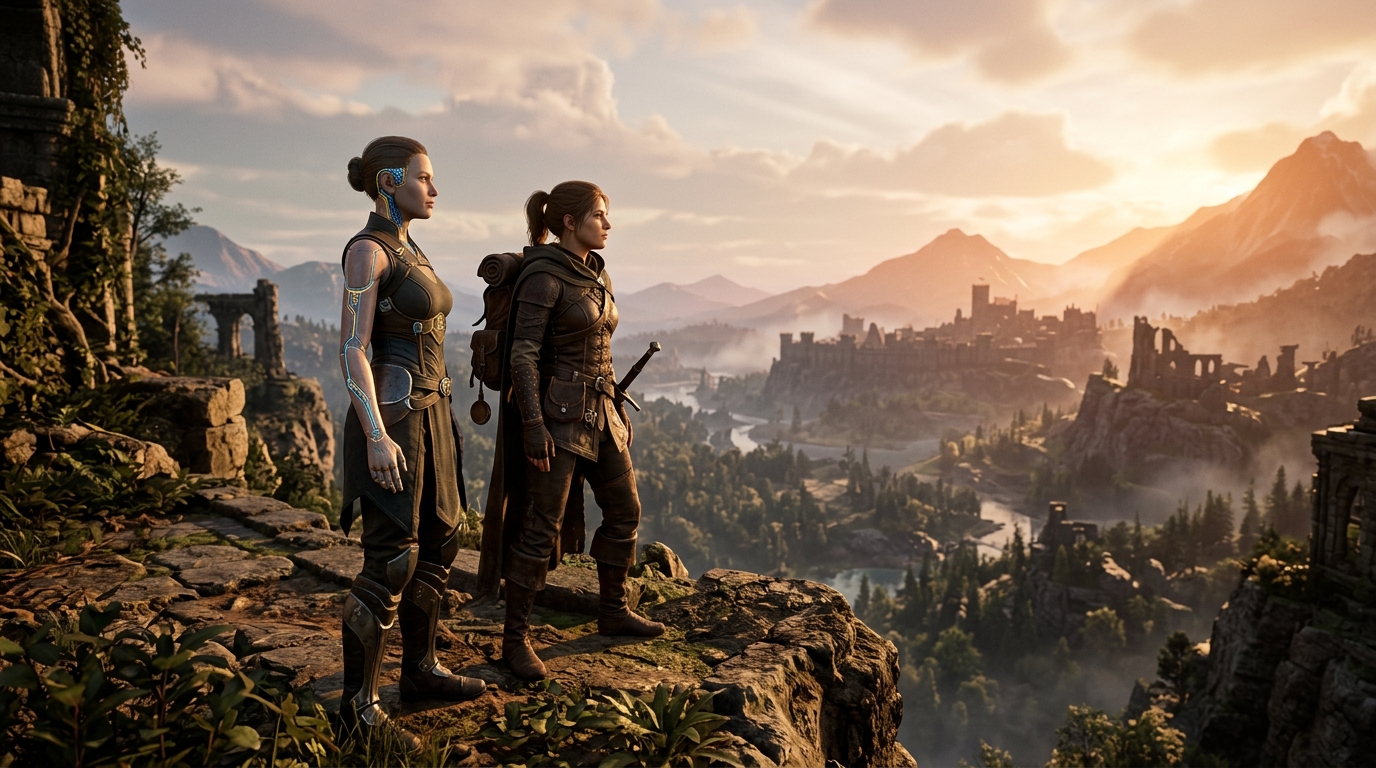
AI NPC companions will succeed as teammates before they succeed as improvisational storytellers. I’d rather have a companion that understands “fall back,” marks a target, shares supplies, and stops charging into lava than one that delivers a beautiful monologue about its childhood in the lava district. The best systems combine conversation with clear game-state awareness, tactical coordination, and boundaries that keep their behavior useful instead of gloriously weird. That may sound less flashy than an NPC who can discuss philosophy for twenty minutes, but winning a fight is still more entertaining than debating one.
The real test is whether these characters change how we play, not whether they can generate endless dialogue. A strong AI companion should recognize intent, adapt to the player’s habits, and make decisions within rules the game can actually support. It should create new strategies, react to changing situations, and remain dependable when the player is busy surviving the consequences of their own terrible planning. If its greatest achievement is remembering the name of our fictional pet while missing every enemy in a hallway, the technology is doing party tricks, not advancing game design.
I expect the most successful AI NPC companions to become practical partners first and conversational performers later. Storytelling still matters, but personality means little if the character cannot contribute to combat, exploration, puzzles, or the broader rhythm of play. The industry does not need more digital chatterboxes wearing fantasy armor and calling it innovation. If the character cannot make the game more strategic, responsive, or fun, then it is not the future of NPCs. It is a chatbot trapped in a side quest.
Build Companions, Not Chatbots in Armor
AI NPC companions are finally inching beyond glossy demonstrations and into real, player-facing games, but the hype still needs a leash. The most convincing systems combine voice recognition, memory, traditional game AI, and tightly controlled access to game state, turning a character into a useful teammate rather than a chatbot wearing armor. I want a companion that understands “watch the door,” revives me under fire, and follows the rules of the game, not one that delivers a ten-minute monologue about its fictional childhood while enemies politely wait. Flexible conversation is nice, but useful behavior is what earns a permanent party slot.
The real test is whether AI NPC companions create meaningful interactions after the novelty wears off. If a character remembers my choices, coordinates intelligently, and reacts within clear gameplay limits, it could make worlds feel more alive without turning every quest into improv theater. If it only responds with vague enthusiasm and forgets everything five minutes later, I’m uninstalling it before it finishes saying, “I understand how you feel.” The technology is promising, but developers still need strong writing, careful boundaries, reliable performance, and an actual reason for the companion to exist. A talking NPC is easy to demo. A dependable partner worth keeping around is the boss fight.