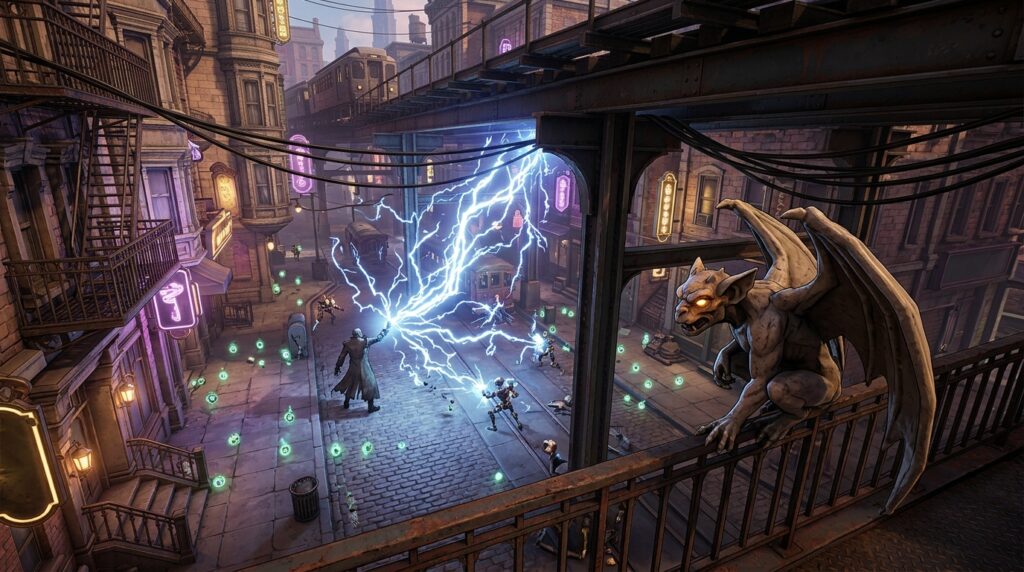
If you’ve been anywhere near a router lately, you’ve likely been buried under the mountain of deadlock valve leaks currently flooding the internet. Valve tried to keep their new 6v6 hero-shooter behind a digital iron curtain, but that NDA was about as effective as a screen door on a submarine. Now, we’re staring at a chaotic blend of steampunk skyrails and MOBA mechanics that the developer clearly wasn’t ready to show off yet.
It’s honestly impressive how a company known for silence and “Valve Time” managed to let an entire game’s worth of footage walk out the front door. We’ve moved past the era of blurry screenshots into full-blown gameplay deep dives, leaving us to wonder if there are any secrets left to keep. Whether this tactical urban fantasy turns out to be a masterpiece or a cluttered mess, the leak culture has already decided we’re playing it before it’s even officially finished.
Key Takeaways
- Valve’s unannounced project Deadlock is a 6v6 hero-shooter that blends tactical MOBA mechanics with a gritty, steampunk urban fantasy aesthetic.
- The game’s strictly enforced non-disclosure agreements have utterly failed, with over 170,000 alpha testers leaking high-quality gameplay, character rosters, and map layouts.
- Deadlock features a massive roster of over fifty heroes and unique skyrail movement systems, raising concerns about game balance and genre fatigue in an already overcrowded market.
- The project has undergone a significant identity shift during its long development, evolving from sci-fi codenames like Neon Prime and Citadel into its current Victorian-inspired form.
From Neon Prime To Leaked Hero Shooter
Valve has been playing a high-stakes game of hide and seek with Deadlock for years, shuffling through codenames like Neon Prime and Citadel while trying to keep the lid on its latest project. What started as a whisper in the dark corners of data mining communities quickly snowballed into a full-blown avalanche of leaked assets and gameplay footage. We watched the aesthetic shift from a sterile sci-fi world to a gritty, steampunk-inspired urban fantasy that looks like a Victorian fever dream. It is the kind of identity crisis you expect from a studio that takes a decade to count to three, but the transition from a mysterious project to a tangible product was anything but graceful.
The real chaos erupted when the non-disclosure agreements started failing faster than a cheap power supply during a summer heatwave. Despite Valve attempting to keep their alpha testers on a short leash, the internet was soon flooded with high-quality clips showing off 6v6 MOBA mechanics and those oddly specific skyrail movement systems. It turns out that when you invite thousands of people to play an unannounced game, someone is eventually going to hit the record button and share it with the world. Now we are left staring at a leaked hero shooter that looks suspiciously like a mashup of every trend from the last five years, leaving us to wonder if the world actually has room for another competitive ability-based grind.
The NDA Breach Heard Round The World
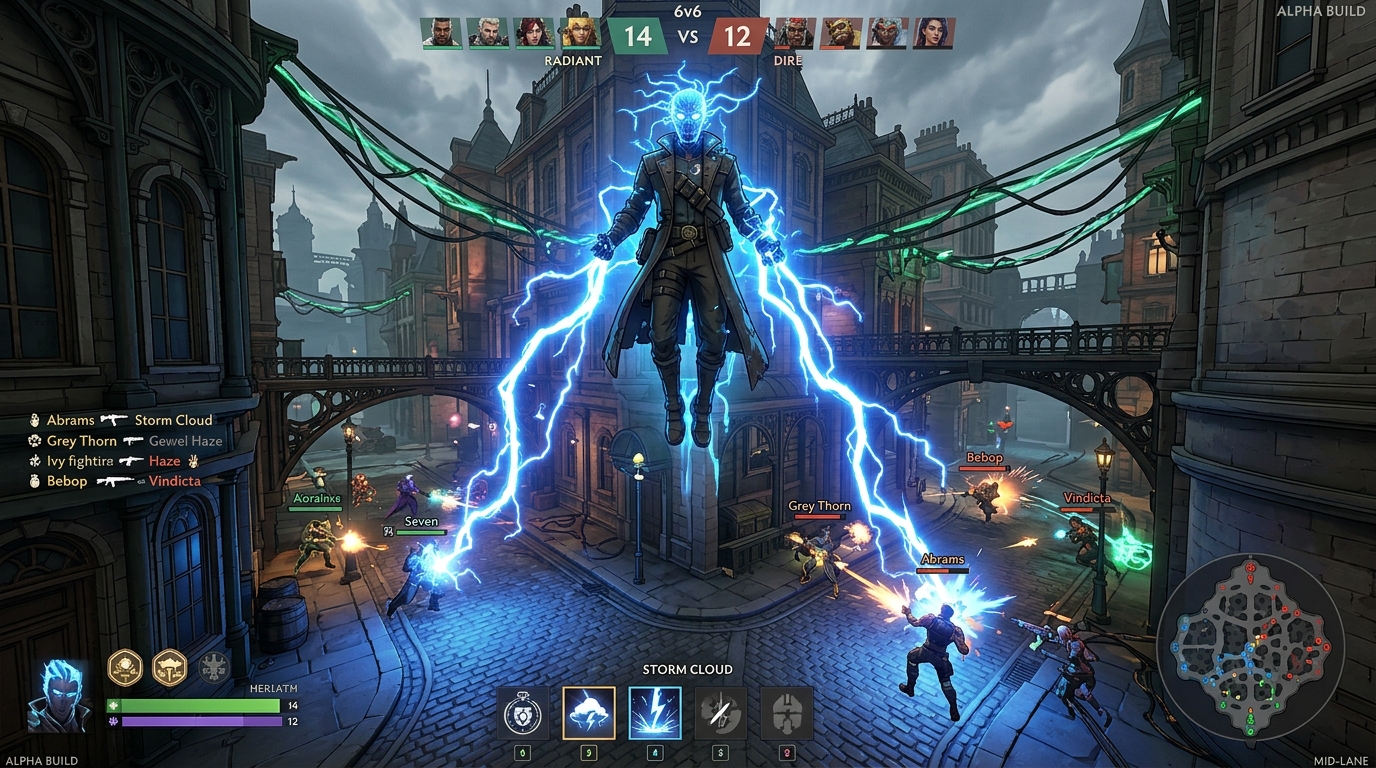
Valve is currently attempting to run a top-secret club with the doors wide open and the music blasting, yet they still expect everyone to pretend they cannot see the party. Despite a strictly enforced non-disclosure agreement that basically asks players to sign away their souls, over 170,000 alpha testers are already logged in and blasting each other in this unannounced hero shooter. It is the gaming equivalent of a “No Trespassing” sign posted on a stadium during a sold-out concert, and the sheer volume of the leak has turned a private alpha into a public spectacle. While Valve remains silent, the internet has decided that the era of mystery is officially over, regardless of what the legal department thinks.
The floodgates truly burst when a few daring journalists and thousands of testers decided that the NDA was more of a polite suggestion than a binding contract. High-level gameplay footage is currently everywhere, showcasing a strange mix of steampunk aesthetics and lane-based combat that looks like someone tossed a MOBA and a shooter into a blender. It takes a special kind of corporate optimism to believe you can keep a secret when you have given the keys to a small city’s worth of gamers. These leaks have bypassed the usual PR machine entirely, giving us a raw and cynical look at a game that feels like it is trying to solve a problem nobody actually had.
Watching this massive breach unfold is arguably more entertaining than the prospect of another competitive hero game entering an already crowded market. We are seeing everything from character abilities to map layouts in real time, proving that you cannot stop the signal once 170,000 people have their hands on the mouse. Valve’s attempt to maintain an air of prestige and secrecy has backfired into a leak circus of information. It is a loud, messy reminder that in the modern gaming industry, the only way to keep a secret is to not tell a single soul, especially not a hundred thousand of them.
Too Many Heroes In An Overcrowded Kitchen
The recent flood of leaks surrounding Valve’s unannounced project has finally given us a look at a roster featuring over fifty different heroes, and I have to ask if anyone actually requested this. We are currently staring down a 2026 release window for a game that feels like it is arriving to a party that ended three hours ago and left everyone with a collective hangover. While the steampunk aesthetic and those fancy skyrails look polished enough, the sheer volume of characters suggests a balancing nightmare that usually ends in a meta so stale you could use it as a brick. It is the classic developer trap of thinking that more content automatically equals a better experience, but usually, it just means more things to break. Valve is essentially trying to sell us a five-star meal in a kitchen that is already packed with too many chefs fighting over the same salt shaker.
The gaming world is currently suffocating under a mountain of competitive hero shooters, yet here comes another one trying to convince us that its specific brand of chaos is actually worth our time. I struggle to see how adding fifty-plus skill trees and ultimate abilities to the mix is going to solve the genre fatigue that has been setting in for years. Most players can barely keep track of ten characters in a standard rotation, so expecting a community to master fifty unique kits feels less like a game and more like a full-time job. We do not need another live-service treadmill that demands our undivided attention just to stay competitive in a crowded market. If the best Valve can offer is a massive list of names and a few shiny rails to grind on, they might find that the world has already moved on to something that does not require a spreadsheet to enjoy.
There is a certain irony in a company known for rarely counting to three suddenly deciding that fifty is the magic number for a starting lineup. This massive roster feels like a desperate attempt to cover every possible gameplay niche at once, rather than focusing on a tight, polished core that actually feels rewarding to play. History has shown us that when a game launches with this much bloat, half the characters end up being useless filler while the other half are fundamentally broken. I would much rather have twelve distinct, perfectly tuned heroes than a small army of clones that only exist to fill out a character select screen. It feels like Valve is throwing everything at the wall to see what sticks, but they are forgetting that the wall is already covered in the remains of a dozen other failed attempts at this exact formula.
Deadlock: Innovation or Just Fashionably Late?
So, is Deadlock actually the second coming of the hero shooter, or is Valve just showing up to the party with a lukewarm six-pack after everyone else has already gone home? The leaks paint a picture of a game that is undeniably polished and mechanically dense, but it feels like it is chasing a trend that peaked years ago. We have seen the “moba-meets-shooter” formula attempted by dozens of studios, and most of those titles are currently sitting in the digital graveyard. Valve has the advantage of a massive built-in audience and a track record of perfectionism, yet even their Midas touch cannot magically make the world crave another lane-pushing exercise in frustration.
The hype generated by these leaks feels less like genuine excitement for a new genre and more like a desperate thirst for anything with the Valve logo on it. While the skyrails and urban fantasy aesthetic look stylish enough, they do not exactly scream innovation in a market that is already oversaturated with colorful ability-based combat. If this game had dropped five years ago, it would have been an industry-shaking event that defined the next decade of play. Now, it just feels like a very expensive, very late attempt to reclaim a throne that has been chopped up for firewood. After all, we have already seen how a historic failure in this genre can happen when a studio misreads the market entirely.
Ultimately, Deadlock will probably be a solid, well-engineered game that people play simply because it is technically competent and free of the usual corporate jank. Whether it actually deserves the mountain of leaked coverage and breathless speculation is another story entirely. It is hard to get truly fired up about a game that looks like a high-budget remix of ideas we have been playing since 2016. I will give it a fair shake when the official gates open, but for now, the leaks suggest Valve is playing it safe rather than pushing the envelope.
Frequently Asked Questions
1. What exactly is Valve’s new game Deadlock?
Deadlock is a 6v6 hero shooter that mashes together tactical MOBA mechanics with a gritty steampunk aesthetic. It features high-speed movement on skyrails and objective-based gameplay that feels like a Victorian fever dream. Think of it as Valve’s attempt to prove they can still make a game without a ‘3’ in the title.
2. How did so much gameplay footage leak despite the NDAs?
Valve tried to use a digital iron curtain to keep things quiet, but their non-disclosure agreement was about as effective as a screen door on a submarine. Alpha testers started sharing high-quality clips and deep dives faster than Valve could hit the delete button. Now the internet has seen more of the game than the developers probably intended for this stage of development.
3. Is Deadlock the same thing as Neon Prime or Citadel?
Yes, those were the codenames Valve shuffled through while they were having an identity crisis with the game’s setting. It started as a sterile sci-fi project before they finally landed on the urban fantasy look we see today. It is the classic Valve strategy of taking a decade to decide what a wall should look like.
4. What kind of gameplay mechanics can I expect?
You can expect a chaotic blend of third-person shooting and traditional MOBA elements like lanes and minions. The most unique feature is the steampunk skyrail system that lets you zip around the map like a caffeinated bird. It is a tactical mess that somehow manages to look functional even in its unpolished state.
5. Is the game actually ready for the public to play?
The game is technically still in a closed alpha, but leak culture has already decided the public is playing it. While the footage looks surprisingly solid, Valve clearly wasn’t ready to show off their homework yet. Whether it becomes a masterpiece or a cluttered disaster depends on if they can actually finish it before the sun burns out.
6. Why is everyone making such a big deal out of these leaks?
It is rare to see a company as secretive as Valve lose control of an entire project’s identity so spectacularly. We moved past blurry screenshots straight into full-blown gameplay deep dives, leaving almost no secrets left for the official reveal. It is a fascinating look at a studio trying to play hide and seek while standing in the middle of an open field, much like why the episodic gaming model failed when promises were left unfulfilled.