Forget the double-jumping acrobatics and the neon-soaked skyscrapers of the future. We are going back to a time when heavy metal meant actual suits of armor. Doom: The Dark Ages has finally arrived, and it trades the frantic speed-dating-with-demons vibe for a grounded, tank-like brutality that feels like getting hit in the face with a medieval mace. It is the origin story we did not know we needed, proving that the Slayer was just as terrifying before he had a laser pointer.
With three million players jumping in during the first week, I am clearly not the only one who missed the feeling of a shotgun blast that actually has some weight behind it. Powered by the new id Tech 8 engine, the environments are beautifully destructible, which is great because I plan on breaking absolutely everything in sight. If you were worried that a prequel would soften the franchise edges, rest easy knowing this game is as unapologetically violent as a bar fight in a cathedral.
Key Takeaways
- Doom: The Dark Ages shifts from high-speed vertical acrobatics to a grounded, ‘tank-like’ combat style that prioritizes deliberate positioning and heavy aggression over twitch reflexes.
- The new Shield Saw serves as a central mechanical overhaul, allowing players to parry, block, and counter-attack, effectively turning the Slayer into a mobile fortress.
- The id Tech 8 engine introduces massive-scale battles and destructible environments, utilizing advanced physics to ensure every impact feels physically significant and permanent.
- This prequel serves as a dark fantasy origin story on Argent D’Nur, trading futuristic technology for a brutal, medieval-inspired arsenal including a skull-grinding shotgun and a lethal flail.
Heavy Metal Warfare On Argent DNur
Forget the pogo-stick acrobatics and the frantic air-dashing that defined the last era of demon-slaying. Doom: The Dark Ages grounds the Slayer in a way that feels less like a caffeinated ninja and more like an unstoppable Abrams tank with a grudge. This shift on Argent D’Nur forces you to stand your ground, trading the constant need for verticality for a heavy, methodical aggression that rewards positioning over twitch reflexes. You are no longer dancing around the arena to survive, but instead, you are carving a path of absolute destruction through a dark fantasy landscape that feels appropriately brutal. The new id Tech 8 engine makes every impact feel massive, ensuring that when you hit something, it stays hit.
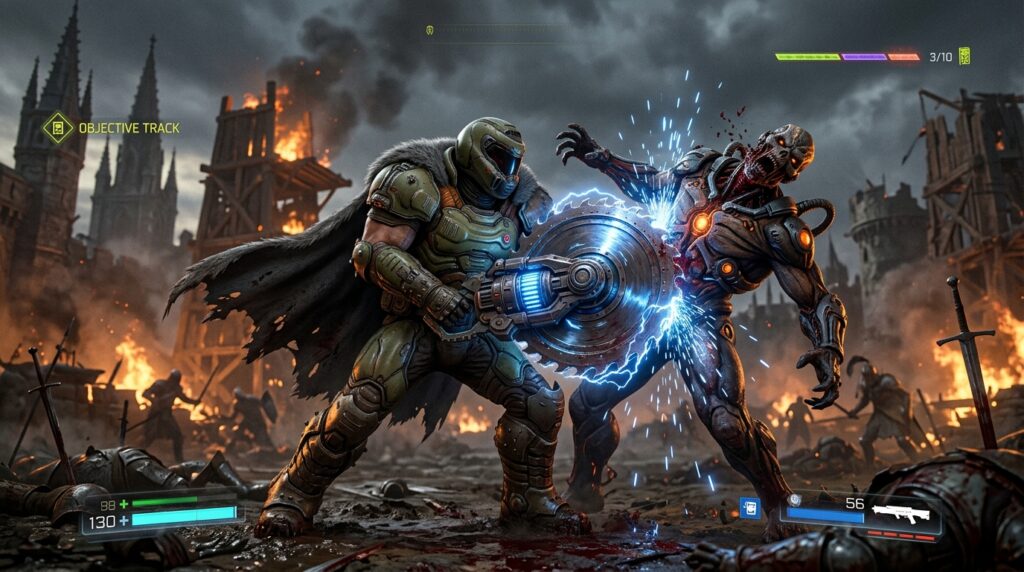
The center of this mechanical overhaul is the Shield Saw, a tool that effectively turns the Slayer into a mobile fortress. Instead of spamming jump to avoid projectiles, you are now actively parrying and blocking attacks to create openings for a counter-offensive. It is a refreshing pivot from the floor is lava gameplay of the previous title, leaning instead into a gritty, medieval brawler aesthetic where every parry feels earned. This isn’t about being slower for the sake of it, but rather about making every movement deliberate and every kill feel like a heavy-metal execution. The game treats combat like a physical confrontation rather than a platforming puzzle, which is exactly the kind of evolution the series needed to avoid getting stale.
Don’t mistake this grounded approach for a lack of intensity, because the scale of the AI encounters is genuinely ridiculous. With the advanced physics of the new engine, you are often staring down massive hordes that would have melted a console five years ago. Because you can’t just double-jump away from your problems anymore, the tension is cranked to the maximum as you manage crowds with your shield and heavy weaponry. It is a raw, punchy experience that cuts through the typical corporate hype to deliver a combat loop that feels dangerous and visceral. This is the Slayer at his most primal, and the mechanical shift proves that you don’t need to be airborne to be the most terrifying thing in the room.
The Shield Saw And Bone Crushing Arsenal
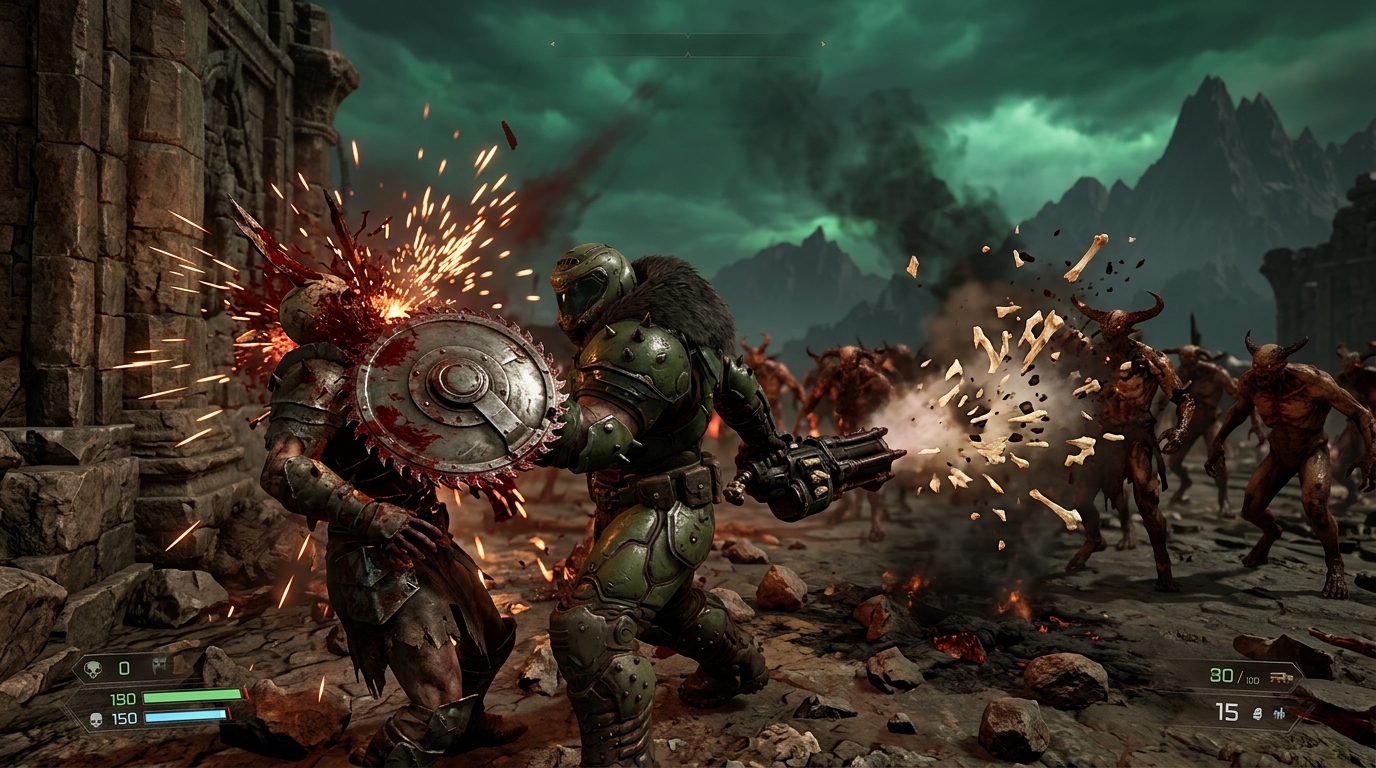
The Shield Saw is the mechanical middle finger that developers have gifted us to deal with the demonic hordes. Instead of just being a passive hunk of metal used to hide from incoming fire, this thing is a versatile tool of absolute carnage that makes parrying feel like a legitimate bloodsport. You can rev the serrated edges to grind through a Hell Knight’s face or hurl it across the room like a lethal, homing frisbee that actually returns to your hand. It changes the rhythm of combat from the frantic jumping of previous games to a more deliberate, heavy-metal power trip. There is a primal satisfaction in timing a perfect block and watching a projectile shatter, leaving the enemy wide open for a brutal counter-attack.
The rest of the arsenal follows suit with a design philosophy that prioritizes crunch over finesse. Take the new shotgun that literally grinds up demon skulls to use as shrapnel, which is easily the most metal sentence I have written all year. It is a slow, methodical weapon that feels like you are operating heavy machinery rather than just pulling a trigger. Every shot carries enough weight to make you feel like a walking siege engine, punishing anything that gets within breathing distance. This shift toward a grounded, tank-like brutality makes every encounter feel less like a game of tag and more like a medieval masterpiece of execution.
Powered by id Tech 8, the physics behind these weapons ensure that the environment reacts to your violence in the most rewarding ways possible. When you unload that skull-crushing shotgun into a crowd, you aren’t just seeing generic blood sprites, you are witnessing actual structural failure in the enemy ranks. The destructible environments mean that cover is a suggestion and your weapons are the only thing you can truly rely on. It is a bold move to strip away the high-flying acrobatics for something this gritty and physical, but it pays off the moment you hear the mechanical whine of the shield spinning up. This is a technical masterclass in how to make digital violence feel heavy, purposeful, and incredibly fun.
Technical Dominance Of The Id Tech 8 Engine
id Tech 8 is essentially the developers flexing on the rest of the industry while everyone else struggles to optimize basic textures. This engine handles massive, medieval scale battles with a level of stability that makes other triple-A releases look like unoptimized mobile ports. We are talking about hundreds of AI entities on screen at once, each reacting to the Slayers carnage without the framerate turning into a slideshow. It is refreshing to see a developer actually prioritize raw performance over shiny, useless bells and whistles that break the moment you move the camera. The sheer technical overhead required to simulate the new destructible environments while keeping the action grounded and responsive is a legitimate feat of engineering.
The visual fidelity on display here is not just about high resolution textures, it is about the grit and atmosphere of a world that feels lived in and dying. Lighting bounces off the Slayers fur-lined armor and stone-heavy shield with a realism that makes the dark fantasy setting feel oppressive and tangible. You can actually see the weight of the new physics system when a flail connects with a demon, sending chunks of meat and bone flying in a way that feels calculated rather than canned. It is the kind of graphical powerhouse that justifies your expensive hardware without needing a dozen patches to function. This engine sets a new gold standard for how much chaos a game can handle simultaneously.
What really separates id Tech 8 from its predecessors is how it manages the transition from high speed verticality to this new, tank-like combat style. The engine handles the heavy, deliberate movements of the Slayer with a physical presence that makes every footstep feel like an earthquake. There is no floaty movement or clipping nonsense to ruin the immersion while you are busy sawing through a crowd of undead knights. It is a masterclass in technical dominance that proves you do not need corporate buzzwords to sell a game when the math and the art style are doing all the heavy lifting. This is the kind of optimization that reminds us why this studio remains the undisputed king of the first person shooter genre.
A Brutal Homecoming for Doom’s Soul
The Dark Ages is not just another recycled prequel designed to milk a dying cow, but a genuine evolution that proves the studio still knows how to innovate without losing the series’ soul. Moving away from the frantic gymnastics of the previous entry was a massive gamble, yet the grounded, heavy hitting combat feels like a homecoming for anyone who prefers raw power over parkour. The id Tech 8 engine delivers on every promise, turning every encounter into a medieval massacre of physics that makes your hardware sweat in the best way possible. It is a rare case where the developer actually listened to the fans who wanted more grit and less fluff, resulting in a game that feels as sturdy and dangerous as the Slayer himself.
Reaching three million players in the first week is just the beginning for a title that manages to make medieval weaponry feel more futuristic than a plasma rifle. The shield saw and the flail are not just gimmicks, they are fundamental shifts in how you control the battlefield and dictate the pace of every skirmish. While some might miss the double jumping madness of the last decade, the sheer tactical weight of this prequel offers a refreshing change of pace that rewards positioning over frantic button mashing. This is easily the most polished and unapologetic shooter of 2025, proving that the Slayer saga is far from becoming a rusty relic of the past.
If you have a gaming subscription or a PC that can handle the graphical load, there is absolutely no excuse to skip this one. It avoids the typical corporate traps of live service bloat and seasonal nonsense, delivering a complete and visceral experience right out of the gate. The Dark Ages is a masterclass in how to handle a legacy franchise, blending dark fantasy aesthetics with the kind of high octane violence that defined the genre. It is loud, it is heavy, and it is exactly what the industry needs right now to remind everyone why we play games with satisfying movement mechanics that actually feel good in the first place.
Frequently Asked Questions
1. Is the Slayer still flying around like a caffeinated ninja?
Absolutely not. We have swapped the pogo stick acrobatics for the heavy, grounded momentum of an Abrams tank. You are trading vertical twitch reflexes for raw, methodical aggression that rewards standing your ground and pulverizing anything in your path.
2. What makes the new Shield Saw so special?
The Shield Saw is your new best friend for defense. Instead of spamming the jump button to avoid fire, you can now parry and block attacks while staying mobile. It turns the Slayer into a literal walking fortress that can shred demons up close.
3. How does the id Tech 8 engine actually improve the game?
The new engine makes every single impact feel massive and final. It powers beautifully destructible environments, meaning you can actually see the consequences of your violence as you break everything in sight. If you hit something in this game, it stays hit.
4. Is the combat as fast as the previous Doom games?
It is a different kind of fast. While the movement is more grounded and less floaty, the brutality is dialed up to eleven. The speed comes from how quickly you can dismantle a room using heavy metal weaponry rather than how high you can double jump.
5. Where does this story fit into the Doom timeline?
This is the origin story we actually wanted to see. It takes us back to Argent D’Nur to show that the Slayer was a terrifying force of nature long before he had futuristic laser pointers. It is a dark fantasy prequel that proves his brutality is timeless.
6. Is the game too easy now that we have a shield?
Don’t let the shield fool you into thinking this is a walk in the park. The game remains unapologetically violent and as chaotic as a bar fight in a cathedral. You still need perfect positioning and aggression to survive the hordes, or you will end up as medieval roadkill.