Since the release of Civilization VII on February 11, the series has finally stopped pretending that an immortal leader needs to be tethered to a single culture for six thousand years. The new roster of civ 7 leaders is the biggest shake-up in franchise history, primarily because I can now pair anyone with any civilization. If I’ve ever wanted to watch Benjamin Franklin lead the Maya into a high-tech future while ignoring every historical textbook ever written, my time has finally come.
This isn’t just about cosmetic flavor. The new Attribute Trees and distinct Leader Personas turn these historical figures into actual RPG characters. I can play Ashoka as a peace-loving monk or a ruthless conqueror, earning attribute points to specialize my strategy as I evolve through the Ages. It’s a bold move that kills the “one-size-fits-all” meta, forcing me to actually think about how my leader’s unique kit synergizes with my shifting empire.
Key Takeaways
- Civilization VII introduces a modular ‘Mix and Match’ system that decouples historical leaders from specific nations, allowing players to pair any leader with any civilization for maximum strategic flexibility.
- Leaders now function as customizable RPG characters through Attribute Trees and distinct Personas, enabling players to specialize their leader’s skills and playstyles as they progress through different Ages.
- The shift toward mechanical synergy over historical accuracy eliminates rigid ‘one-size-fits-all’ metas, rewarding players who can creatively align leader perks with civilization bonuses.
- AI diplomacy is now driven by highly specific leader Agendas and personality quirks that force players to adapt their expansion and resource management to avoid arbitrary diplomatic friction.
Decoupling Leaders From Their Traditional Empires
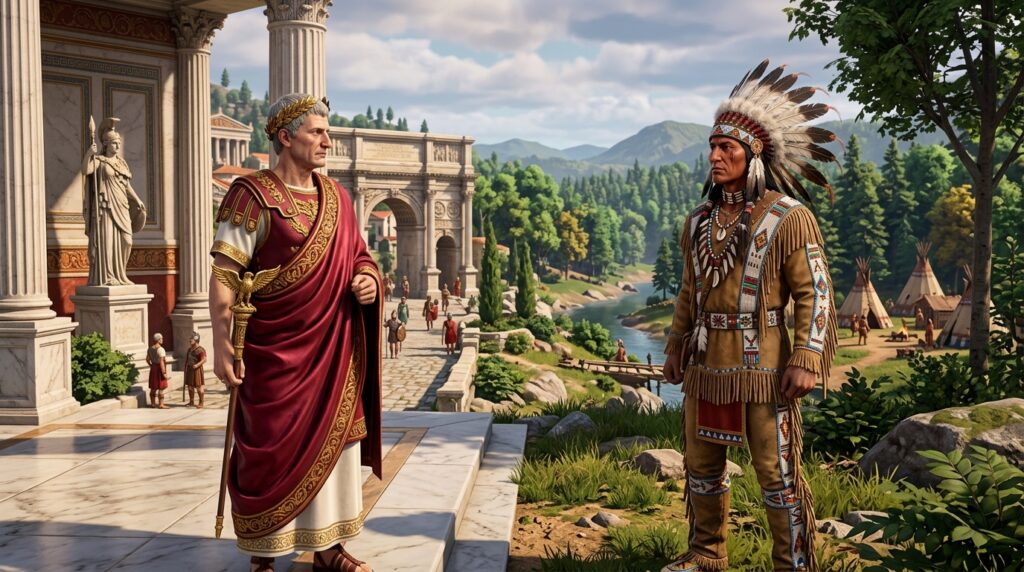
The “Mix and Match” mechanic in Civilization VII is the gaming equivalent of putting pineapple on pizza, it is either a stroke of genius or a total crime against nature depending on who you ask. For the first time in the franchise, the developers have completely severed the umbilical cord between leaders and their specific nations, allowing for some truly unhinged combinations. I can now have Benjamin Franklin leading the Maya or Augustus Caesar commanding the Shoshone, a move that has sent historical purists into a full-blown existential crisis. While the game offers “historical paths” for those who want to keep their sanity intact, the sheer freedom to ignore reality is a massive departure from the series’ identity. It is a bold design choice that prioritizes mechanical strategy over the museum-accurate roleplay we have grown accustomed to over the last few decades.
History buffs are currently screaming into their textbooks because this decoupling shatters the “Great Man” theory of history that previously anchored the game. In older titles, playing as a leader felt like embodying the spirit of a specific culture, but now leaders function more like RPG characters with their own distinct attribute trees and personas. Watching Ashoka transition from a peaceful World Renouncer to a militaristic World Conqueror while leading a completely different civilization every few centuries is undeniably jarring. It turns the game into a giant sandbox of “what-ifs” rather than a semi-grounded historical simulation. If I can get past the sight of an American Founding Father wearing a feathered headdress, there is a deep layer of strategic customization here that rewards clever builds over historical accuracy.
From a gameplay perspective, this change is a blunt instrument designed to fix the balance issues that have plagued the roster for years. By separating the leader’s unique abilities from the civilization’s traits, the developers have created a modular system where I am no longer locked into a sub-optimal playstyle just because I like a certain historical figure. I can now hunt for the perfect synergy between a leader’s diplomatic perks and a civilization’s economic bonuses, regardless of whether those two entities ever existed in the same millennium. It is a cynical, efficient, and highly effective way to keep the meta fresh, even if it means sacrificing the soul of historical immersion. Whether I love the flexibility or hate the nonsense, the era of the “locked” leader is officially dead and buried.
Attribute Trees And The New Leader Personas
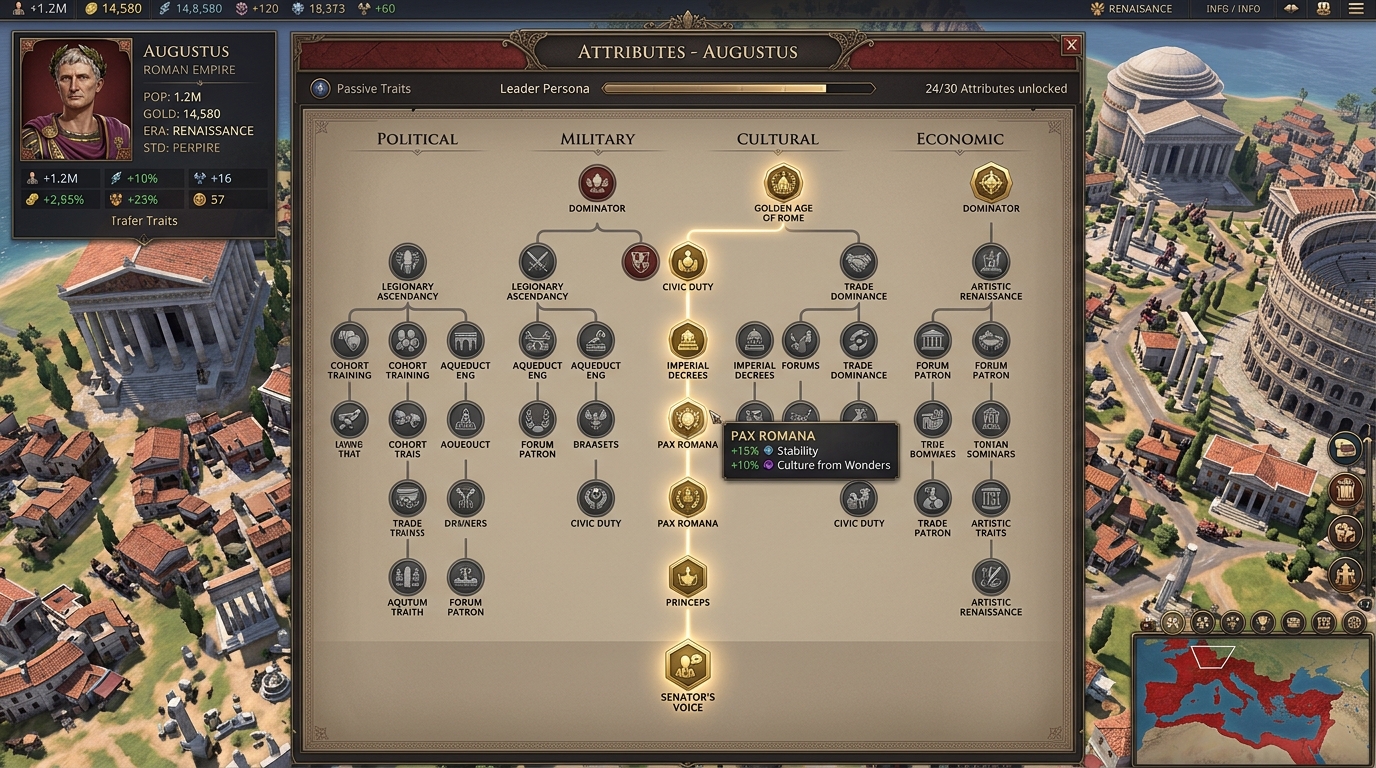
The new attribute trees in Civ 7 officially turn our historical icons into customizable RPG protagonists, and I am here for the chaos. Instead of being stuck with a single, rigid ability for five hundred turns, I now spend attribute points to specialize my strategy like I am building a character in a fantasy dungeon crawler. This shift means my leader is no longer just a static portrait providing a passive buff, but a specialized gameplay tool that I can tune to fit my current strategic disaster. If I want to pivot from a scientific powerhouse to a militaristic menace, the skill trees actually give me the mechanical depth to make that happen without restarting the save.
Personas take this customization a step further by offering different “flavors” of the same leader, such as Ashoka’s World Conqueror versus his World Renouncer variant. It is a blunt admission from the developers that historical accuracy takes a backseat to balanced gameplay variety, and frankly, it is about time. Seeing a militaristic Ashoka paired with a civilization he never actually led might make historians twitch, but it gives me the tactical flexibility I have been craving for decades. These personas ensure that choosing a leader is a meaningful mechanical decision rather than just a cosmetic preference or a loyalty test for history buffs.
This decoupling of leaders from their specific civilizations is the boldest move the franchise has ever made, and it works because it treats the player like an adult who can handle a little non-historical experimentation. I can now build a specialized engine by pairing a diplomatic leader persona with a high-production civilization, creating combinations that are as broken as they are entertaining. While some purists might whine about Benjamin Franklin leading the Maya, the sheer depth provided by these Civilization 7 gameplay features makes the game feel like a living strategy experience rather than a dusty museum exhibit. It is direct, it is aggressive, and it finally lets me play the game my way instead of following a pre-written history book.
Navigating AI Agendas And Diplomatic Personalities
The new diplomatic system in Civilization VII is a fascinating mess of personality quirks that will either make me a strategic genius or leave me pulling my hair out. With leaders now decoupled from specific civilizations, the AI’s “Agendas” have become the primary roadblock to my global domination. Take Amina, for example, who apparently decided that living in the desert is a personal insult to her entire lineage. If I dare to settle a single city on a sand tile, she will treat me like a war criminal regardless of my actual diplomatic standing. It is a bold design choice that forces me to weigh the benefits of a high-yield floodplains start against the literal headache of a neighbor who refuses to play nice because of my geography.
While these quirks are clearly intended to give the leaders more “soul” than the generic bots of the past, they often prioritize flavor over any semblance of logical gameplay. The attribute trees and RPG-style progression mean I am constantly adjusting my strategy to appease a leader who might hate me simply because I have more gold than they do. It is undeniably funny to watch Benjamin Franklin throw a tantrum over my lack of scientific output, but it becomes a strategic nightmare when I am trying to maintain a delicate balance of power. I am no longer just playing against a civilization, I am navigating a minefield of ego and specific dislikes that can derail a hundred-turn plan in seconds.
Ultimately, this shift toward distinct leader personalities feels like a double-edged sword for the franchise. On one hand, it stops every match from feeling like a repetitive spreadsheet simulation by injecting some much-needed chaos into the diplomatic screen. On the other hand, some of these biases feel so arbitrary that they border on being game-breaking if I happen to start in the wrong biome. It is a refreshing change that rewards players who can pivot their strategy on a dime, but it definitely lacks the polished balance of previous entries. If I can handle a leader declaring war because I built a farm where they wanted a mine, I will find plenty of depth here, just do not expect the AI to be reasonable.
Historical Sacrilege That Actually Works
The developers finally did it, they prioritized the spreadsheet over the history book, and I am surprisingly okay with the results. While the purist in me wants to scream about Benjamin Franklin leading the Maya, the actual gameplay loop feels more intentional and rewarding than the chaotic sprawl of previous entries. Decoupling leaders from specific civilizations allows for a level of strategic depth that simply was not possible when I was locked into a single historical path for five hundred turns. It turns the game into a massive puzzle where my leader is the constant variable and the world is my laboratory. If I can get past the initial “what on earth is happening” moment of seeing Confucius in a powdered wig, I will find a game that actually respects my time and tactical creativity.
That being said, we have definitely traded some of that classic soul for raw mechanical efficiency. The new attribute trees and persona shifts make these historical figures feel less like legendary icons and more like customizable RPG protagonists with specialized stat boosts. It is a bold move that successfully kills the “dead turns” of the mid-game, but it also strips away the flavor that made each match feel like a unique historical epic. The team leaned hard into the “game” part of video games this time around, delivering a polished and addictive experience that might leave roleplayers feeling a bit cold. Ultimately, it is a brilliant evolution for those who love a tight strategy loop, even if it means admitting that history is now just a collection of buffs and modifiers.
Frequently Asked Questions
1. Can I really play as any leader with any civilization?
Yes, and it is as glorious or as cursed as it sounds. I can finally stop pretending history is a straight line and have Benjamin Franklin lead the Maya if that is what my heart desires. While the game suggests historical paths for the purists, the training wheels are officially off.
2. What are Leader Personas and why should I care?
Personas are basically RPG classes for historical figures that let me tweak how they play. I can take a leader like Ashoka and build him as a peaceful monk or a warmongering conqueror depending on my mood. It adds actual depth to the roster instead of giving me the same stale bonuses every single match.
3. How do Attribute Trees work in Civ 7?
Think of Attribute Trees as a leader’s talent tree where I spend points earned through gameplay to specialize my strategy. As I move through the Ages, I can customize my leader to synergize with my current empire’s needs. It kills the old meta where every leader had one boring, predictable way to win.
4. Is the historical accuracy completely gone?
Only if I want it to be. The game still offers historical paths for those who get a headache seeing Augustus Caesar leading the Shoshone. I prefer the chaos of the mix and match system, but the developers left a safety net for the players who treat their monitors like a history museum.
5. Does this new system make the game harder to learn?
It adds a layer of strategy that actually rewards me for thinking instead of just following a guide on a second monitor. I have to understand how my leader’s specific kit interacts with my civilization as the game evolves. It is a bit more to juggle, but it is way better than the lazy design of previous entries.
6. Why did they decouple leaders from their specific nations?
They finally realized that tethering an immortal leader to one culture for six thousand years was a mechanical dead end. This change prioritizes gameplay freedom and strategic variety over rigid historical roleplay. It is a bold move that makes every session feel like a different game instead of a repetitive chore.