Online gaming used to feel like a digital Wild West where the only rule was “mute or be muted,” but the push toward civilizing modern gaming has finally turned into a multi-billion dollar arms race. We’ve reached a point where nearly 78% of us have been told things about our lineage that would make a sailor blush, and frankly, the “it’s just locker room talk” excuse is deader than a level one grunt. Developers are finally realizing that if half their player base, specifically women, is quitting because the community is a dumpster fire, they aren’t just losing souls; they’re losing money.
The industry is ditching the old “ban them after they ruin the match” routine for sophisticated AI that actually tries to stop the bleeding before it starts. It’s a massive shift toward Safety by Design, which is corporate-speak for “we’re finally building games that aren’t petri dishes for human garbage.” When 91% of developers are getting harassed just for doing their jobs, you know the status quo is broken beyond repair. We’re moving past the era of defensive gaming where your first move in a lobby is hitting the global mute button just to keep your sanity intact.
Key Takeaways
- The gaming industry is shifting toward ‘Safety by Design’ and AI-driven moderation because toxic environments are driving away players and hurting the bottom line.
- Modern developers have erroneously traded depth for complexity, burying core gameplay under bloated tutorials, excessive UI overlays, and mandatory reading assignments.
- Live service models and daily login chores treat gaming like a second job, prioritizing player retention metrics over the satisfaction of a complete, finished experience.
- True innovation requires a return to ‘pick up and play’ philosophy, where intuitive mechanics and player skill take precedence over artificial progression systems and resource management.
Death To The Five Hundred Page Tutorial
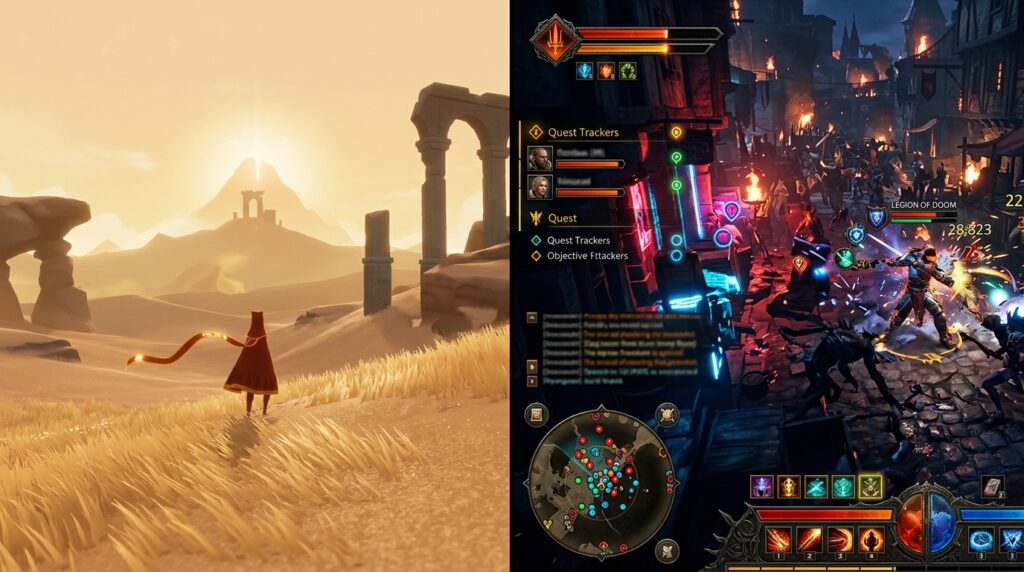
I remember a time when you could pop a cartridge into a console and be playing the actual game within thirty seconds. These days, I feel like I need to pass a bar exam and complete a mandatory internship just to understand how to open a wooden chest. Modern developers seem convinced that more systems equals more depth, but all they are really doing is burying the fun under a mountain of UI overlays and mandatory reading assignments. If I wanted to study spreadsheets for three hours before getting to the action, I would just stay at the office and ask for overtime.
The worst offenders are the games that pause the action every ten steps to explain a crafting mechanic that nobody asked for in the first place. You finally get into a flow, and suddenly a giant text box obscures the screen to lecture you on the difference between enchanted iron and slightly less enchanted iron. It is a sign of lazy design when a game cannot teach you its rules through organic play and instead relies on a digital encyclopedia to bridge the gap. We need to get back to the philosophy where the environment and the mechanics do the talking, rather than a disembodied voice guiding us through a twelve hour orientation.
Civilizing modern gaming means stripping away the bloat and trusting the player to have a functioning brain. There is a specific kind of joy in discovering a hidden mechanic on your own rather than having it highlighted by a neon yellow arrow and a three paragraph pop up. When a game is built with intuitive logic, you do not need a five hundred page manual to feel like a pro. Let us stop treating players like toddlers in a cockpit and start designing games that value our time as much as our reflexes.
Executing The Live Service Chore List
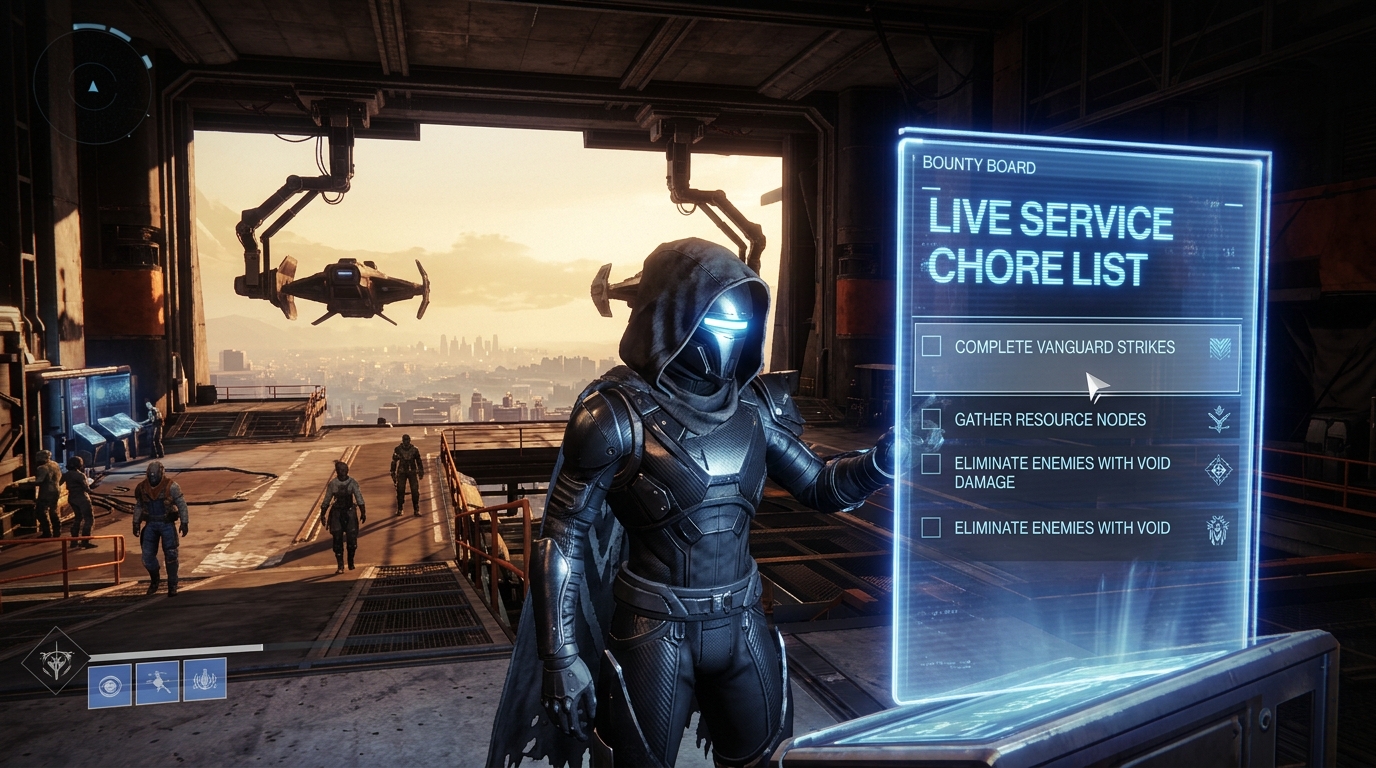
Modern gaming has traded the joy of the “start” button for a digital clipboard of daily chores that feel more like a mid-level accounting job than a hobby. We used to measure a game’s value by its boss fights and secret levels, but now we are expected to clock in for daily login bonuses and battle pass progression just to avoid the crushing weight of missing out. This psychological trap treats your free time like a resource to be harvested rather than a moment to be enjoyed. It is a desperate attempt to keep player engagement numbers high for the sake of a quarterly report, and frankly, it is exhausting to see every new title launch with a roadmap that looks like a five-year infrastructure project.
A truly civilized game understands that the most respectful thing a developer can do is give their work an actual ending. There is a profound sense of satisfaction in witnessing a story conclude, watching the credits roll, and being able to put the controller down without feeling like you have abandoned a second career. We need to return to the era of pick up and play simplicity where the reward for playing was the fun you had, not a digital currency you earned for finishing three matches before dinner. When a game demands your undivided attention every single day just to stay relevant, it stops being entertainment and starts being a parasite on your social life.
The current industry obsession with the perpetual live service model is a race to the bottom that ignores why we fell in love with gaming in the first place. High-intent players are tired of seeing potential masterpieces buried under layers of over-complicated seasonal resets and FOMO-driven storefronts. A great game should be a complete experience that stands on its own merits, allowing you to walk away and return whenever you actually feel like playing. By trimming the fat and trashing the soul-sucking roadmap, developers can finally focus on making games that are actually worth finishing instead of games that are designed to never end.
Bringing Back The Pick Up And Play Philosophy
We need to stop pretending that spending six hours in a menu comparing +1.5% fire damage bonuses is the same thing as actually playing a video game. I grew up in the era where you dropped a quarter into a machine and were immediately fighting for your life, not reading a technical manual on how to craft a slightly better pair of leather boots. Somewhere along the line, developers decided that “depth” meant burying mediocre combat under a mountain of busywork and resource management. If your game requires me to watch a twenty minute YouTube tutorial just to understand the UI, you haven’t designed a deep system, you have designed a digital chore list. It is time to strip away the fluff and remember that the most “civilized” thing a game can do is respect the player’s time by getting straight to the point.
The modern obsession with skill trees and gear scores feels like a desperate attempt to hide the fact that the underlying gameplay just isn’t that fun. I am tired of unlocking the ability to slide or double jump twenty hours into a campaign when those mechanics should have been there from the first minute to make the movement feel good. We are being sold “engagement” through dopamine loops and stat boosts rather than the genuine satisfaction of mastering a difficult mechanical challenge. Bringing back the pick up and play philosophy means prioritizing the “feel” of the controller over the complexity of the spreadsheet. If the core loop of hitting, shooting, or jumping isn’t excellent on its own, no amount of legendary loot drops or crafting materials is going to save it from being a boring experience.
Developers should be brave enough to let their mechanics stand naked without the armor of meaningless progression systems. There is an undeniable elegance in a game that tells you exactly what you can do within thirty seconds and then spends the rest of the runtime testing how well you can actually do it. We don’t need another open world filled with icons that exist only to give us +2 health increments that we will never actually notice during a fight. True innovation would be a AAA title that has the guts to remove the crafting table entirely and focus on making every single encounter a memorable test of skill. Let us go back to the days where being good at a game meant having fast reflexes and smart tactics, not just having a higher level number than the guy standing in front of you.
Stop Treating My Hobby Like a Job
Civilizing modern gaming does not mean we need more AI hall monitors or a multi billion dollar trust and safety industry to watch our every move. The most civilized thing a developer can do is stop treating my free time like a resource to be mined through endless engagement metrics and daily login chores. We have traded the simple joy of picking up a controller for a digital second job filled with over-complicated systems and battle passes that expire before you can even learn the mechanics. A truly sophisticated game is one that respects the player enough to provide a cohesive, finished experience without requiring a spreadsheet or a thousand hours of grinding just to see the fun stuff.
It is time for the industry to realize that less is actually more when it comes to respected player intelligence. We do not need fifty different currencies or a map cluttered with icons that look like a toddler threw a handful of glitter at the screen. Give me a game that trusts me to explore without a glowing yellow line and rewards me with actual gameplay rather than a psychological trick designed to boost retention numbers. The era of defensive gaming, where we have to mute everyone and ignore half the menus just to find the actual fun, needs to end. If a game cannot stand on its own merits without relying on manipulation, it is not a masterpiece, it is just a high tech chore.
Let us get back to the basics where the value of a title is measured by the quality of the hours spent playing it rather than the sheer quantity of time wasted. Modern gaming will be civilized when developers stop hiding mediocre loops behind shiny graphics and safety by design buzzwords that do nothing to fix a boring game. I want to play something that feels like it was made by people who actually enjoy games, not a committee of accountants obsessed with player retention graphs. Respect my time, respect my brain, and just give me something worth playing before I decide to uninstall the whole mess and go back to my retro collection.
Frequently Asked Questions
1. Why is the gaming industry suddenly obsessed with being polite?
Developers finally checked their bank accounts and realized that letting a lobby turn into a toxic dumpster fire is bad for business. When half the potential players quit because they are tired of being harassed, the bottom line takes a hit that no amount of microtransactions can fix.
2. Is AI actually going to fix toxic voice chat?
It is certainly better than the old system of waiting for a match to be ruined before issuing a useless ban. Modern AI is designed to act as a digital bouncer that stops the garbage behavior before it starts, which is a massive upgrade over the ‘mute or be muted’ era.
3. Why do I need a degree in philosophy to play a modern tutorial?
Developers have confused complexity with depth and now insist on burying the fun under a mountain of spreadsheets and mandatory reading. If a game requires a three hour internship just to teach you how to open a door, it is a failure of design, not a lack of player intelligence.
4. Is it just me, or are games getting harder to just pick up and play?
It is definitely not just you. We have traded the thirty second startup of the cartridge era for five hundred page digital manuals and UI overlays that look like a cockpit. The industry needs to remember that games are supposed to be an escape from the office, not a second job with more homework.
5. What exactly is Safety by Design?
It is a fancy way of saying developers are finally building games that are not petri dishes for human garbage from the ground up. Instead of fixing a broken community later, they are designing the systems to prevent harassment and toxicity before the first player even logs in.
6. Does harassment really affect the people making the games too?
Absolutely, considering over ninety percent of developers report being harassed just for doing their jobs. When the people building the worlds are being treated like punching bags, the entire industry suffers from burnout and a lack of actual creativity. It is also important for players to learn how to not be a total menace to their peers during online sessions.
7. Can we ever go back to the simplicity of older games?
We can if we stop rewarding developers who think more systems always equals a better experience. It is time to demand games that respect our time and let us get to the actual action without pausing every ten steps to explain a crafting mechanic nobody asked for in the first place.