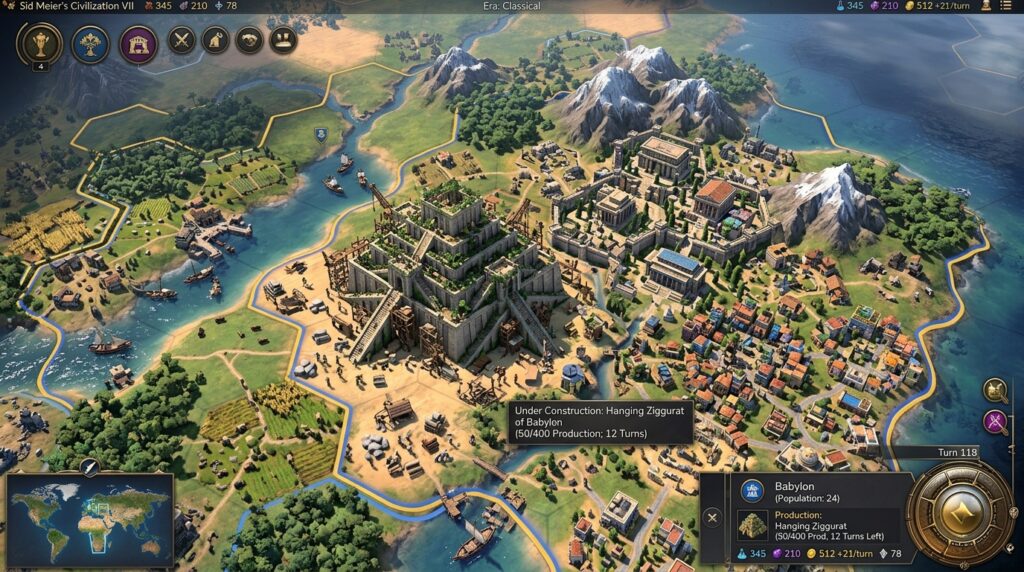
After nearly a decade of clicking “one more turn” until the sun comes up, Sid Meier’s Civilization VII has finally arrived to completely dismantle everything you thought you knew about world domination. This isn’t just a fresh coat of paint. The new civ 7 gameplay features represent a massive mechanical overhaul that finally kills the stale tradition of playing one empire for six thousand years. By decoupling leaders from their civilizations and introducing a modular history, the game forces us to actually adapt instead of just coasting on early-game momentum.
The biggest shake-up is the transition into three distinct chronological Ages, which effectively stops the late-game slog dead in its tracks. You’ll start in Antiquity, but by the time you hit the Modern Age, you’ll be forced to swap civilizations based on your strategic choices and Legacy Paths. It’s a bold, slightly chaotic move that prevents you from sleepwalking through the industrial era just because you had a lucky start with some archers. This is the first time in years the franchise has actually taken a risk. It’s about time someone shook the dust off the 4X genre.
Key Takeaways
- Civilization VII replaces the linear timeline with three distinct chronological Ages, forcing players to adapt their strategies through soft resets that eliminate the traditional late-game slog.
- The game decouples leaders from specific nations, allowing players to mix and match leader abilities with different civilizations to create powerful strategic synergies.
- A new modular history system requires players to swap civilizations at the start of each Age based on their previous strategic choices and earned Legacy Points.
- Tactical gameplay is overhauled through the introduction of navigable rivers for naval transport and Commander units that streamline military movement by grouping multiple units together.
The Three Ages And Civ Swapping
Civ 7 is finally throwing the traditional linear timeline into the trash. It is about time someone shook the dust off this franchise. Instead of one long, exhausting marathon from the Stone Age to giant death robots, the game is now split into three distinct chronological Ages: Antiquity, Exploration, and the Modern Age. This structure forces you to stop mid-game and actually re-evaluate your strategy instead of just clicking next turn on autopilot for twelve hours. Each age acts as a soft reset where you earn Legacy Points based on how well you handled your science or military goals. It is a smart way to kill that late-game boredom where you usually know you have already won but still have to slog through two hundred more turns to see the victory screen.
The most controversial change is that you are now forced to swap civilizations every time the world moves into a new age. If you started as Rome, you might find yourself evolving into Norman England or another culture that makes sense based on your geographic location or playstyle. Some purists are going to lose their minds because they cannot play as the same leader for six thousand years, but it actually fixed its identity crisis by solving the historical absurdity of ancient empires surviving into the space age. It adds a layer of modular strategy that makes your choices feel impactful rather than just picking a single buff at the start and riding it to the finish line. Whether this feels like a fresh evolution or just unnecessary bloat depends on how much you value historical realism over the comfort of your favorite legacy civs.
Decoupling Leaders From Historically Locked Nations
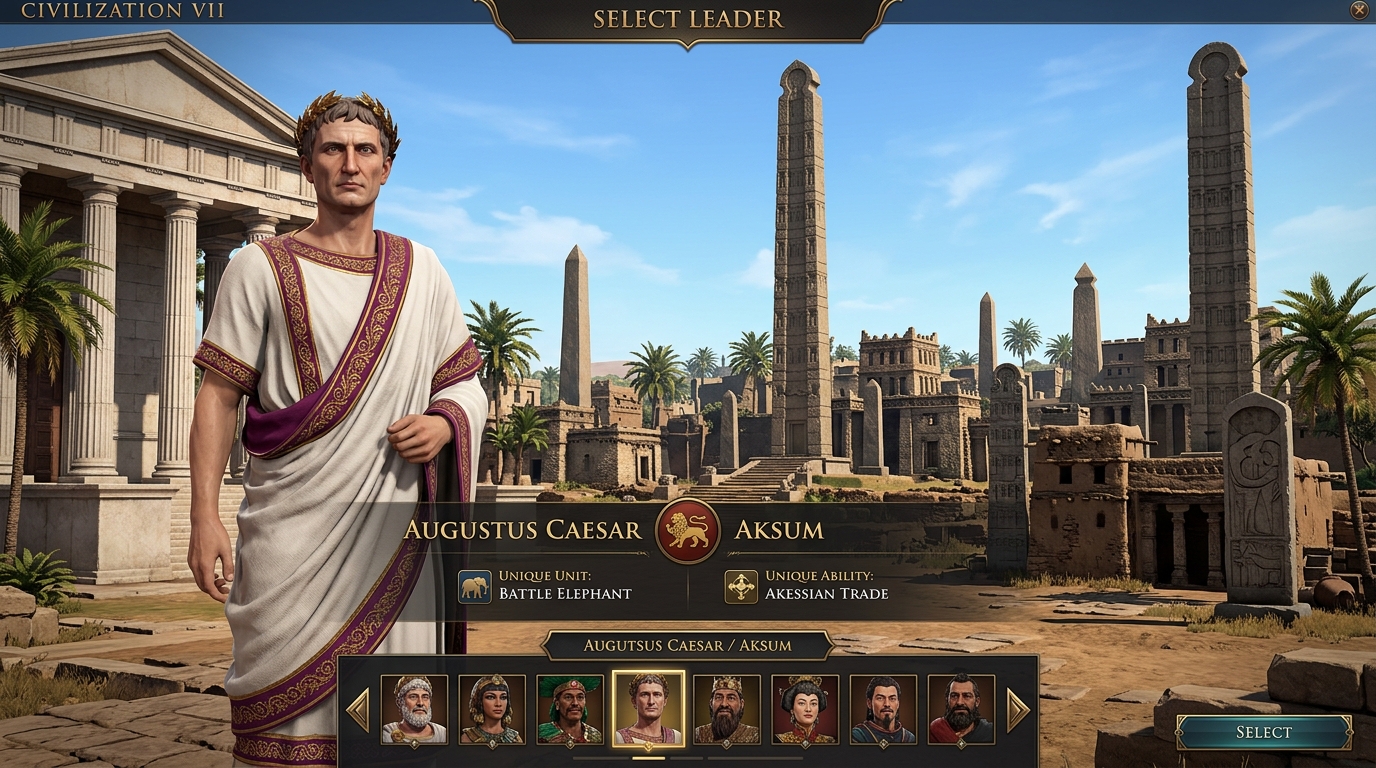
I have spent decades watching Gandhi threaten me with nuclear annihilation while wearing his traditional robes, but Civilization VII is finally letting us break the immersion in the name of pure strategy. By decoupling leaders from their civilizations and historically locked nations, the developers are essentially handing us a giant sandbox and telling us to go nuts. You can now take a militaristic leader and pair them with a scientific powerhouse civilization to shore up your weaknesses or double down on your strengths. It is a bold move that feels less like a historical simulation and more like a high stakes deck builder where the synergies are limited only by your own creativity. If you have ever wanted to see how a philosophical visionary would handle leading a pack of bloodthirsty expansionists, this is your chance to play mad scientist with history.
This massive mechanical overhaul is a direct attack on the stale meta that has plagued the franchise for years where certain leader and civ combos were objectively superior to everything else. In the old days, you picked your civ and your strategy was basically written for you before the first scout even moved. Now, the freedom to mix and match forces you to actually think about how your leader’s unique abilities interact with the specific traits of the civilization you have chosen for the current Age. It is the kind of innovation that keeps the game from feeling like a bloated spreadsheet, even if it does mean seeing some truly cursed combinations on the map. Purists might cry about historical accuracy, but I would rather have a game that plays this well than a history textbook that puts me to sleep by turn fifty.
The transition between Ages adds another layer of chaos to this system because your civilization changes while your leader stays the same. This means you are constantly reevaluating your build to make sure your leader’s permanent perks still provide value as you move from the Antiquity Age into the Exploration Age. It prevents that mid game slump where you usually just click Next Turn until you win, because a bad pairing can actually tank your empire if you are not careful. Some might call this unnecessary complexity, but I call it a much needed wake up call for a series that was starting to feel a bit too comfortable. It is a smart, aggressive change that prioritizes player agency over rigid tradition, and it is exactly the kind of shake up this genre needs to stay relevant.
Navigable Rivers And Tactical Commander Units
Finally, someone at the studio realized that rivers are actually bodies of water and not just decorative blue lines on a tile. In previous entries, rivers were basically just a minor inconvenience for your scouts or a source of fresh water for your housing, but Civ 7 finally lets you actually sail down them. This change effectively turns the map’s interior into a highway for trade and naval warfare, which is a massive win for anyone tired of their frigates being useless until the late game. It is a smart mechanical shift that makes the geography feel like a strategic tool rather than a static obstacle. If you are not planning your city placement around these deep water veins, you are probably going to get outmaneuvered by someone who is.
The new Commander units are the long awaited cure for the dreaded unit carpet that has plagued the franchise for years. Instead of micromanaging forty individual archers like you are herding caffeinated cats, you can now pack your military into a single, cohesive force under one leader. These Commanders act as mobile hubs that provide buffs and allow you to streamline military movement by grouping multiple units together, which is a godsend for your sanity and the game’s pacing. It is not just a quality of life fix, it is a fundamental shift in how tactical positioning works on the hex grid. This system finally rewards actual strategy over whoever has the most patience to click through a hundred unit movements per turn.
I am honestly surprised it took this many decades to realize that moving an army shouldn’t feel like a part-time job in logistics. The synergy between the new river navigation and the Commander system creates a much more fluid combat experience that actually respects your time. You can now ferry a concentrated force deep into enemy territory via a river, bypassing the slog of mountain passes and bottlenecks. It is the kind of innovation that makes you wonder why we were stuck with the old way for so long. While some purists might miss the cluttered maps, most of us will be too busy enjoying a game that finally prioritizes tactical depth over tedious unit shuffling.
Legacy Paths And The Crisis System
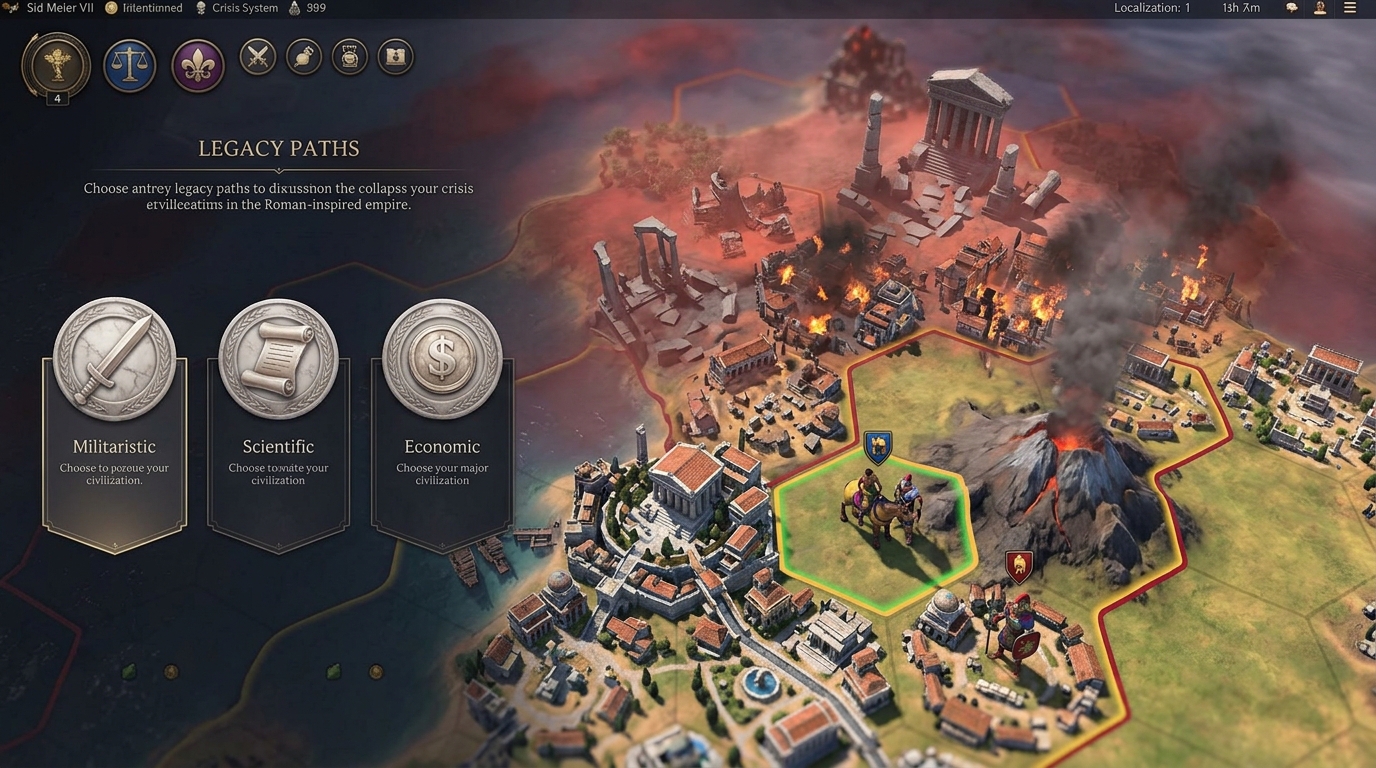
The new Age transitions in Civ 7 feel like a high stakes game of musical chairs where the music stops and suddenly your glorious Roman Empire is wearing a powdered wig and calling itself Norman England. To keep things from descending into total chaos, the game introduces Legacy Paths that track your progress in science, culture, and war. If you actually put in the work, you earn Legacy Points that let you carry over bonuses and special cards to the next era. It is a clever way to reward smart play, ensuring that your hard earned momentum from the Antiquity Age does not just vanish into the digital void the moment the calendar flips.
However, the real test of your patience comes in the form of the Crisis system, which acts as a mandatory speed bump for anyone getting too comfortable. As you approach the end of an Age, the game starts throwing metaphorical bricks through your windows to simulate the collapse of an era. While I appreciate the attempt to stop the traditional late game boredom where you just click Next Turn until you win, it can occasionally feel like the AI is just punishing you for being successful. If the tactical pause mechanics feel like a natural challenge, it is a stroke of genius, but if they just add unnecessary bloat to your to do list, it might make you miss the simplicity of the old world.
Whether these systems actually improve the experience depends on how much you enjoy being micmanaged by history itself. The Legacy Point system is clearly designed to give players a sense of continuity, but it also adds another layer of resource tracking that could easily become a sick of the grind chore. I want to feel like a visionary leader, not an accountant balancing a ledger of historical brownie points just to unlock a decent unit in the next Age. If the rewards for navigating a Crisis are powerful enough to justify the headache, then the developers have successfully evolved the formula, but the line between innovation and busywork is dangerously thin here.
Reinventing the Wheel or Just Breaking It?
Ultimately, whether you should drop sixty bucks on Civilization VII depends on how much you enjoy having your comfort zone dismantled. The transition from a continuous empire to a three-age modular structure is a massive gamble that successfully trims the fat of the late-game slog, but it might feel like heresy to those who want to play as Rome from the Bronze Age to the Space Age. It is not just unnecessary bloat or a coat of fresh paint, as these mechanical overhauls fundamentally change the rhythm of the “one more turn” addiction. If you are tired of the same predictable build orders and want a strategy game that actually makes you adapt to history rather than just steamrolling through it, this is a mandatory upgrade.
However, if the idea of your carefully cultivated civilization morphing into a completely different culture mid-game makes your skin crawl, you might want to stick with your current saves for a while. The new legacy system adds a layer of depth that rewards long-term planning, but the learning curve is steeper than a mountain tile without a scout. Civilization VII is bold, occasionally frustrating, and unapologetically different from its predecessors, which is exactly what a stale franchise needs to stay relevant. It is a brilliant evolution for the brave, but for the traditionalists, it might just feel like a bridge too far into unfamiliar territory.
Frequently Asked Questions
1. Wait, so I can’t play as the same civilization for the whole game?
No, and honestly, you should thank the developers for it. You start as one empire in Antiquity and swap to new ones as you progress through the Ages, which finally kills the boredom of the late-game slog. It forces you to actually use your brain and adapt instead of coasting on a lucky start from four thousand years ago.
2. How do these three Ages actually work?
The game is chopped into three distinct chapters: Antiquity, Exploration, and the Modern Age. Each one acts as a soft reset where your previous triumphs earn you Legacy Points to spend on perks for the next era. It is a brilliant way to keep the pressure on and stop you from playing the game on autopilot for twelve hours straight.
3. What are Legacy Paths and why should I care?
Legacy Paths are the hoops you have to jump through to determine which civilization you can pivot to next. If you spend all of Antiquity acting like a warmonger, you will unlock different options than if you spent your time staring at test tubes. It makes your strategic choices actually matter for the long haul.
4. Is my leader tied to my civilization choice anymore?
Absolutely not, because the old system was getting dusty and restrictive. You can now pick a leader and pair them with whatever civilization fits your playstyle, allowing for combinations that would have been impossible in previous games. It is a massive mechanical overhaul that puts player agency over historical rigidness.
5. Does this mean the late-game boredom is finally gone?
That is the goal, unless you just really enjoy clicking next turn while your eyes glaze over. By forcing a transition between Ages, the game prevents that annoying situation where the winner is decided by turn 100. You have to keep earning your victory in every era or get left in the trash heap of history.
6. How do I earn Legacy Points?
You earn these points by completing objectives related to science, culture, or military dominance within your current Age. These points are your ticket to powerful upgrades and better civilization choices when the world moves forward. Think of it as a report card that actually gives you cool stuff instead of just a pat on the head.