
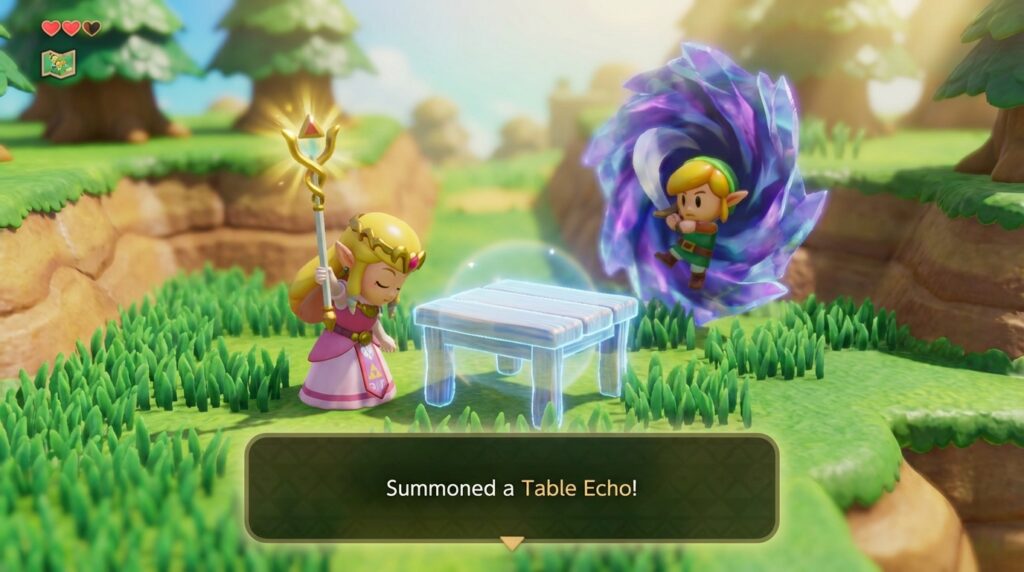
After nearly four decades of watching Link stumble into jars and get kidnapped, we finally have a game where the person in the title actually does the heavy lifting. The Legend of Zelda: Echoes of Wisdom isn’t just another stroll through Hyrule; it’s a total identity shift that swaps the master sword for a magical stick and some serious brain power. Zelda is finally the protagonist, and frankly, it’s about time she stopped waiting around for a guy who communicates exclusively in grunts to save the day.
The Echo system is the real star here, turning every rock, table, and monster into a copy-paste tool for your own amusement. Instead of mindlessly slashing through tall grass, you’re stacking beds like a cheap motel architect to scale cliffs or summoning a mob of monsters to do your dirty work. It’s a clever, refreshing pivot that rewards creativity over button-mashing, proving that sometimes the smartest way to save a kingdom is to let someone else fight while you hide behind a conjured shrub.
Key Takeaways
- The Echo system fundamentally redefines the Zelda formula by replacing traditional sword-and-shield combat with a creative, physics-based ‘copy-paste’ mechanic.
- Zelda’s debut as a protagonist shifts the gameplay focus from muscle memory and button-mashing to lateral thinking and environmental manipulation.
- The tilt-shift, toy-like aesthetic serves a functional purpose by making complex spatial puzzles feel tactile and intuitive while grounding the high-stakes narrative.
- Strategic freedom allows players to bypass traditional dungeon designs by using a diverse toolbox of summoned objects and monsters to engineer their own unique solutions.
Breaking The Sword And Shield Habit With Echoes
After decades of reflexively tapping the B button to swing a sword at every shrub and slime in sight, Echoes of Wisdom feels like a much needed intervention for the Zelda franchise. Instead of the usual hack and slash routine, the Tri Rod forces you to actually use your brain for something other than memorizing boss patterns. I found that summoning a stack of old beds to bridge a gap or drop on a moblin is infinitely more rewarding than a standard spin attack. It is a bold move to take away the series’ most iconic weapon, but the game is better for it because it replaces muscle memory with genuine creativity.
The beauty of the Echo system lies in how it turns every encounter into a weird, physics based puzzle that you can solve with absolute nonsense. Why bother with a shield when you can manifest a wooden crate to soak up arrows or summon a swarm of literal monsters to do your dirty work for you? There is a certain smug satisfaction in sitting back while a conjured Peahat shreds your enemies while you just stand there holding a decorative shrub. It is not just about being different for the sake of it, as the mechanics are polished enough to make the old traditional sword-and-shield combat feel almost primitive by comparison.
The developers finally stopped treating us like toddlers who can only handle one way to fight, and the result is a gameplay loop that actually respects your imagination. You are constantly scanning the environment for new objects to copy, turning the world into a giant toolbox of potential chaos. While some might miss the weight of the Master Sword, I would trade a thousand generic swings for the ability to manifest a trampoline in the middle of a dungeon. It is a smart, refreshing pivot that proves this franchise still has plenty of weird ideas left in the tank.
The Toy Aesthetic Meets High Stakes Hyrule
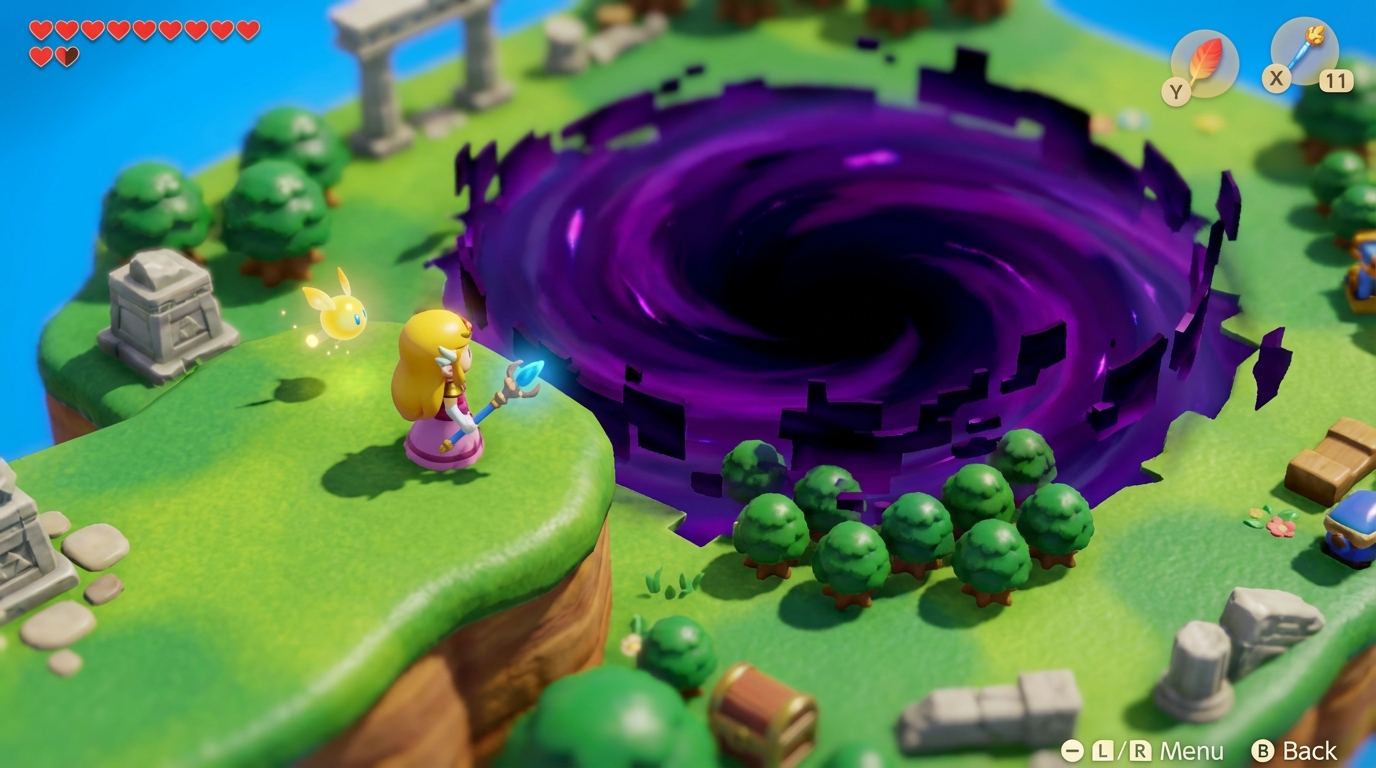
Echoes of Wisdom adopts the tilt-shift, diorama aesthetic first seen in the Link’s Awakening remake, and it works surprisingly well for a game about spatial manipulation. At a glance, the world looks like a collection of shiny plastic toys that you could easily crush under a boot. This miniature charm creates a deceptive sense of safety that makes the arrival of the purple, reality-tearing rifts feel genuinely intrusive. It is a clever visual trick that prevents the game from looking like a generic asset flip while giving the environmental puzzles a tactile, physical quality. You are not just moving pixels around, you are rearranging a high-end playset to see what breaks first.
The contrast between the adorable art style and the high-stakes narrative keeps the experience from devolving into a toddler’s fever dream. While Zelda is busy summoning decorative beds to climb cliffs or tossing rocks at moblins, the world around her is literally being erased by an existential threat. This tension ensures that the gameplay feels substantial despite the primary colored visuals and bobble-headed characters. If the world looked more realistic, the act of stacking tables to reach a ledge might feel ridiculous or immersion-breaking. Instead, the toy-like logic of the world makes these creative, often chaotic solutions feel perfectly natural within the established rules.
The team managed to dodge the trap of making this feel like a “Zelda Lite” spin-off by grounding the cute visuals in complex mechanical innovation. The Echo system requires a level of lateral thinking that most big-budget titles are too afraid to demand from their players. By pairing this brain-bending freedom with a simplified art style, the developers ensure the screen never feels cluttered or overwhelming during intense encounters. It is proof that you do not need gritty textures or realistic lighting to convey a sense of adventure and danger. The result is a game that looks like a gift for a six-year-old but plays with the emergent gameplay of a classic dungeon crawler.
Solving Rifts With Monster Minions And Physics Manipulation
After decades of watching Link solve every problem with a sharp piece of metal, Echoes of Wisdom finally hands the reins to Zelda and her chaotic collection of magical blueprints. The Tri Rod transforms the kingdom into a literal sandbox where you can treat every enemy like a collectible minion. Instead of swinging a sword, you are tossing out armored knights and fireball-spitting statues to do your dirty work while you stand back and watch the carnage. It is a refreshing shift that rewards brains over button-mashing, turning every encounter into a weird, tactical experiment. This mechanical pivot feels like the shot of adrenaline the classic top-down formula needed to stay relevant.
The real magic happens when you realize that the game’s physics are just suggestions waiting to be ignored. Need to reach a high ledge or bypass a complex puzzle? Just stack a dozen water blocks like a liquid staircase or create a bridge out of old beds to skip the intended path entirely. There is a certain smug satisfaction in looking at a meticulously designed dungeon and deciding to fly over the whole thing with a captured crow. It is the kind of creative rule-breaking that makes you feel like a genius rather than a player just following a script. This level of freedom ensures that even the most frustrating rifts become playgrounds for your own brand of environmental sabotage.
Princess Zelda Finally Outsmarts the Formula
Ultimately, giving Zelda a magic staff instead of a rapier was a bold move that actually paid off. While it would have been easy to just copy Link’s homework and give the Princess a sword, the Echo system forces you to actually use your brain for once. Solving puzzles by stacking old beds and summoning monsters to do your dirty work feels like a clever evolution rather than a gimmick. It is refreshing to see a developer take a massive risk with a legendary formula and actually land the jump. This mechanical shift proves that the series can survive without constant spin attacking.
The Tri Rod might feel like a glorified remote control at first, but it quickly becomes the most versatile tool in the kingdom. You are not just mashing a single button to win, because the game expects you to experiment with the environment in ways that traditional combat never allowed. Sure, there are moments where navigating the menu feels like digging through a messy junk drawer, but the payoff is worth the clutter. It is a smart, tactical approach that respects the player’s intelligence without becoming a tedious chore. Zelda is finally the protagonist who has a distinct identity that does not rely on being a Link clone.
If you were hoping for a standard hack and slash adventure, you might feel a bit of whiplash during the first hour. However, once you start dropping giant rocks on enemies from across the room, the genius of the Echo system becomes undeniable. It is a rare example of innovation that actually enhances the core experience instead of just adding complexity for the sake of it. While it is not a perfect game, it is a hell of a lot more interesting than another standard dungeon crawl. Go ahead and play it, if only to see how much fun being a royal puppeteer can actually be.
Frequently Asked Questions
1. Is Link finally out of a job in Echoes of Wisdom?
Pretty much, and it is about time. After forty years of getting kidnapped or napping on the clock, Link has stepped aside so Zelda can actually do the heavy lifting with her own brain instead of his grunts.
2. How does the Echo system actually work?
Think of it as a magical copy-paste tool for your own amusement. You use the Tri Rod to memorize objects like rocks, tables, or monsters, then summon them whenever you want to bridge a gap or start a fight.
3. Can I still just run around and hack at things with a sword?
Not unless you want to fail miserably, because the game replaces mindless button-mashing with actual creativity. You are trading muscle memory for the ability to drop a stack of beds on a Moblin, which is objectively more satisfying than a standard spin attack.
4. Is the game’s difficulty based on combat or puzzles?
It turns every encounter into a physics based puzzle that you solve with absolute nonsense. Instead of blocking with a shield, you are manifesting wooden crates or summoning a swarm of monsters to do your dirty work while you hide behind a bush.
5. Do I have to be a genius to figure out the Echo combinations?
Not at all, you just need to stop thinking like a typical gamer and start thinking like a cheap motel architect. The game rewards you for using weird solutions, meaning there is no wrong way to play as long as you are making the physics engine work for you.
6. Is it worth playing if I miss the classic Zelda formula?
It is absolutely worth it because it is a bold intervention for a series that was getting a bit too comfortable. Breaking the sword and shield habit might feel strange at first, but the sheer freedom of the Echo system makes the old way feel lazy by comparison.