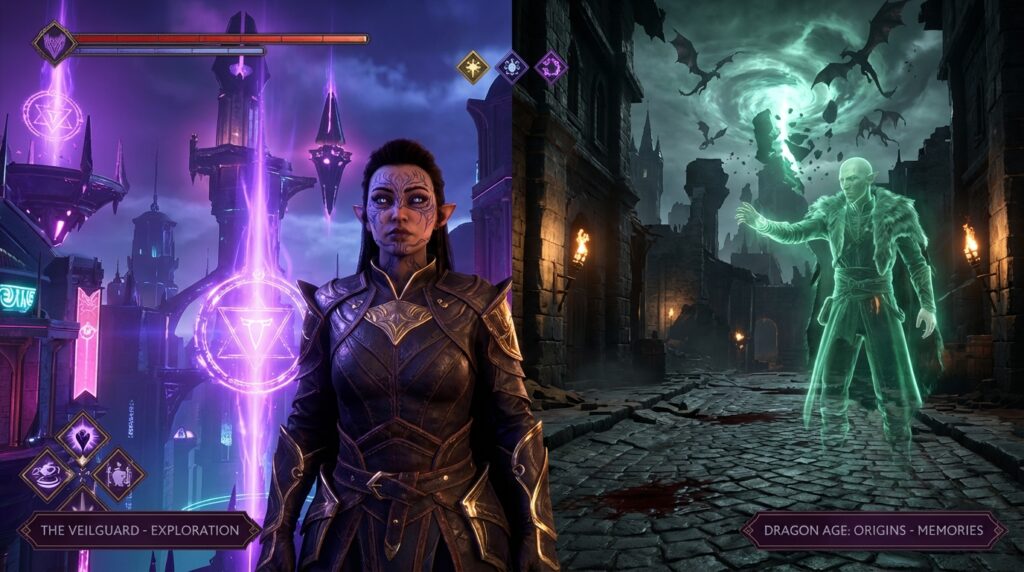
After a decade of waiting for BioWare to stop teasing us with cliffhangers, Dragon Age: The Veilguard has finally landed, and it’s about as subtle as a high-dragon in a library. I’m trading the sprawling, fetch-quest-heavy plains of the past for a punchy, action-heavy tour of Northern Thedas that feels more like a superhero brawler than a traditional tactical slog. Whether you’re a die-hard Grey Warden or just here to see if the Tevinter Imperium is as edgy as the lore promised, this game isn’t interested in playing it safe.
I step into the boots of Rook, a customizable protagonist who apparently spent their downtime joining one of six factions just to get some dialogue bonuses. The party size has been trimmed down to two companions, presumably because managing three personalities while dodging real-time fireballs was too much for our collective attention spans. It’s a bold, flashy shift that prioritizes kinetic combat over paused menus, proving that the franchise is finally done living in the shadow of its predecessors.
Key Takeaways
- The franchise has transitioned from a tactical, pause-based RPG to a fast-paced, action-heavy hack-and-slash brawler that prioritizes flashy animations over strategic depth.
- Party dynamics are significantly streamlined by reducing the companion count to two, resulting in simplified combat synergies and less complex group interactions.
- Faction choices and character backgrounds function primarily as cosmetic flair and passive stat bonuses rather than deeply impactful narrative foundations.
- The game adopts a sanitized ‘dark fantasy’ tone, replacing morally gray choices and gritty companion conflicts with polite, supportive dialogue and lower narrative stakes.
From Tactical Planning To Button Mashing Mayhem
The tactical DNA of this franchise has been thoroughly scrubbed away in favor of a combat system that feels more like a caffeinated hack-and-slash than a strategic RPG. Gone are the days of positioning my party with surgical precision or carefully timing a chain of elemental spells to turn the tide of a grueling battle. Now, I spend most of my time frantically mashing buttons and dodging glowing telegraphed attacks like I am auditioning for a role in a generic character action game. While the animations are slick and the visual feedback is punchy, the depth has been flattened into a pancake. It is a jarring shift that prioritizes immediate spectacle over the thoughtful, paused-based decision making that once defined the series.
BioWare also decided to trim the fat by limiting the party to just two companions, a move that feels less like a design choice and more like a surrender to simplicity. With fewer allies on the field, the legendary banter and complex group dynamics take a backseat to a streamlined experience that feels oddly lonely. I no longer feel like a commander leading a diverse squad into the breach, but rather a solo act with two assistants who occasionally chime in. This reduction limits my ability to experiment with different class synergies and tactical combinations, making every encounter feel repetitive far too quickly. It is a “less is more” approach that actually results in significantly less fun for anyone who enjoyed the complexity of a full four-person team.
The Ability Wheel serves as the ultimate awkward middle ground, acting as a frantic pause button that kills the momentum of an otherwise fast-paced game. Every time I want to trigger a specific companion skill, the action grinds to a screeching halt so I can navigate a menu that feels out of place in such a kinetic system. It is a clumsy compromise that tries to satisfy old-school fans while clearly chasing a crowd that just wants to see big numbers pop up on the screen. Instead of feeling like a master strategist, I feel like a frantic remote control operator trying to manage two NPCs who cannot seem to think for themselves. The result is a combat loop that feels perpetually confused about whether it wants to be a technical brawler or a traditional RPG.
Rook And The Tevinter Faction Fashion Show
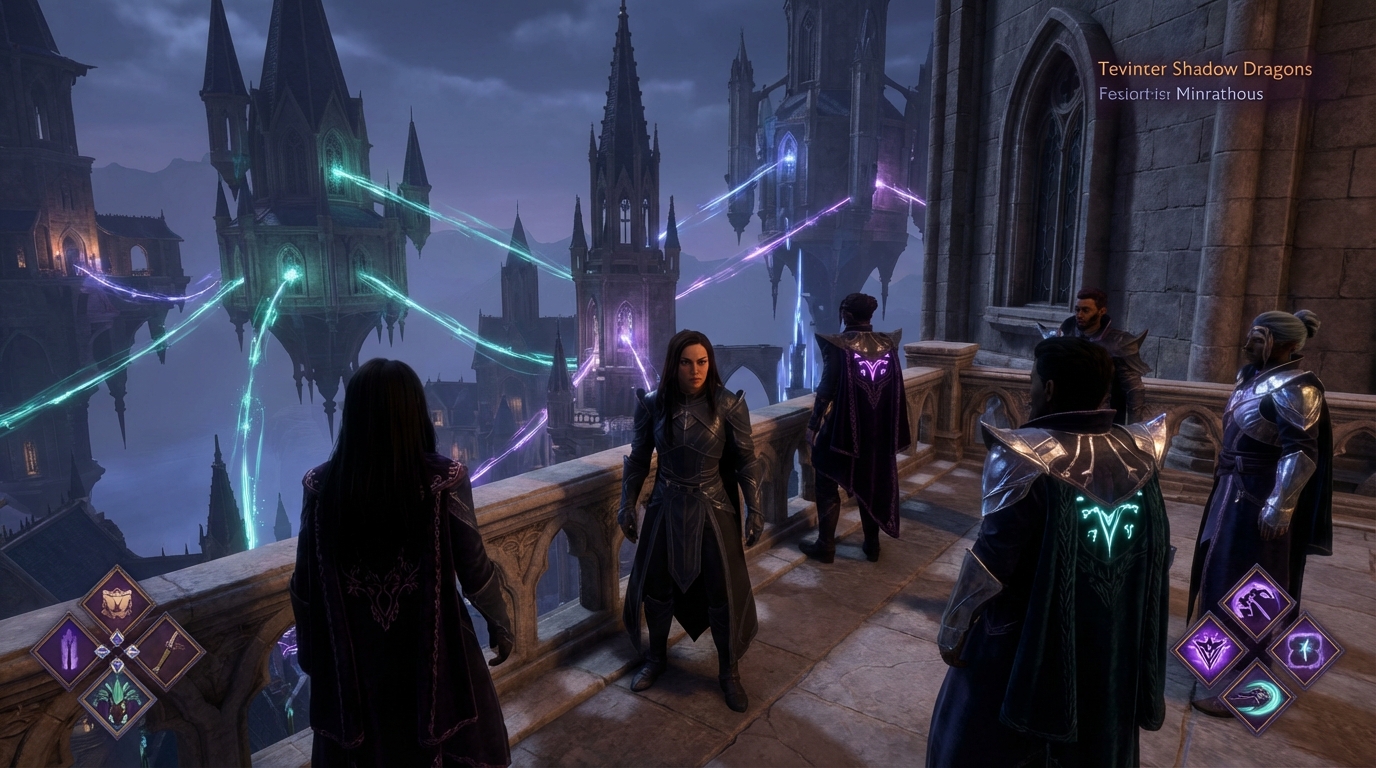
Rook enters the stage with a wardrobe full of faction-specific flair, but the real question is whether these origins actually mean anything once the fighting starts. I get to pick from six distinct groups, ranging from the monster-hunting Grey Wardens to the stylish Shadow Dragons of Minrathous, each promising a unique perspective on the crumbling world of Thedas. While the game talks a big game about my background influencing the narrative, it often feels like I am just choosing which flavor of snappy dialogue I want to endure for the next forty hours. The mechanical bonuses are real enough to matter for my build, but the story beats frequently treat my lifelong commitment to a faction as a fun trivia fact rather than a core personality trait.
Walking through the neon-soaked streets of Minrathous as a Shadow Dragon should feel like a homecoming, yet the game struggles to make my history feel lived-in. I get the occasional specialized dialogue option that lets me flex my insider knowledge, but these moments rarely shift the trajectory of a quest in a meaningful way. It is a bit like wearing a high-end designer suit to a dive bar. I look the part and people might comment on the threads, but I am still drinking the same cheap beer as everyone else. BioWare clearly wanted to give us agency, but they ended up delivering a polished fashion show where the clothes have more personality than the actual career path I chose.
The shift toward a more action-heavy experience means that my faction choice is often reduced to a set of passive stats and a cool title next to my name. While the visual design of the different regions is impressive, the narrative weight of being an Antivan Crow or a Mourn Watcher feels strangely light when the world is ending. It is hard to feel like a gritty underworld operative when the game constantly pushes me toward being a generic hero who happens to have a specific hobby. If I am looking for a deep roleplaying experience where my past haunts my every move, I find that Rook’s background is more of a thin coat of paint than a solid foundation.
Sanitized Dialogue And The Death Of Dark Fantasy
The grit and grime that once defined Thedas have been scrubbed away in favor of a narrative that feels like it was put through a high-pressure car wash. In the original journey, I was forced to make sickening choices where nobody walked away happy, but The Veilguard treats its cast like fragile glass. The dialogue is sanitized to the point of being toothless, replacing the sharp, cynical bite of the past with a relentless wave of HR-approved positivity. It is hard to feel like I am saving a world on the brink of collapse when my companions spend most of their time offering supportive affirmations instead of challenging my leadership. The danger feels hollow when every conversation is designed to ensure no one’s feelings get hurt in the middle of a literal demon apocalypse.
BioWare used to be the master of the “messy” companion, giving us drunks, betrayers, and ideological zealots who would leave the party if I crossed their lines. Now, Rook is surrounded by a group of cheerleaders who seem more concerned with healthy communication boundaries than the terrifying reality of Elven gods tearing the sky apart. Those dark, morally gray corners of the franchise have been replaced by a “safe” vibe that prioritizes comfort over compelling drama. There is no longer a sense that my choices carry a heavy, permanent weight when the game constantly nudges me toward the most polite outcome. If I was looking for the visceral, blood-soaked stakes that made this series a dark fantasy titan, I find this new polite version of the end times a bit too soft to swallow.
Flashy Spectacle Over Tactical Substance
Dragon Age: The Veilguard is a neon-drenched spectacle that feels like BioWare trying to win back a crowd that has already moved on to more complex RPGs. While Northern Thedas looks stunning, the shift to a two-companion party and button-mashing action combat feels like a desperate attempt to turn a tactical masterpiece into a generic hack-and-slash. It is hard to feel like the stakes matter when the grit of previous games has been polished away in favor of flashy particles and simplified mechanics. The Dread Wolf deserved a grander stage than this brightly colored, streamlined adventure that prioritizes accessibility over the dark fantasy roots I fell in love with a decade ago.
If I am looking for a breezy action game with a Dragon Age skin, I might actually enjoy my time as Rook. However, for those of us who spent hundreds of hours micromanaging party tactics and agonizing over moral gray areas, this feels like a soul-searching exercise that came up empty. The faction system adds some flavor, but it cannot hide the fact that the narrative teeth have been filed down to accommodate a wider, more casual audience. It is not a total disaster, but it is certainly a departure that leaves the franchise’s legacy feeling more like a memory than a living, breathing world.
Ultimately, my verdict is to wait for a deep sale unless you are a diehard completionist who needs to see how Solas ends his saga. The game is polished and functional, which is more than I can say for many AAA launches lately, but it lacks the spark of true innovation. It is a competent title that plays it too safe, trading depth for a shiny coat of paint that eventually loses its luster. If this is the future of the series, the Dread Wolf might not be the only thing we should be worried about losing to the fade.
Frequently Asked Questions
1. Is this still a tactical RPG like the old games?
Not even close. BioWare has scrubbed the tactical DNA away in favor of a caffeinated hack and slash system that values button mashing over surgical precision. If I enjoy pausing every five seconds to micro manage my party, I am going to be disappointed.
2. How many companions can I bring along this time?
I am limited to just two companions now, down from the traditional three. Apparently, managing more than two personalities while dodging real time fireballs was deemed too much for our collective attention spans.
3. Who exactly is Rook?
Rook is the customizable protagonist who can join one of six different factions for various dialogue bonuses. They are essentially a blank slate designed to let me punch my way through Northern Thedas however I see fit.
4. Is the combat actually fun or just mindless?
The animations are slick and the visual feedback is punchy, but the strategic depth has been flattened into a pancake. It is a flashy, action heavy experience that prioritizes immediate spectacle over the thoughtful decision making of previous entries.
5. Do I need to have played the previous games to understand the lore?
The game is a punchy tour of Northern Thedas that leans heavily into the Tevinter Imperium lore. While it is a bold shift for the franchise, it is clearly trying to move out from the shadow of its predecessors to attract a new audience.
6. Is the game world still full of boring fetch quests?
BioWare has traded the sprawling, fetch quest heavy plains of the past for a more focused and kinetic experience. It feels less like a traditional slog and more like a superhero brawler set in the Dragon Age universe.