If you’re still tracking your stock on a coffee-stained spreadsheet that looks like a relic from the Windows 95 era, you aren’t just behind the curve, you’re basically asking for a business-ending disaster. Modern inventory management has evolved from a boring back-office chore into a high-stakes game of predictive chess where AI does the heavy lifting while you actually try to turn a profit. We’ve moved past the days of guessing and hoping into an era where your software should know a supply chain crisis is coming before the shipping vessel even leaves the port.
The industry is finally ditching the rigid, soul-crushing contracts of the past in favor of collaborative models that don’t leave you stranded with a warehouse full of unsellable junk. Between AI-driven sentiment analysis and vendor-managed systems that actually make sense, the tech has finally caught up to the chaos of the global market. It’s time to stop treating your logistics like a game of Minesweeper and start using the tools that actually prevent your bottom line from exploding.
Key Takeaways
- Ditch manual spreadsheets and rigid contracts for AI-driven predictive systems that identify supply chain crises before they impact your profit margins.
- Inventory management must transition from a tedious manual chore into a strategic, automated process that respects the user’s time and prioritizes high-level decision-making.
- Relying on ‘auto-sort’ buttons and grid-based storage is a design failure that masks cluttered interfaces and lacks the visual clarity needed for efficient resource tracking.
- Real-world logistics and modern gaming both require a shift toward collaborative, vendor-managed models and seamless UIs to prevent operations from becoming ‘business-ending disasters.’
The Grid System Tyranny Of Resident Evil 4
I have spent more time rearranging items in the Resident Evil 4 attache case than I have actually fighting off the Ganados. It is a special kind of mental illness that makes a player stare at a virtual suitcase for ten minutes, trying to figure out if a sniper rifle can fit if they just rotate three green herbs and a tactical vest. This isn’t inventory management, but rather a high stakes game of Tetris where the prize is being allowed to carry a single extra grenade. You are essentially working a grueling back office shift at IKEA while a chainsaw wielding maniac is trying to take your head off.
The grid system is a masterclass in making a chore feel like a core gameplay pillar, even if it is a massive pain in the neck. You start the game with grand ambitions of being a tactical genius, but you end up as a glorified luggage handler obsessed with spatial efficiency. Every time a new weapon drops, you have to perform a ritualistic dance of clicking and dragging icons until your brain hurts from the sheer geometry of it all. It is a bizarre design choice that forces you to prioritize your love for organization over the actual survival horror elements happening right outside the menu screen.
Modern games have mostly moved toward streamlined, AI driven systems that handle the heavy lifting of procurement and resource tracking, but this retro nightmare persists in our memories. We have transitioned from these clunky manual grids to integrated platforms that provide real time visibility, yet we still find ourselves nostalgic for the trauma of the attache case. There is a strange satisfaction in finally clicking that last shotgun shell into a perfect corner, even if it took thirty percent of your total playtime to achieve. It is a testament to how a well designed inconvenience can become an iconic, albeit frustrating, part of gaming history.
Weight Limits And The Bethesda Hoarding Tax
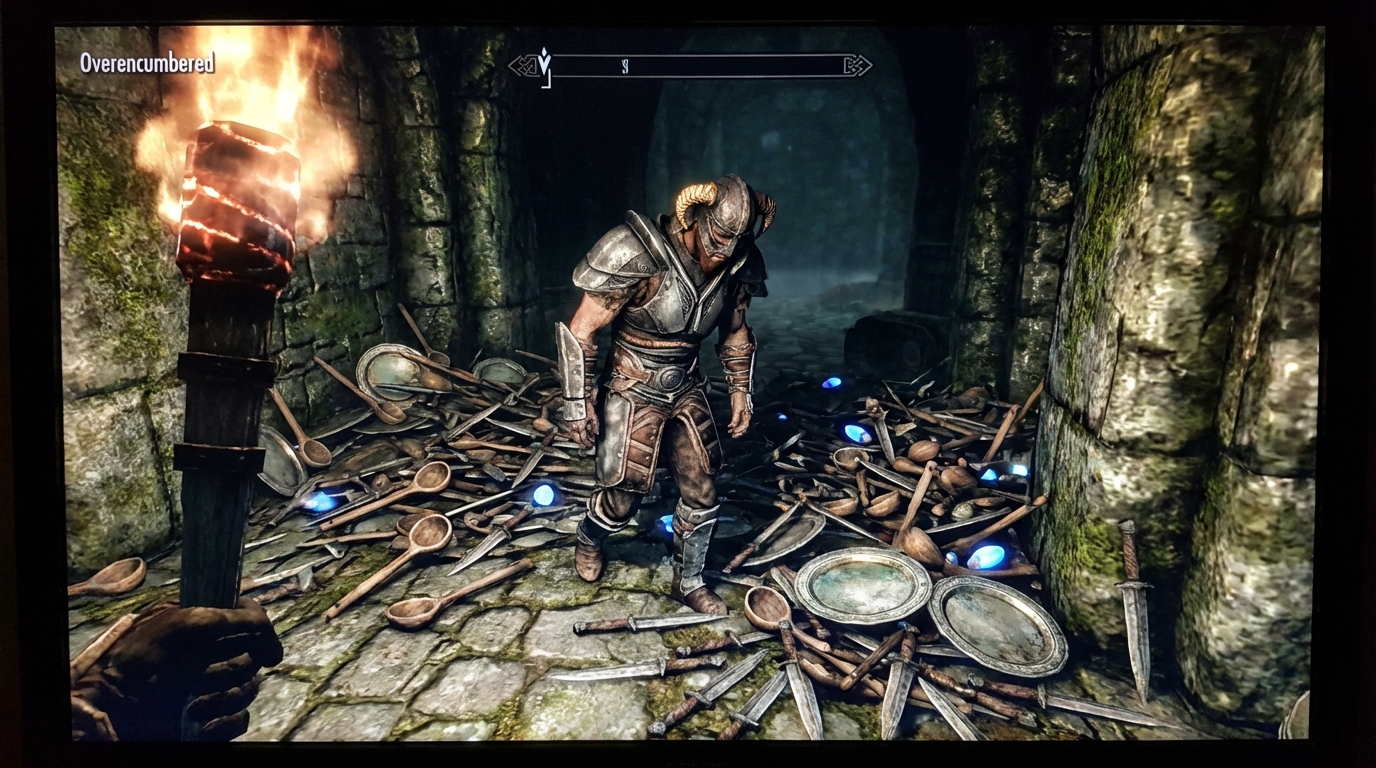
The developers at Bethesda seem to think that the pinnacle of immersive gameplay is watching a legendary space explorer or a post-nuclear savior move at the speed of a tectonic plate because they picked up one too many desk fans. The encumbrance mechanic is less of a realistic weight simulation and more of a punitive tax on basic curiosity. You find a unique suit of power armor or a rare decorative spoon, and suddenly your character develops the physical structural integrity of a wet noodle. It is a tedious loop of opening a menu, staring at a grid of icons, and playing a sad game of “what do I love least” just so you can walk to the next objective. This design choice turns what should be an epic adventure into a glorified logistics manager simulator for a hoarder who refuses to seek professional help.
Modern inventory management should be about making strategic choices, not performing manual labor in a digital UI. While some developers are moving toward AI-driven systems and streamlined procurement strategies that actually respect a player’s time, certain studios remain tethered to the “walk of shame” across three miles of wasteland. There is no joy in managing a coffee-stained spreadsheet while a deathclaw is breathing down your neck, yet we are constantly forced to stop the action to drop ten pounds of rusted pipes. If a game wants me to care about its world, it should stop punishing me for actually interacting with the items inside of it. We are in an era where games can handle complex physics and massive scale, so surely we can move past the era of the snail-paced inventory crawl.
Auto Sort Buttons Are Cowardly Band Aids
The “Sort” button is the ultimate admission of defeat from a UI designer who gave up halfway through the project. Instead of creating distinct, readable icons that help you identify a health potion from a pile of junk at a glance, developers just dump a hundred identical squares into a grid and give you a panic button to reorganize the mess. It is a lazy, cowardly band-aid designed to mask the fact that navigating your own pockets has become a full-time clerical job. We are supposed to be slaying dragons and exploring galaxies, but instead, we are staring at a sea of microscopic pixels trying to figure out why the “legendary” sword looks exactly like the rusted spoon we picked up three hours ago.
Clicking that button does not actually solve the problem of a cluttered interface, it just shifts the garbage into a slightly more alphabetical pile. When every item icon is a muddy brown smudge or a generic glowing orb, the spatial memory that makes inventory management feel intuitive is completely destroyed. You end up spamming the sort command every thirty seconds because you have no idea where anything is, effectively letting a basic algorithm play the organization mini-game for you. It is a band-aid that has become a crutch, allowing studios to ignore the fundamental need for high-contrast visuals and thoughtful category tabs in favor of a “fix it later” button.
If a game requires me to constantly click a button just to make sense of my own equipment, the designers have failed to respect my time. Modern inventory management should be about making strategic choices on the fly, not squinting at a grid like I am performing a digital eye exam. We need better silhouettes, clearer color coding, and UI layouts that do not require an automated cleanup crew to be functional. Stop giving us the “Sort” button as a feature and start giving us an inventory that does not look like a junk drawer exploded inside a spreadsheet.
Survival Horror Logistics And Strategic Item Culling
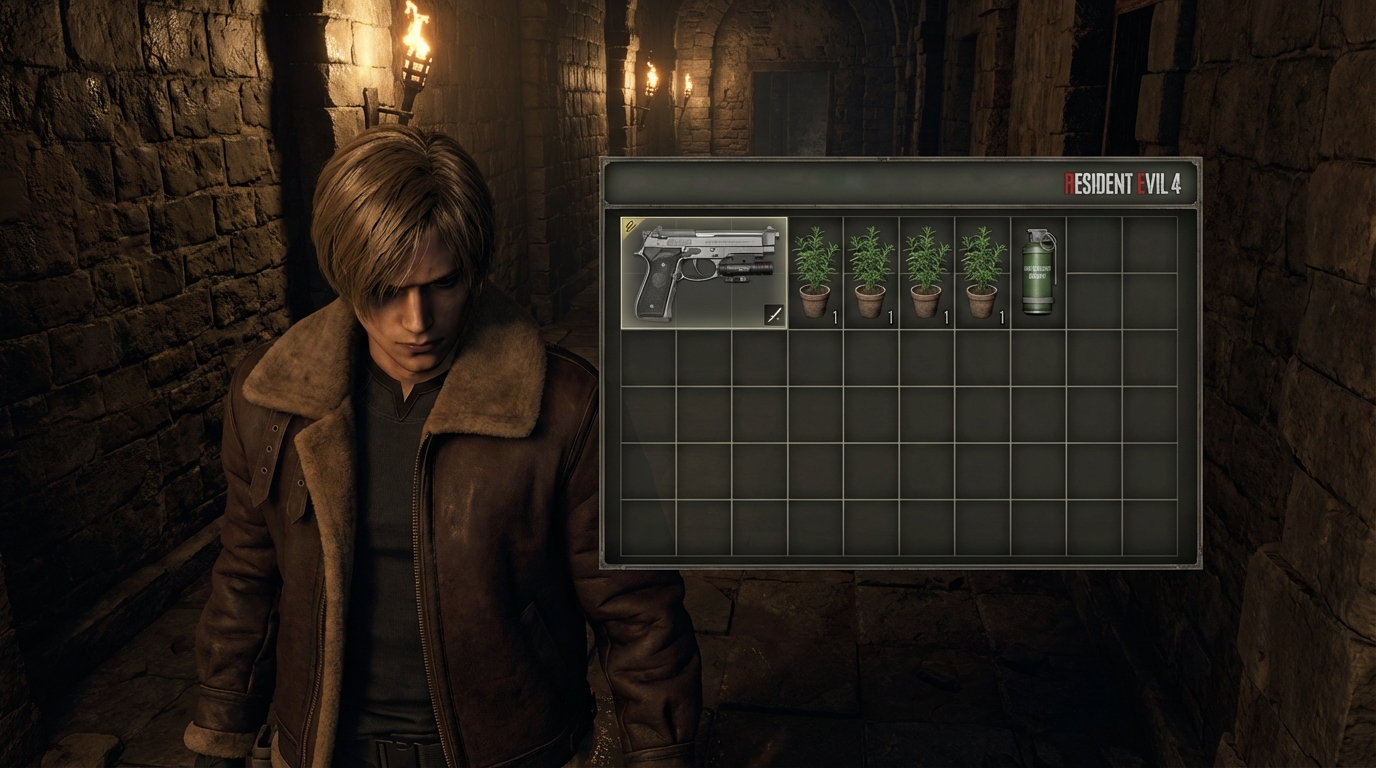
Survival horror games love to hide behind the excuse of realism to justify why a battle hardened protagonist can only carry six items at a time. We are expected to believe that a character capable of suplexing a zombie suddenly lacks the physical capacity to put a small brass key in their pocket because they are already holding a green herb. This isn’t immersive world building, it is a glorified chore masquerading as a high stakes tactical decision. Forcing me to backtrack through three hallways of respawning monsters just because I didn’t have a spare slot for a plot coupon is the height of artificial difficulty. It turns a terrifying atmosphere into a tedious commute where the scariest thing in the mansion is my own inability to manage a backpack.
The actual gameplay of modern inventory management has devolved into a frustrating mini game of moving icons around a grid like a digital moving company. You spend half your playtime staring at a pause screen, rotating a shotgun ninety degrees just so you can fit a single box of handgun ammo in the corner. Developers seem to think that making us drop a life saving potion to pick up a quest item adds tension, but it really just adds frustration. It breaks the flow of the experience and reminds me that I am playing a spreadsheet with a spooky skin rather than an actual adventure. If your game requires me to spend more time organizing my luggage than actually engaging with the mechanics, you have failed to design a meaningful challenge.
True strategic depth should come from how I use my resources in combat, not from how well I can play Tetris with a bunch of pixelated icons. There is nothing clever about making a player choose between a weapon and the key required to progress the story. It is a lazy way to pad out the game’s length by forcing unnecessary travel between storage boxes that are conveniently placed miles apart. We need to move past the era where a character’s greatest weakness is a lack of pockets. Let me focus on the monsters and the atmosphere instead of making me act as an unpaid logistics consultant for a character who apparently cannot carry a flashlight and a map at the same time.
Stop Forcing Us to Play Tetris
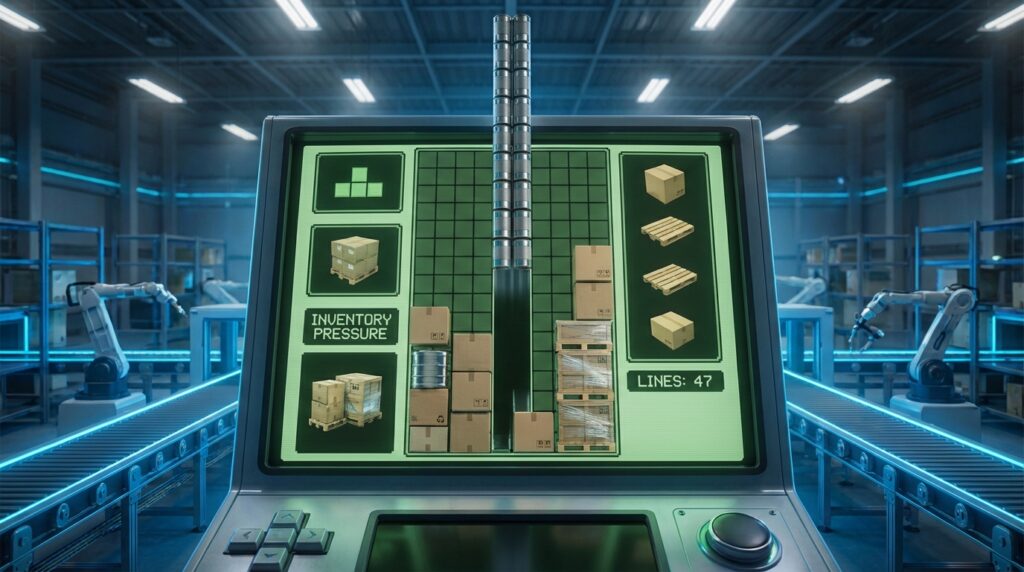
Ultimately, we need to stop pretending that rearranging icons in a grid is a meaningful gameplay loop. I didn’t sit down at my desk to play “Extreme Warehouse Simulator” or spend twenty minutes deciding which slightly different grey sword deserves to stay in my backpack. Developers seem to think that forcing us to play Tetris with our loot adds depth, but it really just adds a commute between the fun parts of the game. If I wanted to manage a cluttered storage unit, I would go to my garage and do it for free. Our time is better spent slaying dragons or exploring alien worlds than squinting at weight limits and inventory slots.
Modern gaming has the technology to automate the boring stuff, so it is time to actually use it. We are seeing AI and predictive systems handle complex logistics in the real world, yet I am still manually discarding rusted spoons to make room for a potion. A good inventory system should be invisible, acting as a seamless bridge to the action rather than a toll booth that stops the flow of the game. Give us smart sorting, infinite storage, or at least a UI that doesn’t require a degree in logistics to navigate. Let the machines handle the bean counting so we can get back to the reason we actually bought the game in the first place.
The final verdict is simple: stop making my digital hobbies feel like a second job at a shipping center. We want to be heroes and explorers, not underpaid inventory clerks struggling with encumbrance penalties. When a game respects my time by removing the inventory chore, it immediately becomes more fun and less of a headache. If you are a developer still clinging to the “realism” of limited backpack space, please realize that nobody is playing your game for the sick of the grind. Let us play the game, keep the loot flowing, and leave the tedious inventory management to the office workers. This is exactly why we suffer for loot in games that prioritize gear fear over user experience.
Frequently Asked Questions
1. Why should I ditch my current spreadsheet for an AI system?
Because your Windows 95 spreadsheet is a ticking time bomb that cannot predict a supply chain meltdown. Modern AI handles the heavy lifting by spotting global crises before they ruin your profit margins, saving you from a business ending disaster.
2. What is the biggest problem with the Resident Evil 4 grid system?
It transforms you into a glorified luggage handler who spends more time playing Tetris with green herbs than actually playing the game. It is a masterclass in making a tedious back office chore feel like a core gameplay pillar while a chainsaw maniac waits for you to finish.
3. How does sentiment analysis help my inventory levels?
It uses actual data to figure out what people actually want instead of relying on your gut feeling. This tech prevents you from getting stuck with a warehouse full of unsellable junk that nobody asked for in the first place.
4. Are long term inventory contracts still the industry standard?
Only if you enjoy being trapped in a soul crushing agreement that leaves you stranded when the market shifts. The smart move is switching to collaborative, vendor managed models that actually adapt to the chaos of the real world.
5. Can I apply Resident Evil 4 logic to my real life business?
Unless you want to go bankrupt while trying to rotate a tactical vest, the answer is a hard no. Real world logistics should be about automation and predictive chess, not staring at a virtual suitcase for ten minutes like a mental patient.
6. What happens if I keep managing stock the old fashioned way?
You are basically playing a high stakes game of Minesweeper where the prize is your bottom line exploding. Eventually, the lack of predictive tools will catch up to you and turn your logistics into a smoking crater.