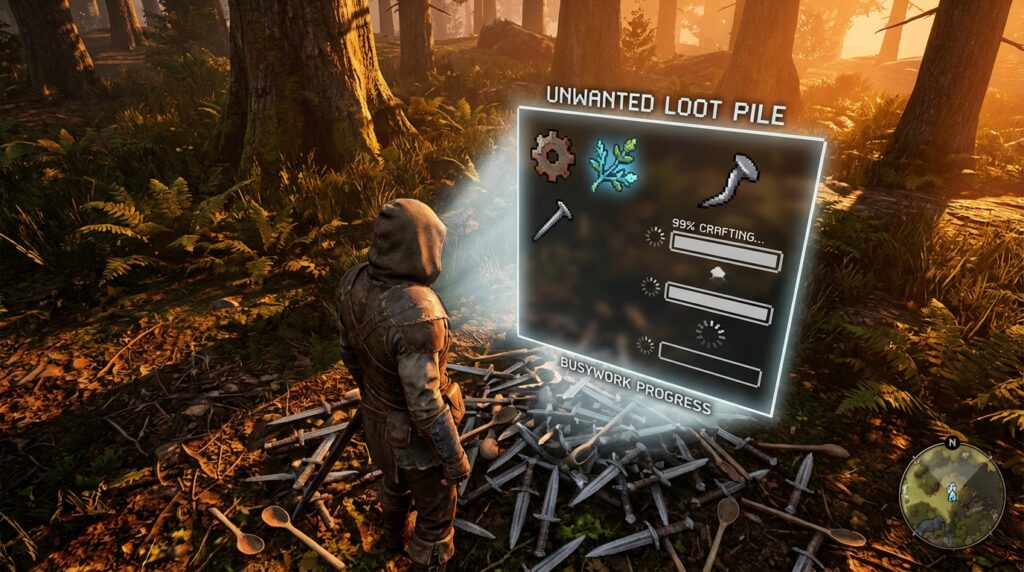
I’ve spent the last decade of my life picking up rusty spoons and “pristine” wolf pelts just to watch a progress bar fill up in a menu. Somewhere around 2012, the industry decided that every protagonist, from battle-hardened soldiers to literal gods, needs to be a part-time carpenter with a passion for pointless crafting systems. It’s no longer enough to find a cool sword in a chest; now you have to find the recipe, three chunks of ore, and a specific type of leather just to play the game.
We’ve reached a breaking point where even masterpieces like Elden Ring insist on cluttering your inventory with rowa berries and butterfly wings you’ll never actually use. It’s not “immersion” to pause a climactic boss fight so I can glue two sticks together to make a fire arrow. These mechanics aren’t gameplay; they’re just uninspired data entry disguised as “player choice.” If I wanted to spend my Friday night managing a spreadsheet of raw materials, I’d get a job in logistics and actually get paid for the headache.
Key Takeaways
- Modern crafting systems are often cynical padding used to artificially extend gameplay hours through forced busywork and ‘unpaid administrative work.’
- Forced foraging and inventory management act as momentum killers that break immersion and distract players from core narrative and combat experiences.
- The ‘Minecraft hangover’ has led developers to include redundant crafting menus even when the loot found through exploration is vastly superior to anything the player can build.
- Crafting should only be included if it is a central, rewarding pillar of the gameplay loop rather than a mandatory chore bolted onto a high-stakes adventure.
The Minecraft Hangover And Forced Busywork
Ever since Minecraft turned virtual landscaping into a global obsession, every developer with a budget seems convinced that I cannot enjoy a game unless I am first forced to act as an unpaid garbage collector. We have entered an era where epic heroes, destined to save the world from ancient evils, spend forty percent of their playtime stopping to pick up rusty nails and wilted mushrooms. It is a cynical padding way to pad out gameplay hours, turning what should be a tight, focused narrative into a glorified grocery list. I did not sign up to play a logistics simulator, yet here I am, staring at a menu instead of a monster.
The most egregious offenders are the games that treat crafting as a mandatory chore rather than a creative choice. Take Elden Ring, for instance, which is a masterpiece of world design that somehow felt the need to include a menu for crafting fire pots and status cures that almost everyone ignores. When the “craft” button becomes a hurdle between the player and the actual fun, the system has failed its primary purpose. It is not immersion to stop a high stakes chase because I ran out of stamina raisins and need to forage in a bush.
This industry wide Minecraft hangover has turned modern gaming into a series of tedious data entry tasks where we trade our limited free time for digital scrap metal. There is no joy in clicking through three submenus just to assemble a basic healing potion that could have easily been a simple loot drop. We are being sold the illusion of depth, but it is really just a shallow pool of busywork designed to keep us from noticing how little is actually happening. If I wanted to manage a complex supply chain of mundane household items, I would just get a job at a warehouse.
Redundant Consumables And The Elden Ring Problem
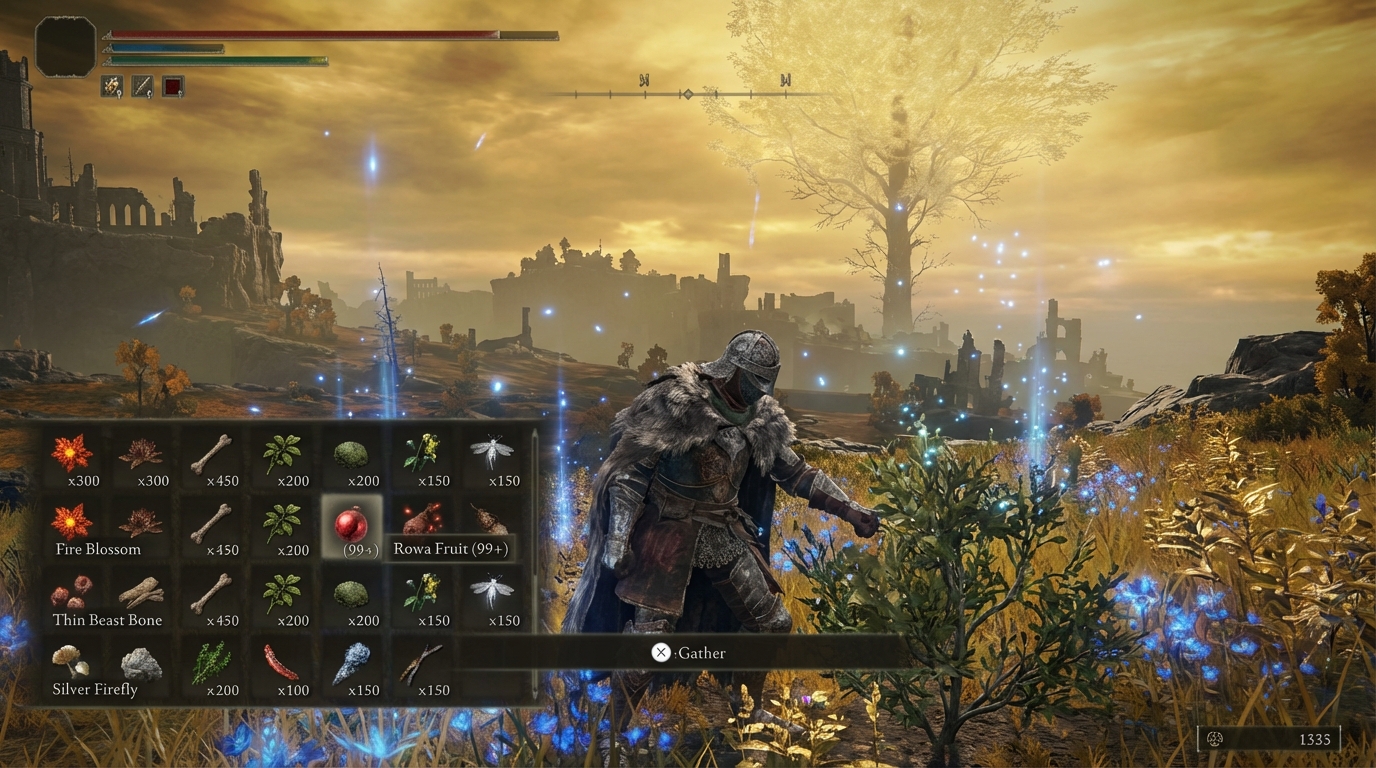
Elden Ring is a masterpiece of world design, but its crafting system is about as useful as a screen door on a submarine. From the moment you step into Limgrave, the game pelts you with cookbooks and cracked pots like it is trying to teach you a new hobby you never asked for. You spend hours scouring the bushes for rowa raisins and butterfly wings just to craft a fire pot that does less damage than a stiff breeze. By the time you have gathered enough ingredients to make a single specialized arrow, you have probably already found fifty better ones sitting in a chest three rooms back. The game wants you to feel like a resourceful survivalist, but it actually just makes you feel like a glorified trash collector.
The fundamental issue is that the loot you stumble upon during actual gameplay is ten times better than anything you can assemble in a menu. Why would I ever stress over finding rare mushrooms to craft a mediocre status cure when the world is literally overflowing with high tier consumables and legendary weapons? It creates a bizarre gameplay loop where you spend forty minutes picking flowers just to create a consumable you will forget to use during a boss fight anyway. Most players end up with an inventory full of artisanal garbage that they never touch because the math just does not add up. If the rewards for exploration are consistently superior to the rewards for crafting, the entire system is just a glorified checklist of chores.
We have reached a point where developers feel legally obligated to include a crafting menu even when it adds zero mechanical depth to the experience. It is a classic case of busywork designed to pad out the game time and give you something to do with the thousands of useless items you pick up. Instead of a meaningful progression curve, we get a cluttered UI filled with recipes for items that were obsolete five hours ago. If I have to navigate three submenus just to make a bomb that performs worse than my basic light attack, I am not engaging with a mechanic, I am doing unpaid administrative work. Games need to stop pretending that picking up sticks is a core gameplay pillar when the real fun is actually playing the game.
Inventory Bloat And The Scavenger Hunt Fatigue
Modern gaming has turned us all into high-stakes janitors with a compulsive need to vacuum every corner of the map. Instead of feeling like a legendary hero destined to save the world, I often feel like a scrap metal enthusiast looking for discarded tin cans in a ditch. Developers seem to think that staring at the floor for hours is an acceptable substitute for actual gameplay. It is a soul-crushing cycle where you spend ninety percent of your time playing a glorified scavenger hunt and only ten percent actually enjoying the game. If I wanted to spend my weekend sorting through junk and managing a cluttered inventory, I would just clean out my actual garage.
The inventory screens in these games are where fun goes to die under the weight of three hundred different types of moss and rusted bolts. You finally reach a massive, intimidating boss, but you cannot even start the fight because you forgot to pick up enough silver-tinted mushrooms for your resistance potions. This constant stop-and-start rhythm kills any sense of narrative momentum or excitement. It is an artificial barrier designed to stretch a ten-hour experience into forty hours of mindless busywork. We are being sold a grand adventure, but the reality is just a series of spreadsheets disguised as a fantasy world.
Take a look at Elden Ring, a literal masterpiece that still fell into the trap of giving us a crafting menu the size of a phone book. I have finished the game multiple times and I can count on one hand how many times I actually sat down to craft a specialized meat dumpling or a fire pot. Most of these items are just clutter that fills up your bags until you eventually forget they even exist. When the optimal way to play a game is to ignore an entire mechanic, that mechanic has officially failed its job. We need to stop pretending that picking up every twig on the ground adds depth when it really just adds physical pain to our clicking fingers.
Crafting: A Reward, Not a Chore
Ultimately, a good crafting system should feel like a reward for your curiosity rather than a tax on your free time. Games like Subnautica or even Monster Hunter get it right because the entire gameplay loop is built around the materials you find and the gear you forge. In those worlds, you aren’t just clicking a button to fill a bar, you are actually engaging with the ecosystem. When the crafting is woven into the identity of the game, it stops being a chore and starts being a motivation to explore. Everything else is just a glorified grocery list designed to pad out the play clock.
I am officially begging developers to stop making me forage for scrap metal and gunpowder when I am supposedly busy saving the universe from an ancient evil. There is nothing more immersion breaking than watching a legendary warrior stop mid quest to pick blue flowers so they can make a basic healing potion. If your game is about high stakes action or a tight narrative, you do not need to delete on a Minecraft clone just to check a box on a marketing sheet. Sometimes it is better to stop grinding and just let me buy my bullets at a shop and get back to the actual fun. It is time to admit that not every protagonist needs to be a part time blacksmith or a hobbyist chemist.
Frequently Asked Questions
1. Why has every modern game turned into a grocery shopping simulator?
It is the lingering Minecraft hangover where developers assume you cannot have fun unless you are digging through trash. They use these systems to artificially pad gameplay hours because it is easier to make you pick up mushrooms than it is to design a meaningful mission.
2. Is crafting actually necessary for immersion in open world games?
No, it is usually a momentum killer that forces you to stare at a menu instead of the beautiful world you paid sixty dollars to see. True immersion comes from engaging gameplay, not from pausing a life or death boss fight to glue two sticks together for a fire arrow.
3. What is the biggest problem with crafting in masterpieces like Elden Ring?
Even the best games fall into the trap of cluttering your inventory with useless rowa berries and butterfly wings you will never use. It turns a legendary warrior into an unpaid garbage collector, forcing you to manage a spreadsheet of raw materials instead of slaying monsters.
4. Are these mechanics just a way for developers to be lazy?
Absolutely, as it is a cynical form of forced busywork disguised as player choice. Instead of giving you a cool weapon as a reward for a tough fight, they give you a recipe and tell you to go find the ingredients yourself.
5. When does a crafting system actually work in a game?
A system works when it is a creative choice rather than a mandatory chore. If the game stops being an adventure and starts feeling like a job in logistics, the developers have failed to respect your time.
6. Should I just ignore crafting systems entirely if I hate them?
You should ignore them whenever possible, though some games are spiteful enough to gate your progress behind these tedious menus. If a game makes you spend forty percent of your time picking up rusty nails, it might be time to hit the uninstall button.