PRAGMATA is a clever sci-fi shooter whose hacking combat makes the $59.99 standard price worth considering, even if its story wobbles. The Pragmata review consensus on Metacritic is hard to argue with: 85 out of 100 from 104 critics, with 95% positive and zero negative.
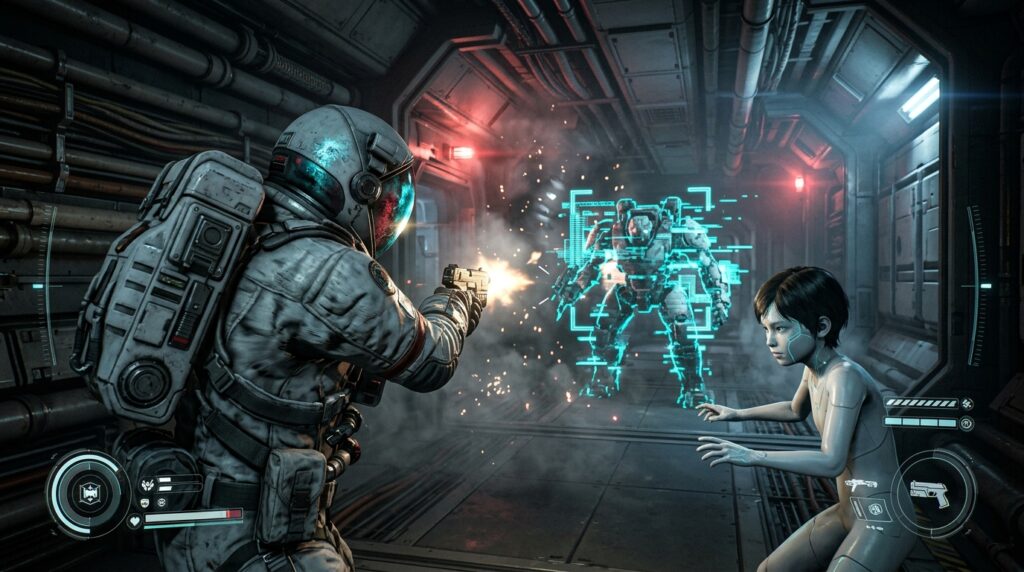
Hugh shoots and moves while Diana solves real-time hacking puzzles to expose enemy weak points, so you’re juggling two jobs at once. It’s clever on paper and mostly clever in practice, though the mid-game can drag into a shooting gallery. The campaign runs about 10 to 12 hours on Standard difficulty, according to GameSpot, which is a sensible length for a game that wants to stay sharp.
Key Takeaways
- Pragmata’s hacking combat is the standout feature, with Hugh handling the guns while Diana solves real-time grid hacks, and that juggling act is the main reason the $59.99 standard edition is worth your money.
- Pragmata’s story is undercooked for many critics, so players who care most about narrative should weigh that before paying full price.
- Pragmata’s campaign runs about 10 to 12 hours on Standard difficulty according to GameSpot, and the $69.99 Deluxe Edition includes the Shelter Variety Pack.
- Pragmata’s PC minimum specs require Windows 11, 16 GB of RAM, and 40 GB of storage, and its path-tracing mode is limited to GeForce cards.
Is Pragmata Worth Playing Right Now?
Yes, if you want a shooter that makes you think while you shoot and you can forgive a story that never quite lands. The critical picture is strong, but the praise isn’t evenly spread. Critics broadly agree that the hacking combat is the standout. Hugh handles the guns and movement while Diana cracks grid-based hacks in real time, and the fun comes from juggling both without dropping either.
The story is where the room splits. PCGamesN called the plot undercooked and forgettable, while other reviewers credited the growing bond between Hugh and Diana with giving the game its emotional core. Both camps have a point, and you’ll likely land in one of them by the end.
Pragmata launched April 17, 2026 on PlayStation 5, Xbox Series X|S and PC, with Switch 2 following on April 24. Metacritic’s 85 looks like a clean consensus, but the cracks show up in the details. The mid-game can slip into a shooting gallery, and the script tends to coast on the strength of the combat.
Does Pragmata’s Hacking Combat Actually Work?
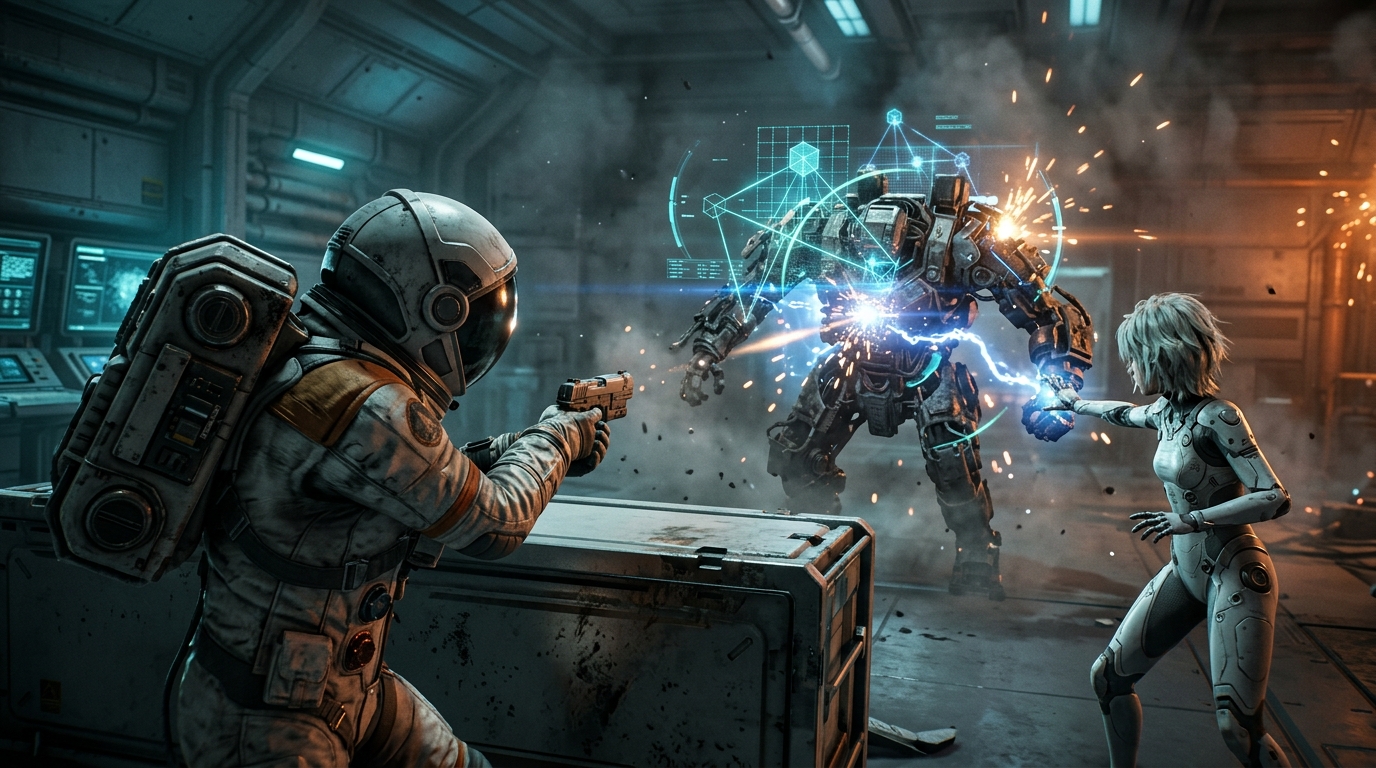
Yes, the hacking combat works, and it’s the strongest argument for buying Pragmata. Hugh keeps shooting and moving while Diana traces a grid-based hack on enemies, so the two jobs run side by side instead of taking turns.
The hack is where the game earns its brain. Connect more squares and the damage goes up, and the enemy’s armor stays disabled for longer. A sloppy trace gets you a few shots, while a clean chain opens a window to tear a room apart. The loop is simple to understand and satisfying to pull off.
Hugh’s arsenal is split into four weapon types: Primary, Tactical, Attack, and Defense Units. The Primary is your main gun, and the other three are situational tools with a catch. Non-primary weapons break when their ammunition runs out, so the gadget you finally learned to love can vanish mid-fight. That forces you to commit, and it makes every charge count. It also means you’ll occasionally be stuck with an empty hand and a grudge against the designer.
Juggling both characters is the real skill test. Stay on the trigger too long and Diana’s hack stalls. Obsess over the grid and Hugh becomes a very expensive piñata. When you find the rhythm, combat feels like conducting an orchestra. When you don’t, it feels like patting your head while rubbing your stomach, and someone sets your shoes on fire.
Does Pragmata’s Story Earn Its Emotional Weight?
Pragmata’s story earns some of its emotional weight, mostly through Hugh and Diana. Critics keep praising the growing bond between the two leads, and it’s the best thing the script has going for it. Watching a battle-hardened soldier and a hacker warm up to each other is nice. It just isn’t enough when you can see most of the twists coming from the title screen.
Several reviewers called the plot predictable or undercooked. One of the harsher reviews in the mix described the story as undercooked and forgettable, while still giving the hacking plenty of love. That’s a fair summary of the problem. The combat carries the game, and the script is happy to let it.
Pacing is the bigger issue. The Guardian noted a mid-game lull that turns combat into a directionless shooting gallery. You’re still juggling two jobs, but nothing much rides on the juggling. Hugh is shooting at things, Diana is solving puzzles, and nobody stops to explain why it matters.
The good news is that the back half pays off. The late-game upgrades give the combat a reason to stay interesting again, and they’re the moment the game stops treating your arsenal like a checklist. Stick around for them. The story may wobble, but the gunplay finally starts to feel like it has somewhere to go.
How Long Does Pragmata Take to Beat?
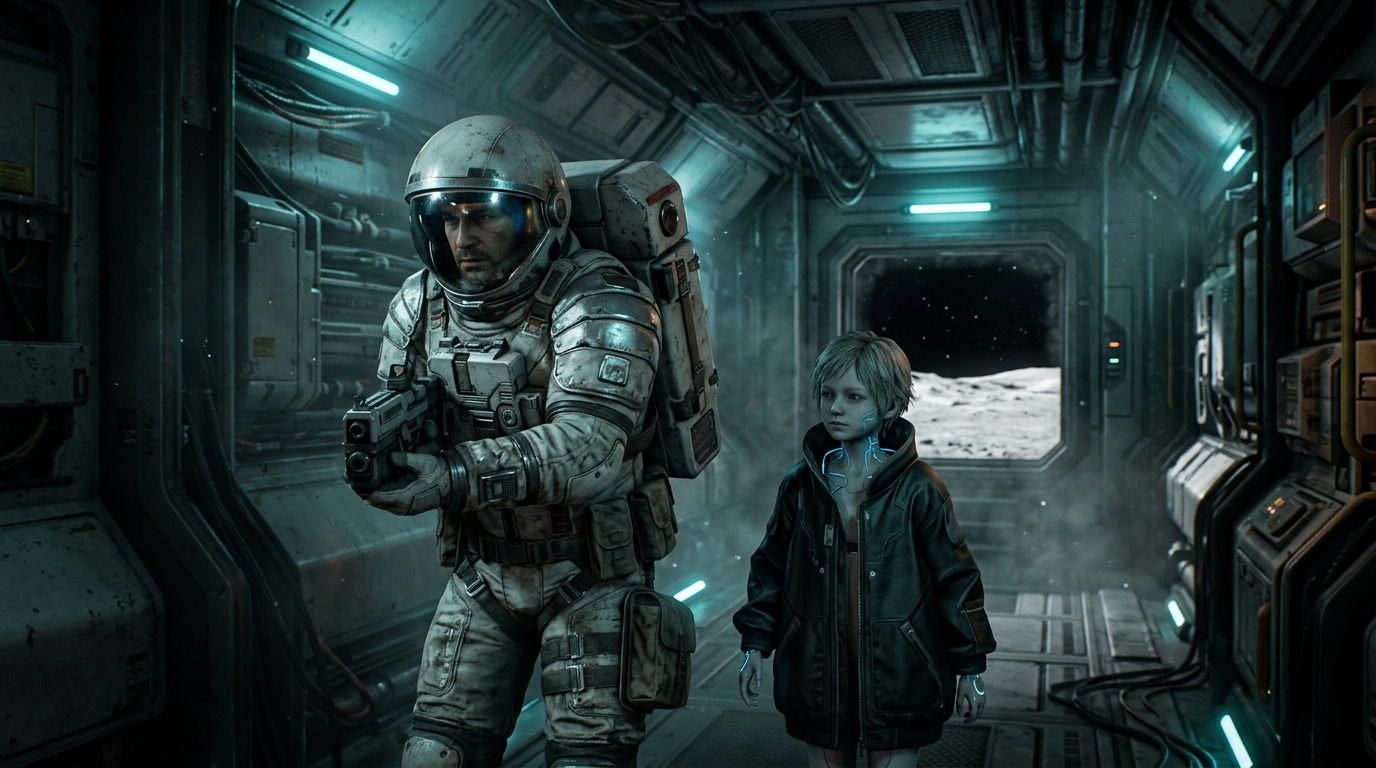
Most players should expect about 10 to 12 hours on Standard difficulty, and a faster run is possible for anyone who blazes through. The campaign is compact, which suits a game that wants its hacking to stay fresh.
PC Gamer‘s reviewer Justin Wagner finished the campaign in under 10 hours without rushing, so the length feels tight rather than padded. Nobody has to grind through filler to reach the credits.
Use the 30 training simulations before you need them. They let you practice the hack-and-shoot juggling without enemies punishing every mistake. Skipping them is tempting if you think you’re too cool for tutorials, but you aren’t.
Difficulty scales the way it does in most shooters. Higher settings make enemies tougher and leave less room for a sloppy trace. Standard is a sensible first run, while the harder tiers test whether you can keep both hands busy.
Once the credits roll, the replay value kicks in:
- New Game+, which carries your progress into a second run
- An endgame mission mode for more combat without the story hand-holding
- Lunatic difficulty, for players who want the juggling to hurt
Each of these asks you to perform the same act with less margin for error.
Why Does Pragmata Look Blurry on Switch 2?
Pragmata looks softer on Switch 2 when docked. The frame behavior is the good news. Performance stays consistent in both handheld and docked play, so the combat keeps its rhythm whether you’re on the couch or on the bus.
The compromise shows up in the picture. Nintendo Life notes a slight blur when docked, along with visual reductions that include hair physics and dimly lit interiors. Hugh’s hair moves less convincingly, and dark corridors lose some of the murk that was supposed to make them creepy.
Does it ruin the game? Not really. Hacking still feels crisp when you’re juggling Hugh’s guns and Diana’s grid, and a little softness doesn’t change how a clean chain plays out. If you’re buying for the picture, the Switch 2 version deserves a closer look. If you’re buying for the combat, it still does the job.
What PC Specs Does Pragmata Need to Run Well?
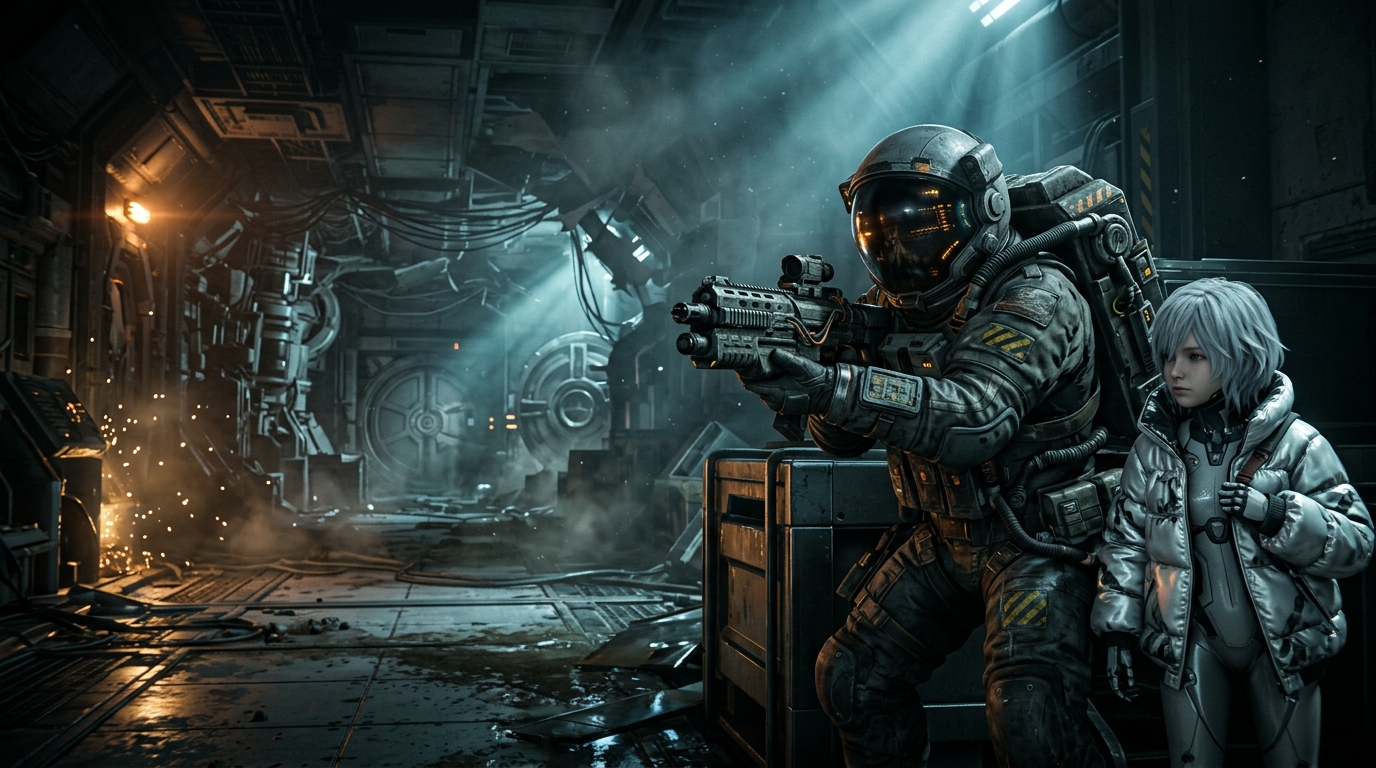
Pragmata’s minimum PC specs are Windows 11, 16 GB of RAM, a GTX 1660 6 GB or Radeon RX 5500 XT 8 GB, and 40 GB of storage. Those numbers get the game launching, but the Capcom Town Store listing estimates 1080p at 45 fps on the Performance preset, and that’s the realistic target.
Forty-five frames per second is playable for a game that asks you to juggle a shooter and a hacking grid. The catch is that the dips land in graphics-heavy scenes, which are usually the moments when a room fills with enemies and every light effect starts firing at once. Nobody wants a slideshow in the middle of a firefight.
Path tracing is the expensive showpiece. It’s computationally demanding and limited to GeForce cards, so if your GPU carries an AMD badge, the mode isn’t even on your menu. Tom’s Hardware found that a smooth native path-tracing experience needs DLSS upscaling and frame generation, so the prettiest lighting depends on NVIDIA’s AI tricks.
If you’re not running NVIDIA, the deal is simpler. You get a solid shooter with conventional lighting, and the combat doesn’t care whether the reflections are ray traced. Just don’t confuse “it launches” with “it runs well,” because the estimate is 1080p at 45 fps on the Performance preset, and the dips are real.
Is Pragmata Worth the Full Price?
Yes, the $59.99 standard edition is worth full price if hacking combat is what you’re after. The $69.99 Deluxe Edition is a harder sell. According to Capcom’s launch announcement, the extra $10 gets you the Shelter Variety Pack. Unless you know you’ll use that pack, the standard edition covers everything the combat needs.
The bigger question is timing. Capcom reported more than one million copies sold worldwide within two days of release, which is a fast start for a new action game. Publishers rarely rush to discount a title moving that quickly, so don’t build your budget around a sale that may be a long way off.
Buy now if you want to play while the game is fresh and the juggling sounds like your kind of fun. Wait if the story is the thing that worries you most. You’d be paying full price for a game whose main hook is the combat, and you’d be the one judging whether the rest holds up.
Buy Now or Wait for Pragmata’s Price Drop
Your next step depends on two things: the platform you play on and how much the story matters to you. If you’re on PlayStation 5 or Xbox Series X|S, the $59.99 standard edition is a straightforward buy. Start a run this weekend and give it until the late-game upgrades arrive before you judge the whole thing.
If you’re on PC, check your graphics card before you check your wallet. A GeForce card can use the path-tracing mode, while a Radeon card gets the same hacking combat with conventional lighting. The juggling works either way, so don’t let a missing reflection talk you out of it.
Don’t wait for a discount just because the game is pricey. Capcom has already moved more than a million copies, and there’s no sale date worth planning around. If you’re budgeting, set aside the standard price now instead of hoping it drops.
If you’re still undecided, watch a few minutes of the mid-game footage on the platform you’d buy for. If the shooting gallery stretch looks like your idea of a slog, wait. If the combat looks like the most fun you’ve seen in a while, buy it and stop reading reviews.