
Game review bombing is no longer just a digital tantrum followed by twelve angry screenshots. Players use review scores to punish broken launches, invasive DRM, ugly monetization, missing features, and corporate decisions that have little to do with gameplay. The result is a ratings battlefield where a masterpiece can look radioactive and a mediocre game can become a protest billboard overnight.
The tricky part is separating genuine player backlash from coordinated noise, revenge campaigns, and people reviewing a game they barely touched. Some platforms verify ownership and playtime, while others leave the door open to anyone with a keyboard and a grudge. I’m cutting through the score chaos to see what these campaigns actually reveal, and when a “mixed” rating is really just the internet setting fire to the comments section.
Key Takeaways
- Review bombing is primarily a protest signal, not a reliable measure of game quality. Sudden score changes often reflect backlash over broken launches, DRM, monetization, updates, missing features, or platform disputes rather than gameplay alone.
- Storefront reviews offer stronger context because ownership, playtime, purchase status, and recent-versus-overall scores help distinguish active players from drive-by outrage. Aggregator ratings are easier to manipulate because they generally do not require proof of purchase or meaningful playtime.
- The timing and subject of a rating spike matter more than the score itself. Campaigns that follow a specific policy, update, pricing, or launch failure and contain detailed player complaints are more credible than waves of low-playtime, repetitive, off-topic ratings.
- Separate genuine consumer protest from coordinated manipulation by examining ownership, playtime, timing, repeated wording, topic relevance, and sentiment recovery after fixes. A mixed campaign can contain both legitimate grievances and opportunistic participants, so the underlying complaint must be evaluated independently.
Platform Ownership Versus Aggregator Access
Digital storefronts and review aggregators create very different arenas for review bombing. On a storefront, a reviewer generally needs a game license on the account, and visible playtime gives readers at least some clue whether the complaint comes from an actual player or someone parachuting in with a grudge and a keyboard. That friction does not make bombing impossible, especially when a monetization change, broken update, DRM dispute, or platform policy sparks outrage, but it makes mass coordination slower and more expensive. Storefronts can also flag unusual review activity and separate recent sentiment from the lifetime score, which helps keep one furious weekend from rewriting the entire history of a game.
An aggregator’s user-rating system is easier to rally around because participation typically does not require proof of purchase or meaningful playtime. A campaign can spread through social posts, forums, and organized calls to action before most participants have touched the game, if they ever do more than touch the rating button. That accessibility makes aggregators useful for measuring public anger, but weaker at distinguishing active players from drive-by outrage tourists. In practice, I treat a sudden score collapse as a signal to investigate launch problems, updates, pricing, or corporate disputes, not as an automatic verdict from thousands of disgruntled experts who apparently completed the game telepathically.
| Factor | Digital storefront | Review aggregator |
|---|---|---|
| Account requirements | Requires a platform account and generally a game license, with purchase-source labels adding context. | Requires a user account, but usually no proof of purchase. |
| Timing | Ownership and playtime create some friction, although coordinated reviews can still arrive quickly after launches, patches, or controversies. | Ratings can appear rapidly, making launch-day and dispute-driven campaigns easier to organize. |
| Review visibility | Shows written reviews, playtime, purchase context, helpfulness signals, and recent versus overall sentiment. | Displays user scores and selected written reviews, but usually offers less evidence of hands-on engagement. |
| Manipulation risks | Review brigades, review trading, account activity spikes, and outrage unrelated to the game remain possible. | Multiple accounts, coordinated campaigns, and ratings from non-players are harder to detect from the public score alone. |
| Active-player distinction | Stronger, thanks to ownership and playtime indicators, though not perfect. | Weaker, because drive-by participation can look much like genuine player feedback. |
Launch Spikes And Update Backlash
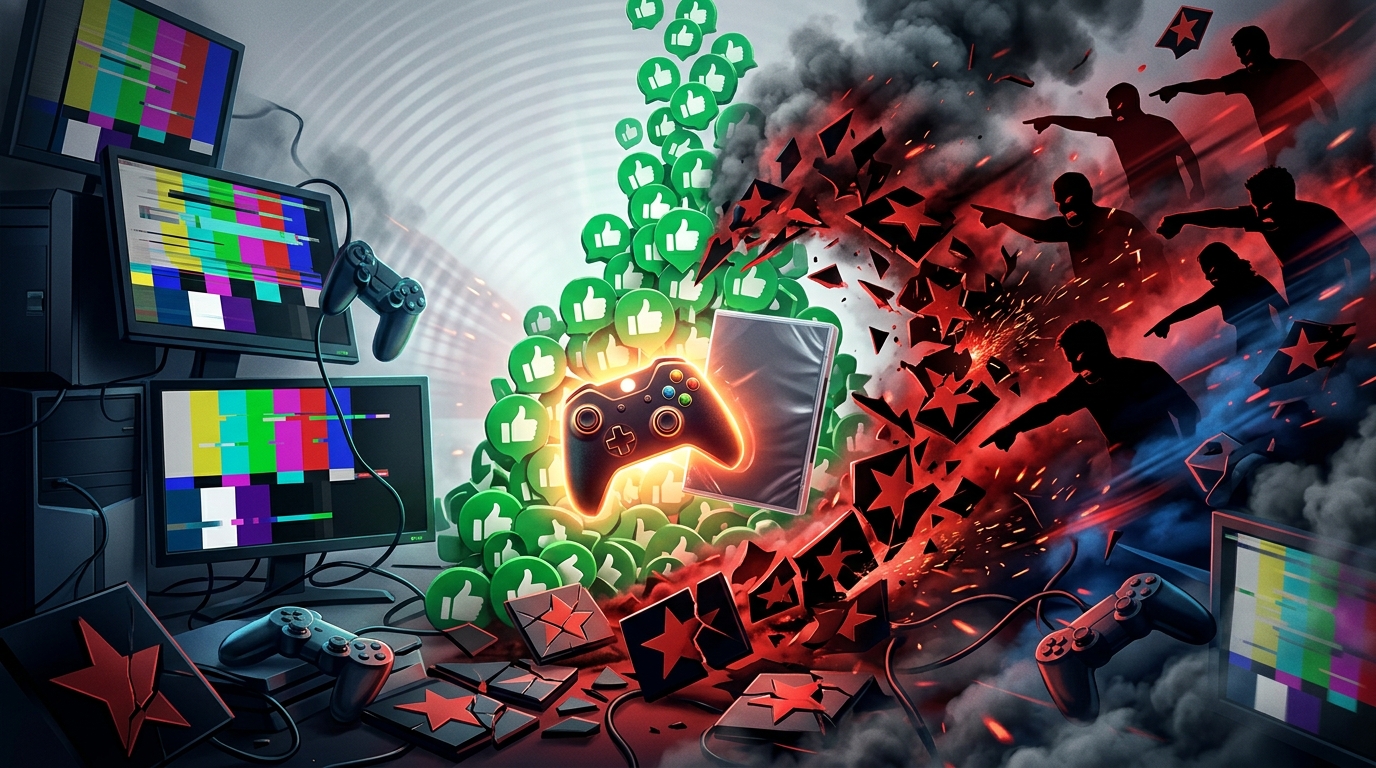
Review-bombing waves usually begin when players feel a game has broken a promise, not simply because they disliked a boss fight. A broken launch can trigger a flood within hours, while surprise DRM, aggressive monetization, missing content, or an update that removes beloved features can turn mild grumbling into a digital fire alarm. Platform disputes and policy reversals widen the blast radius because players are protesting a publisher’s decision as much as the game itself. I have seen the loudest campaigns form around one headline, patch note, or executive statement, then cool once the outrage cycle finds its next meal. The pattern is less “steady decline over years” and more “one news moment kicks the rating down the stairs.”
| Trigger | Typical rating shift | How quickly it appears | What keeps it moving |
|---|---|---|---|
| Broken launch, severe bugs, or server failures | Sharp negative drop | Within hours to 24 hours | Launch coverage, refund requests, and unresolved fixes |
| Unpopular update or removed content | Fast, concentrated decline | Same day to 72 hours | Patch notes, viral clips, and developer silence |
| New DRM or access restrictions | Moderate to severe drop | One to three days | Privacy concerns, performance reports, and review coordination |
| Monetization change or paid replacement for included content | Sharp negative spike | Within 24 to 48 hours | Pricing screenshots and claims that players were misled |
| Platform dispute or policy reversal | Uneven but highly visible shift | One to seven days | Community organizing and coverage beyond the game itself |
The important caveat is that no single industry-wide database captures every campaign, and user-rating systems count participation differently, so a dramatic score change is not a perfect measurement of public opinion. Even so, the timing is hard to miss: reviews tend to cluster immediately after the triggering event, then flatten as fixes arrive, attention moves on, or the publisher finally explains itself like an adult. Positive reversals can happen too, especially after a strong recovery update, but they rarely erase the original damage overnight. I treat the review graph as a smoke alarm, not a laboratory instrument. It tells me when players think something has gone badly wrong, even if it cannot explain every voice in the crowd. The loudest backlash is usually concentrated around a specific news moment, not evenly distributed across the game’s lifespan.
Co-op Shooter, Fantasy RPG, And Historical Action Game
A popular co-op shooter shows how a review wave can be about platform politics rather than the game itself. In 2024, a proposed account requirement triggered furious backlash because players felt a previously optional condition had been smuggled in after launch. The anger was not imaginary just because the policy was later reversed, and the sudden review plunge tracked a specific corporate decision rather than a mysterious outbreak of bad taste. I would file this under consumer protest, not proof that the co-op shooting suddenly forgot how guns work. When complaints arrive alongside a policy change, update, or monetization shift, the timing is evidence worth examining, not an excuse to wave away every angry player as a bot.
A recent fantasy role-playing game became a different kind of battlefield, with culture-war arguments about representation overwhelming ordinary discussion of combat, writing, performance, and story. Some negative reviews were clearly aimed at perceived politics or character choices rather than hands-on experience, while other players had legitimate complaints about pacing, dialogue, and a sanitized tone. Those are not interchangeable, and pretending they are only makes the conversation dumber. A historical action game faced a similarly polarized launch, with criticism split between gameplay and technical concerns on one side, and arguments about historical representation and identity on the other. I treat both as signals, but I still want reviewers to explain what they played before declaring the entire production guilty of crimes against their preferred comment section.
The useful trend is not simply that scores fall, but why they fall and how the timing lines up with launches, patches, monetization changes, or platform disputes. A coordinated-looking spike can include genuine customers who feel misled, alongside drive-by voters who have not touched the game since the tutorial, so the label “review bomb” is a starting point rather than a verdict. I look for detailed reviews, ownership or playtime indicators where available, language changes over time, and whether the complaints survive after the news cycle moves on. Executives reaching for the emergency stress ball does not automatically make a negative wave fake. Sometimes players are not attacking the game. They are reviewing the decision made around it, and that distinction separates useful consumer pressure from digital confetti.
Genuine Protest Or Coordinated Manipulation
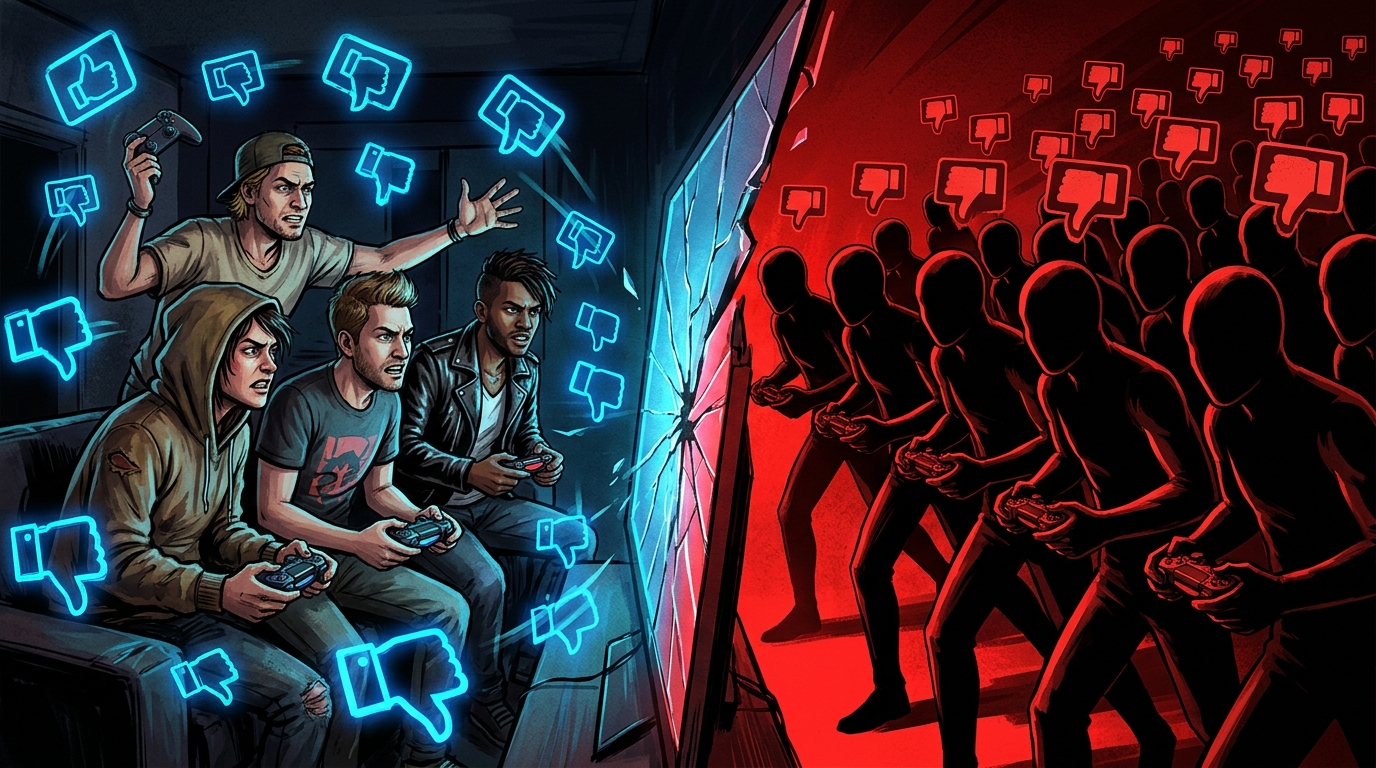
A useful 2026 review-bombing test starts by separating genuine anger from suspicious coordination, rather than treating every ugly score as internet theater. I score each campaign from authentic to dubious using account-linked ownership, review timing, repeated wording, topic relevance, playtime, sentiment recovery, and whether the complaint was actually fixed. A sudden wave from verified players with hours logged and complaints about a real update looks very different from thousands of near-identical ratings posted by accounts that barely launched the game. Neither pattern proves intent on its own, because players can organize around a legitimate grievance and still sound like they copied the same memo. That is why the result should be a trust score, not a smug declaration that everyone involved is either a hero or a bot.
| Signal | +2, supports genuine protest | 0, mixed evidence | -2, raises manipulation concerns |
|---|---|---|---|
| Verified ownership | Most reviewers own the game | Ownership is unclear or split | Ratings come mostly from unverified accounts |
| Timing | Spike follows a launch, update, price, or policy change | Reviews arrive in several unrelated waves | Spike appears before the alleged event or without a clear trigger |
| Repeated language | Players describe the same issue in their own words | Some phrases clearly spread through the community | Large blocks use near-identical wording or slogans |
| Topic relevance | Complaints connect directly to gameplay, access, or monetization | Game and wider corporate issues are tangled together | Ratings focus almost entirely on unrelated politics or rivalries |
| Playtime | Reviewers show enough time to assess the change | Playtime varies wildly | Many accounts have almost no playtime |
| Sentiment recovery | Scores improve after communication or a patch | Anger fades but remains divided | Reviews stay frozen despite meaningful fixes |
| Complaint fixed | Players acknowledge a real repair | Developers promise action without proof | The campaign continues unchanged after the issue is resolved |
Add the row scores together, then treat the total as a warning light rather than a courtroom verdict: 8 to 14 suggests authentic frustration, 1 to 7 points to a mixture, and 0 or below deserves a serious manipulation check. A mixed result is common, especially when a real pricing or content dispute attracts opportunists who have never played the game, because outrage is apparently downloadable now. I also compare the spike with launch dates, major updates, monetization changes, and platform disputes, then read a sample of reviews instead of trusting a single percentage. If the underlying complaint is fixed and sentiment gradually recovers, the protest probably recorded real harm rather than permanent sabotage. If the score remains poisoned by irrelevant, repetitive, low-playtime posts, I would call it coordinated manipulation while still preserving any legitimate complaint buried underneath the noise.
Review Bombs Reveal Anger, Not Quality
Looking at 2026’s review-bombing trends, I see a protest signal more than a reliable quality score. Spikes tend to follow predictable flashpoints: a broken launch, a controversial update, a new monetization scheme, missing features, or a platform dispute that makes players feel ignored. That timing matters because a sudden flood of reviews can reveal genuine anger long before formal statements arrive, but it can also bury useful criticism beneath copy-pasted outrage and drive-by nonsense. A game’s score tells me that something happened. The timeline tells me what, when, and whether the complaint had anything to do with playing the game. Treating the number as sacred is how you end up diagnosing a house fire with a bathroom scale.
The fairest conclusion is that review bombing is neither flawless consumer intelligence nor proof that every critic is acting in good faith. Some campaigns expose real bait-and-switches, while others weaponize a rating system against developers, policies, or arguments happening nowhere near the game itself. I read the launch reviews, the update history, the developer response, and the ratio of specific complaints to theatrical keyboard smoke before deciding whether the damage is temporary or deserved. Platforms should publish clearer, comparable campaign data, including timing, review volume, verified play context, and the reason for the spike. Players should read the timeline behind the score before deciding whether a game belongs on their wishlist or in the digital bin.