The AI game backlash is no longer a few angry posts yelling into the void. It is a full-blown argument over what games should be, who gets paid to make them, and whether “efficiency” is just corporate shorthand for “please ignore the missing humans.” I’m all for better tools behind the scenes, but when a game ships with soulless artwork, synthetic voices, or dialogue that sounds assembled by a malfunctioning toaster, players notice. Increasingly, they refuse to pretend otherwise.
Studios have not stopped using generative AI, but the backlash is forcing them to think twice about what reaches the player. Disclosure, human review, consent for voice work, and replacing questionable assets are becoming less like optional morality points and more like basic survival skills. The real question is not whether AI belongs in game development. It is whether developers can use it without turning the final product into an expensive screensaver with dialogue.
Key Takeaways
- The backlash targets visible, player-facing generative AI—such as synthetic art, writing, cinematics, live content, and cloned voices—not traditional gameplay AI or carefully controlled behind-the-scenes assistance.
- Players and game workers object most strongly when studios hide AI use, replace creative labor, produce low-quality content, or imitate performers without consent, compensation, and likeness protections.
- Responsible AI use requires clear disclosure, meaningful human review, honest credit, consent-based voice and likeness contracts, and replacement of disputed or inadequate assets.
- Generative AI adoption will continue, but studios that treat it as a tool under human control will build more trust than those using it primarily to cut creative jobs and costs.
Introduction To AI Game Backlash
Generative AI adoption in games has not stopped, but the welcome mat is getting dragged through the mud. Players and game workers are pushing back hardest when AI-made art, writing, cinematics, or voices appear in the finished product, where “efficiency” starts looking suspiciously like “we cut the humans.” I can accept a tool helping with brainstorming or testing, but a synthetic actor delivering emotional dialogue is harder to swallow than a loading-screen tip. The backlash is really a fight over trust, creative labor, and whether a game was made by people or assembled by a cost-cutting algorithm wearing a tiny developer badge.
That distinction matters because players are not automatically opposed to every AI tool hidden in a production pipeline. They are far less forgiving when studios quietly ship generated assets, imitate performers without meaningful consent, or replace artists while insisting the result is basically the same. It is not the same, especially when visual glitches, bland writing, and voices with all the emotional range of a microwave expose the shortcut. Once players suspect that a studio is hiding AI use, every awkward animation and suspiciously generic line becomes evidence in the court of public opinion.
The industry’s response is increasingly centered on disclosure, human review, consent-based voice contracts, and replacing AI assets after complaints. That tells me the criticism is landing. It does not mean generative AI is leaving game development, because executives rarely abandon a cheaper workflow simply because everyone hates the smell of it. It does mean studios are learning that “made faster” is not the same as “made better,” and players can tell when the soul has been optimized out. If a game wants our money, it should be honest about who made it, who got paid, and whether the machine was assisting the artists or quietly eating their lunch.
The Four Faces Of Game AI
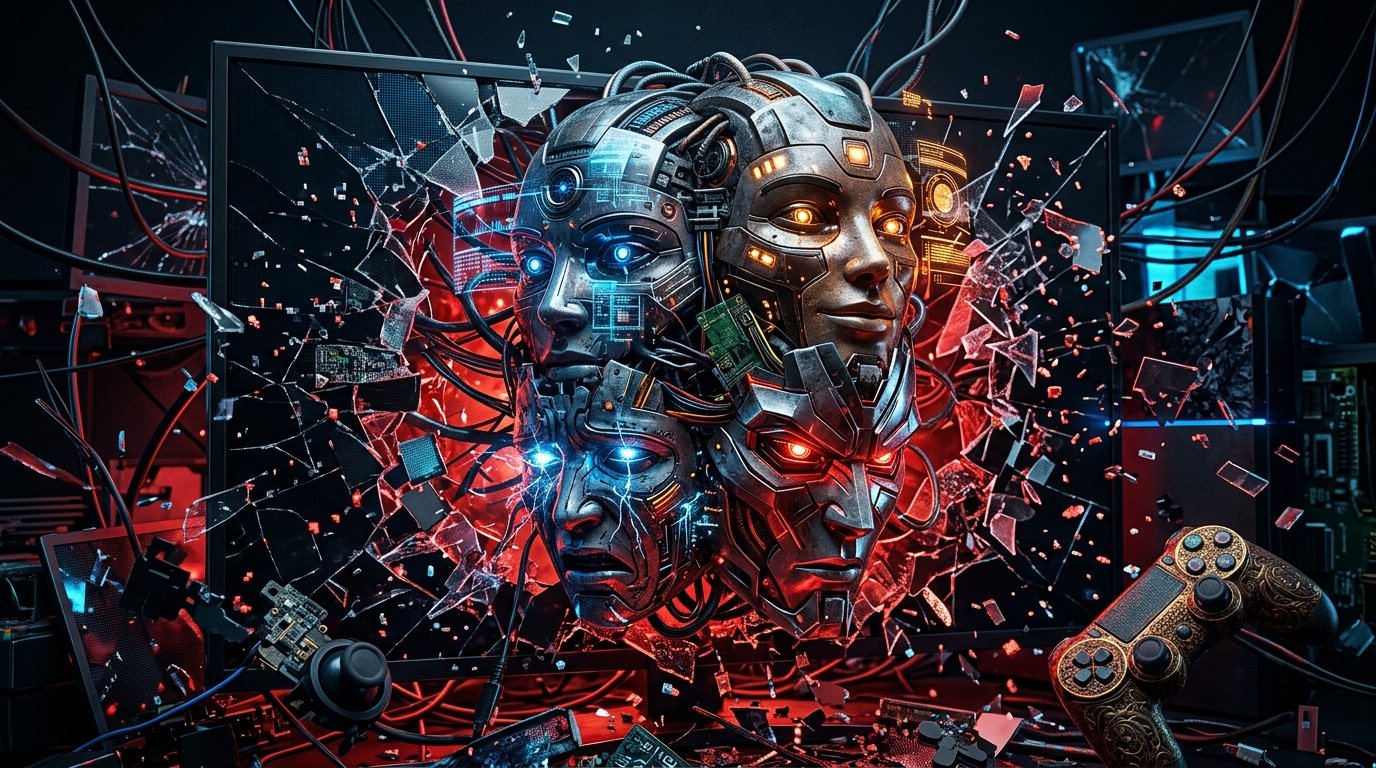
Traditional gameplay AI is not the villain here. Enemy pathfinding, companion behavior, racing-line logic, and adaptive difficulty have been running games since long before anyone tried to make a chatbot write a tragic elf monologue. The current backlash targets four newer uses that affect production, shipped content, live interaction, or a performer’s identity. I find the distinction useful because calling every algorithm “AI” is how studios turn a real argument into technological soup.
| Technology | What it does | Who benefits | Why players object | Typical backlash |
|---|---|---|---|---|
| Traditional gameplay AI | Controls enemies, allies, navigation, and difficulty | Players and designers | Usually nothing, unless it behaves like a confused shopping cart | Low |
| Behind-the-scenes assistance | Helps with coding, testing, research, localization drafts, or administration | Studios, publishers, and sometimes players | Fear of job cuts, errors, hidden use, and weaker human oversight | Low to medium |
| Shipped generative assets | Creates or assists with art, writing, music, animation, or cinematics included in the game | Studios seeking cheaper or faster production | Sloppy results, unclear training data, and the feeling that human craft was replaced | High |
| Live-generated content | Produces dialogue, characters, quests, or reactions while players are playing | Publishers chasing endless content and lower writing costs | Inconsistent quality, moderation risks, and a world that feels assembled by a vending machine | High |
| AI replicas of voices or likenesses | Imitates a performer’s voice, face, or mannerisms | Studios and publishers controlling production costs | Consent, ownership, royalties, and the possibility of replacing real performers | Very high |
That explains why “AI game backlash” has intensified through August 2026, even though adoption has not stopped. Players are far more tolerant of a testing tool finding bugs than a game quietly shipping synthetic artwork or cloning a voice actor without meaningful consent. Game workers have pushed the issue harder, forcing studios to discuss disclosure, human review, replacement of questionable assets, and consent-based voice contracts instead of hiding behind the phrase “new workflow.” In other words, the anger is not aimed at clever software doing boring work. It is aimed at executives using clever software as a bargain-bin substitute for people. Nobody buys a $70 game hoping the credits reveal that the creative department was a spreadsheet.
My verdict is simple: use AI to sharpen the tools, not to sand away the humans. Behind-the-scenes assistance can be reasonable when workers remain in control, errors are checked, and nobody pretends a rough draft is finished work. Player-facing generation deserves much tougher scrutiny because it can damage writing, visual identity, performance rights, and trust all at once. The strongest backlash lands on visible shortcuts and unconsented replicas, while traditional gameplay AI barely registers as controversial. That is not hypocrisy. It is basic quality control, and the industry should stop acting surprised when players notice the difference.
Why Visible AI Assets Enrage Players
Players are far more forgiving when AI stays behind the curtain, helping with code suggestions, bug testing, research, or rough localization drafts. Those tools assist human developers without pretending to be the human developers, which is a crucial distinction when the credits still contain actual people. Synthetic character art, dialogue, music, cinematics, and performances are different because players experience them directly, often for dozens of hours. At that point, the game can feel less like a crafted work and more like an automated content buffet where someone forgot to include the chef.
The complaints are not mysterious, either. Players worry that AI will replace artists, writers, composers, and actors while training on work scraped without meaningful consent. They also notice the output, especially when a character has rubbery expressions, dialogue with the emotional range of a parking receipt, or music that sounds assembled from three stock trailers and a headache. Copyright uncertainty makes every supposedly “finished” asset feel like a future legal argument wearing a fancy costume. Add soulless design to the mix, and the promise of faster production starts looking suspiciously like an excuse to spend less on the humans who gave games their personality.
Trust collapses fastest when studios hide their AI use until players spot the evidence themselves. A vague statement about “experimental tools” after launch does not reassure anyone when the game contains suspiciously lifeless portraits or a voice performance that sounds recorded by a haunted GPS. I can accept a developer using assistance to chase bugs or organize a mountain of text, but shipping synthetic performances while pretending nothing changed is asking for applause after stealing the microphone. By August 2026, the backlash has not stopped adoption, but it has made one verdict increasingly hard to ignore: if AI is visible, studios need consent, disclosure, serious human review, and a result good enough to justify its existence.
Voice Actors And Developers Draw The Line
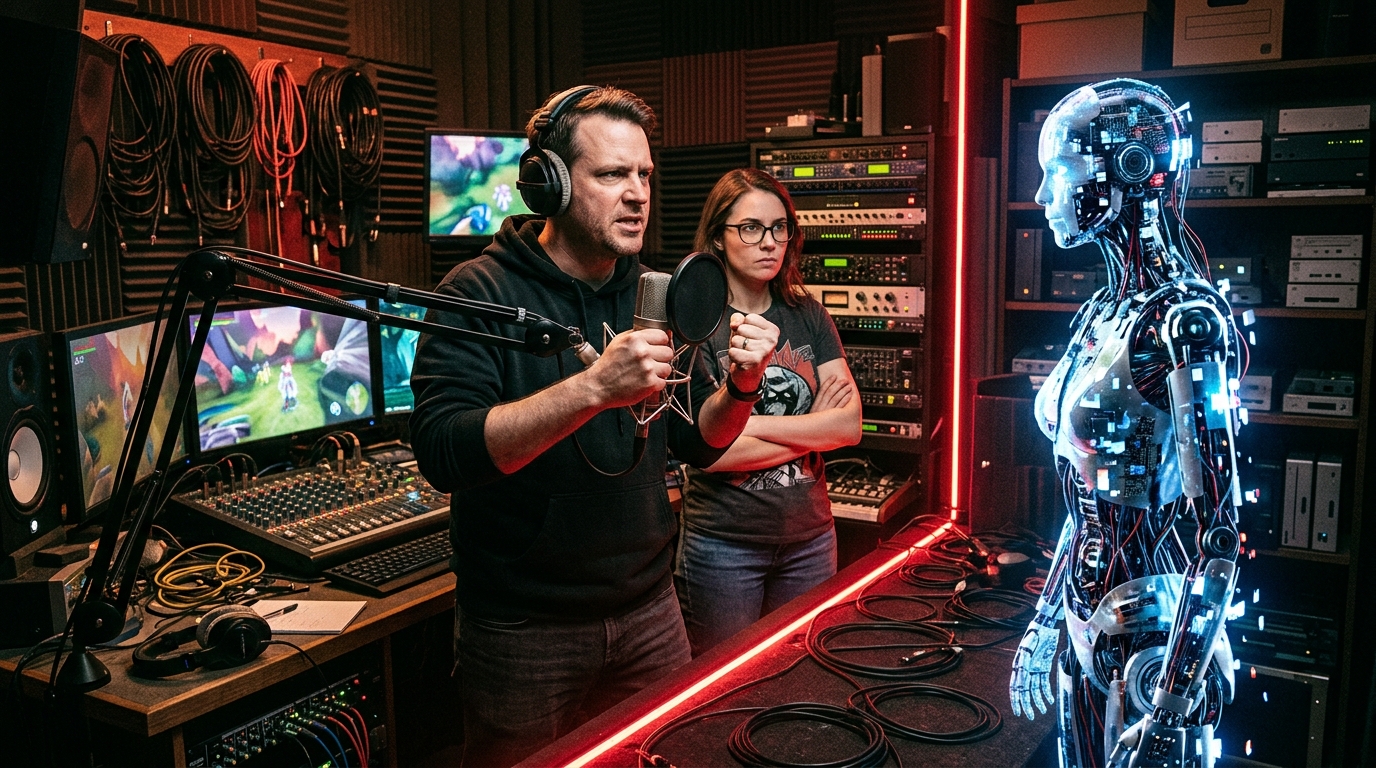
Voice actors and developers are not rejecting every algorithm with a pulse. They are rejecting the idea that consent is an optional menu setting. A voice contract should clearly state whether a performance can be cloned, where the synthetic voice can appear, how long the permission lasts, and whether the actor gets paid when it earns money. Likeness protection matters just as much, because nobody should discover their face, voice, or mannerisms starring in a game they never agreed to make. Replacement fears make the issue even sharper, especially when studios pitch AI as “efficiency” while quietly eyeing the people whose jobs it might erase. Calling workers expensive obstacles with keyboards is not innovation. It is accounting dressed up as progress.
Developers are demanding transparency because players deserve to know what they are buying, and workers deserve to know what they are building. Responsible use can mean AI helping with research, rough drafts, testing, or other background tasks while humans review the output, secure permission, and take final responsibility. The bad version is painfully obvious: clone a performance, generate a pile of art, slip it into the game, and hope nobody notices before launch day. That approach treats artists as disposable input devices and quality control as a problem for public relations to solve later. I am all for tools that remove drudgery, but if the tool removes the credited human being, someone needs to explain why that is supposed to be good for games.
The backlash has intensified because studios keep asking for trust while behaving like transparency is a paid expansion. Game workers want disclosure about where generative systems were used, meaningful human review, and contracts that protect consent, compensation, and a person’s likeness. Players are pushing back hardest when AI-generated voices, writing, cinematics, or art are visible in the finished product, because nobody enjoys paying full price for content that feels assembled by a haunted autocomplete box. A studio that uses AI carefully, credits people honestly, and lets performers control their digital replicas can earn a hearing. A studio that quietly ships cloned work and calls the creators an overhead problem deserves the uninstall button.
The Backlash Is Changing Studio Behavior
The backlash is forcing studios to treat AI disclosure as a launch requirement instead of a public-relations fire extinguisher. I want clear answers about what was generated, what was licensed, who consented, and which human checked the final work, especially when the material involves voices, writing, character art, or cinematics. Quietly dropping synthetic assets into a premium game and hoping nobody notices is not a strategy. It is a scavenger hunt with the audience holding the flashlight. The strongest studios are removing questionable assets, replacing them with human-made work, and explaining the change without pretending players are furious about “innovation.” Here is my scorecard for the responses becoming standard across the industry:
| Studio response | Verdict | Why it earns that verdict |
|---|---|---|
| Publishes what tools were used, secures consent, names human reviewers, and replaces disputed assets when necessary | Trustworthy | It gives players evidence, accountability, and a meaningful correction when the process goes wrong |
| Admits to AI assistance only after screenshots, credits, or worker reports expose it | Evasive | Disclosure arrived because discovery became unavoidable, not because transparency was part of the plan |
| Calls criticism “anti-progress,” blames players or workers, and refuses to explain training data or consent | Outright insulting | It treats legitimate questions about ownership and labor as a marketing obstacle |
AI adoption is continuing because studios see uses for coding assistance, testing, localization drafts, and other behind-the-scenes chores. The reputational liability begins when executives confuse “technically possible” with “welcome in the finished game,” then act surprised when players notice a lifeless voice performance or suspiciously familiar artwork. Human review is quickly becoming the minimum acceptable standard, not a premium feature to unlock after three angry livestreams. My verdict is simple: players are not demanding that every algorithm be dragged into the sea, but careless implementation is teaching them to distrust the entire production. That distrust will cost more than the automation saves if publishers keep communicating like a chatbot that just discovered public relations.
Players Still Want Human Games
Players are not rejecting every algorithm in gaming, and frankly, they should not have to. Code assistance, testing, localization drafts, and other behind-the-scenes tools can save time without pretending a machine wrote the soul of the game. The backlash starts when studios quietly ship synthetic art, voices, writing, or cinematics and expect players to clap for the efficiency. That is not innovation. It is outsourcing creativity while hiding the invoice. If a game uses generated material, players deserve disclosure, creators deserve consent and credit, and everyone responsible should face the consequences when the result is cheap, soulless, or simply bad.
The studios most likely to survive this mess will treat AI like a wrench, not the worker holding it. Human artists, writers, actors, designers, and programmers should remain visible, credited, and firmly in control of what reaches the player. I will happily play a game improved by smart tools, but I have no interest in buying a glorified content smoothie assembled by executives trying to delete the creative team from the budget. The blunt verdict is simple: players still want human games, and the industry can either respect that demand or keep discovering that “technically generated” is not the same thing as worth playing.
Players Want Human-Made Games, Not Prompt Slop
The AI game backlash is not a tantrum from players who think every developer should still be drawing sprites with a crayon. I see a clear line between behind-the-scenes tools that help with testing, research, or rough localization and AI-generated art, writing, cinematics, or voices shipped as finished work. Players are far less forgiving when a game feels like it replaced an artist, performer, or writer with a prompt box and a shrug. That reaction has intensified in August 2026, with game workers pushing back over job security, consent, training data, and the quality of the final product.
Generative AI has not stopped spreading through development, but the backlash is forcing studios to act less smugly about it. Human review, clearer disclosure, consent-based voice agreements, and replacing weak AI assets are becoming practical expectations instead of optional public-relations confetti. My verdict is simple: use AI as a tool if it genuinely improves the work, but do not disguise cost-cutting as innovation and expect players to applaud. A game still needs human judgment, style, and accountability, because nobody buys a ticket to watch a spreadsheet make eye contact.