Esports sportswashing is what happens when a government tries to buff its public image with flashy tournaments, celebrity players, and enough LED lighting to blind a referee. Saudi Arabia is the clearest example, using its sovereign wealth fund to invest in esports infrastructure, fund major events, support teams and venues, and make gaming central to its economic strategy. Supporters call it diversification and industry investment. Critics see a polished distraction from repression and human-rights abuses.
I’m interested in the uncomfortable question underneath the confetti: can esports grow without becoming a public-relations shield for powerful governments? The term itself is not legally defined, and not every investment is automatically sinister. Still, pretending politics vanish when the match starts is naïve. The real test is whether esports receives genuine, lasting support, or simply lends its youthful, global image to whoever can afford the biggest stage.
Key Takeaways
- Saudi Arabia has moved beyond tournament sponsorship to build deep influence across esports through sovereign-wealth investment in events, teams, venues, publishers, infrastructure, and national gaming policy. This makes esports a central part of its economic diversification strategy and its global image-building efforts.
- Esports sportswashing is a contested political judgment, not a legal designation, but genuine industry development and reputation management can occur simultaneously. Jobs, funding, and infrastructure do not erase scrutiny of Saudi Arabia’s human-rights record.
- The Esports World Cup demonstrates how ownership and control carry greater reputational impact than simple branding. By financing the spectacle and shaping the surrounding ecosystem, Saudi-linked interests can influence which narratives receive attention and which criticisms remain offstage.
- Players, publishers, teams, journalists, and fans should evaluate who funds esports, who benefits, and what trade-offs partnerships create. Enjoying the competition does not require treating the money behind it as politically neutral or dismissing accountability concerns.
Saudi Arabia’s Esports Power Play
Saudi Arabia’s esports power play is no longer just a giant check attached to a tournament logo. Its sovereign wealth fund has pushed into event funding, esports infrastructure, game development, team relationships, and global industry partnerships. That matters because “sportswashing” is not a legal label, but it describes a political effect critics see clearly: gaming’s youthful, shiny image helps soften scrutiny of Saudi Arabia’s human-rights record. Supporters call this economic diversification and industry building, which is fair, although “please admire our innovation district” is also a remarkably polished public-relations strategy. The real question is not whether Saudi money is changing esports, but whether esports is being asked to make the country look better while everyone pretends the scoreboard is politically neutral.
| Year | Expansion | Why it matters | Source |
|---|---|---|---|
| 2022 | A Saudi-backed gaming investment vehicle was established, while major events helped normalize large-scale funding. | Saudi involvement moved from occasional sponsorship toward a permanent gaming investment strategy. | Public investment fund documentation |
| 2022 | Saudi Arabia announced its National Gaming and Esports Strategy. | Gaming became part of national economic planning, not merely entertainment spending. | Investment strategy overview |
| 2023 | Saudi-backed investors acquired major esports tournament, league, and production assets while expanding their game-industry portfolios. | The strategy gained infrastructure and operational reach, giving Saudi capital influence over how esports is staged and distributed. | Investment portfolio documentation |
| 2024 | The Esports World Cup launched in Riyadh with a reported $60 million-plus prize pool, alongside club and ecosystem partnership programs. | Saudi Arabia became the host, financier, venue builder, and relationship broker in one package. Subtle as a loot box ad. | Tournament information |
| 2025-2026 | The event expanded its publisher, team, and international partnerships, with the 2026 edition drawing criticism over cooperation involving France and Saudi Arabia. | The project now reaches beyond Riyadh, making the image-building argument an international issue rather than a local tournament complaint. | News reporting |
The Esports World Cup is the centerpiece because it turns financial influence into a recurring cultural spectacle. Saudi Arabia can fund prize pools, provide purpose-built venues and production infrastructure, cultivate relationships with teams, and invite publishers into a system where access and visibility run through Riyadh. None of that automatically makes every player, developer, or fan a propagandist, and pretending otherwise would be lazy analysis. It does mean the industry should stop treating money as politically sterile, especially when the same investment strategy is designed to attach Saudi Arabia to innovation, youth culture, and international community. I can enjoy a ridiculous best-of-seven while still noticing who owns the arena, who pays the bill, and who gets the reputation upgrade.
From Tournament Sponsorship To Ownership

A logo on a tournament stage buys visibility, but ownership buys a much bigger slice of the story. Sponsorship can make a government or brand look friendly for a weekend, while controlling teams, venues, funding, or event infrastructure can shape what esports celebrates all year. That distinction matters at the 2026 Esports World Cup, where Saudi Arabia’s investment has moved well beyond putting its name beside a trophy. Critics call this esports sportswashing because gaming’s youthful, global image can make a government facing serious human-rights criticism look innovative and approachable. Supporters call it economic diversification, but branding does not become neutral just because someone adds a flashy arena and a press release.
| Approach | What it influences | Impact on gaming’s public image |
|---|---|---|
| Sponsorship | Event visibility and messaging | Creates a polished association, usually for a limited time |
| Investment | Companies, platforms, and long-term strategy | Builds influence over which parts of esports grow and receive attention |
| Publisher partnerships | Game access, official events, and competitive ecosystems | Can shape which games, rules, and narratives receive institutional support |
| Team backing | Players, content, fan communities, and competitive results | Turns a sponsor into a familiar presence inside everyday fandom |
| Venue development | Physical spaces, hosting rights, and local gaming culture | Makes the investor look like essential infrastructure, not a passing advertiser |
That is why ownership carries more reputational weight than a banner behind the commentators. When the same financial network funds tournaments, backs teams, develops venues, and helps build national gaming policy, it becomes harder to separate the sport from the sponsor’s preferred image. I see the appeal of new jobs, better facilities, and bigger prize pools, but money can improve an industry while still serving a public-relations strategy. Esports does not lose its ability to entertain, yet its institutions can become excellent billboards with keyboards attached. The uncomfortable question is not whether the investment helps gaming, but whether gaming is being asked to make its investor look better in return.
The Esports World Cup Reputation Test
The 2026 Esports World Cup is the reputation test that esports cannot dodge by turning up the RGB lighting. Major publishers, elite players, serious prize money, and international audiences have given the tournament real competitive weight, while its Saudi-linked relationship with France has expanded the event’s political and cultural reach. The production is enormous, polished, and built to make every match feel like the championship of the universe, which is exactly the point. I can admit the tournament delivers compelling competition without pretending the surrounding questions have vanished. A flashy stage is still a stage, not an invisibility cloak.
That tension sits at the heart of esports sportswashing, a contested term for using gaming’s youthful, innovative, and supposedly borderless image to improve a government’s reputation. Saudi Arabia presents its investment as economic diversification and industry development, and there is genuine infrastructure, funding, and opportunity behind that argument. Critics, however, point to the country’s human-rights record and accuse it of attaching feel-good esports branding to unresolved abuses. Both realities can exist at once, which is inconvenient for anyone hoping a trophy ceremony will settle the debate. Competition can be authentic while the image campaign around it is carefully engineered.
For me, the real question is whether the Esports World Cup’s spectacle leaves room for accountability or simply turns criticism into background noise between highlight reels. The event can attract the best players in the world and still deserve hard questions about who funds it, who benefits, and what gets quietly edited out of the broadcast. If publishers and competitors treat participation as a blank check, esports risks becoming less a global community than a very expensive reputation machine with excellent production values. The tournament’s success should therefore be measured by more than viewership, prize pools, or how many lasers fit inside a stadium. If the games are the only thing anyone is allowed to discuss, the spectacle has already won.
Can Esports Escape Sportswashing
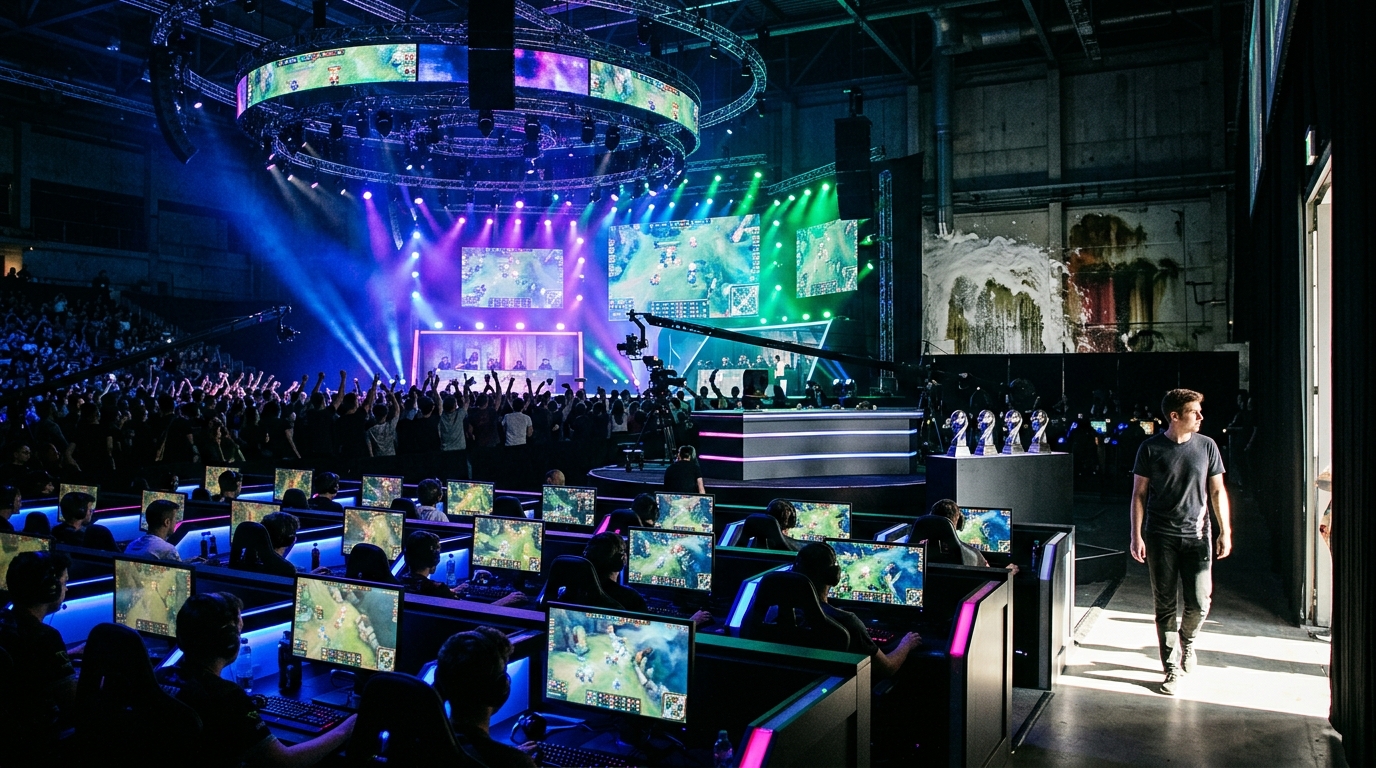
Saudi investment in esports is not automatically a villain monologue in a business suit. The country is trying to diversify beyond oil, create jobs for a young population, develop venues and infrastructure, and turn gaming into a serious economic sector. That money can grow tournaments, support players, create production work, and give esports a larger global stage instead of leaving it dependent on the same handful of fragile revenue streams. From that angle, the Esports World Cup looks like industrial policy with RGB lighting, not merely a public-relations stunt.
The problem is that economic diversification and image-building can happen at the same time. Saudi Arabia’s sovereign wealth fund has moved beyond sponsoring a single event, backing teams, venues, gaming infrastructure, and the wider tournament ecosystem. That gives the country unusually deep control over the story esports tells about it. Critics argue that gaming’s youthful, innovative, and welcoming image can soften attention on the government’s human-rights abuses, while supporters say judging every investment by political intent turns legitimate development into a conspiracy theory with better production values. Both claims deserve scrutiny, because a sponsorship alone cannot prove what anyone intended.
Still, intent is not the only thing audiences can evaluate. The scale, concentration, and branding of Saudi involvement make it reasonable to ask who benefits, what gets discussed, and which uncomfortable facts are quietly pushed off the broadcast screen. I can enjoy a brilliant match and still question the machinery paying for the arena, because “just enjoy the games” sounds about as convincing as a loot box with a 0.1 percent drop rate. Esports may not be able to escape sportswashing accusations entirely, but it can stop pretending that money becomes politically neutral the moment someone adds a tournament logo.
Esports Can’t Outplay Sportswashing
Esports sportswashing is not a claim that every player, coach, or fan is secretly reading from a government script. Most people are there to watch brilliant plays, questionable drafts, and someone panic-ulting into a wall. The real question is who controls the stage, who funds the spectacle, and whether the tournament’s glow helps move a government’s record out of frame. In Saudi Arabia’s case, major investment in esports, teams, venues, and international competition has made that question impossible to dismiss as internet noise.
Supporters can point to jobs, infrastructure, economic diversification, and genuine growth for gaming, and those benefits may be real. They do not magically cancel criticism of repression or human-rights abuses, because a shiny arena is not a moral pressure washer. Calling the activity sportswashing is a political judgment, not a legally defined verdict, but refusing to examine the image-building element is just corporate public relations wearing a gamer headset. We can enjoy the competition while still noticing who paid for the spotlight and which uncomfortable facts were politely escorted backstage.
My standard is simple: enjoy the competition, name the money, disclose the trade-offs, and stop treating criticism as bad sportsmanship. Readers should ask questions, journalists should follow the funding, publishers should explain their partnerships, and teams should stop pretending every deal arrived gift-wrapped from the heavens. Nobody needs to boycott every match or accuse every competitor of conspiracy to take accountability seriously. If esports wants to call itself a global community, it needs to handle scrutiny like a professional, not rage-quit the conversation when the scoreboard gets inconvenient.